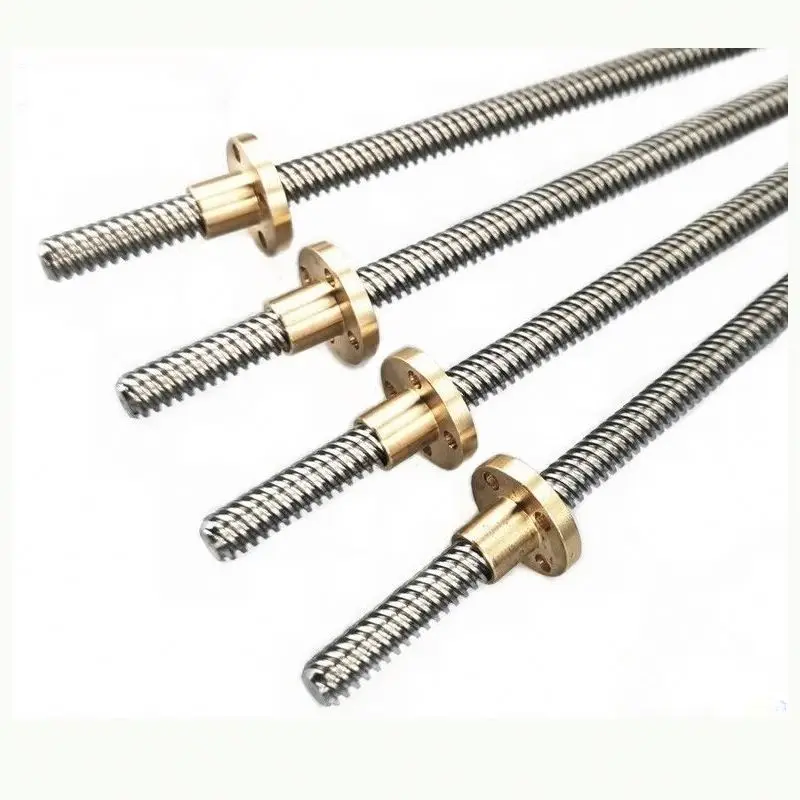
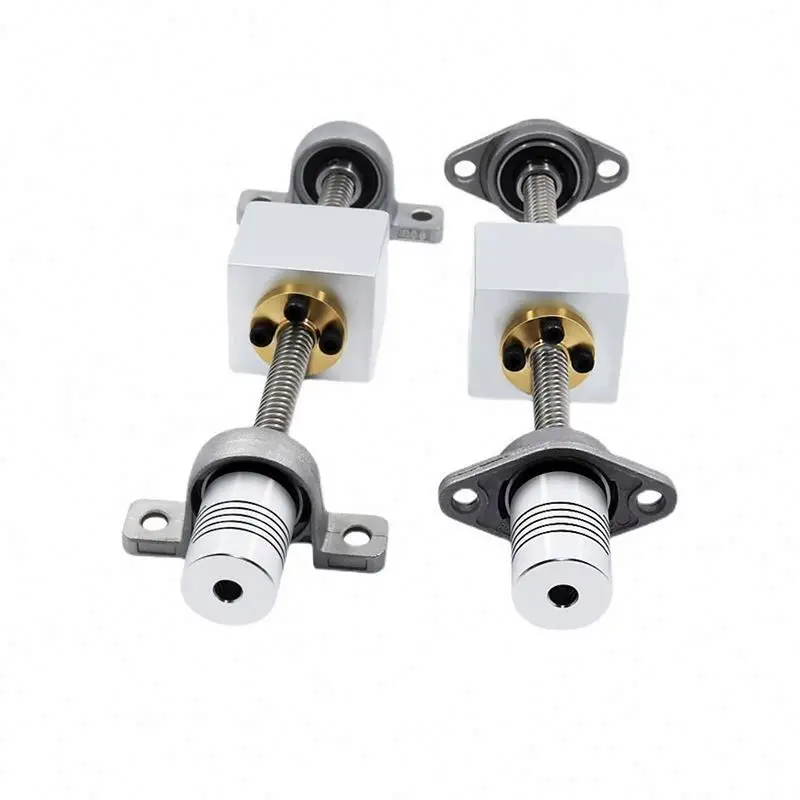
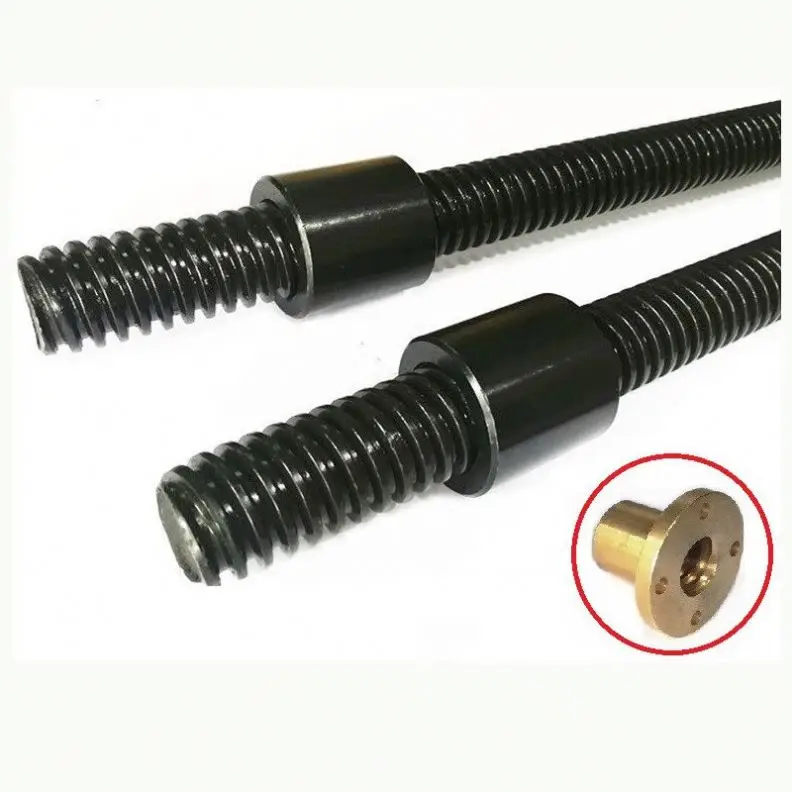
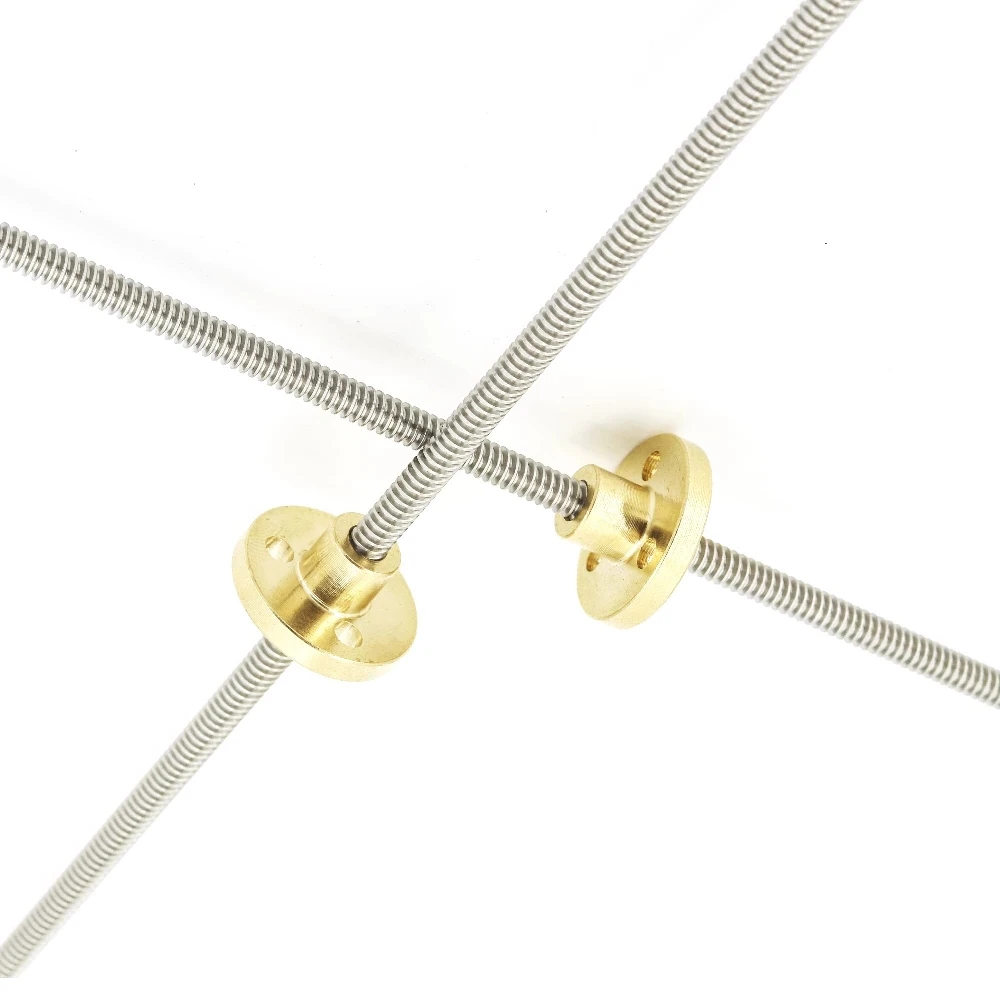
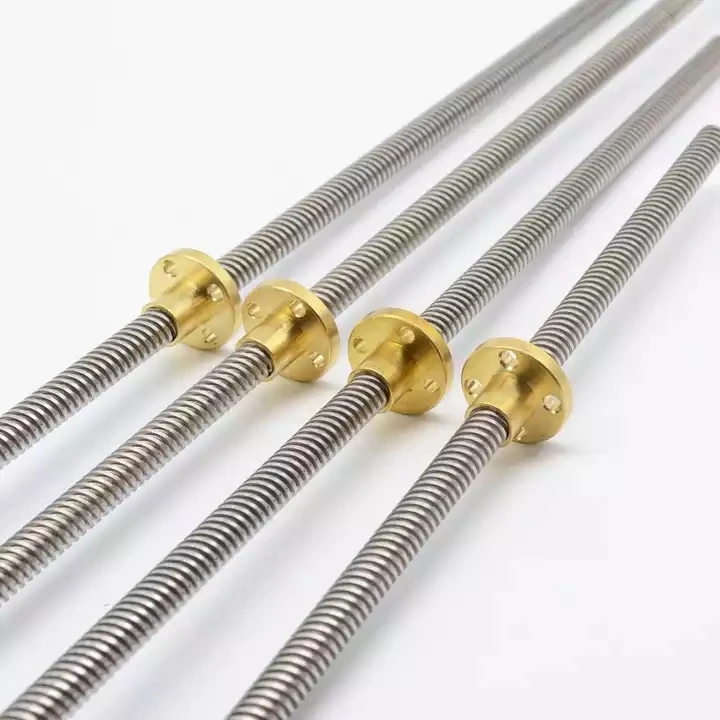
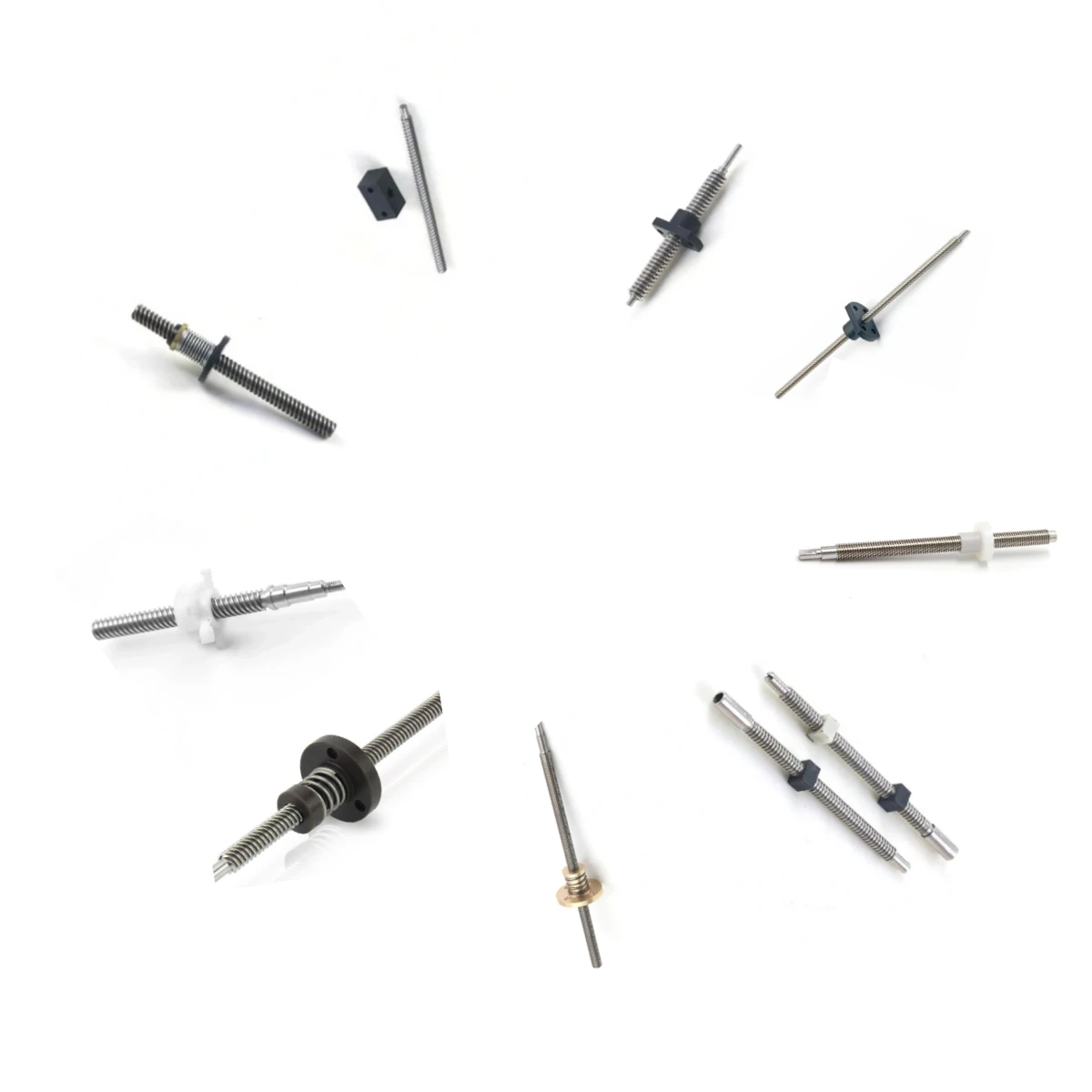
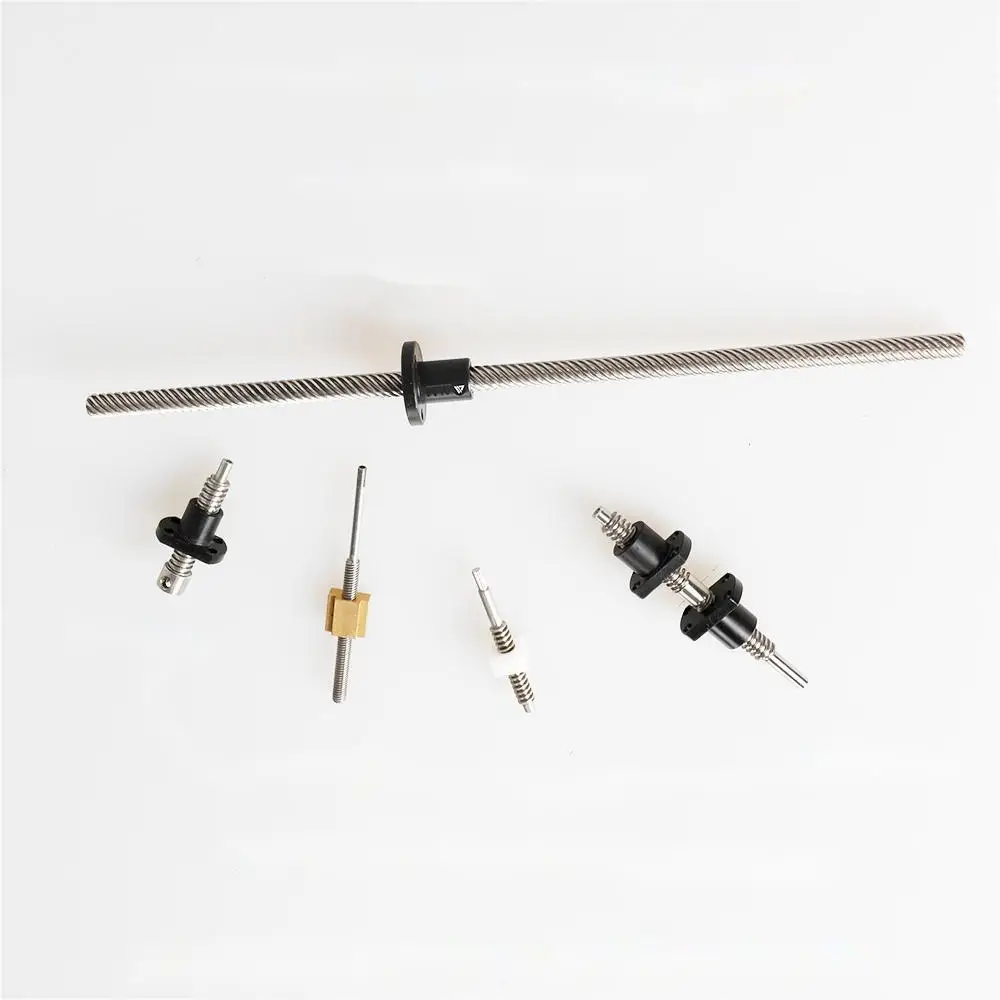
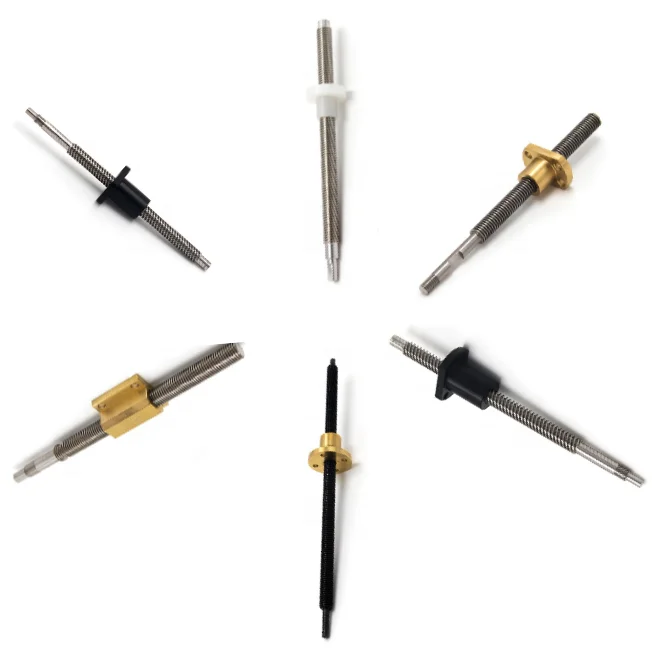
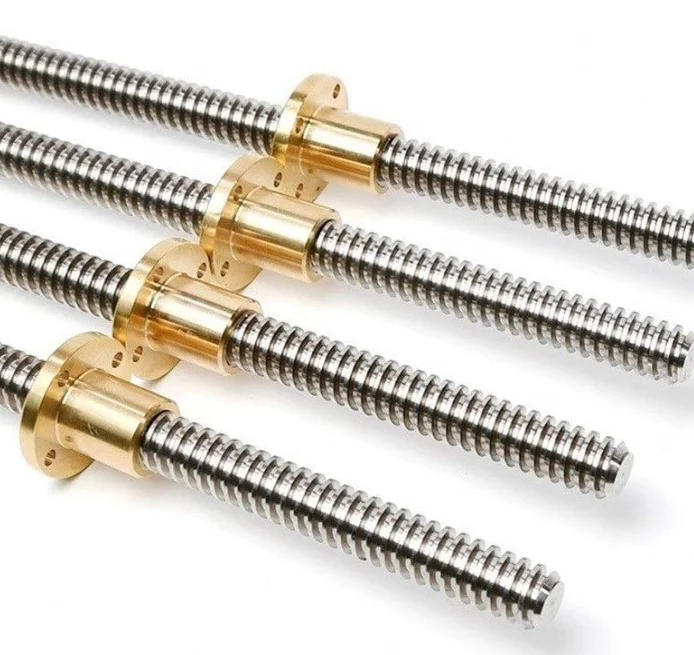
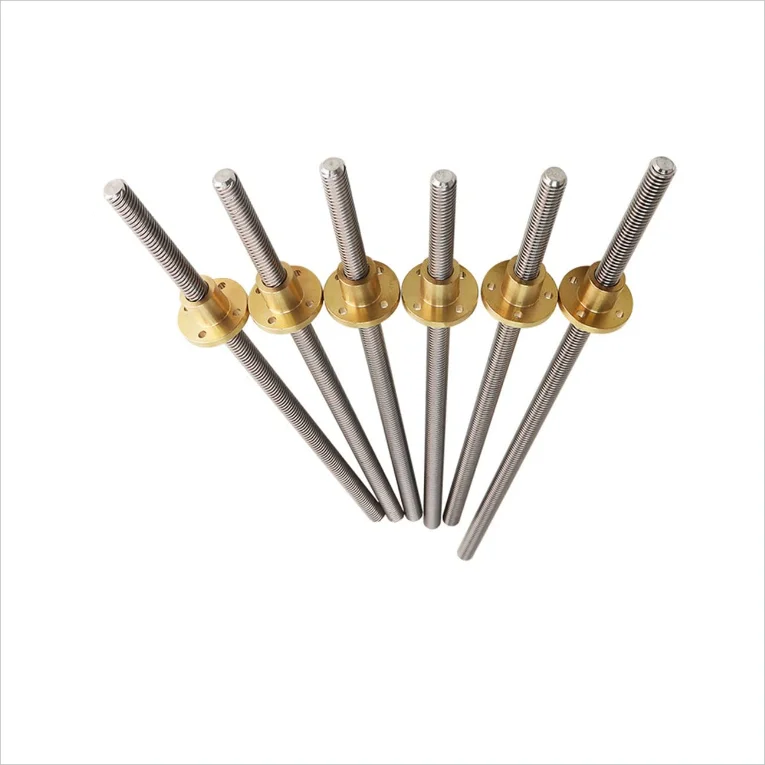
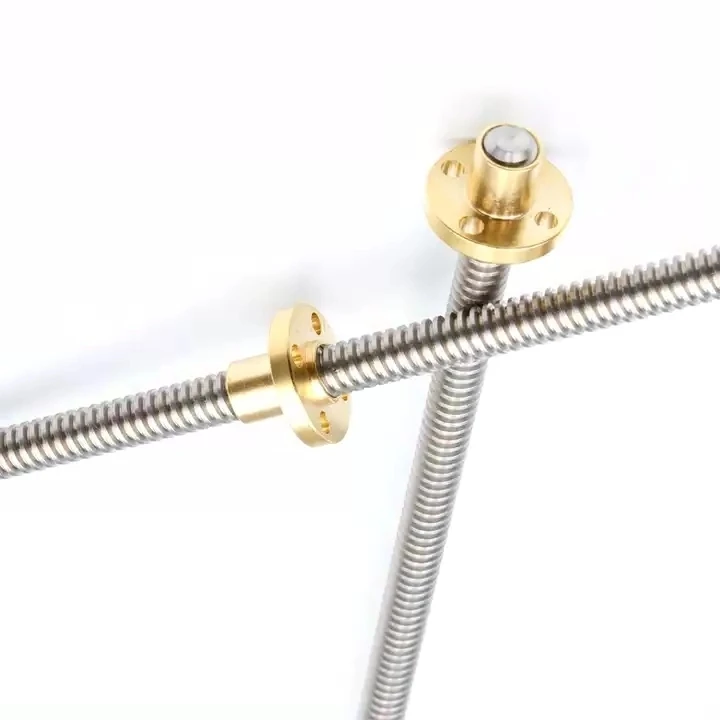
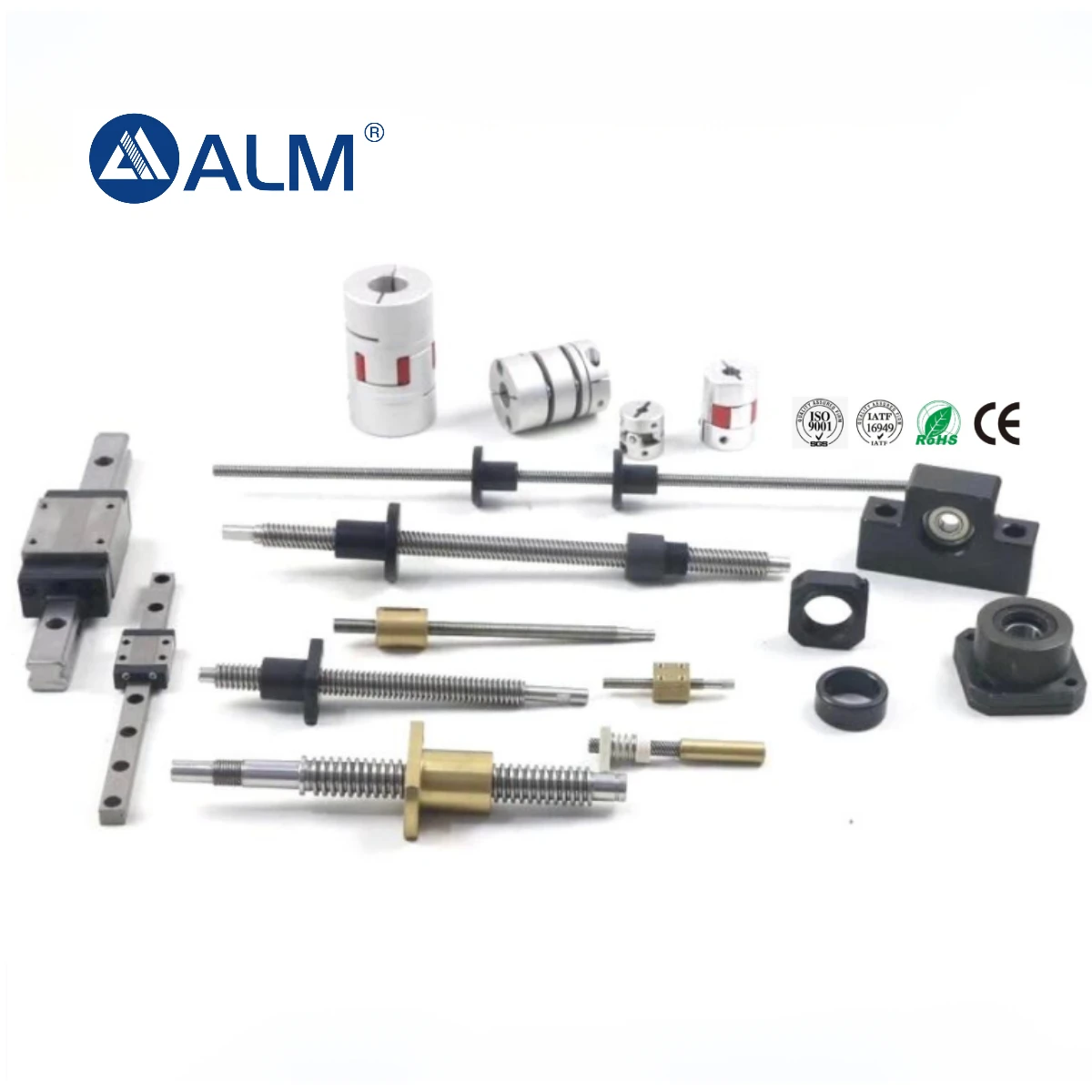
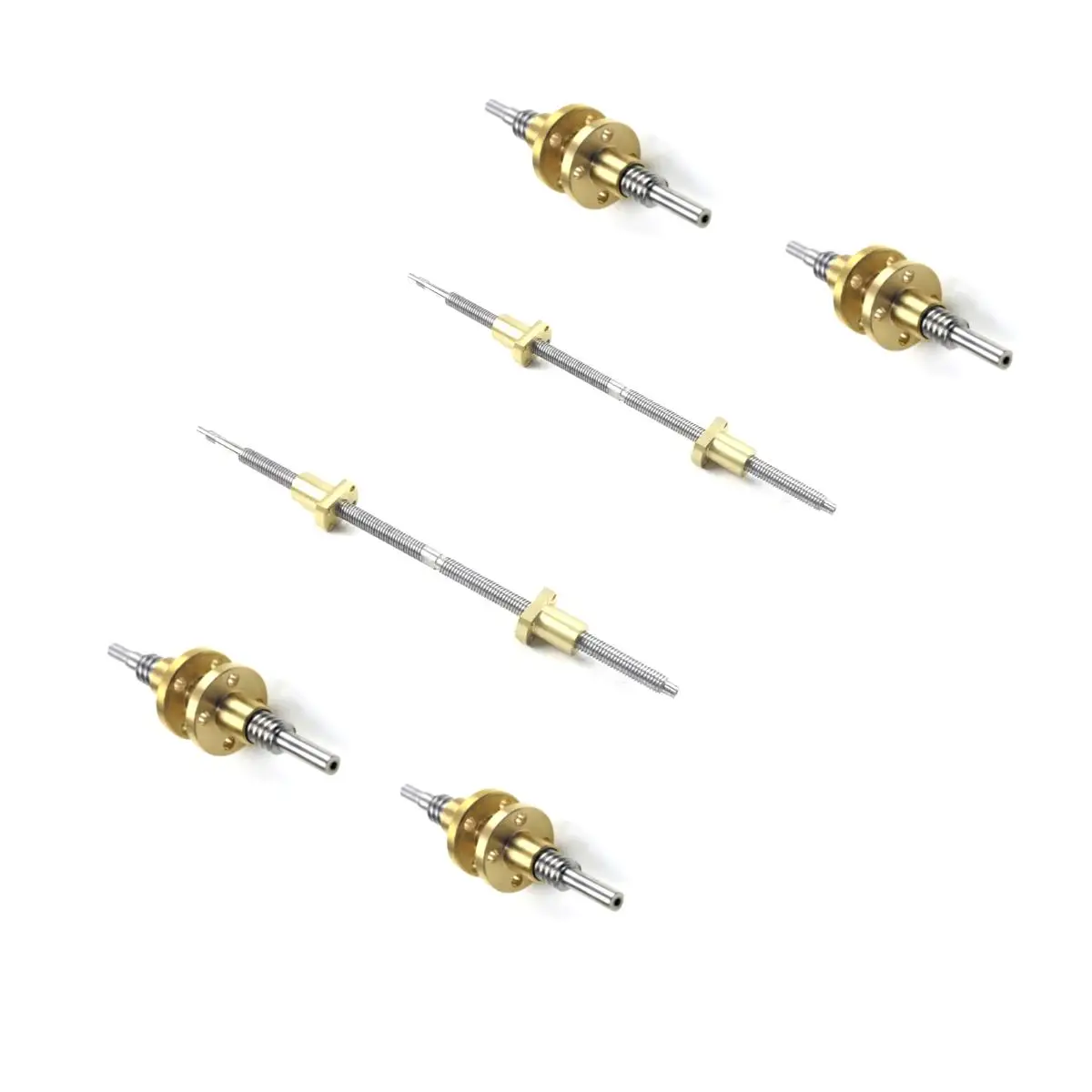
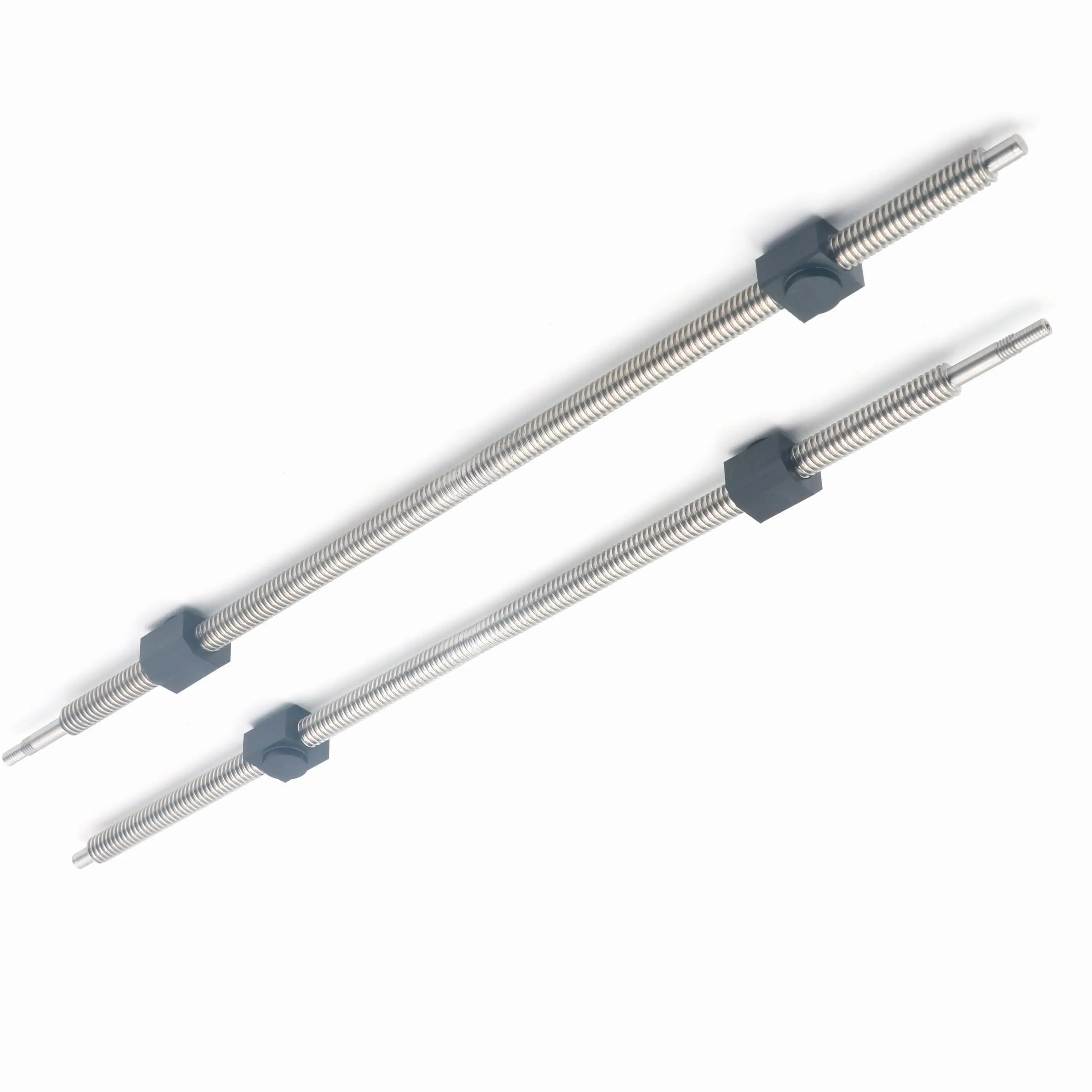
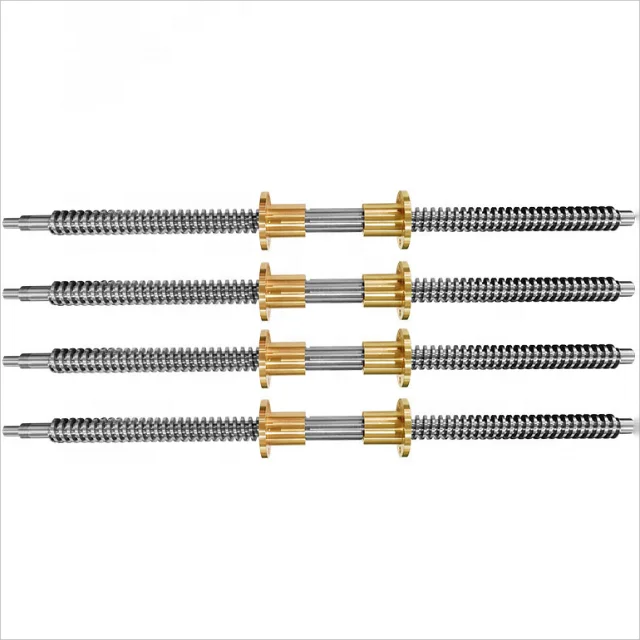
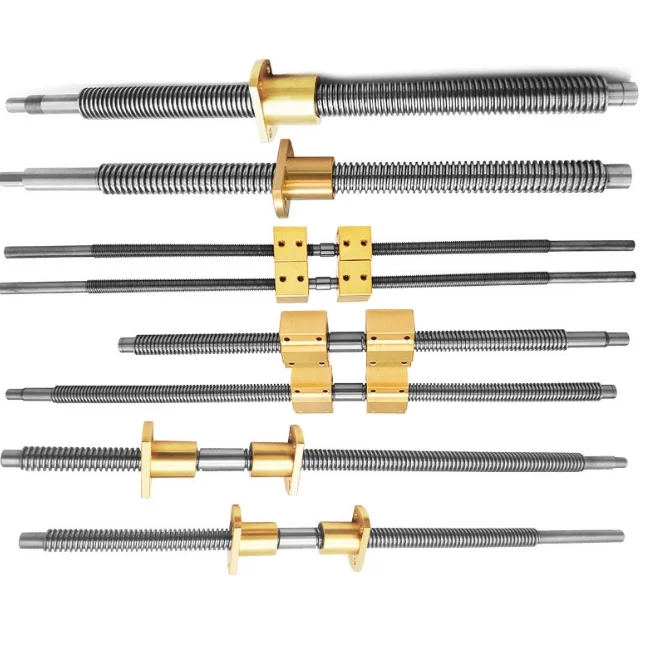
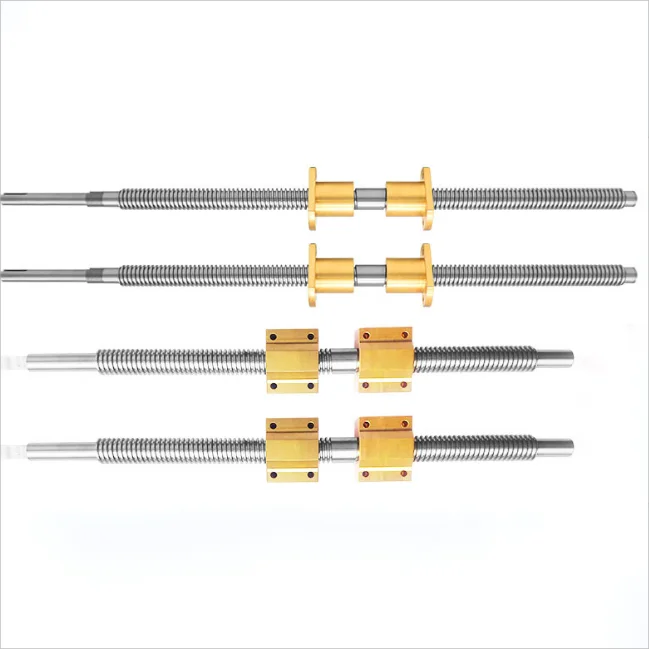
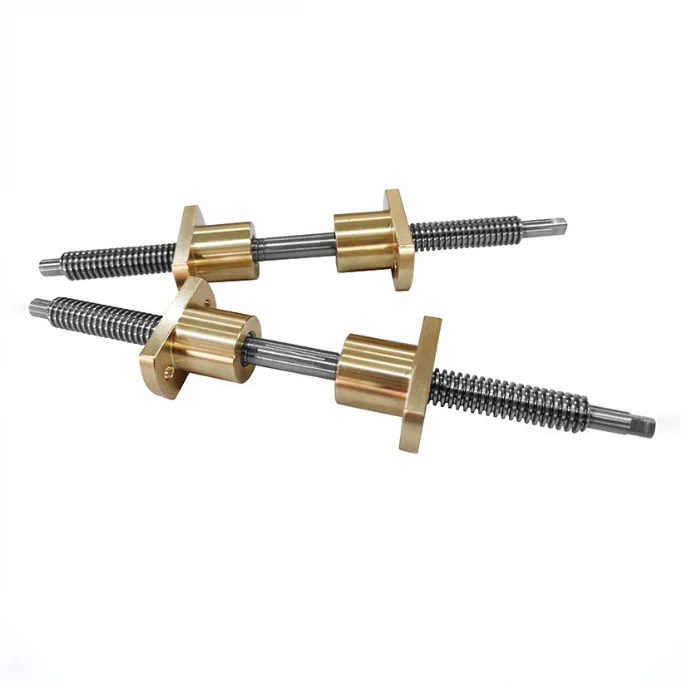
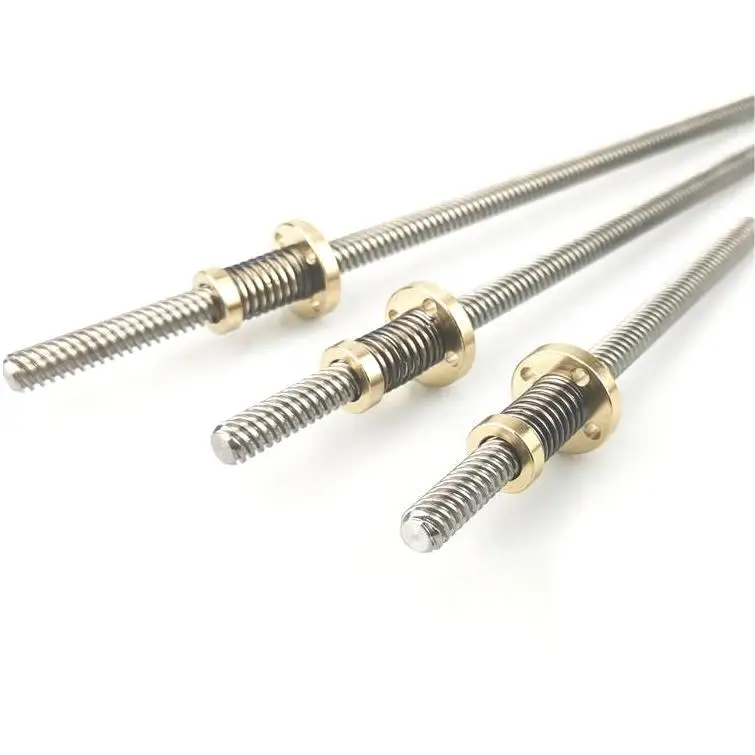
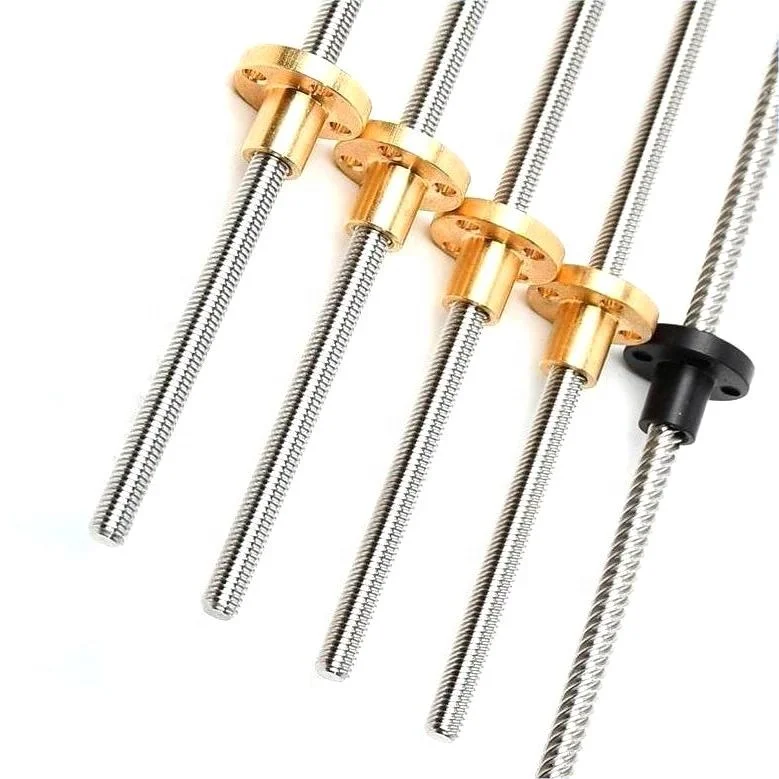
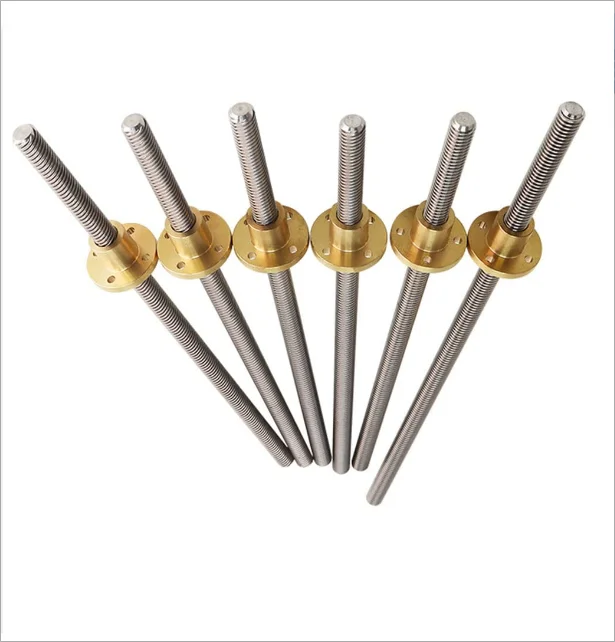
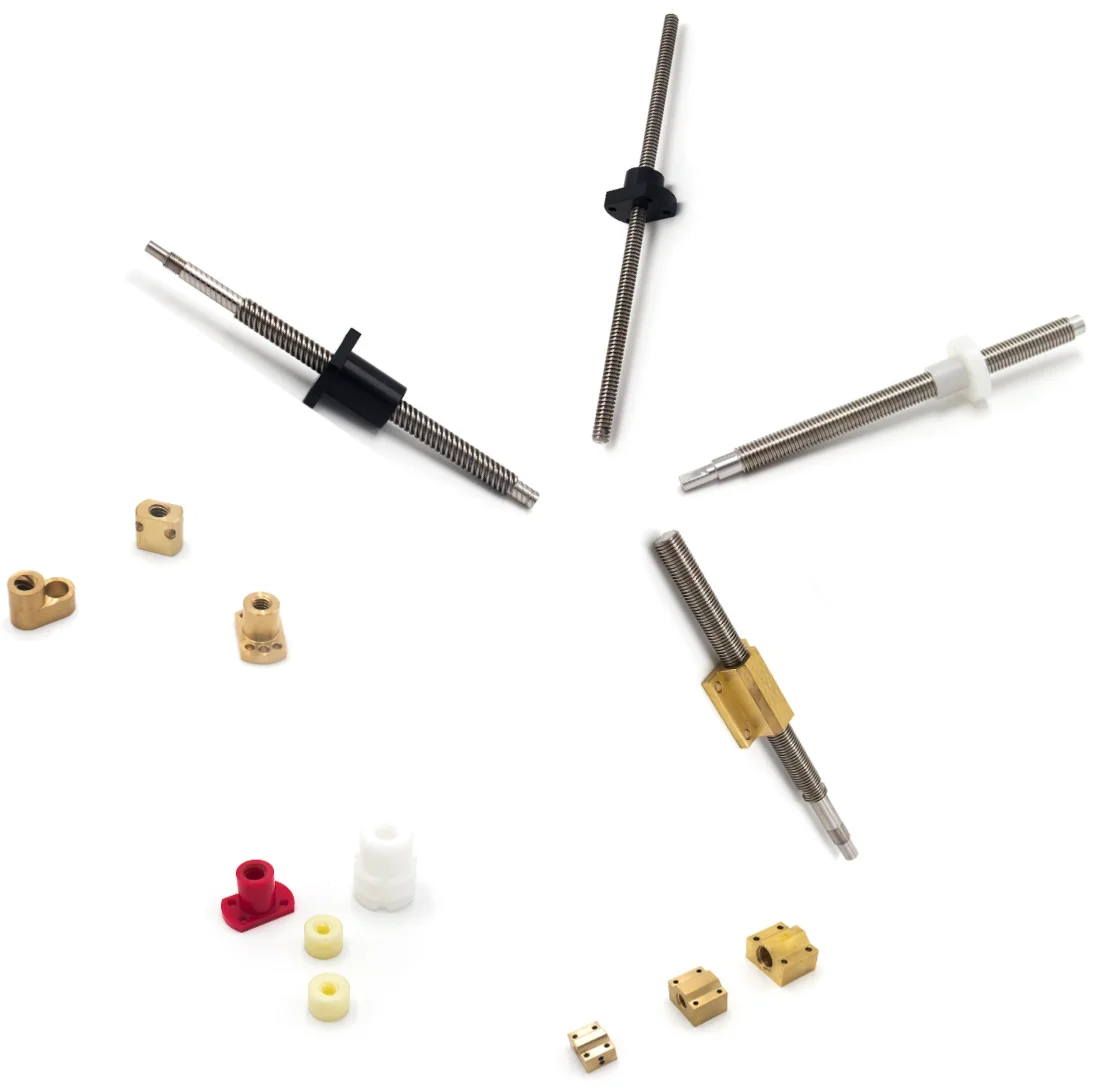
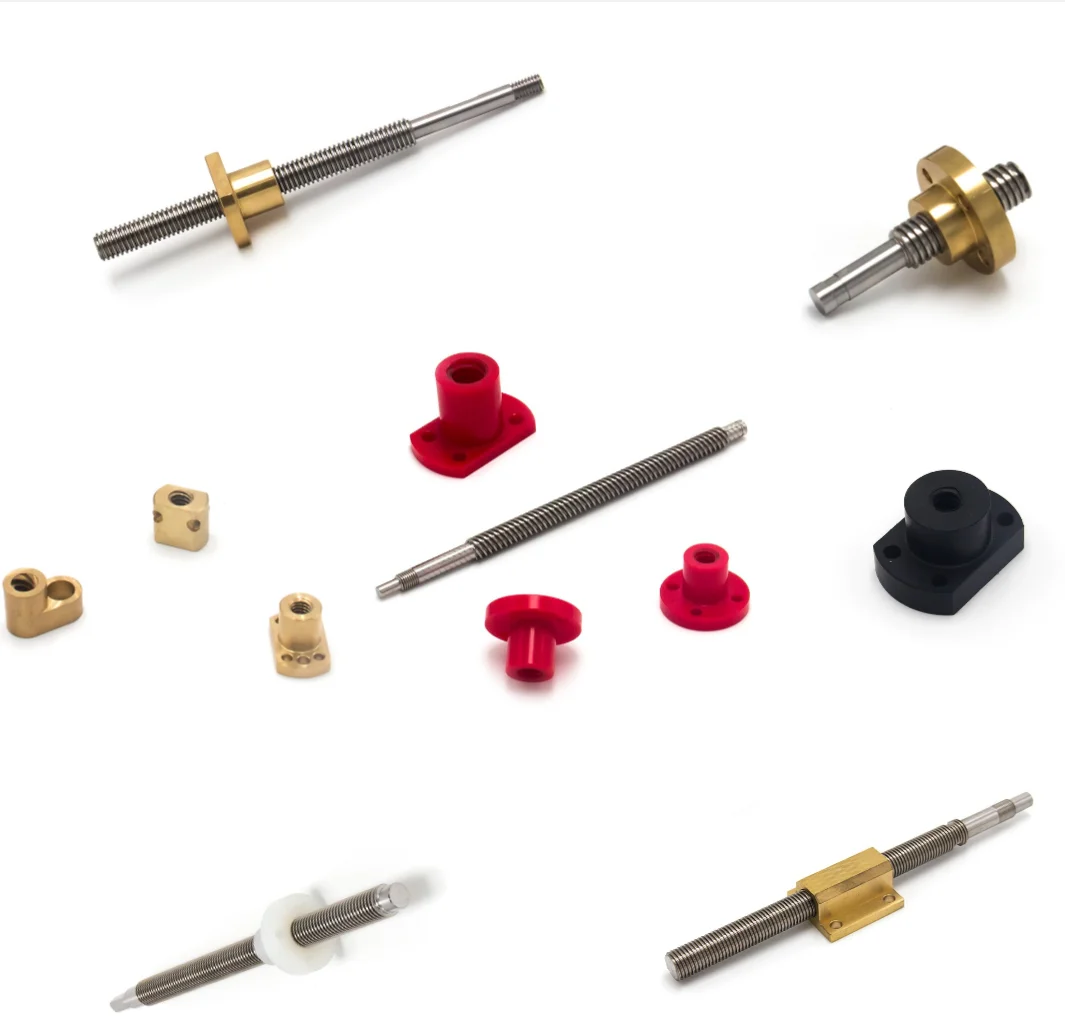
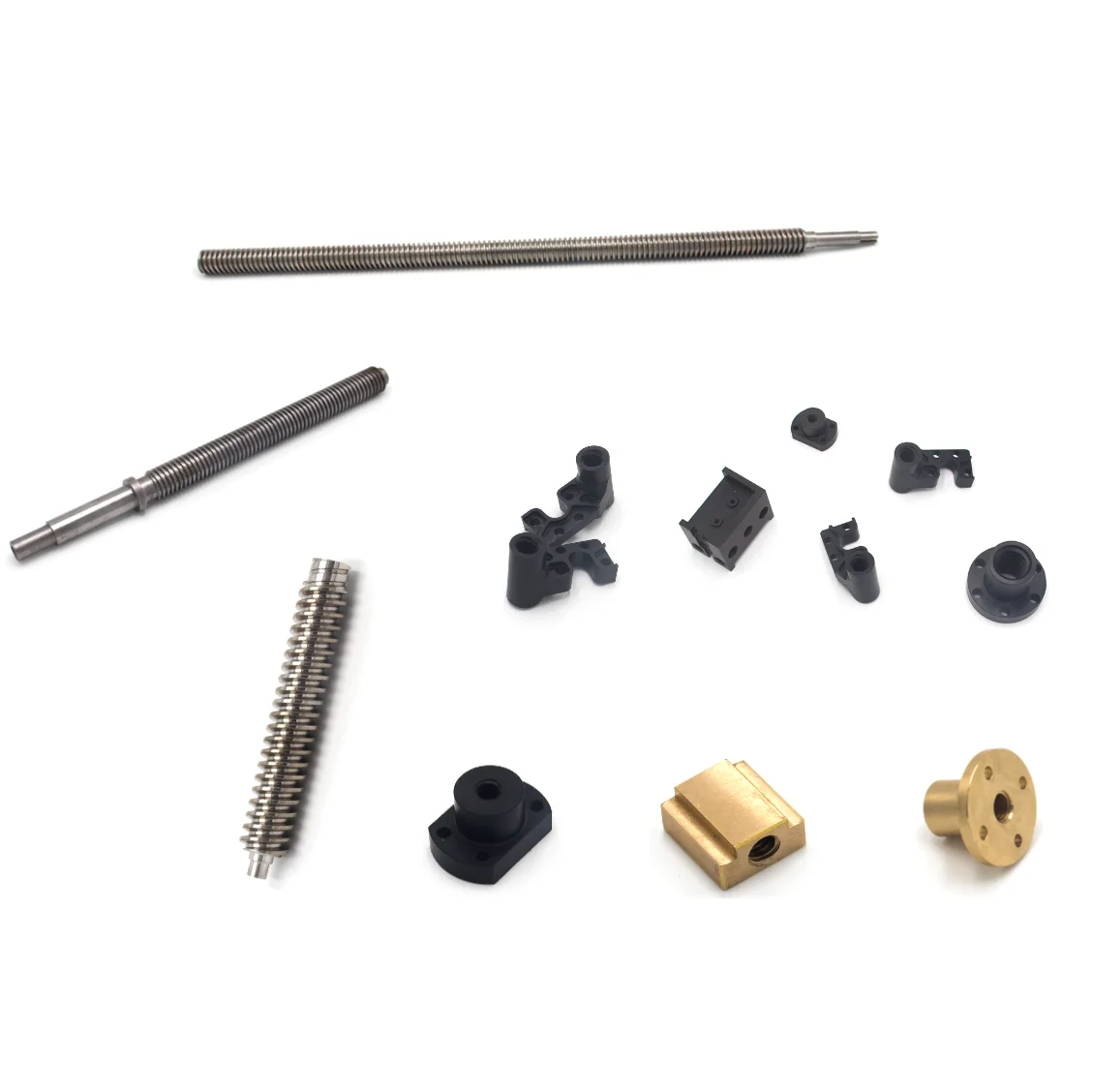
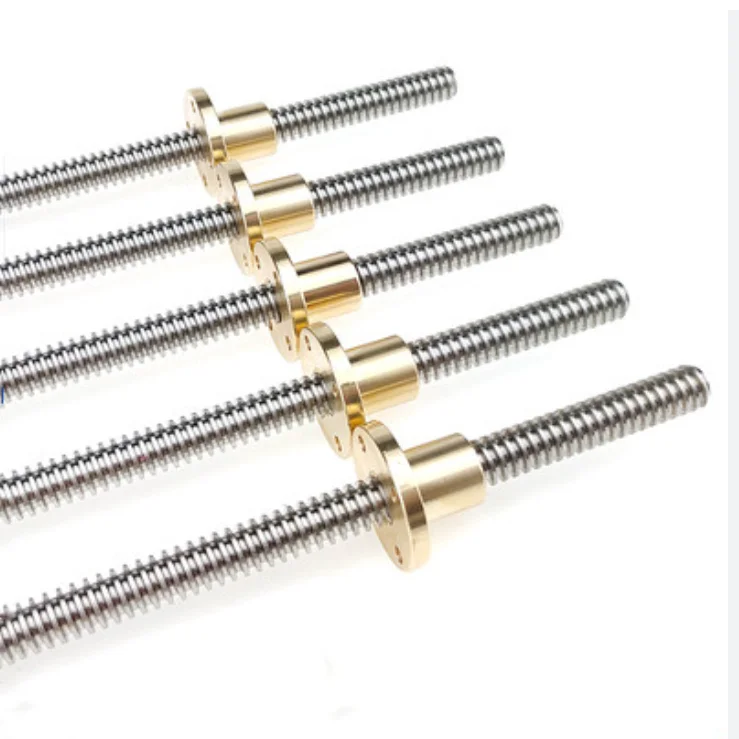
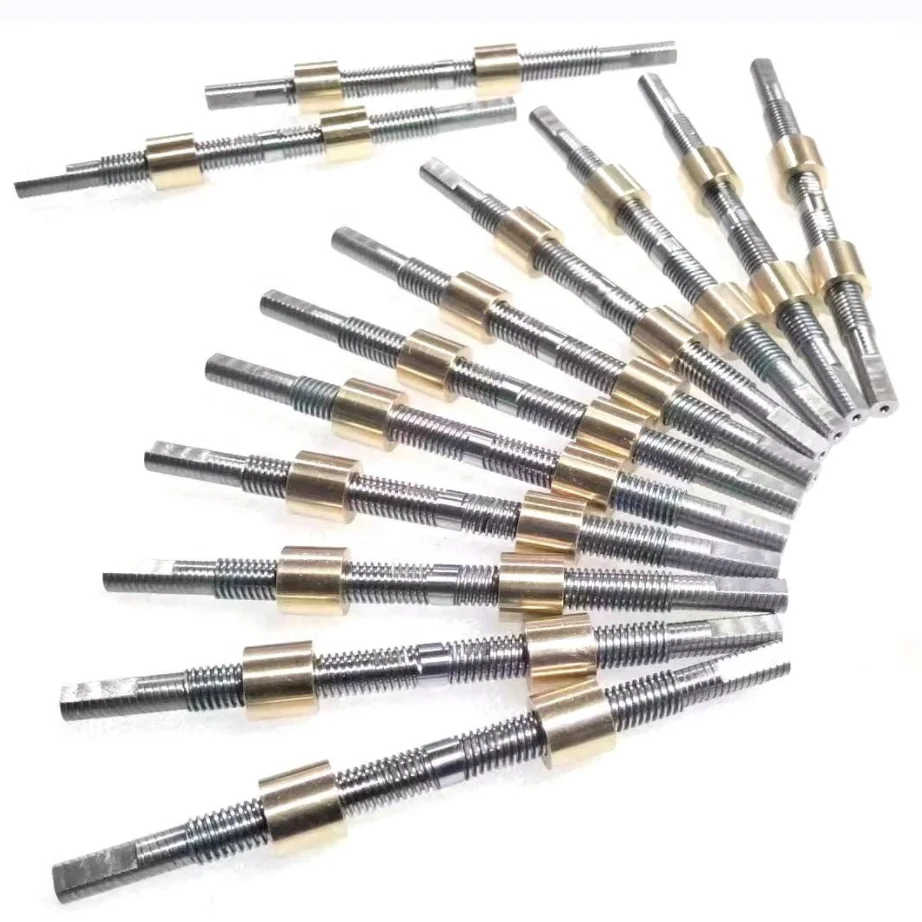
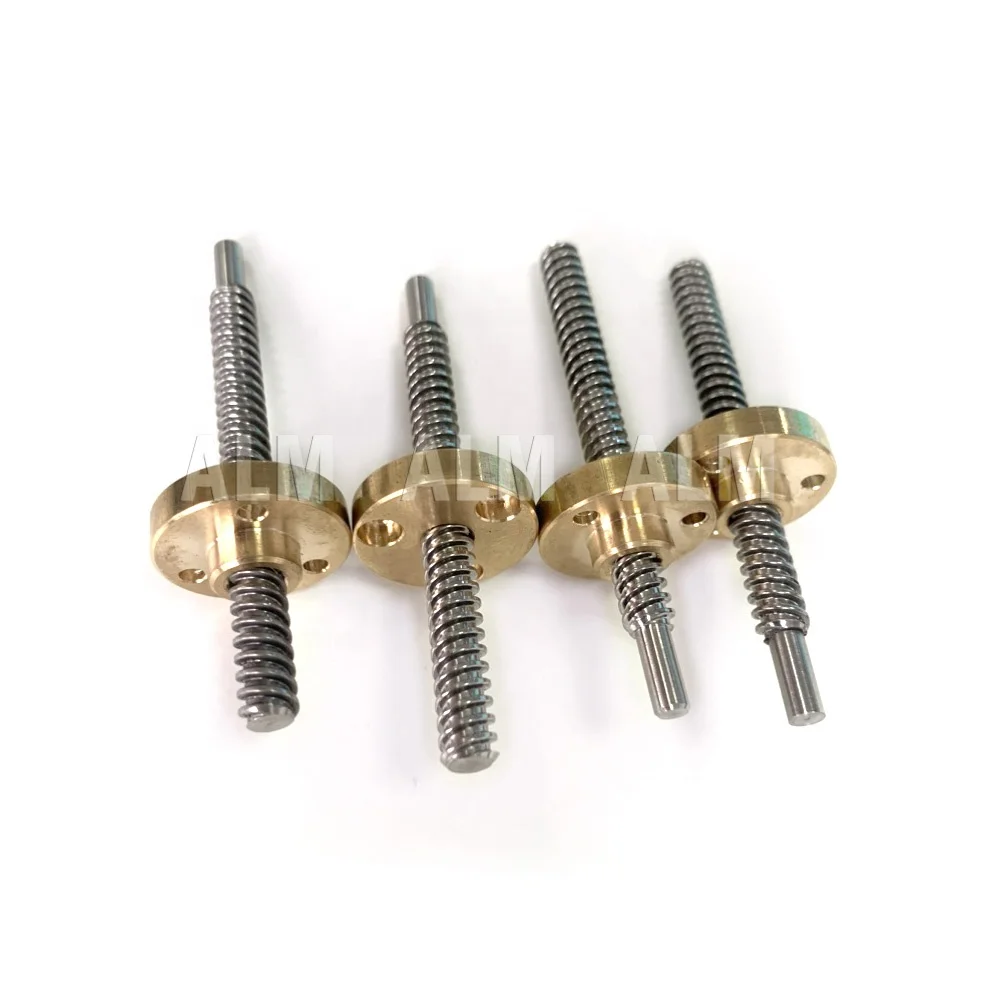
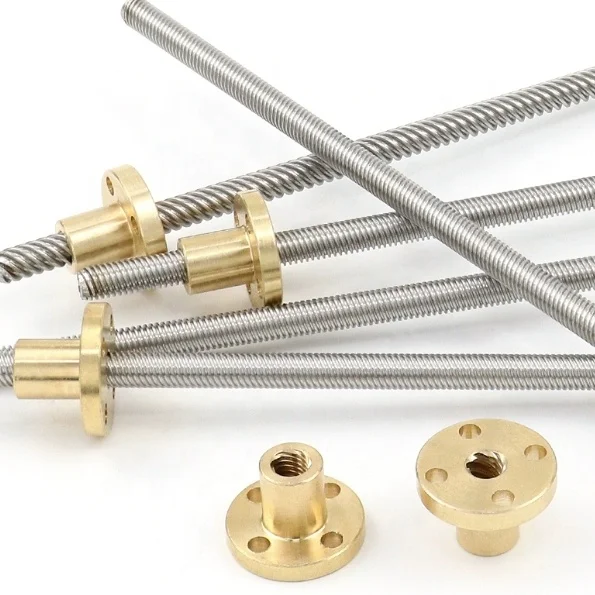
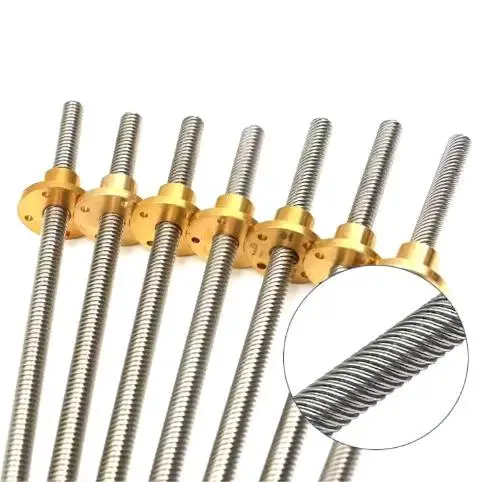
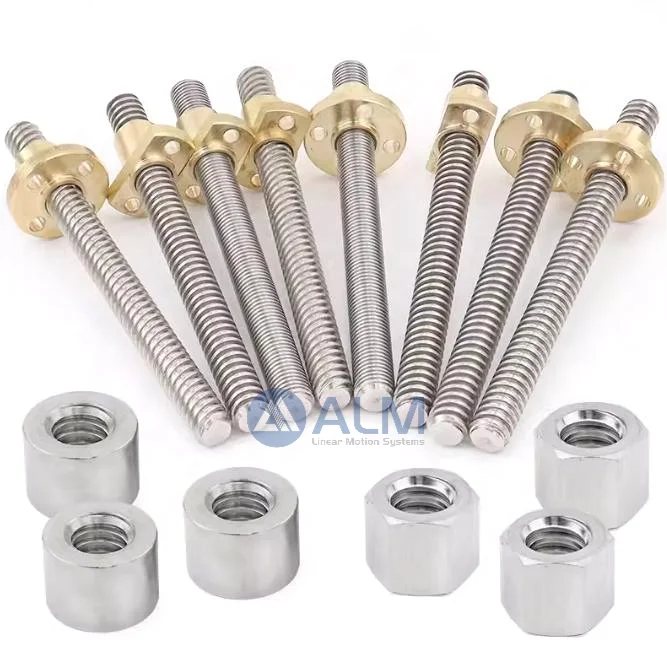
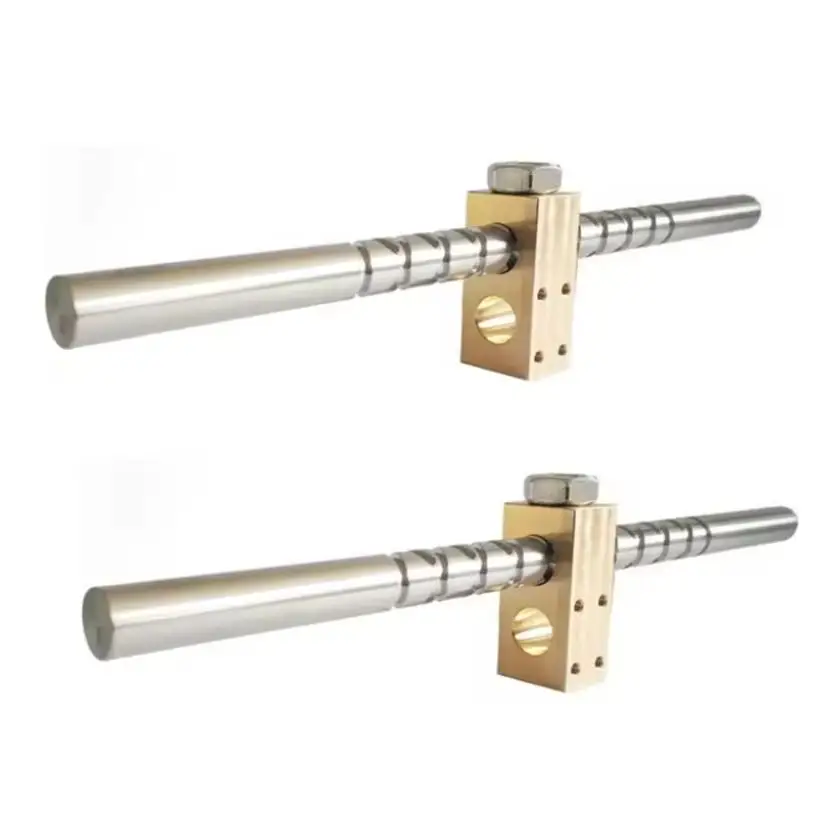
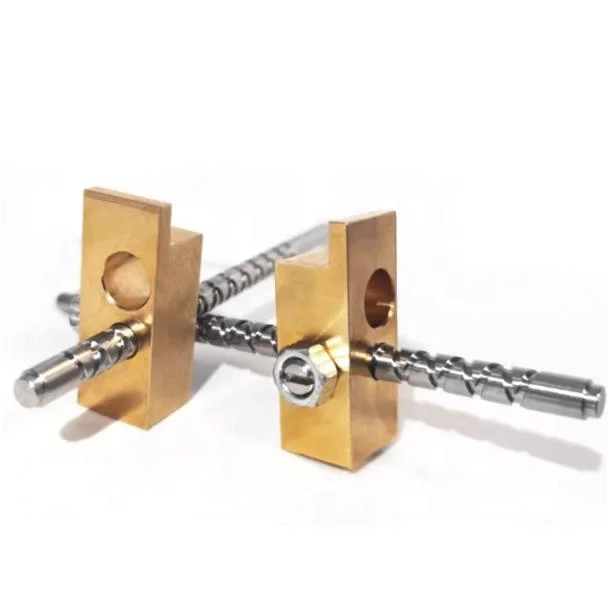
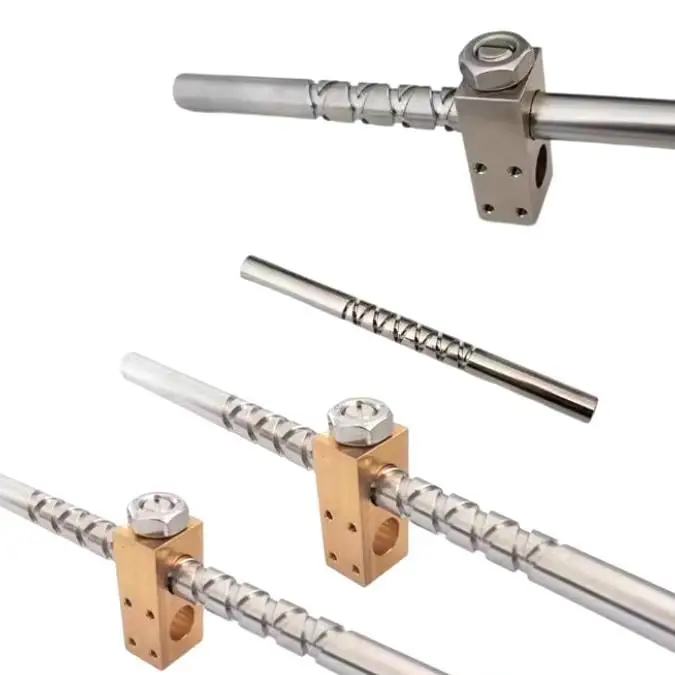
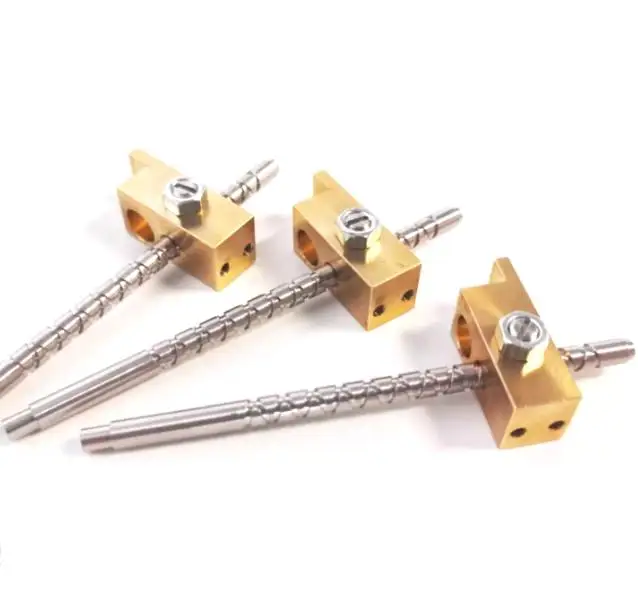
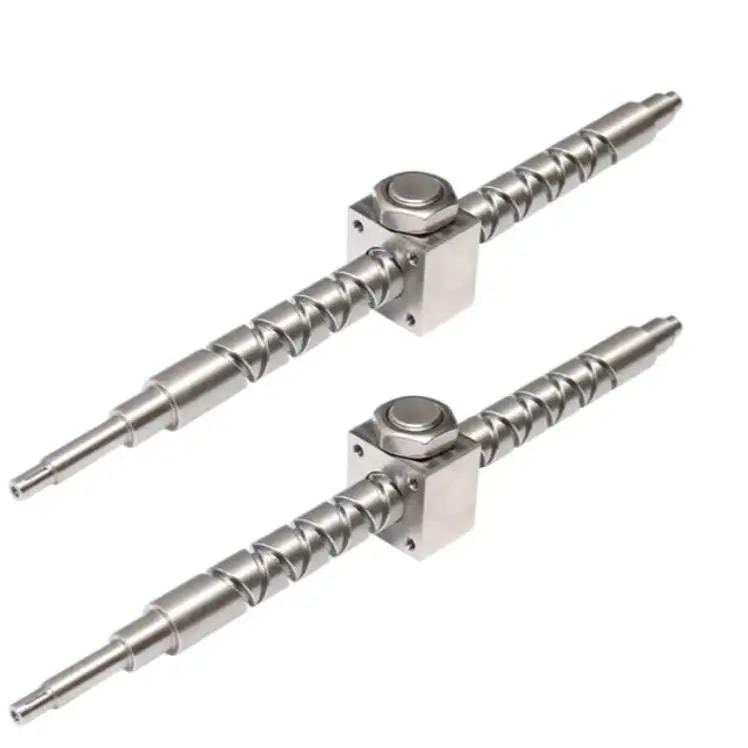
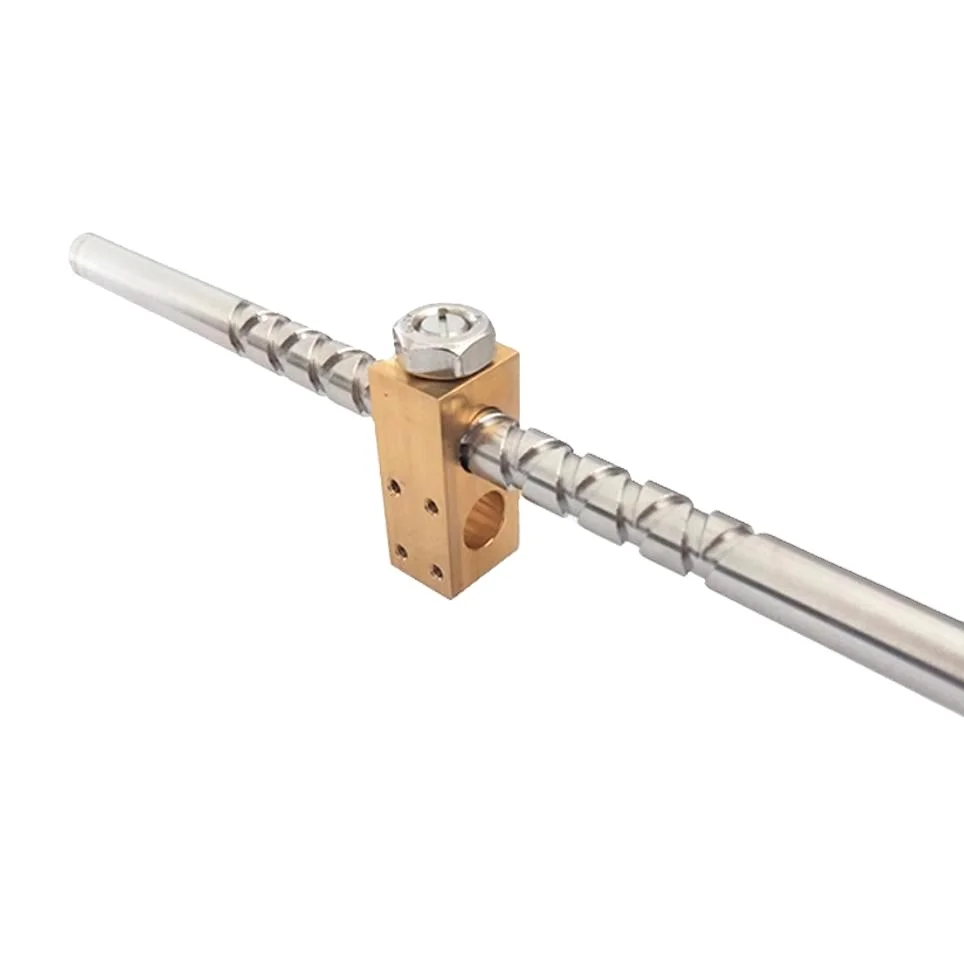
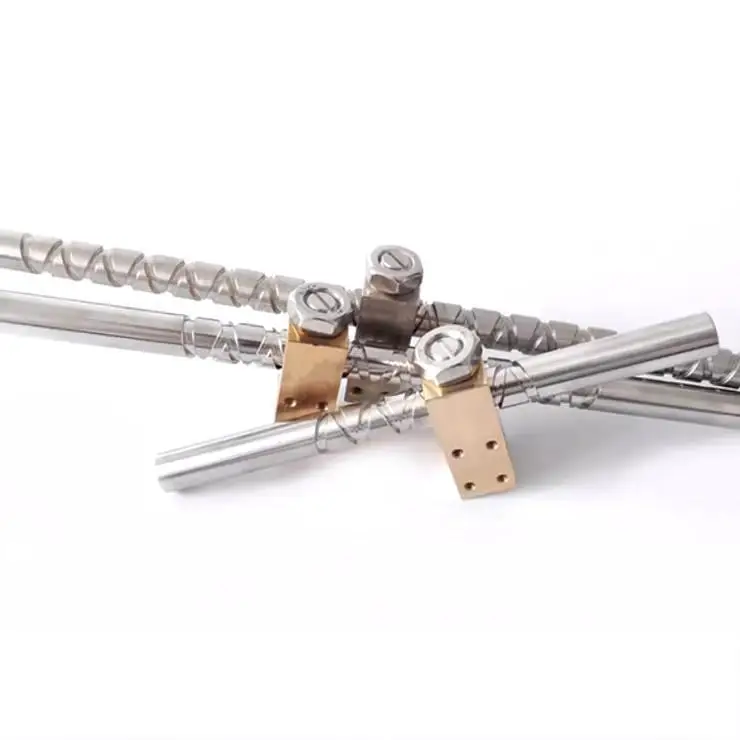
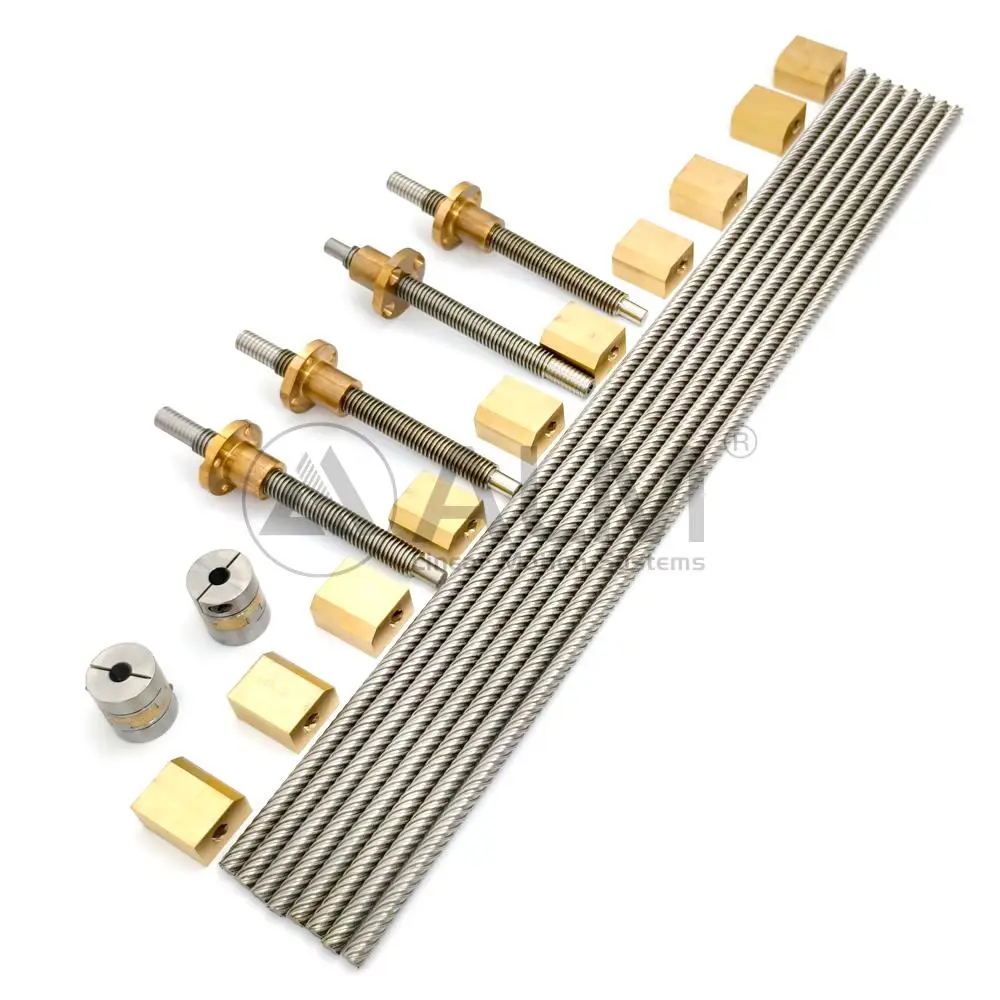
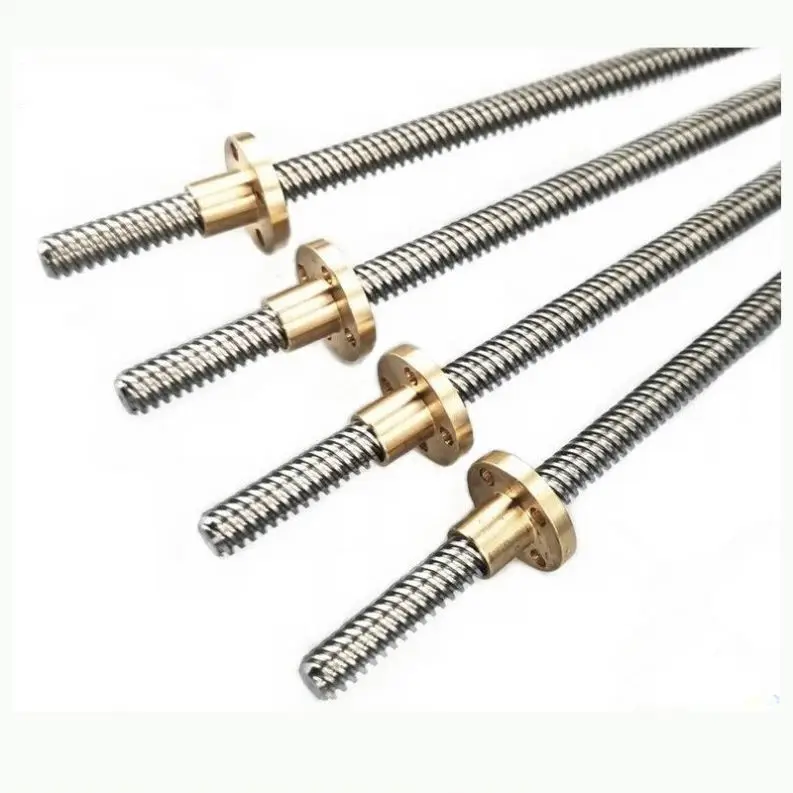
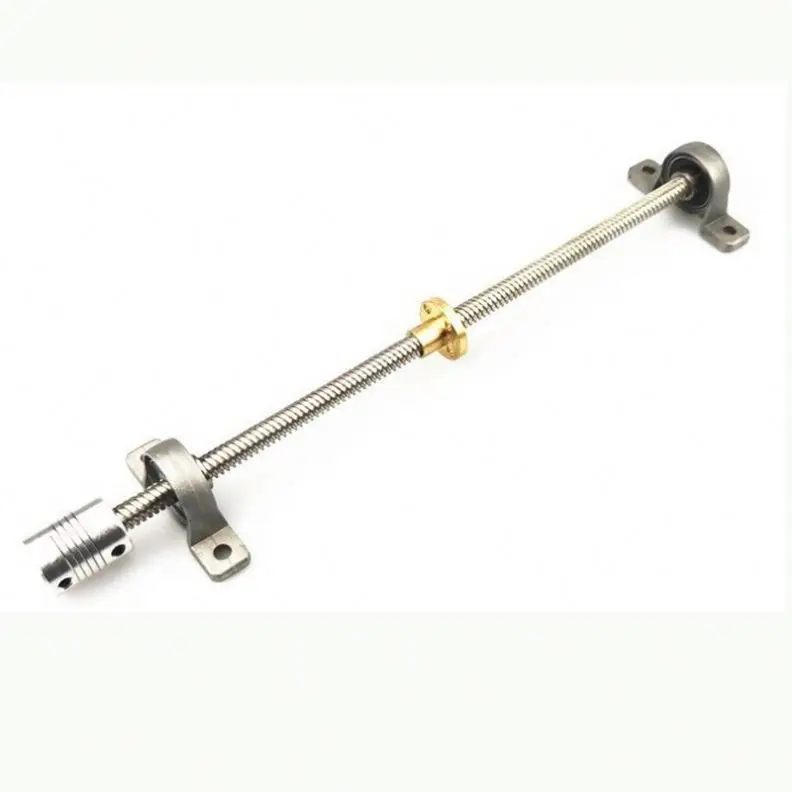
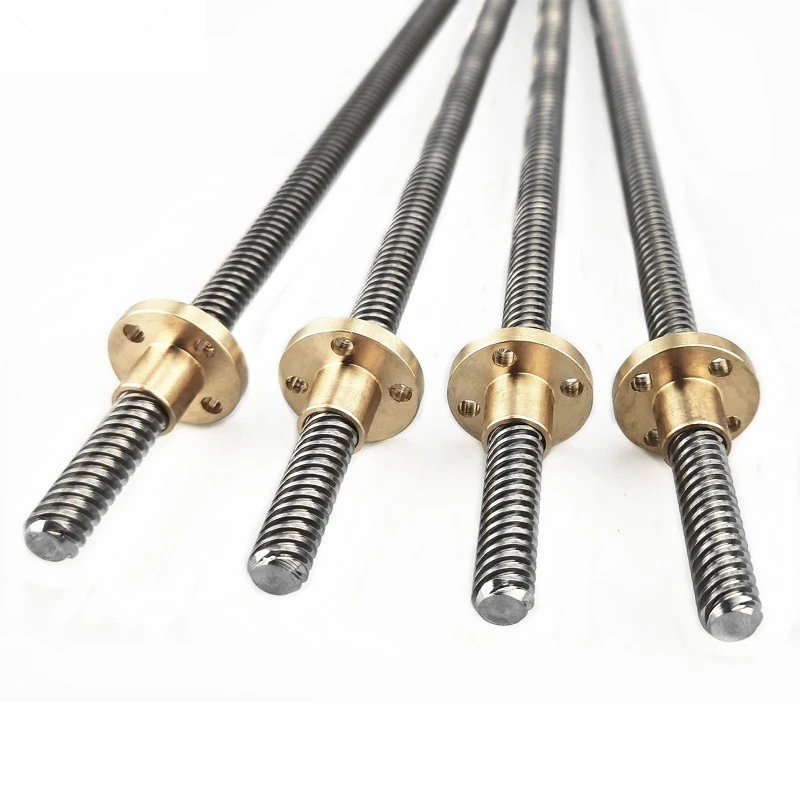
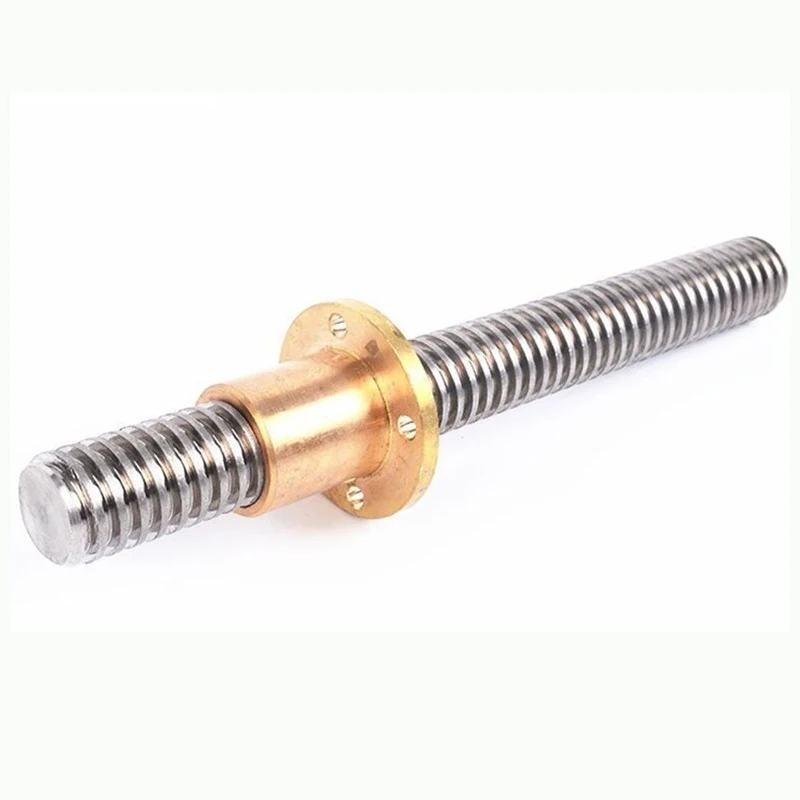
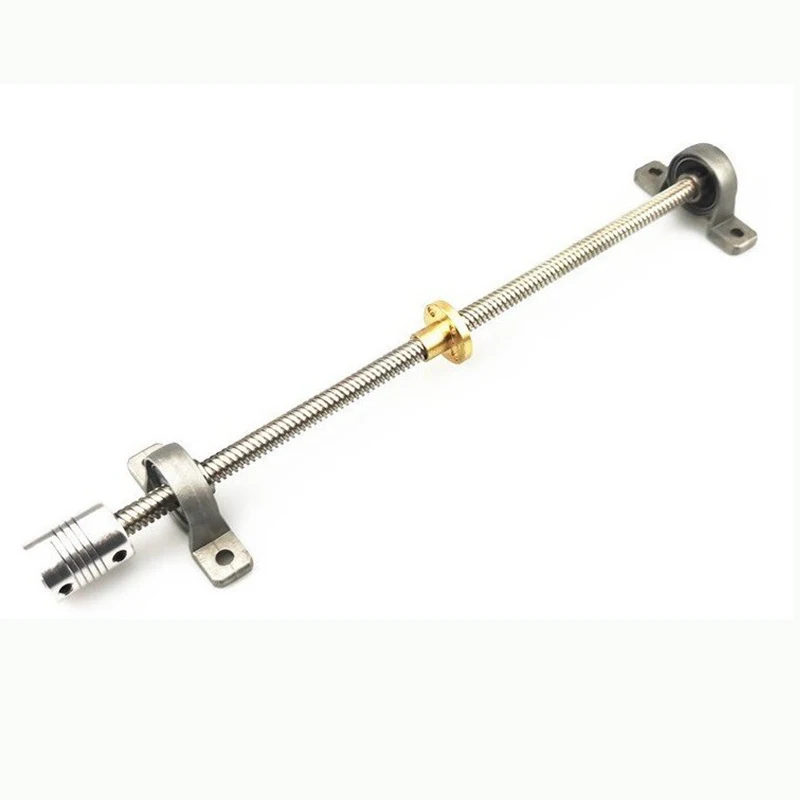
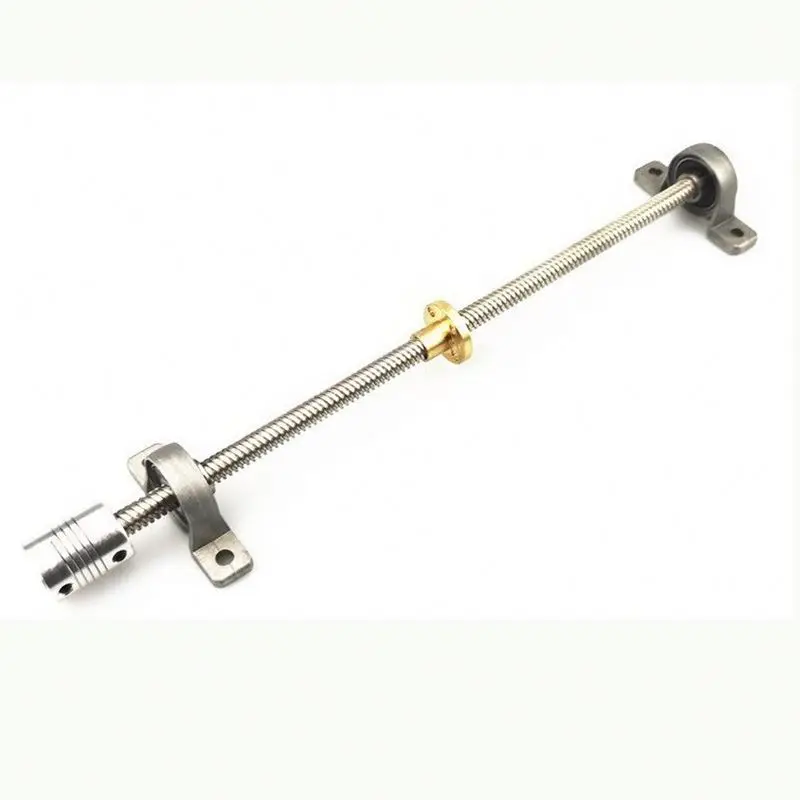
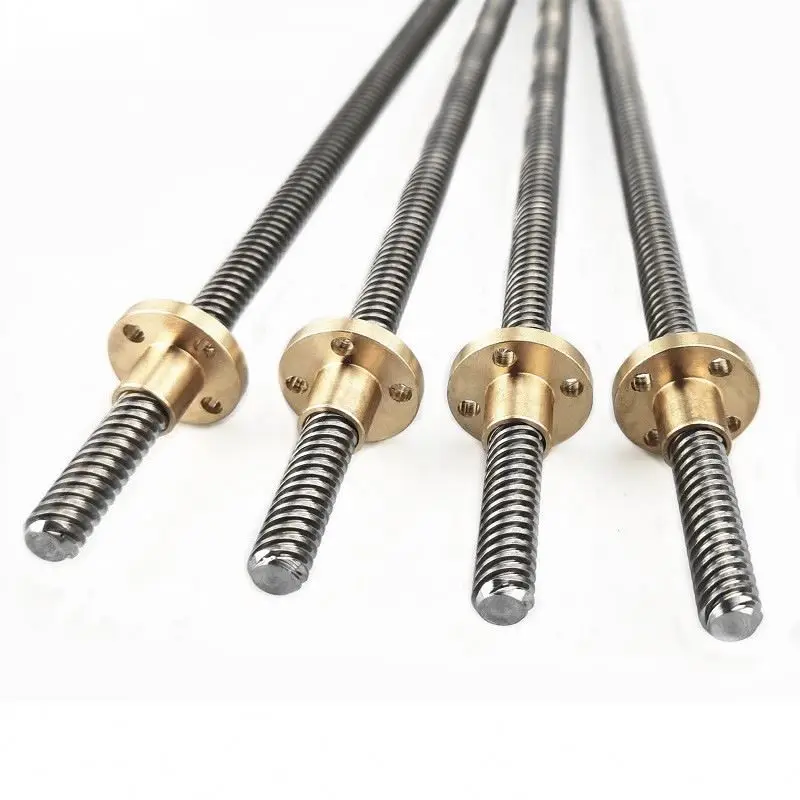
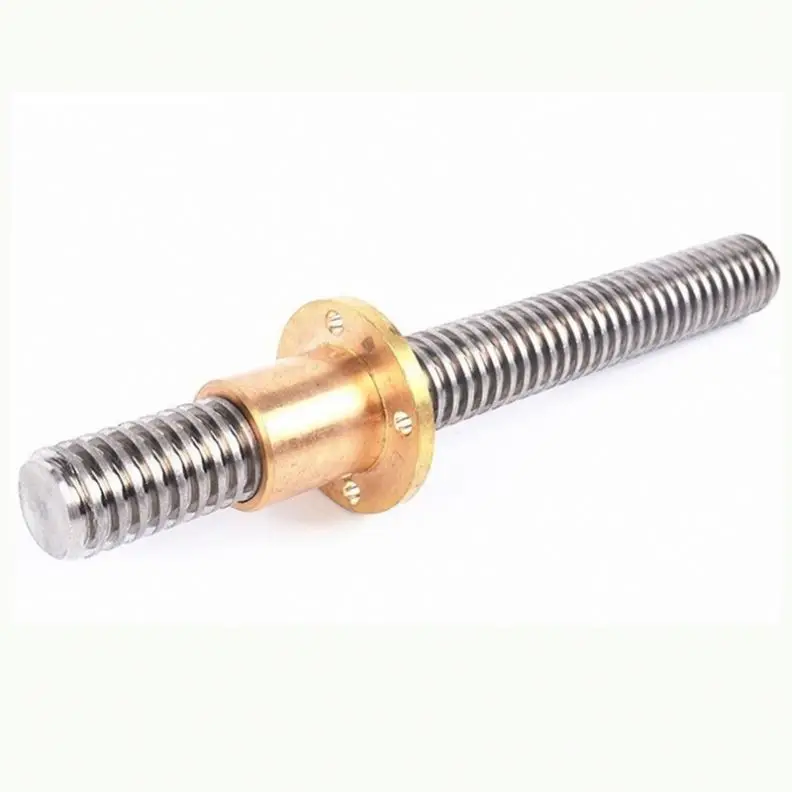
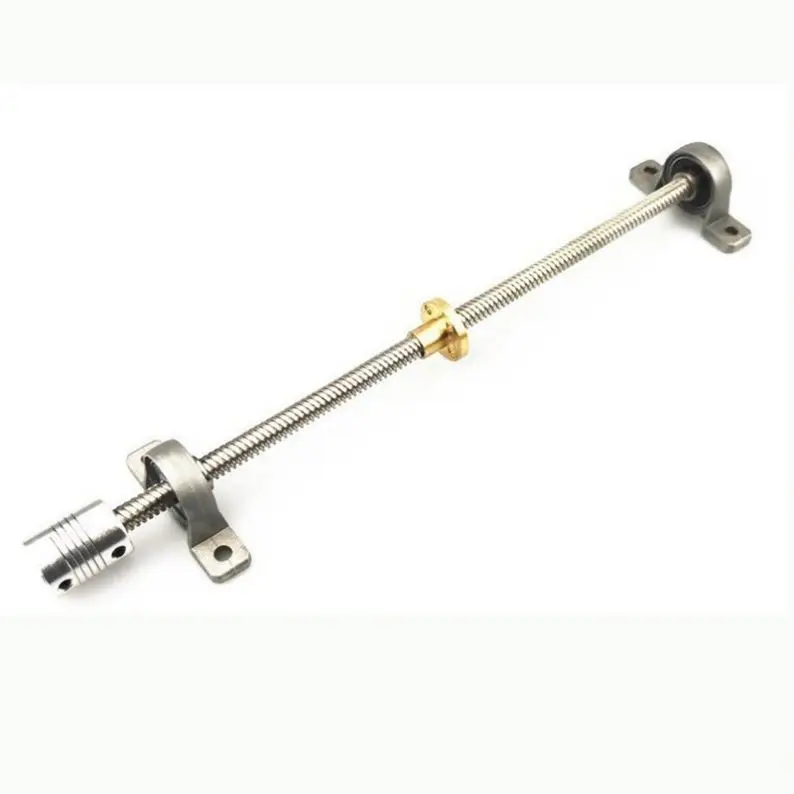
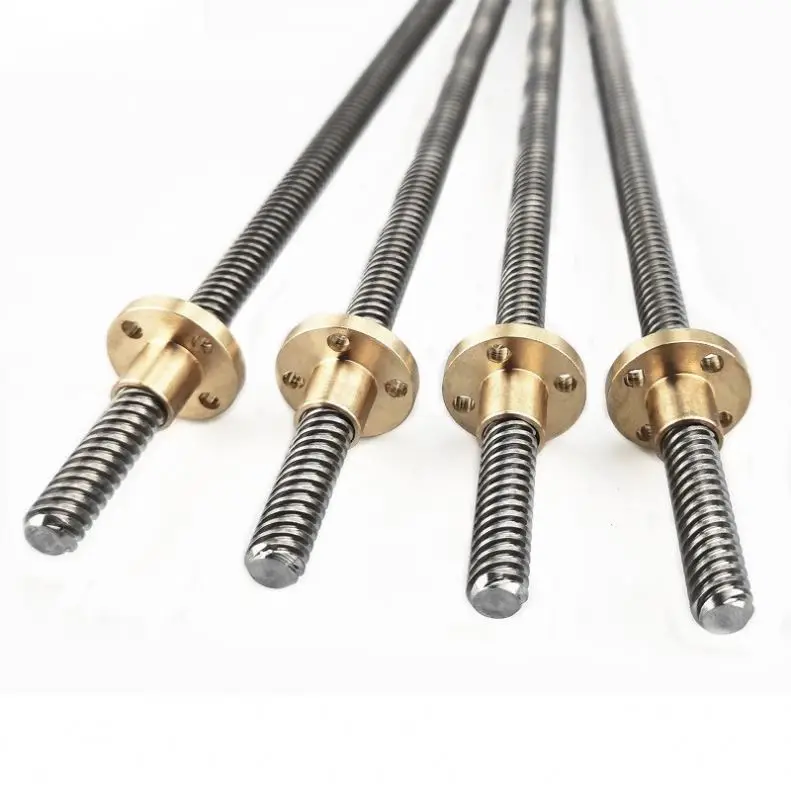
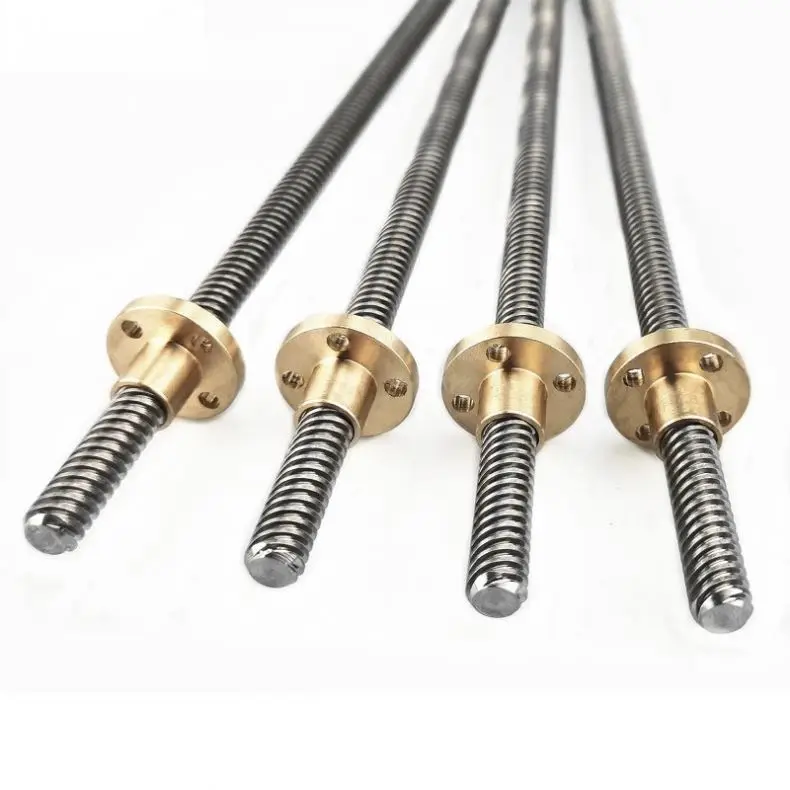
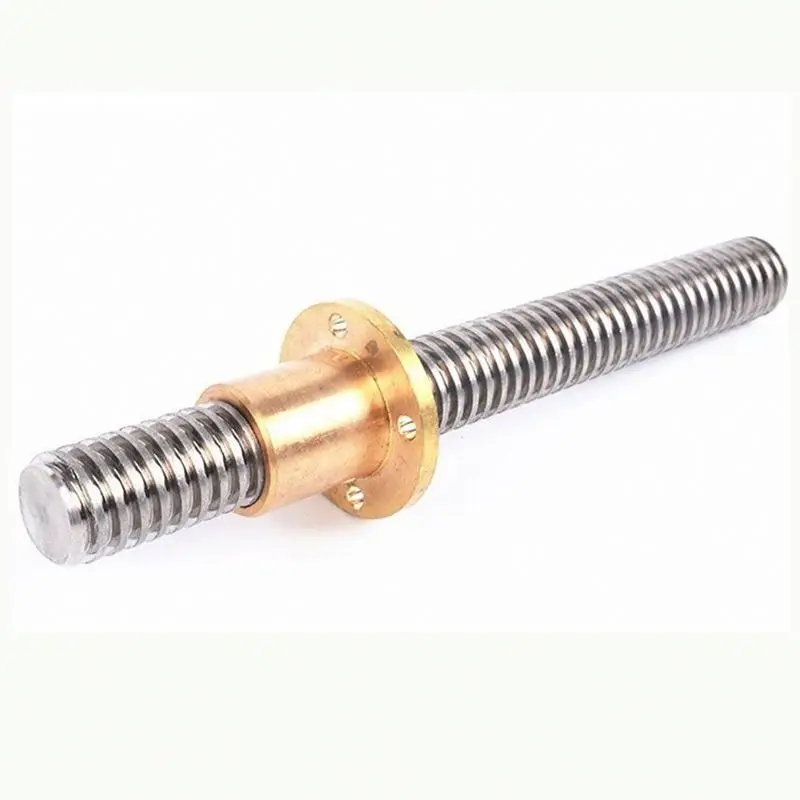
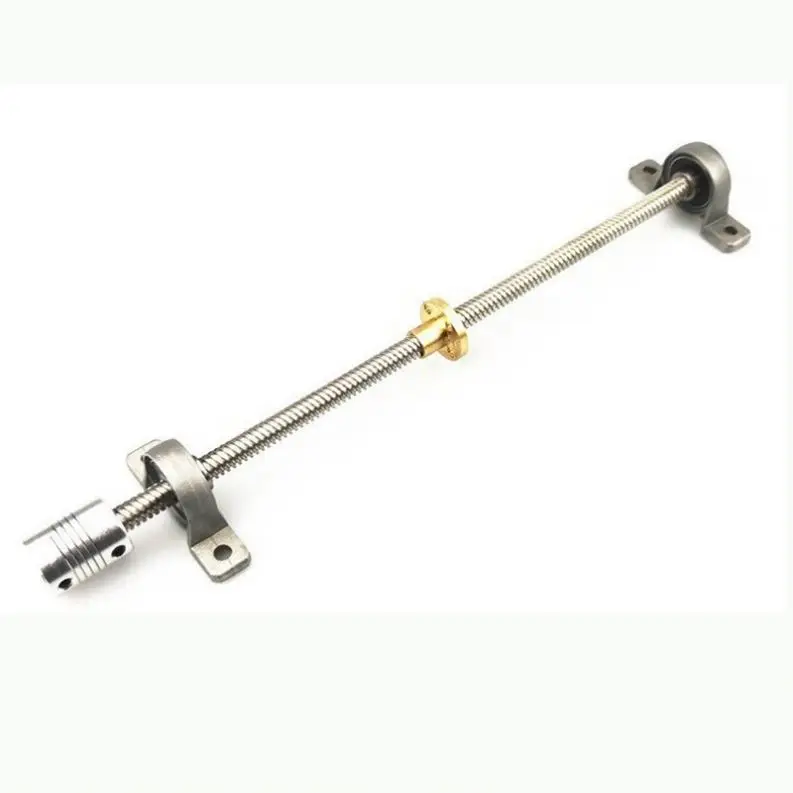
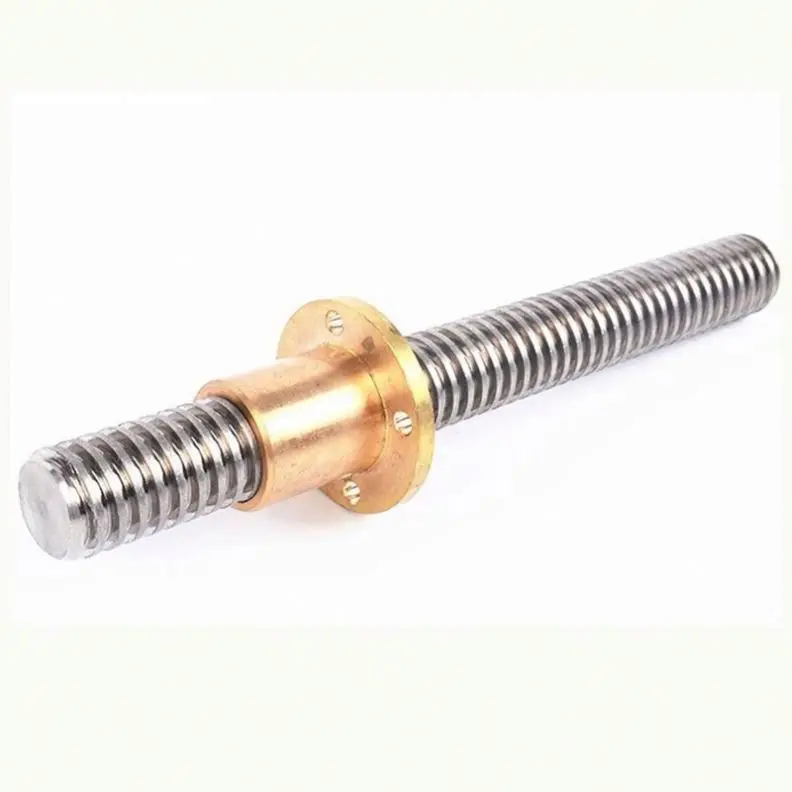
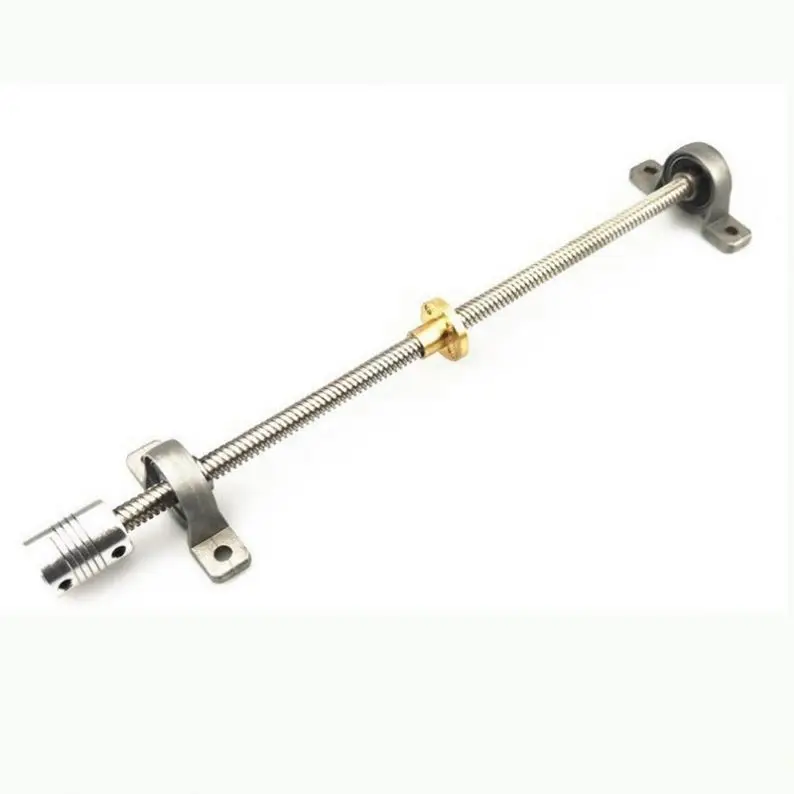
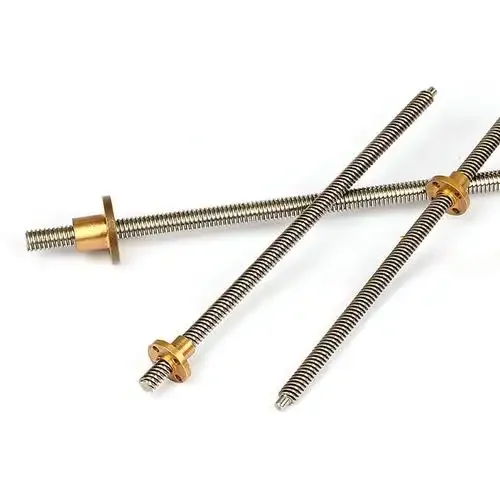
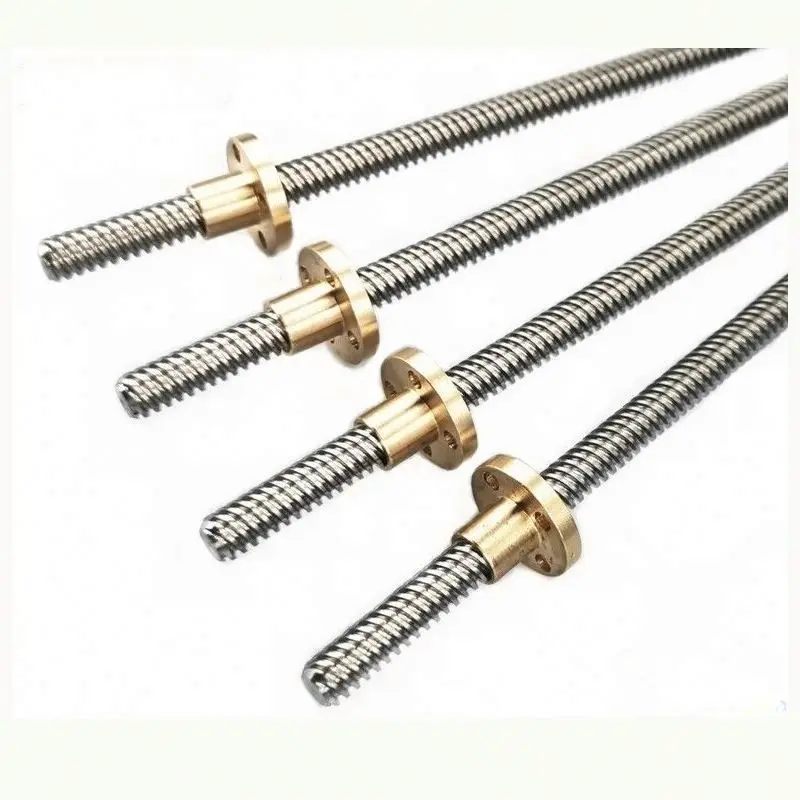
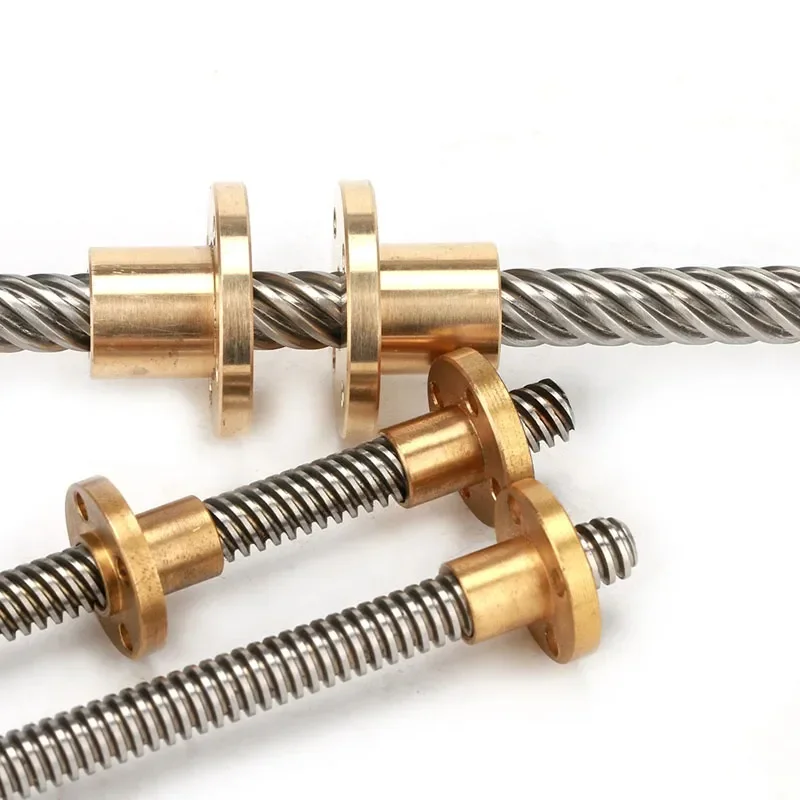
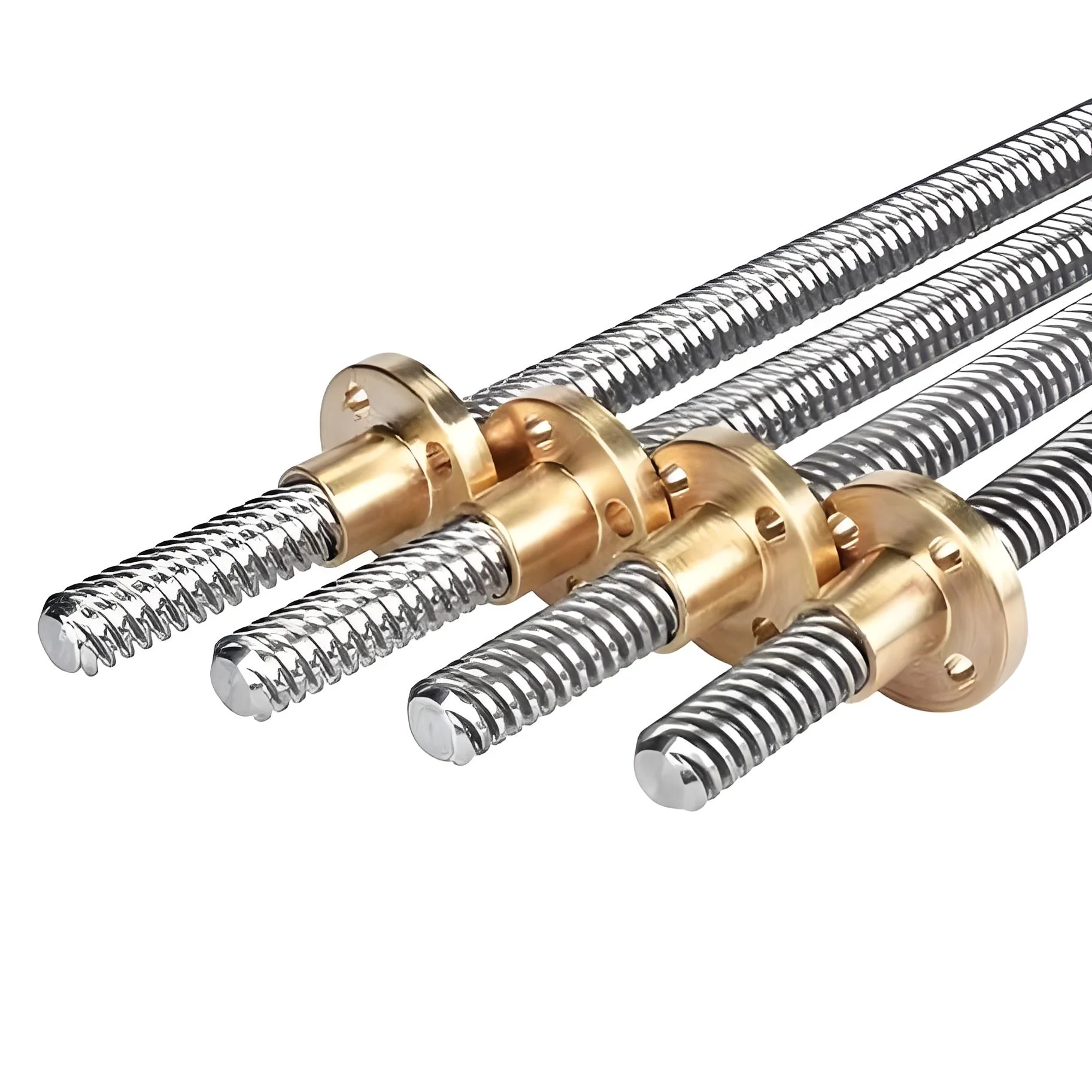
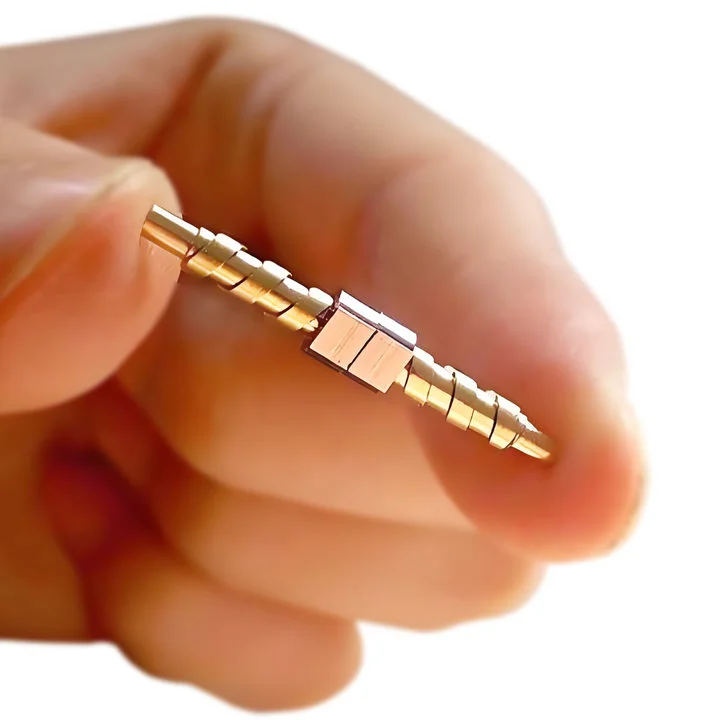
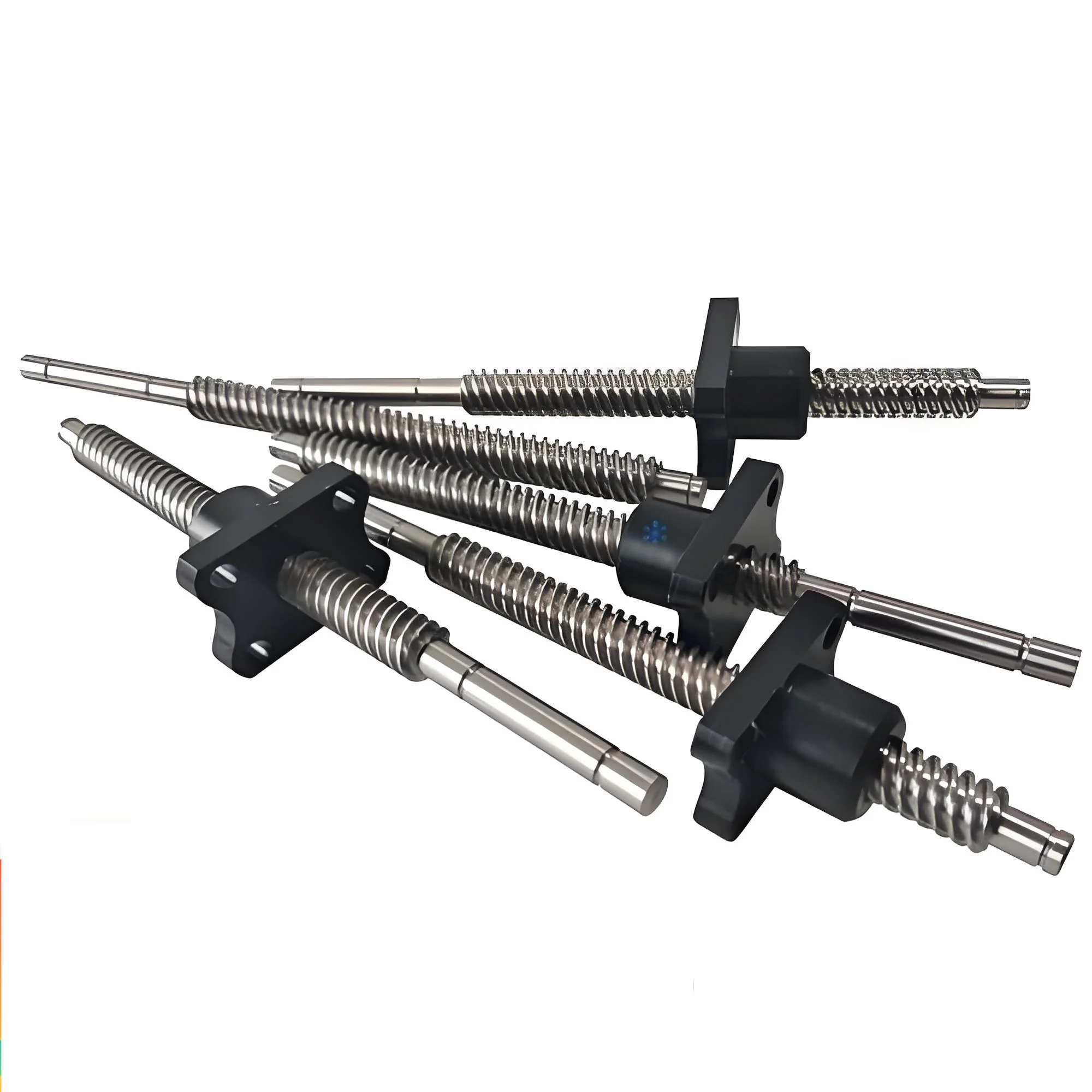
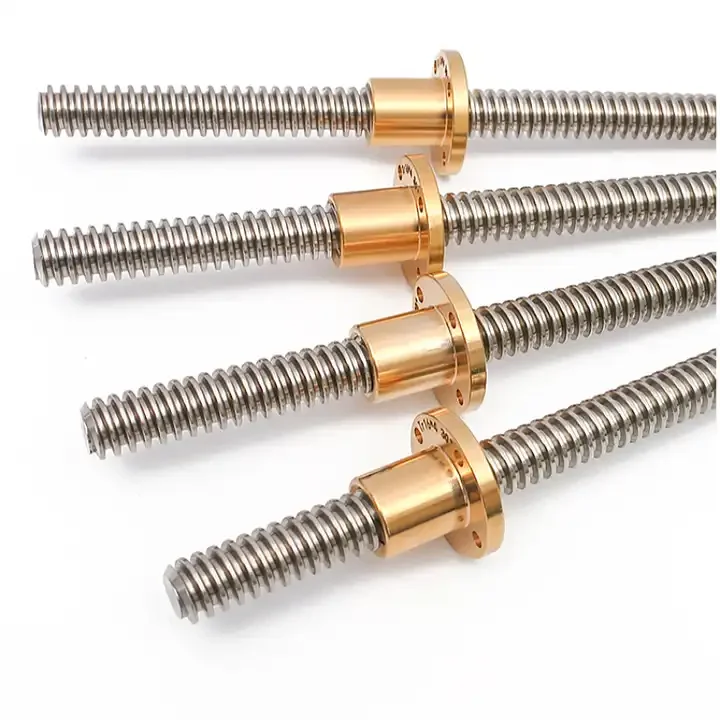
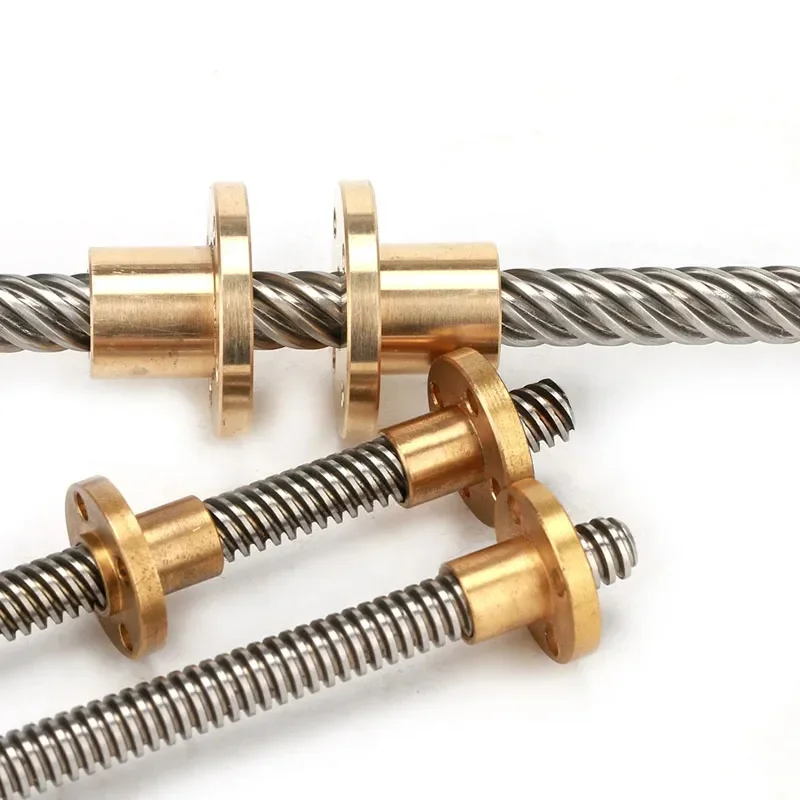
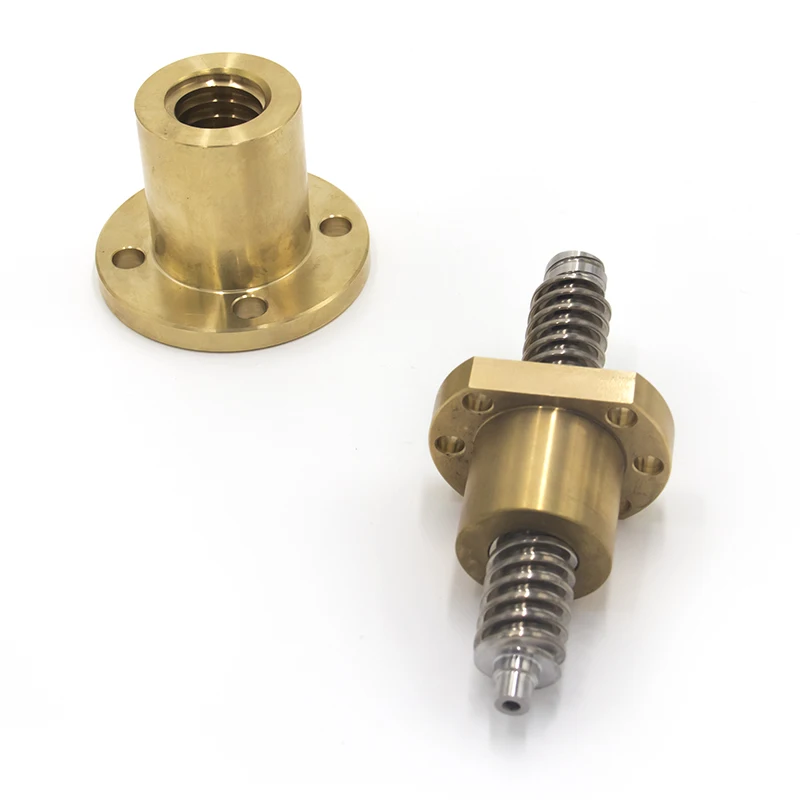
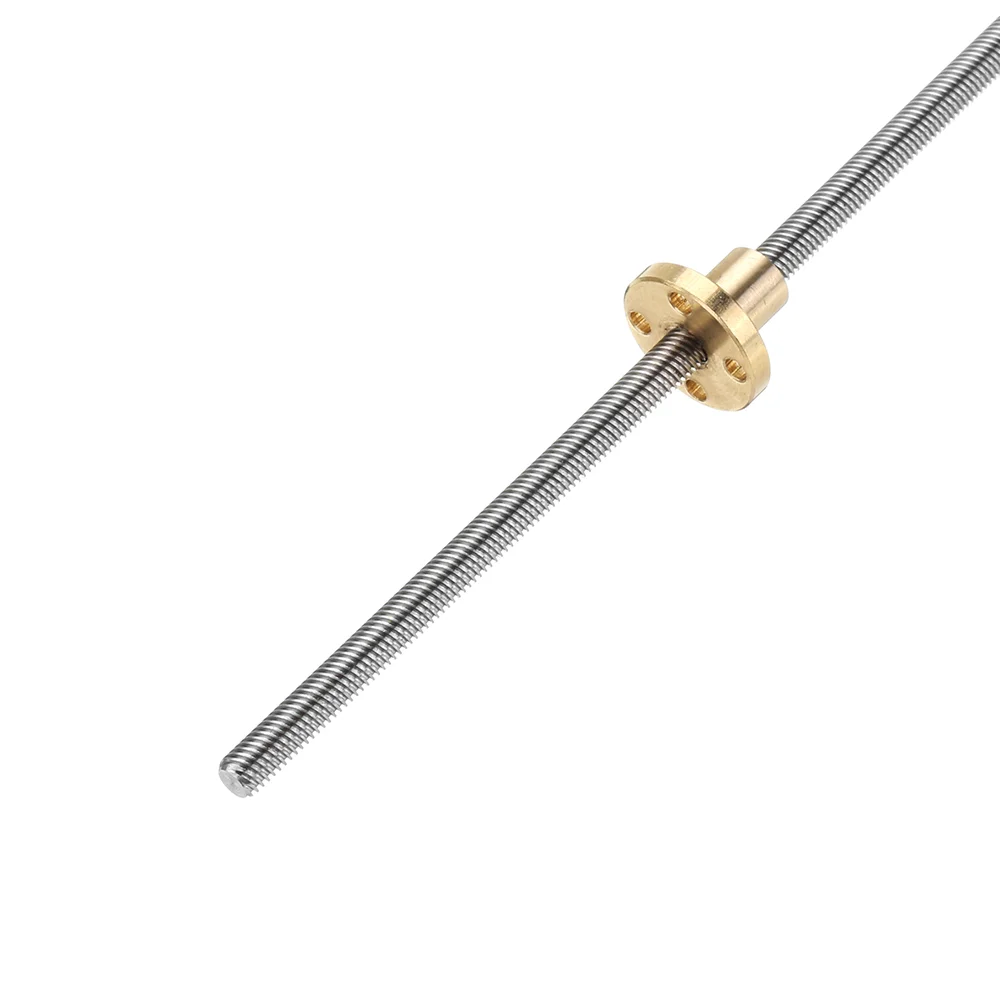
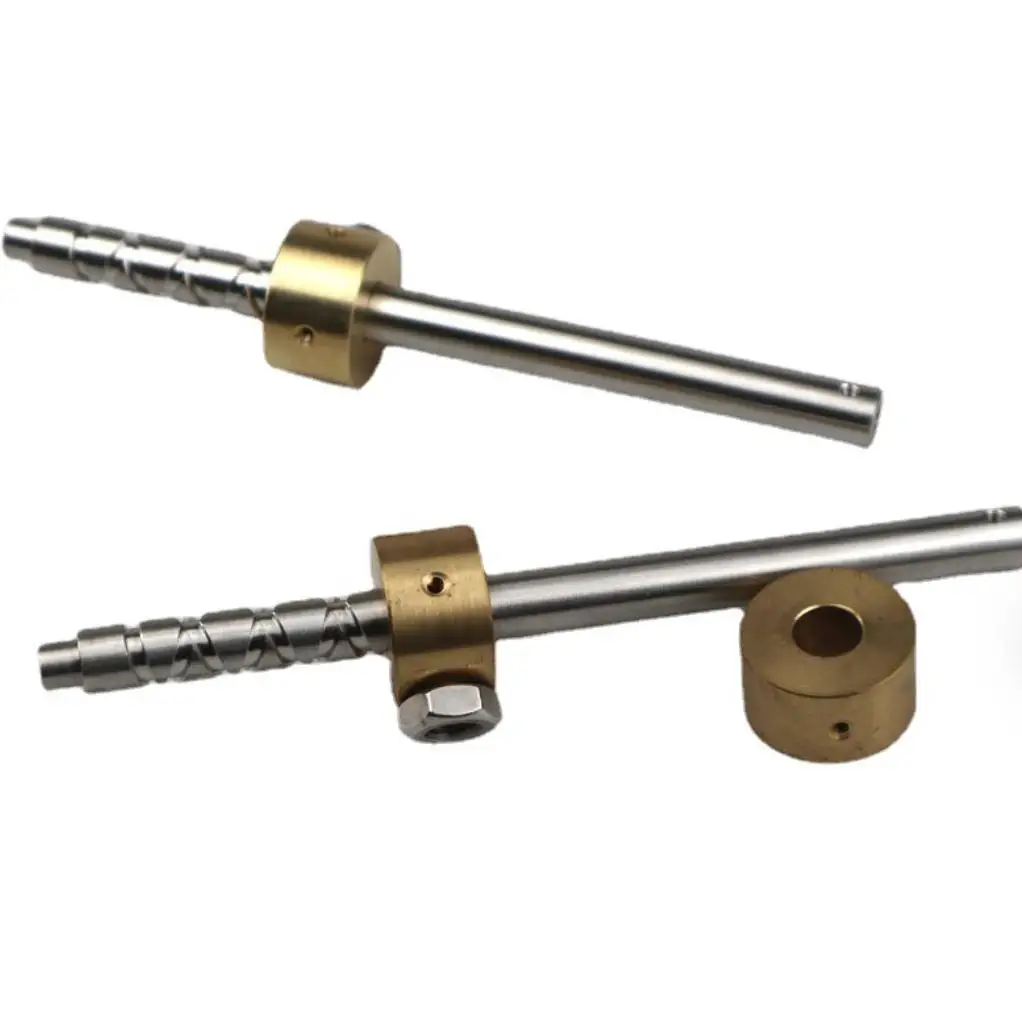
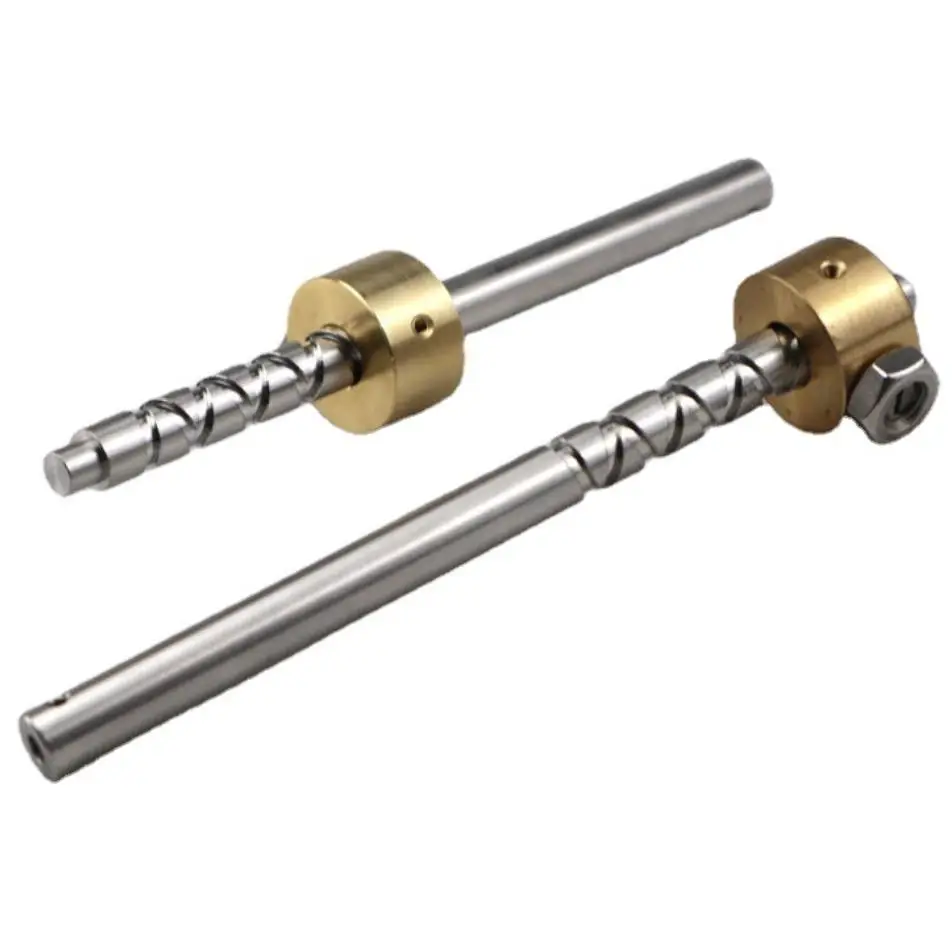
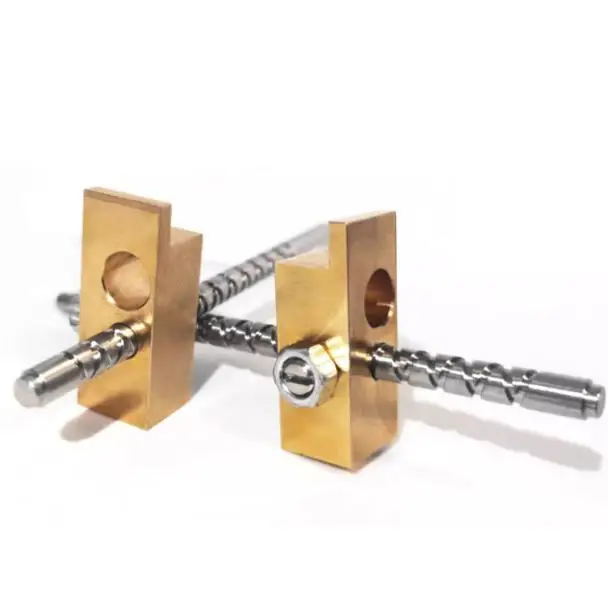
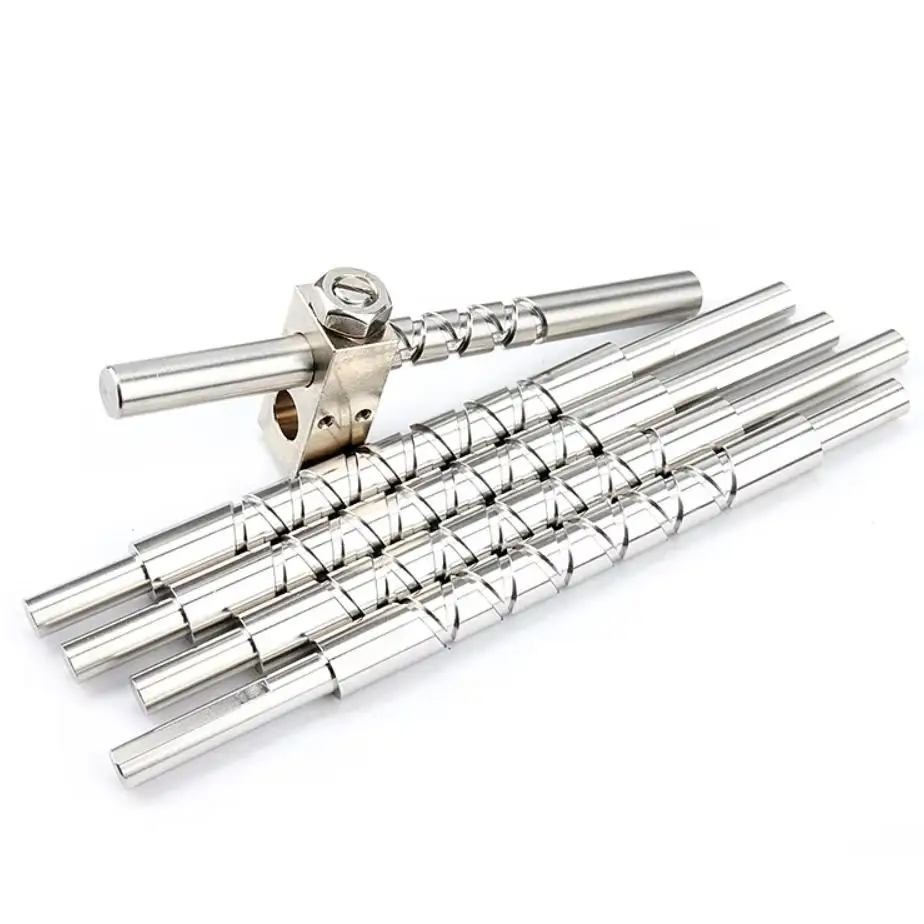
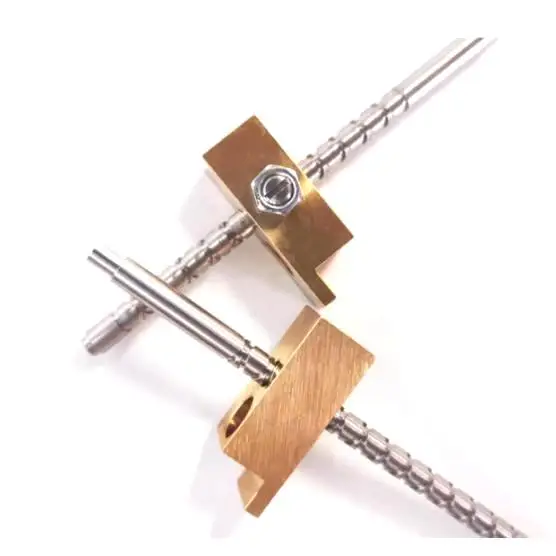
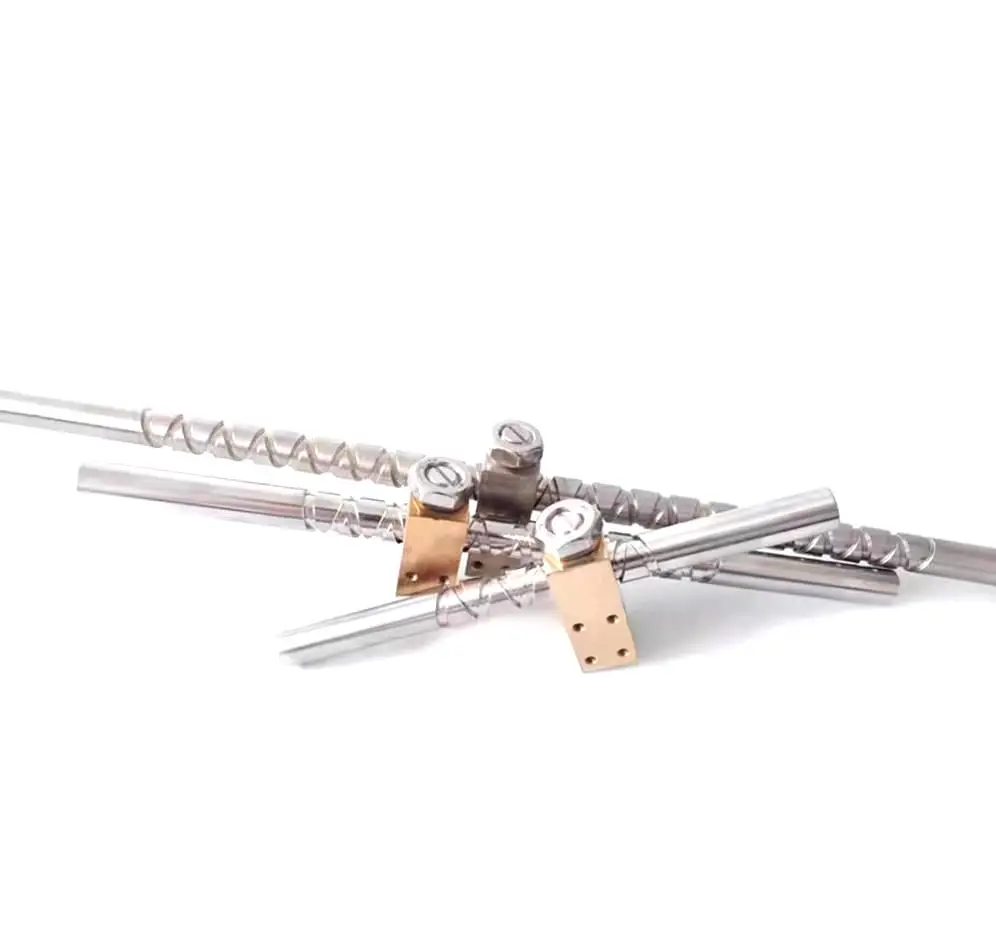
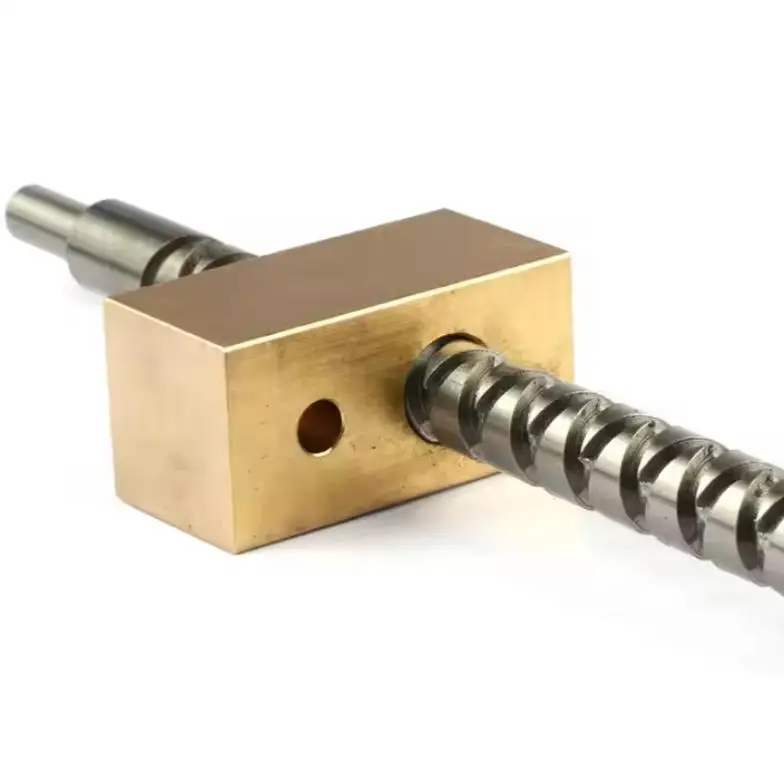
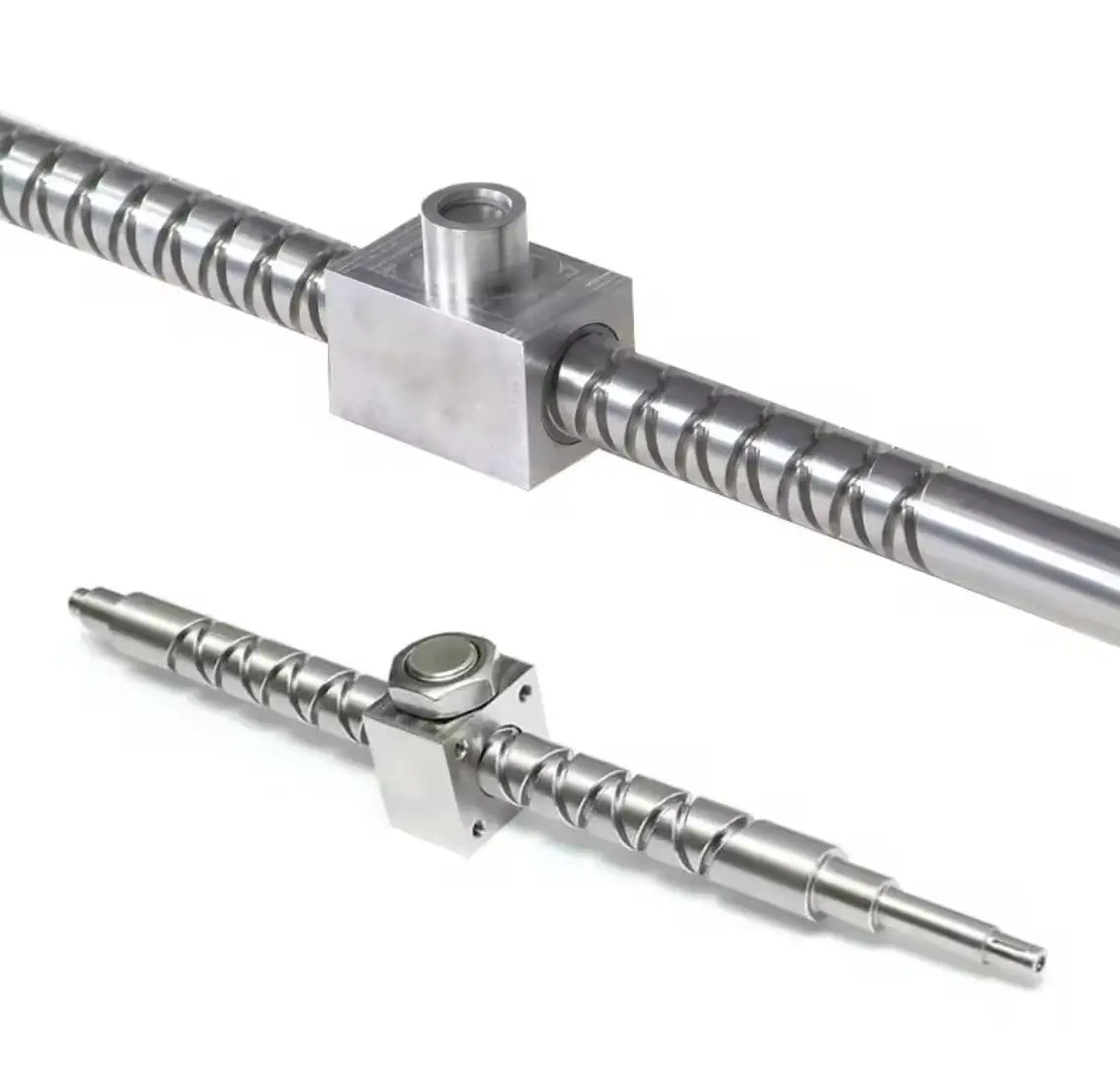
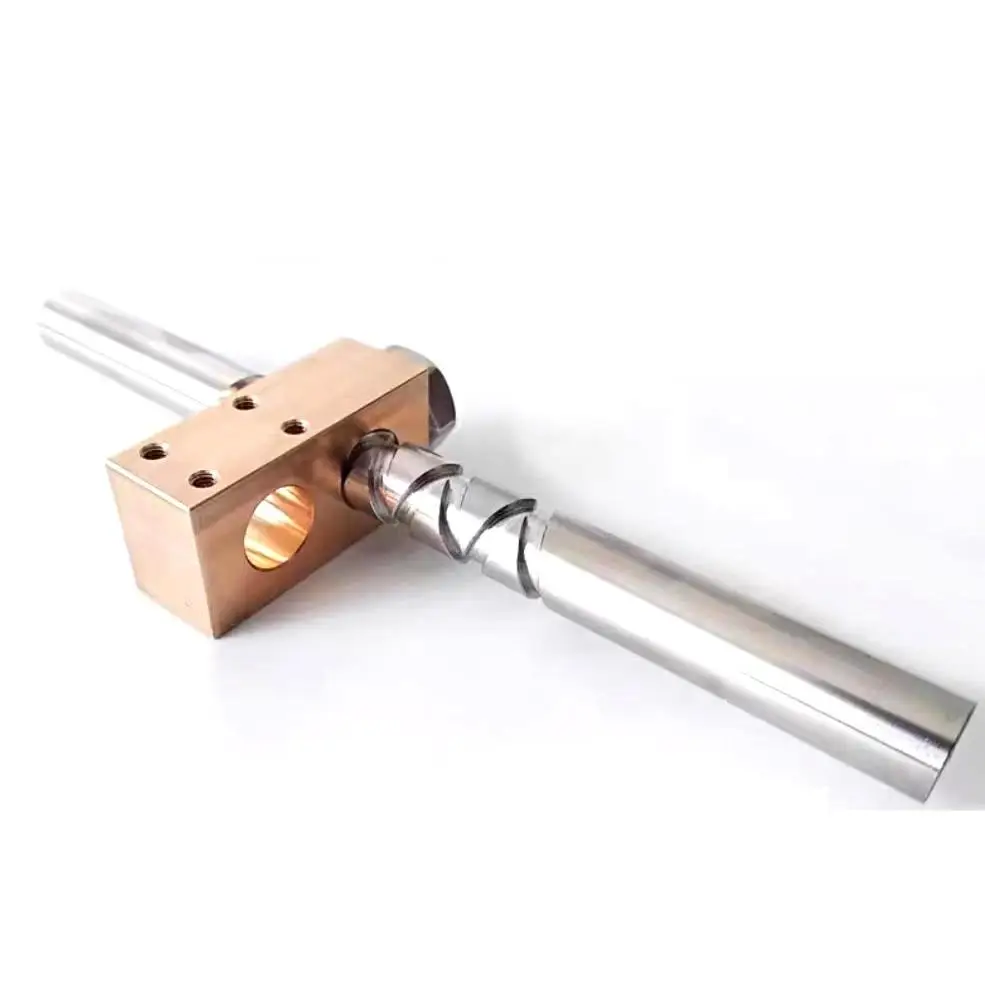
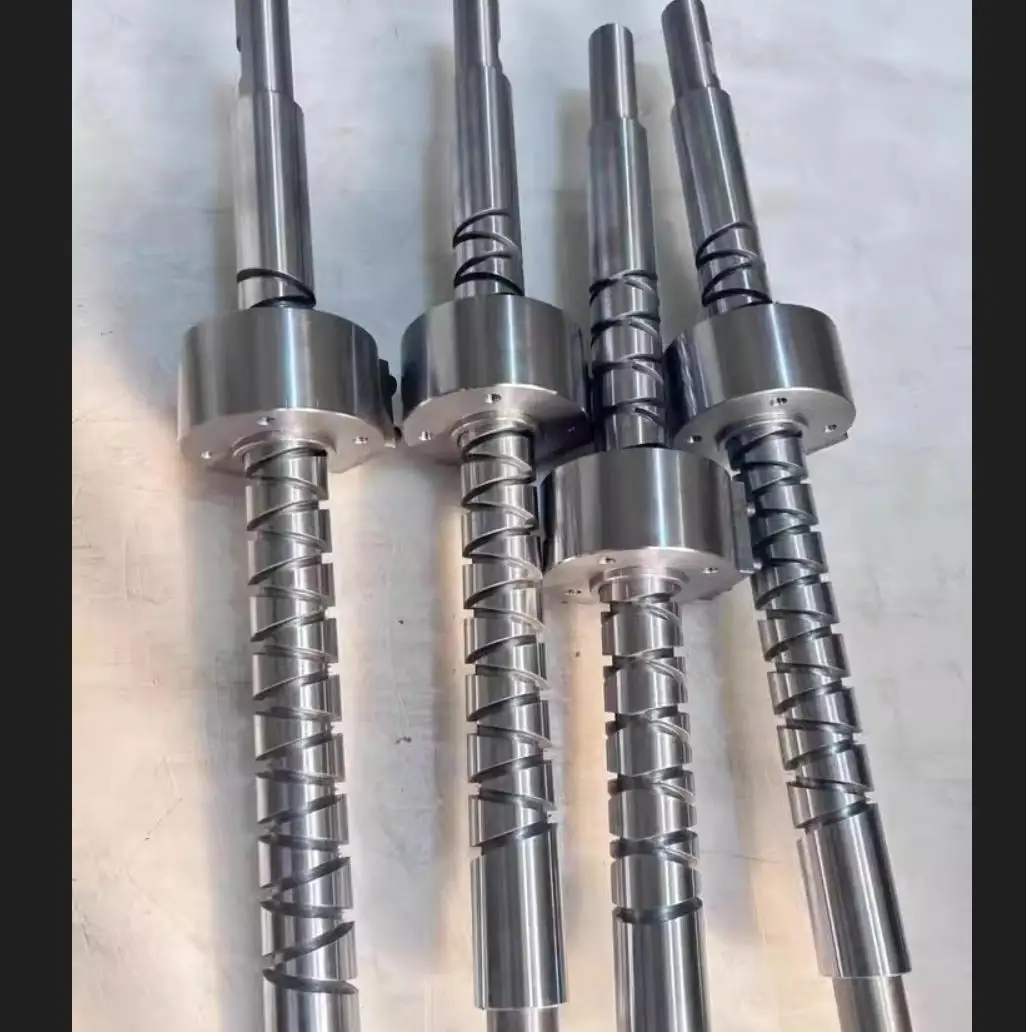
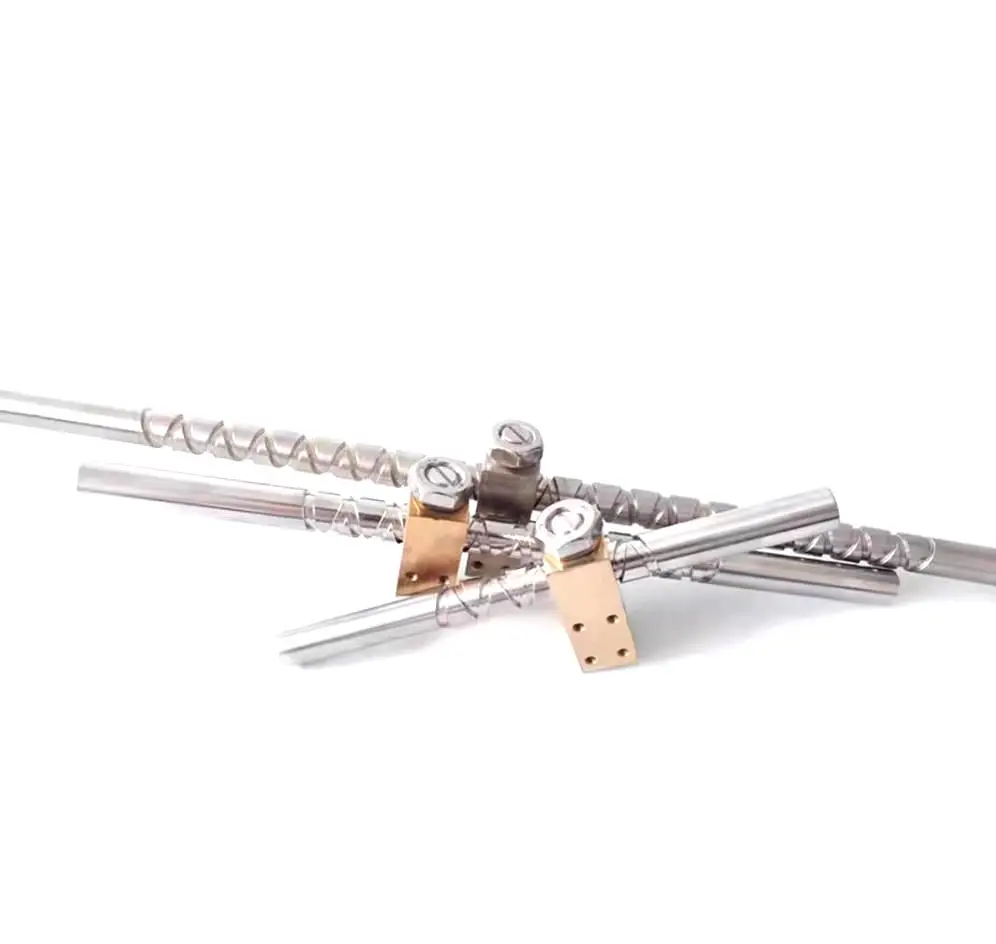
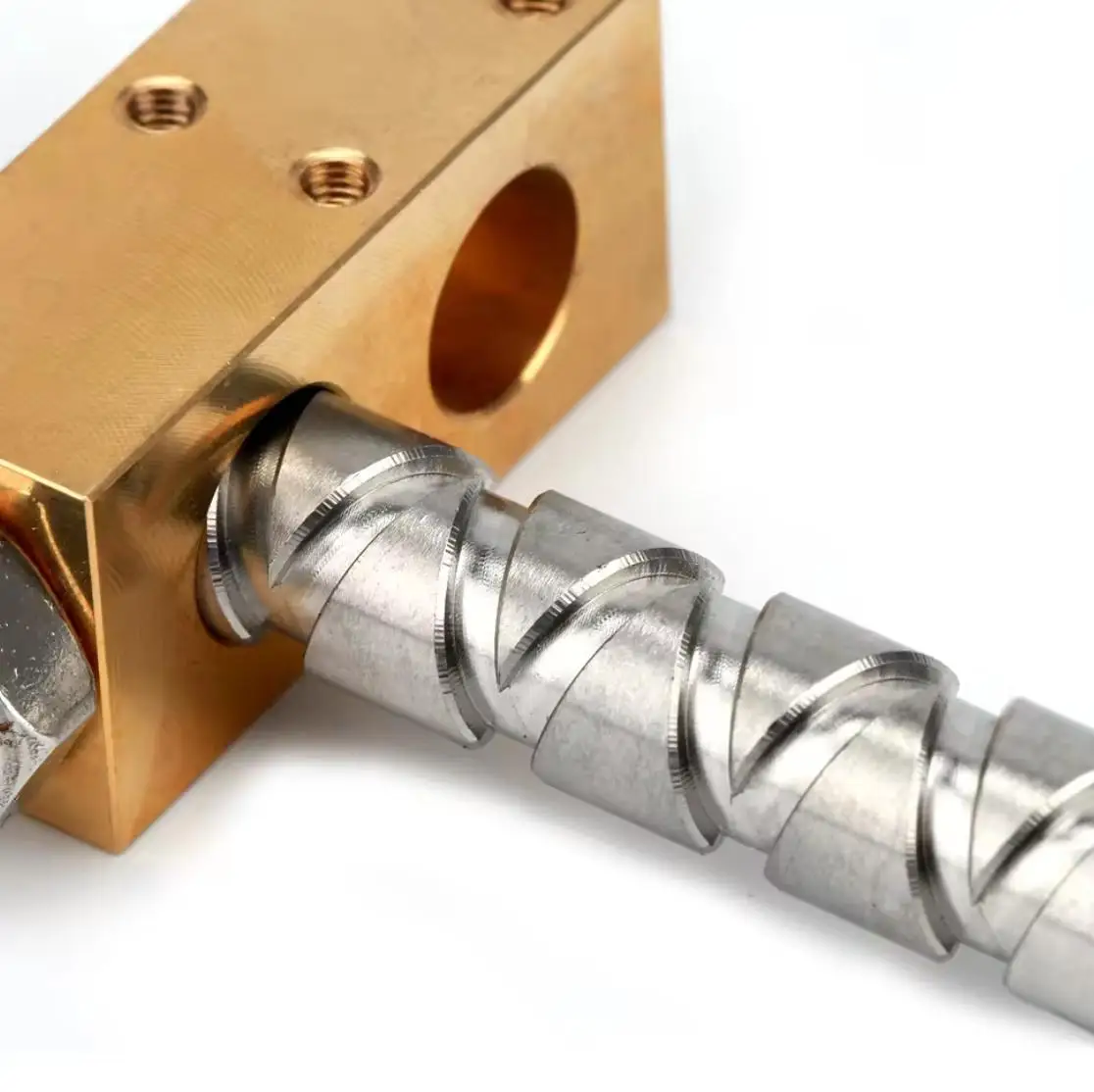
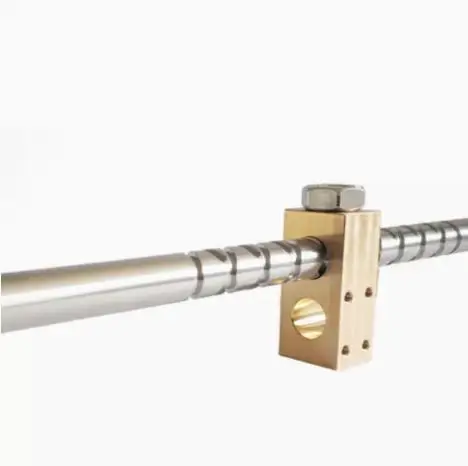
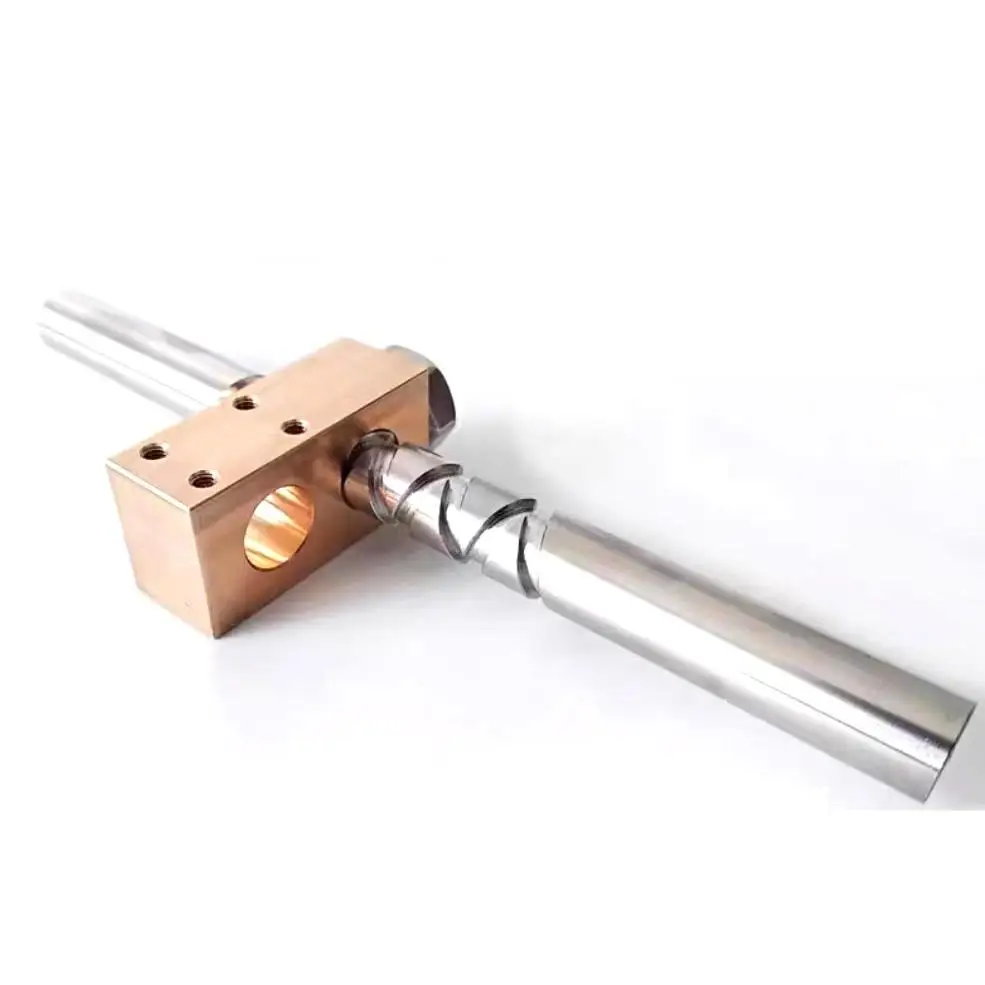
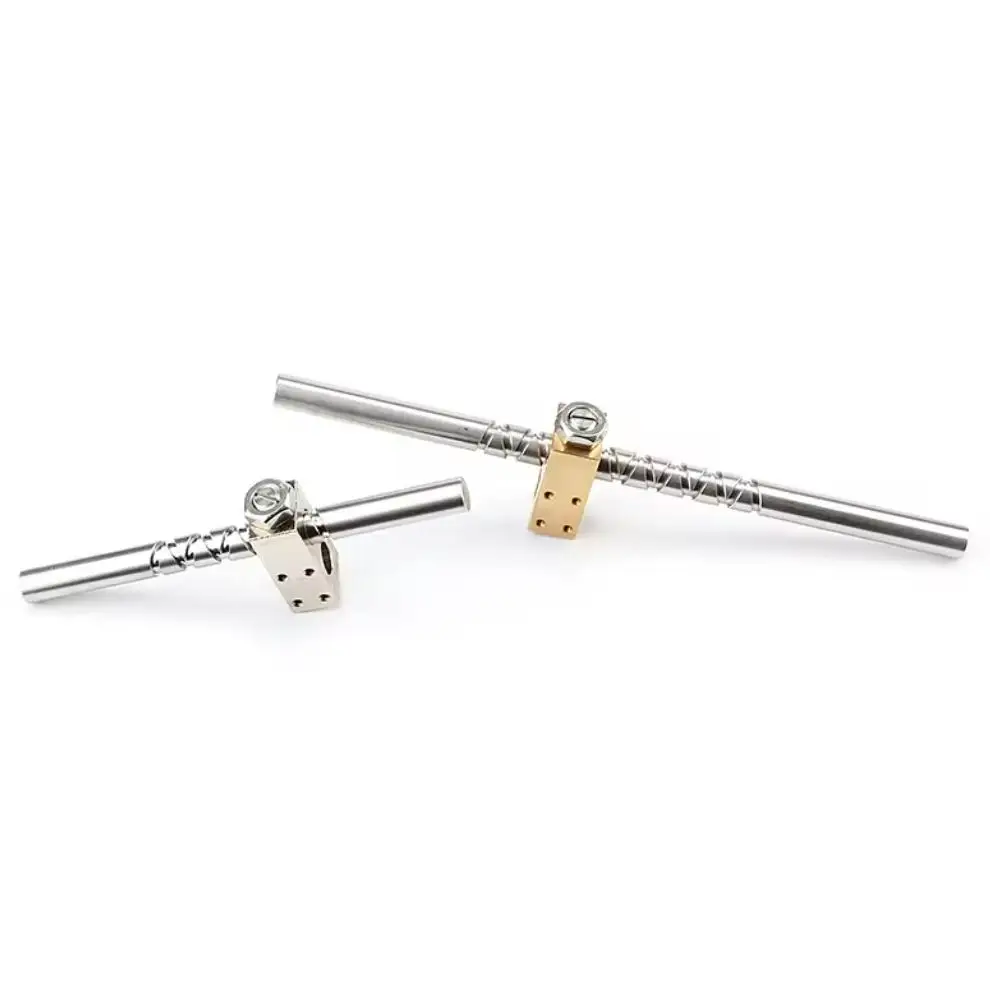
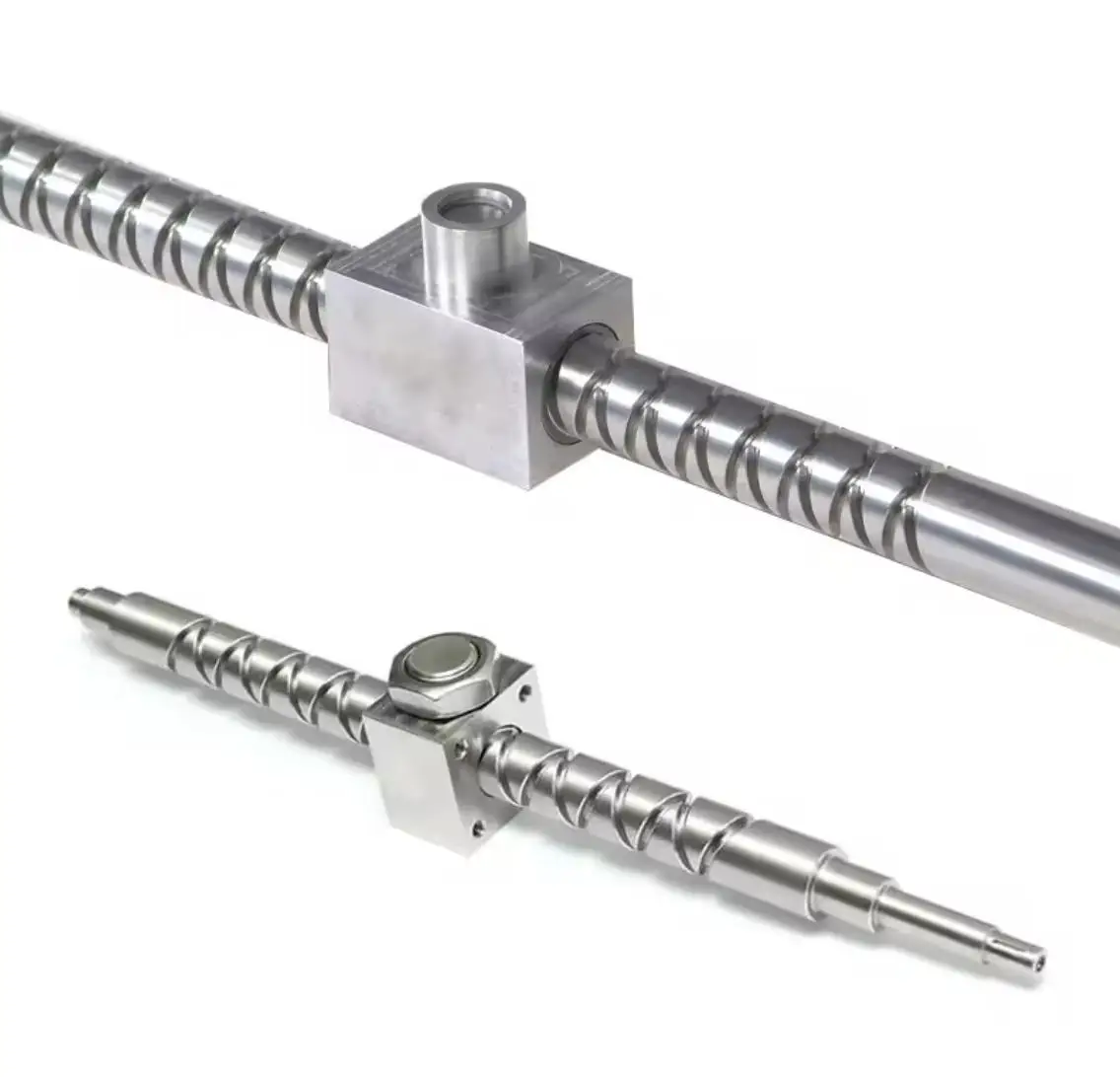
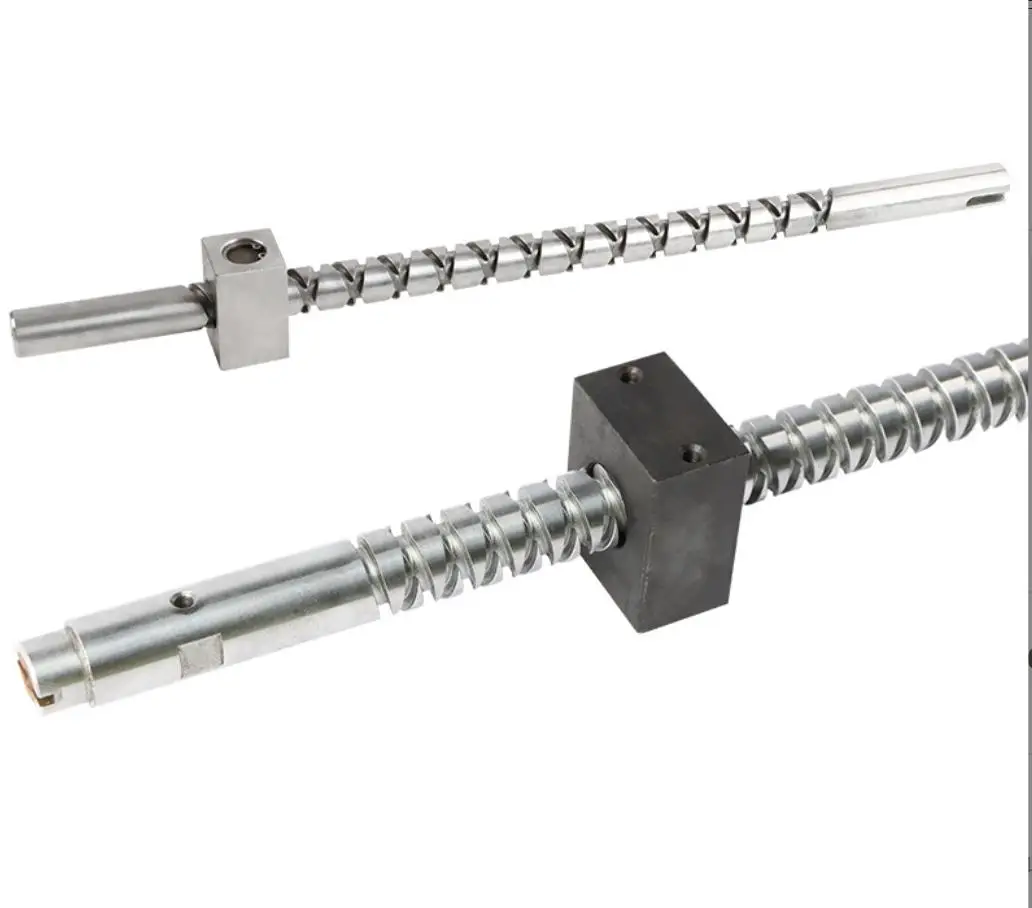
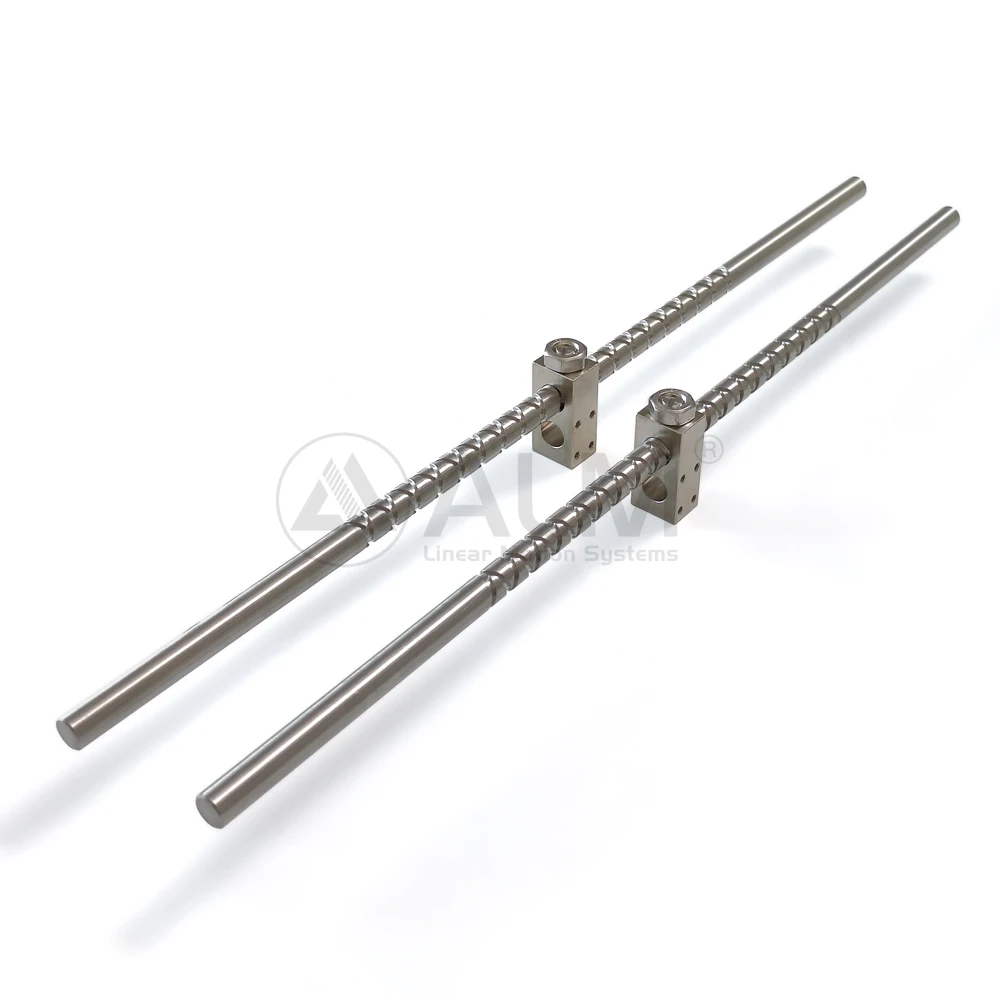
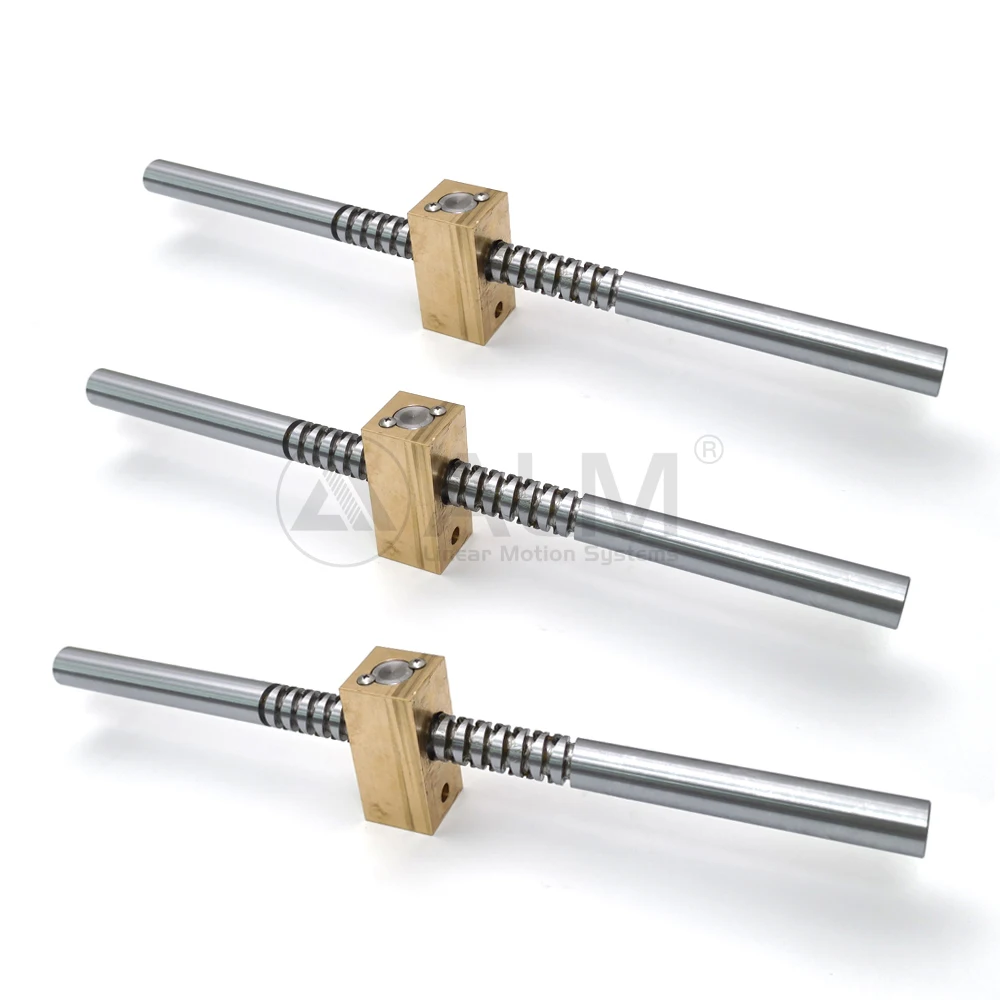
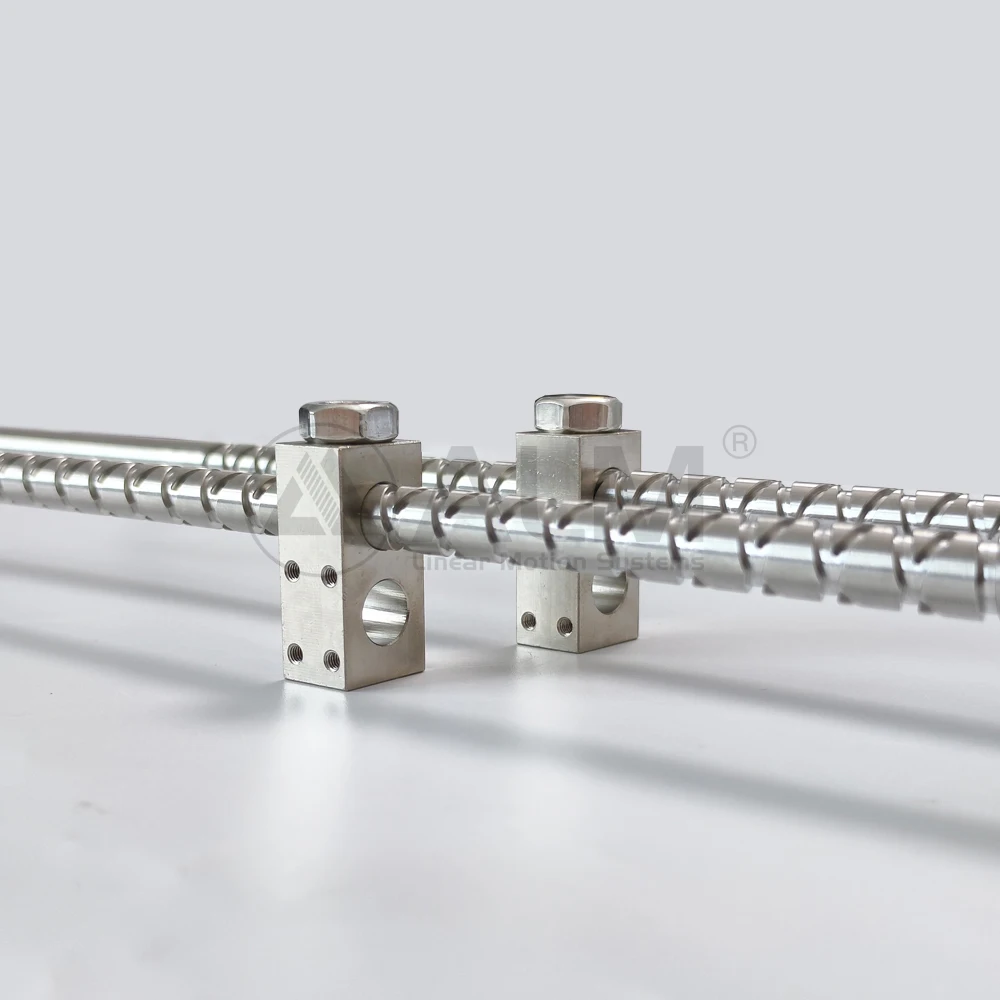
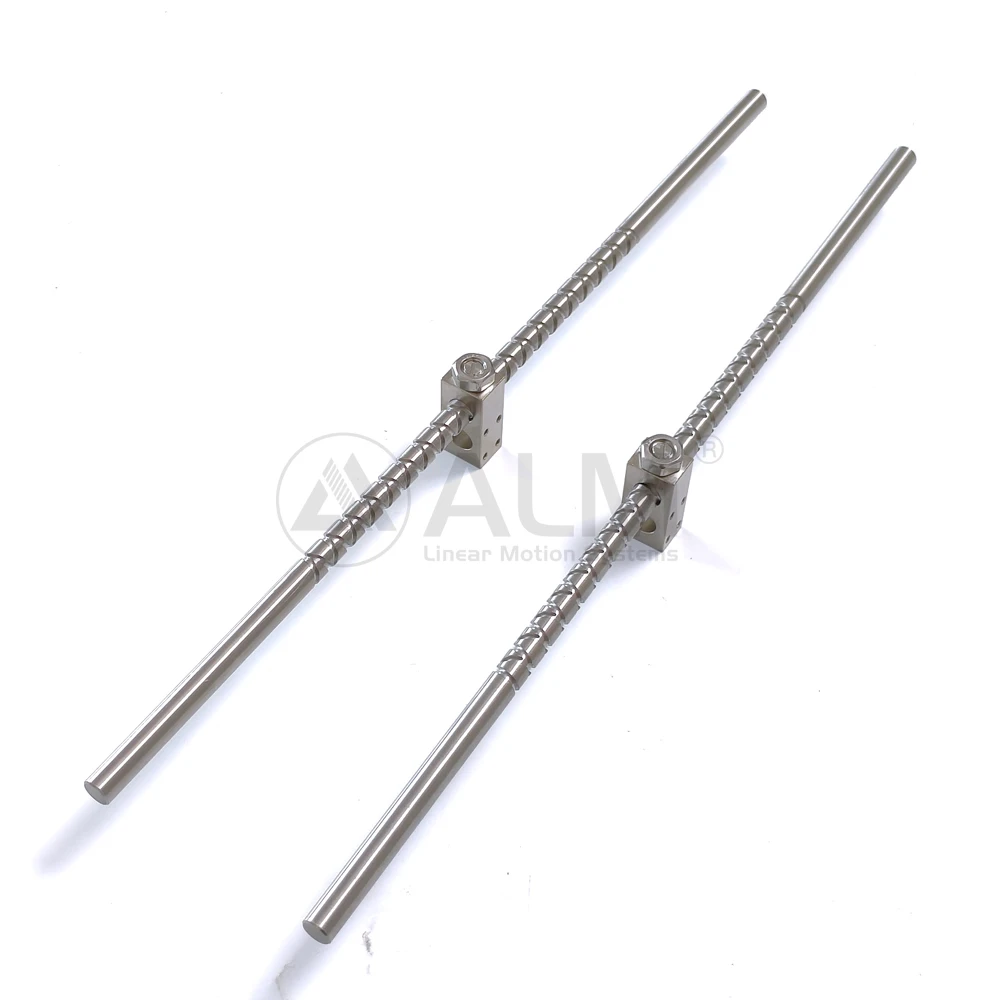
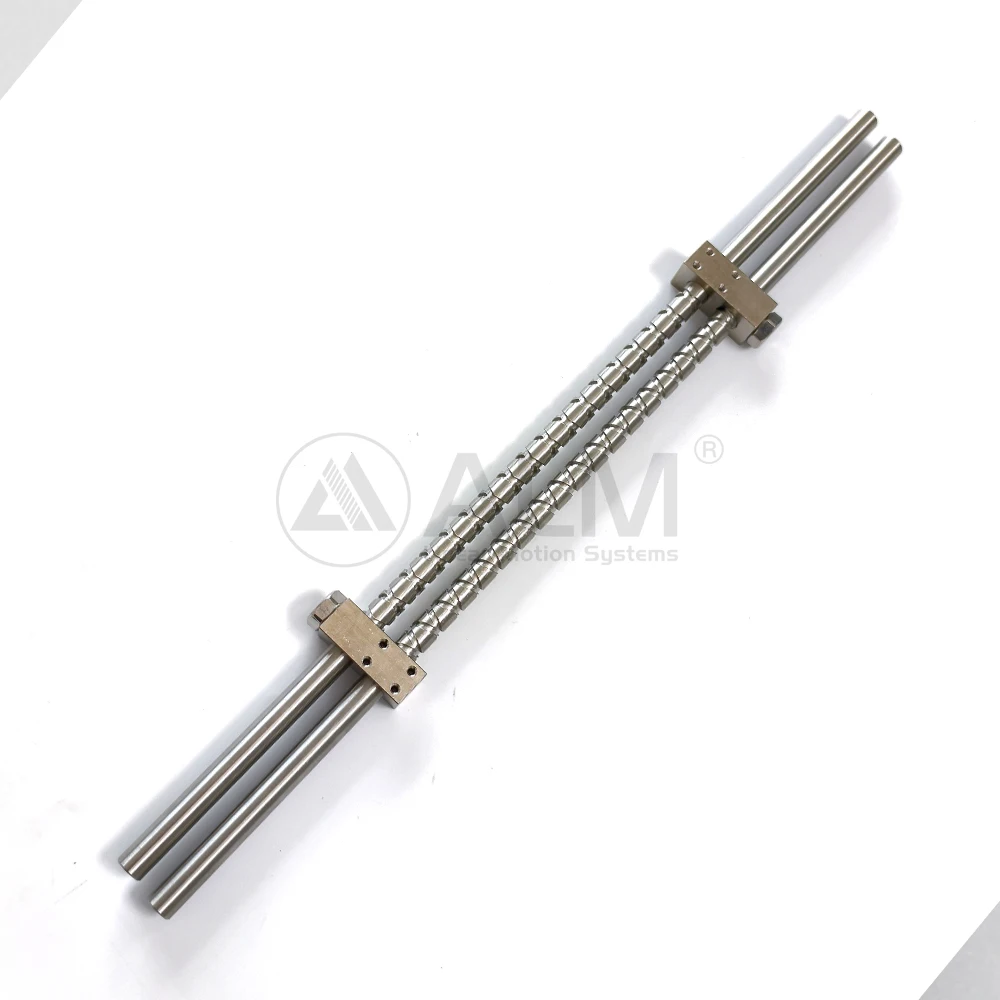
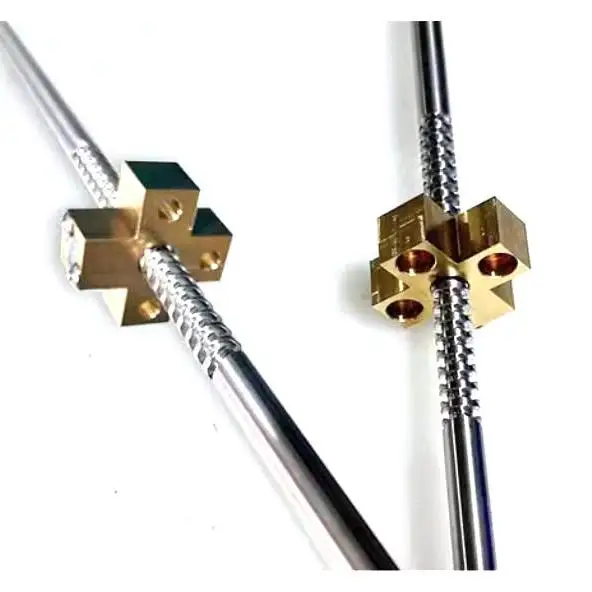
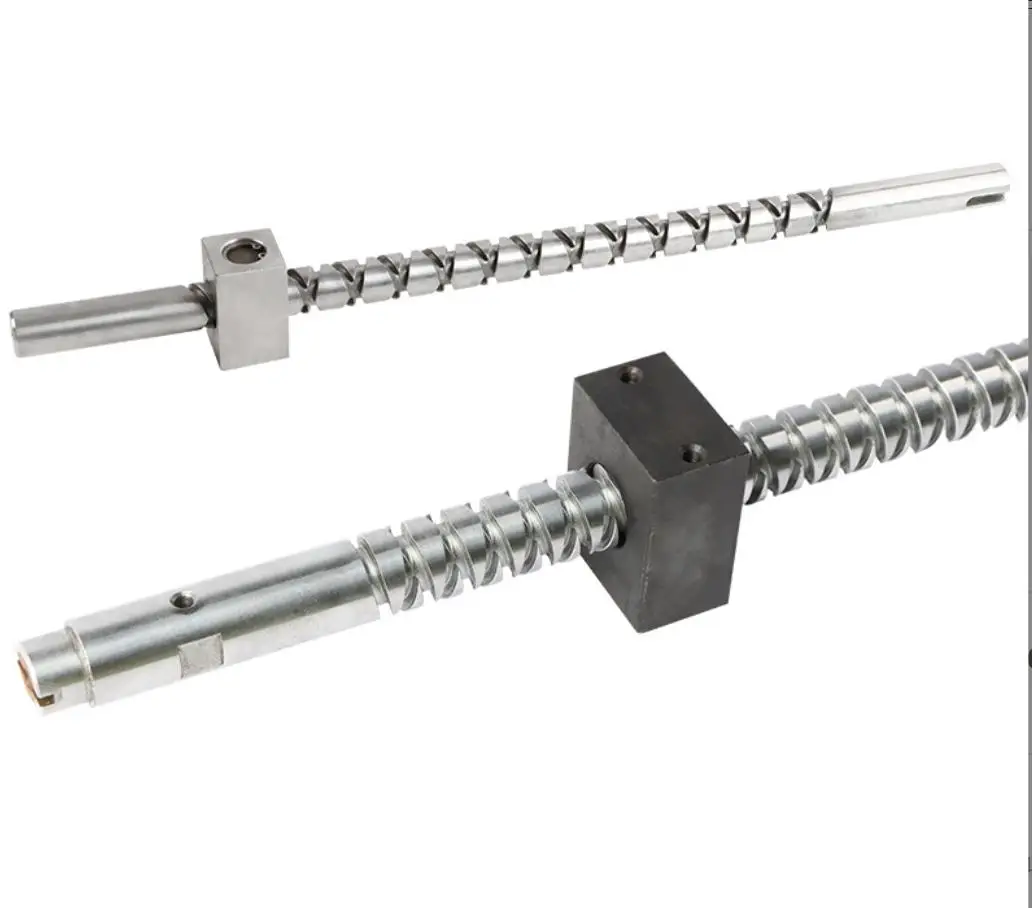
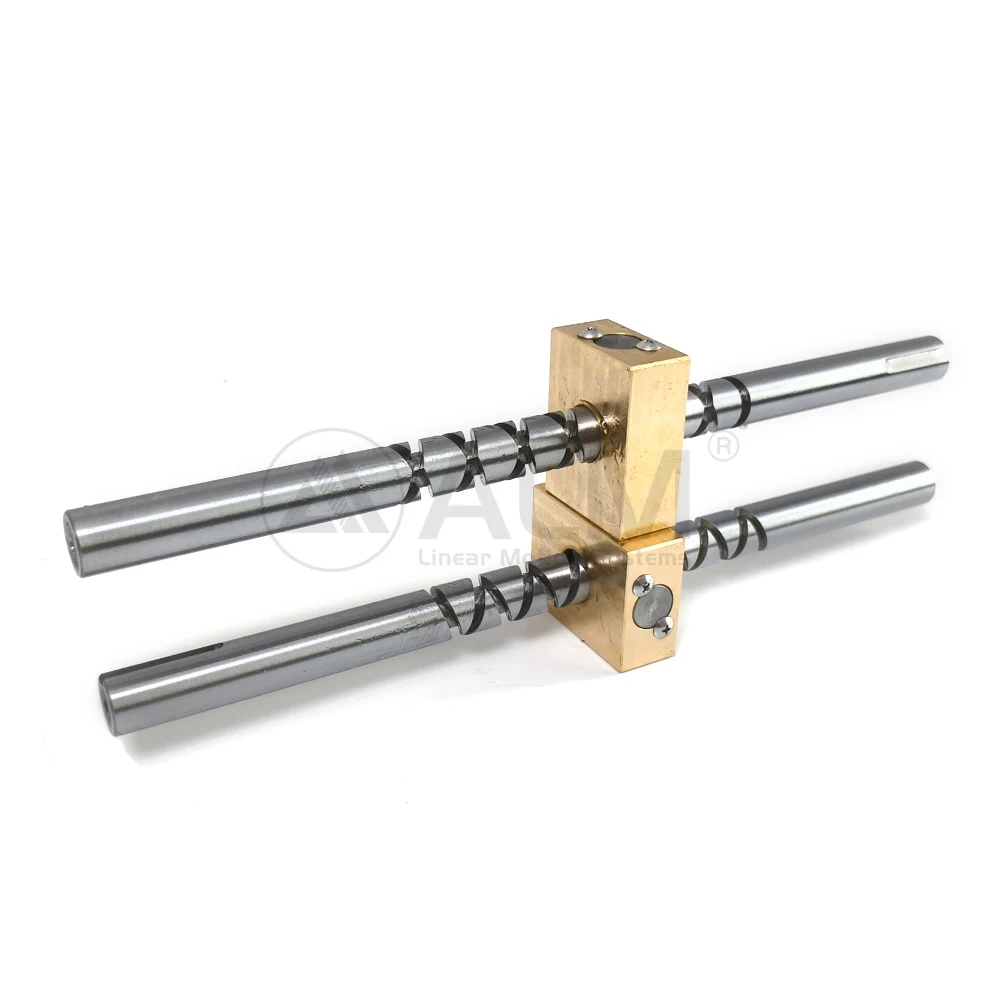
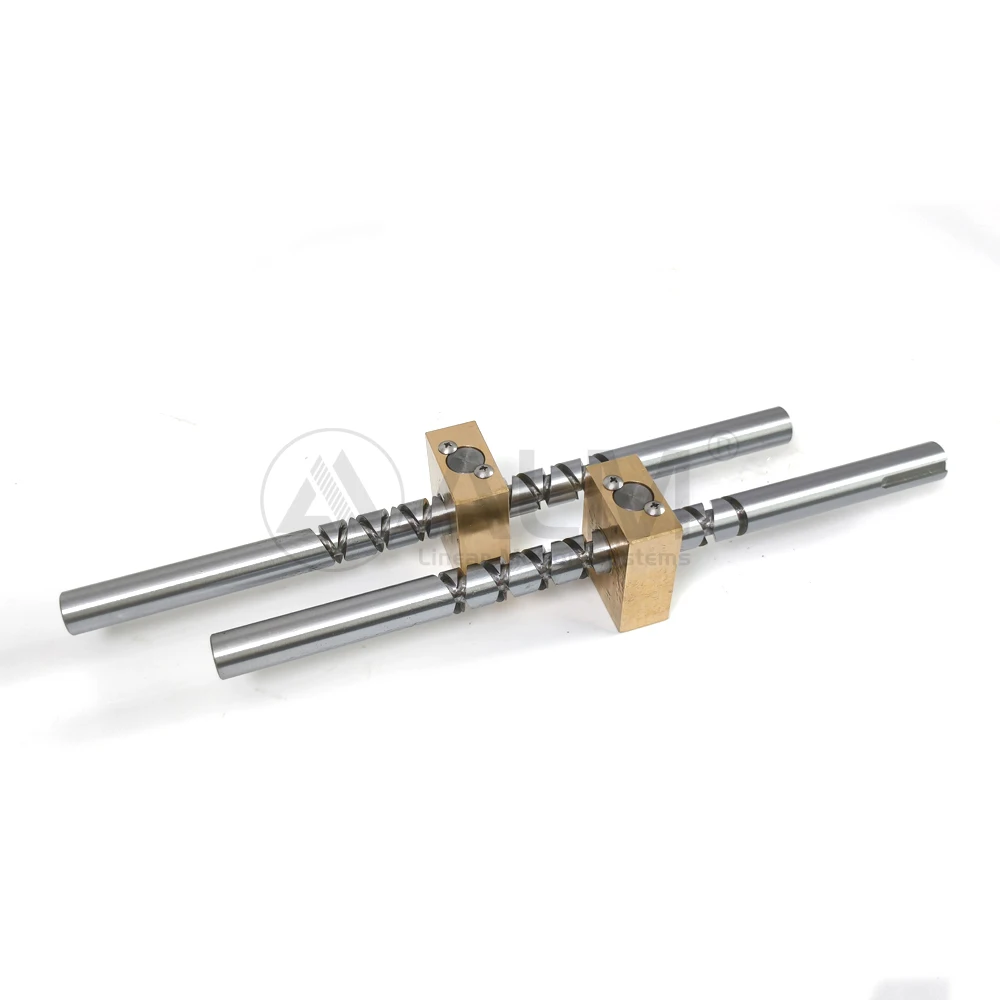
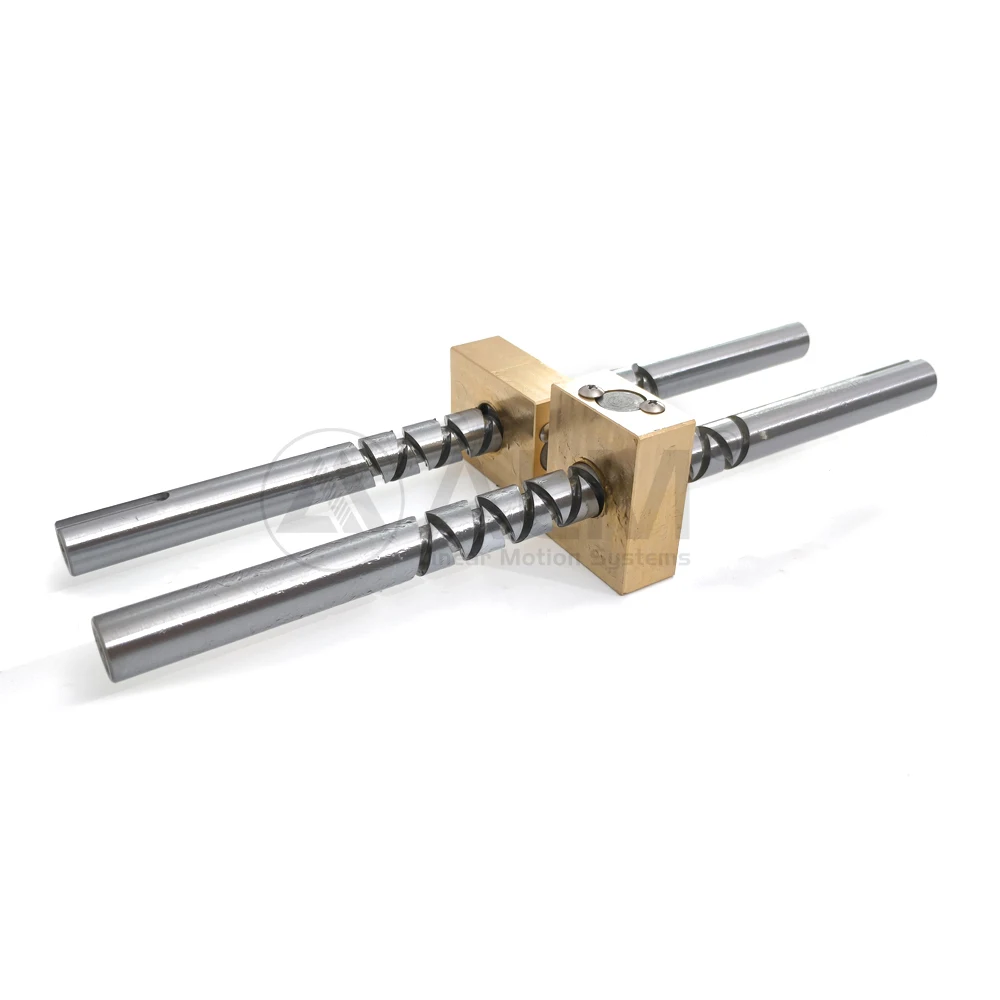
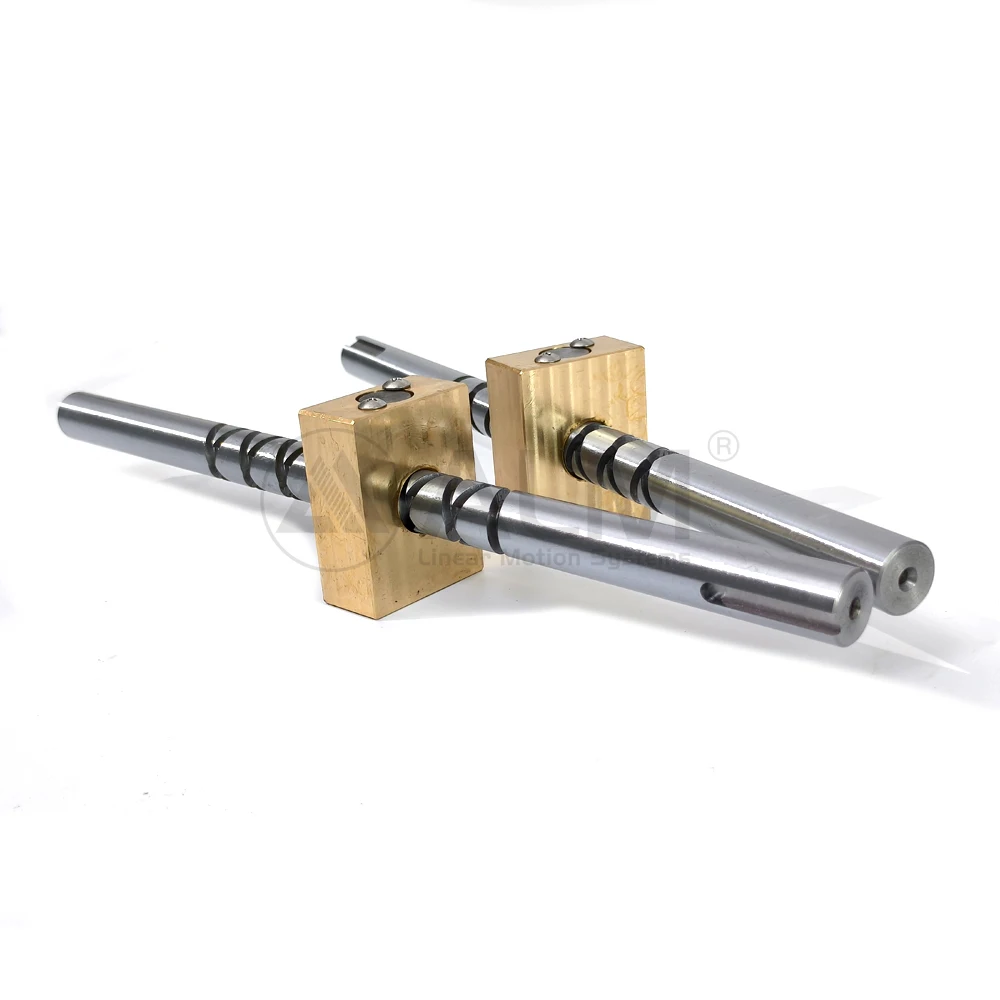
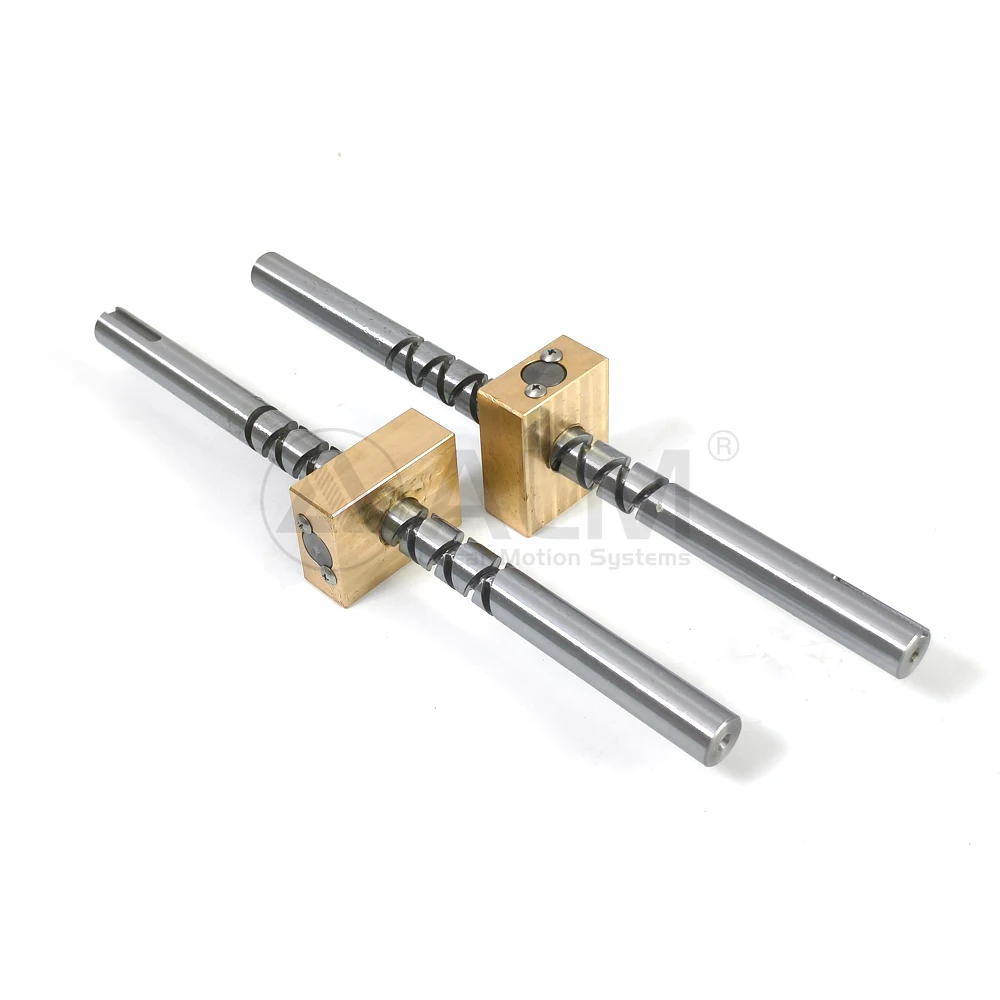
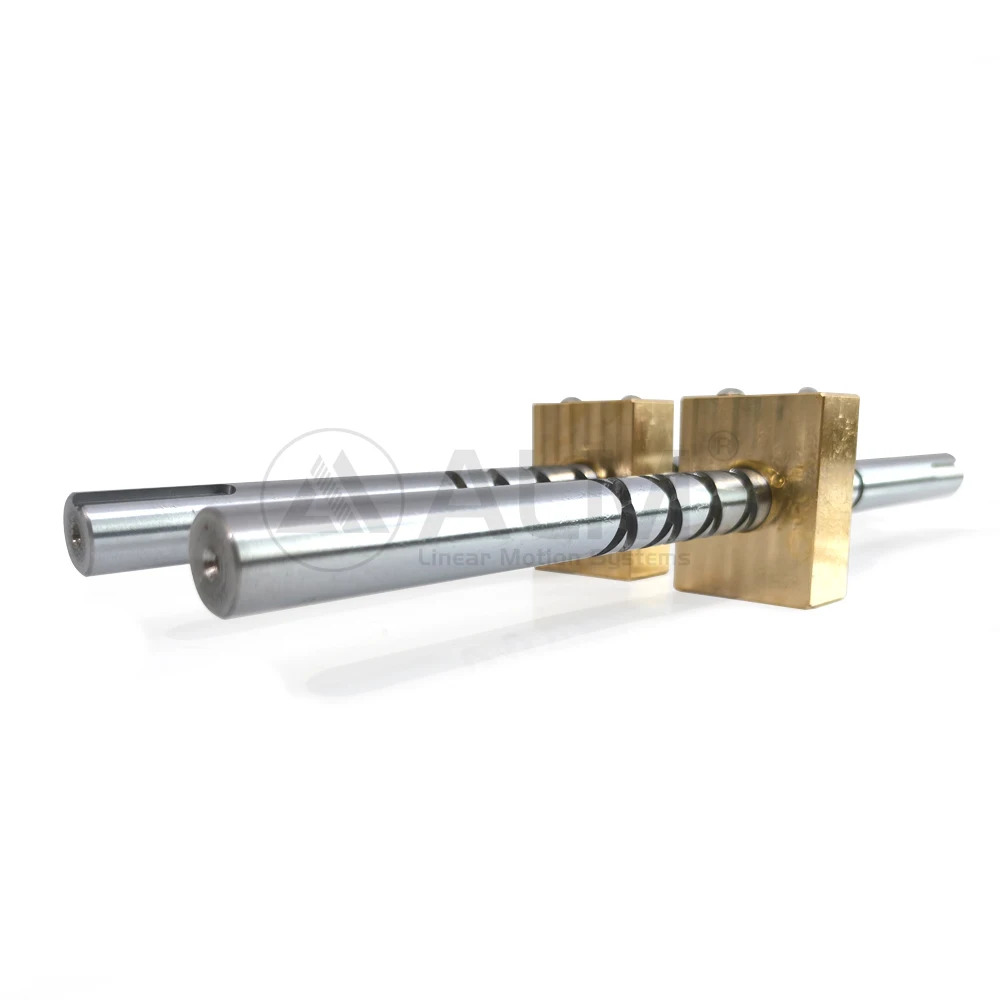
A lead screw is a screw thread doing the same job as a ball screw with sliding contact instead of rolling. It is less efficient, it wears, and it is far cheaper per metre. On the right application that trade is a good one: a lead screw holds position when the power is off, tolerates dust, and does not care whether the lubricant was changed on schedule.
What is in the catalogue
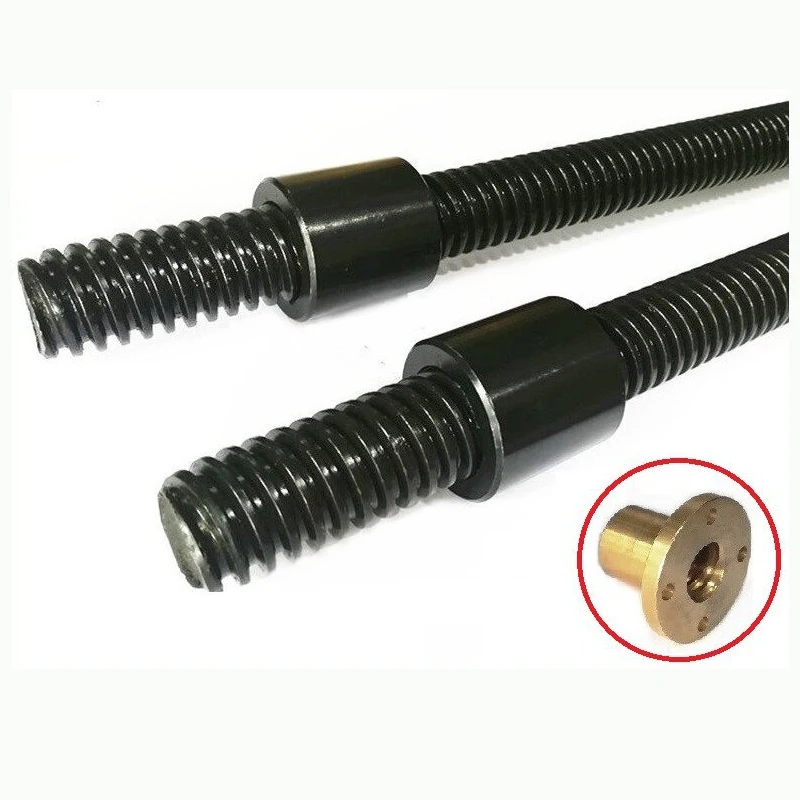
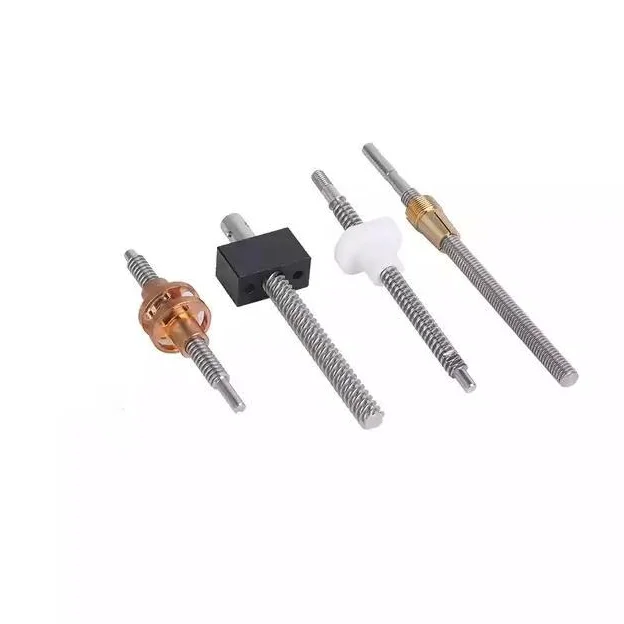
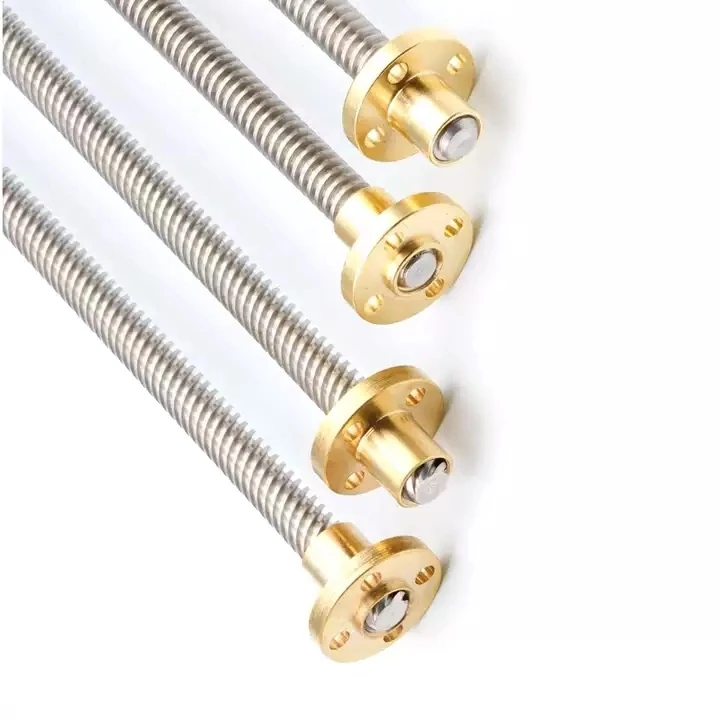
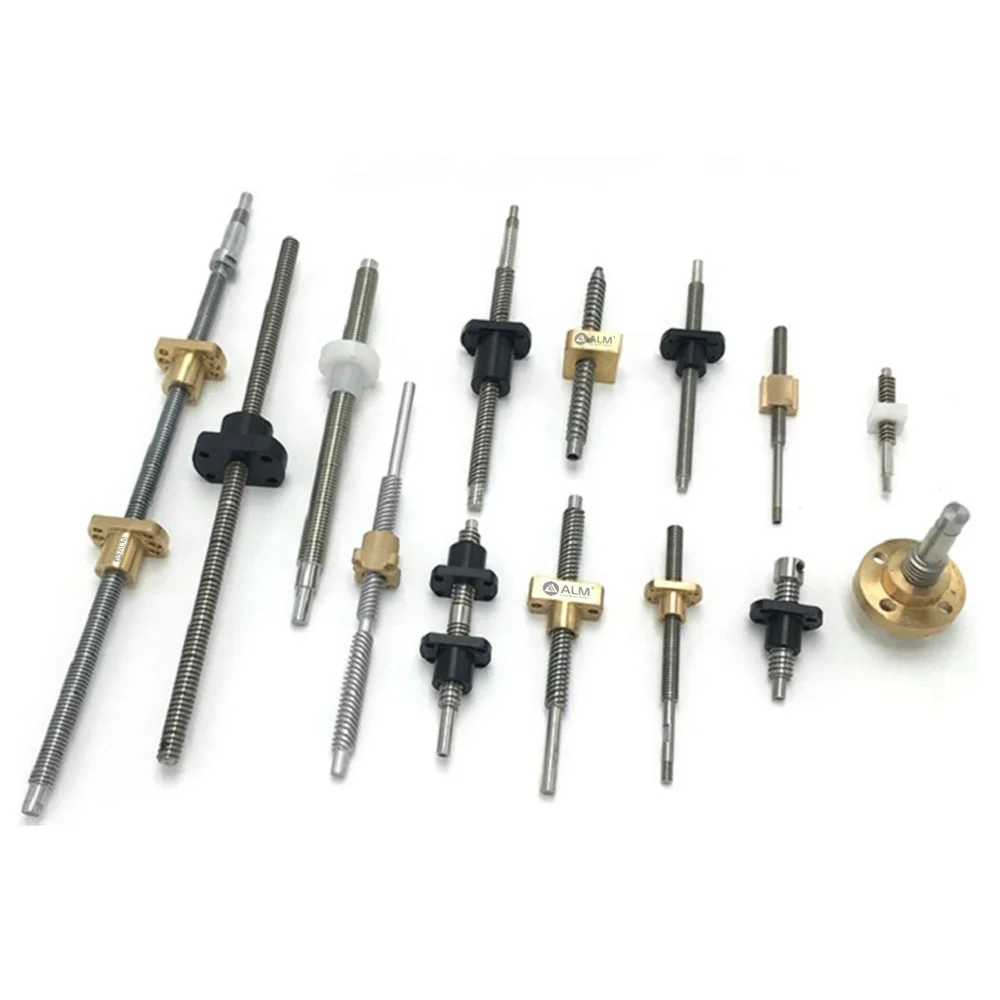
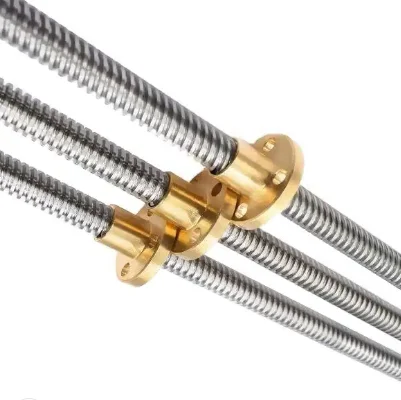
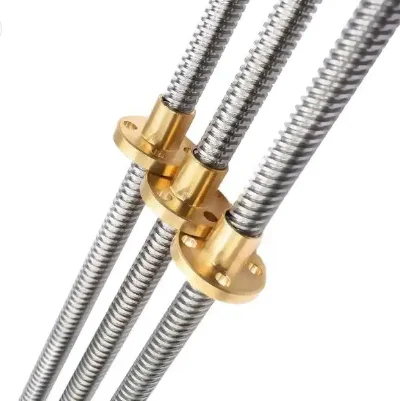
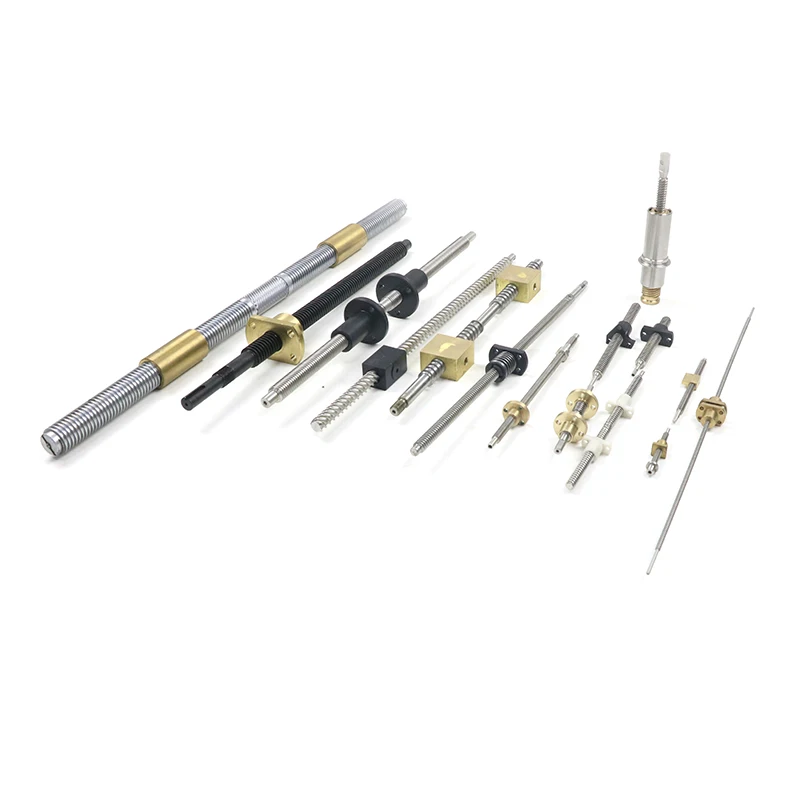
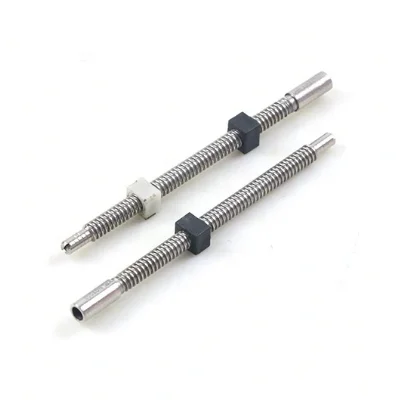
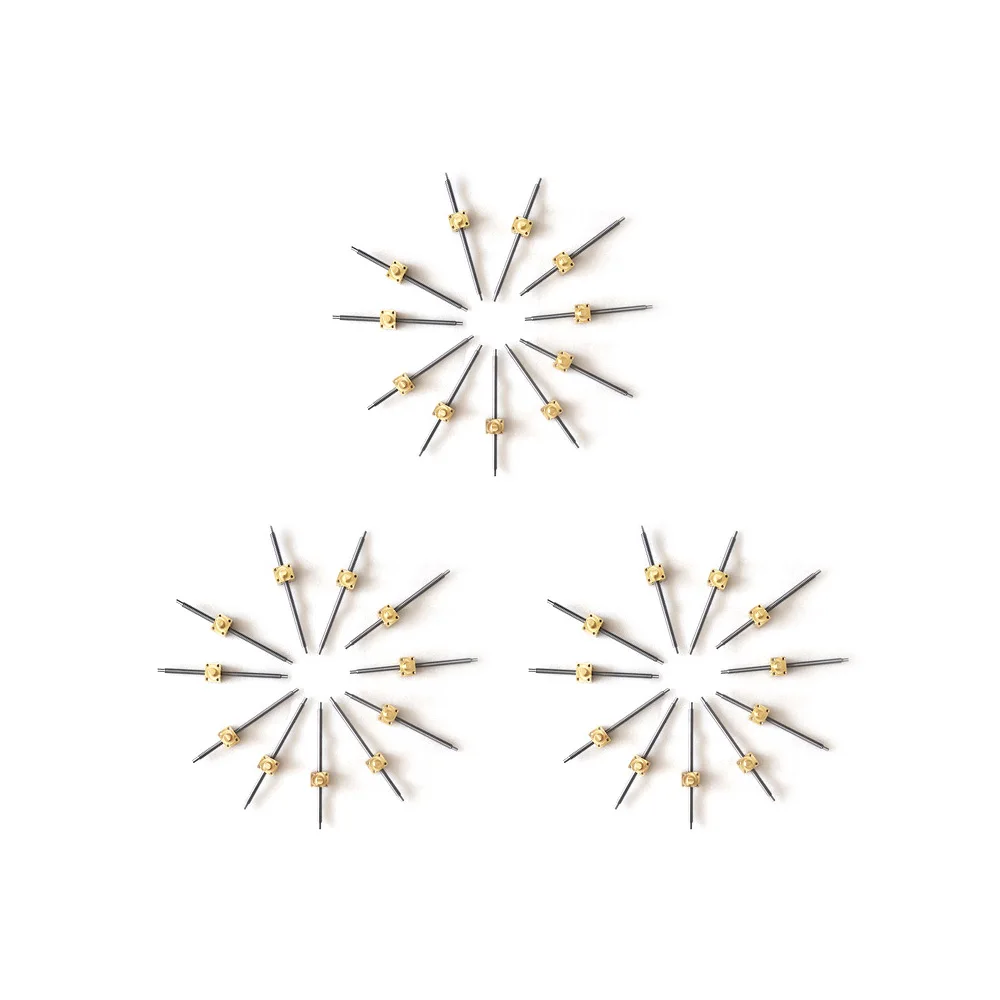
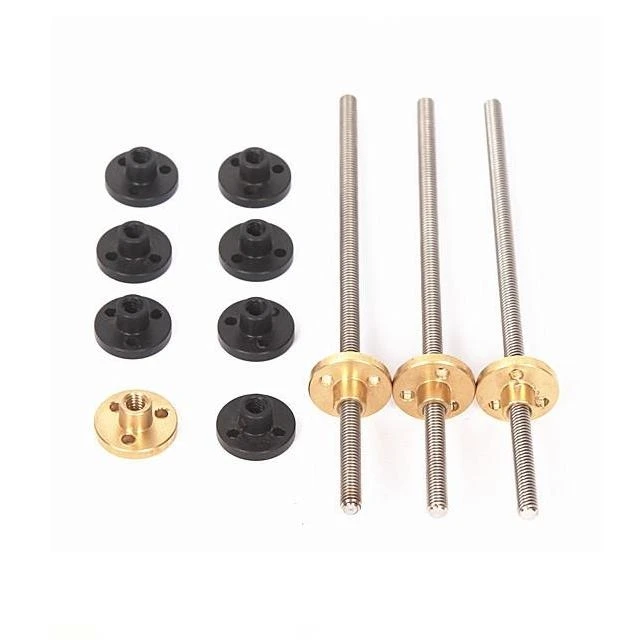
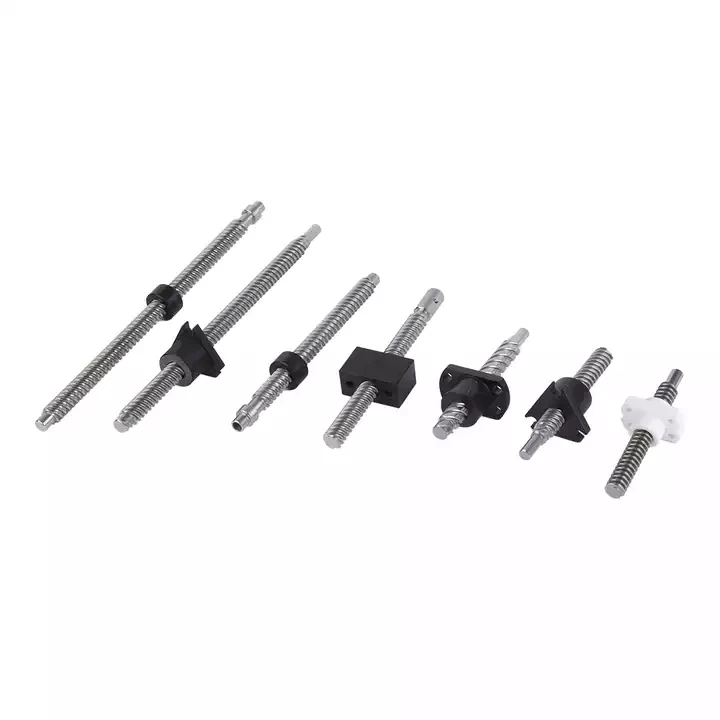
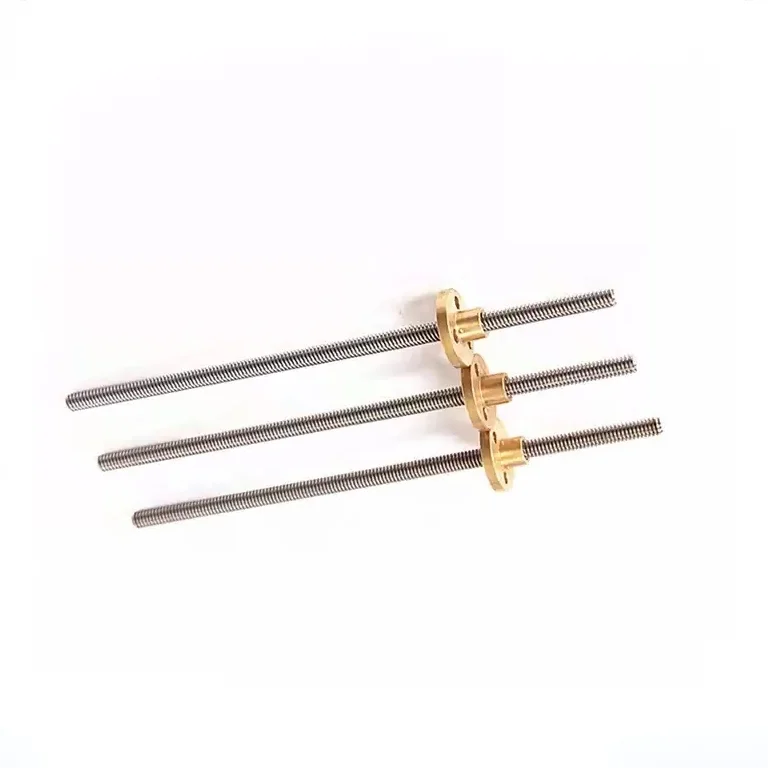
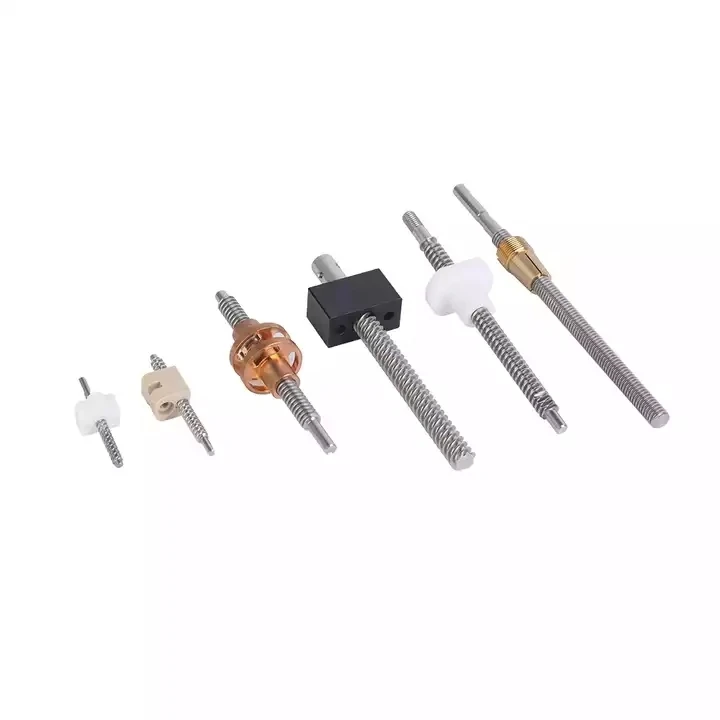
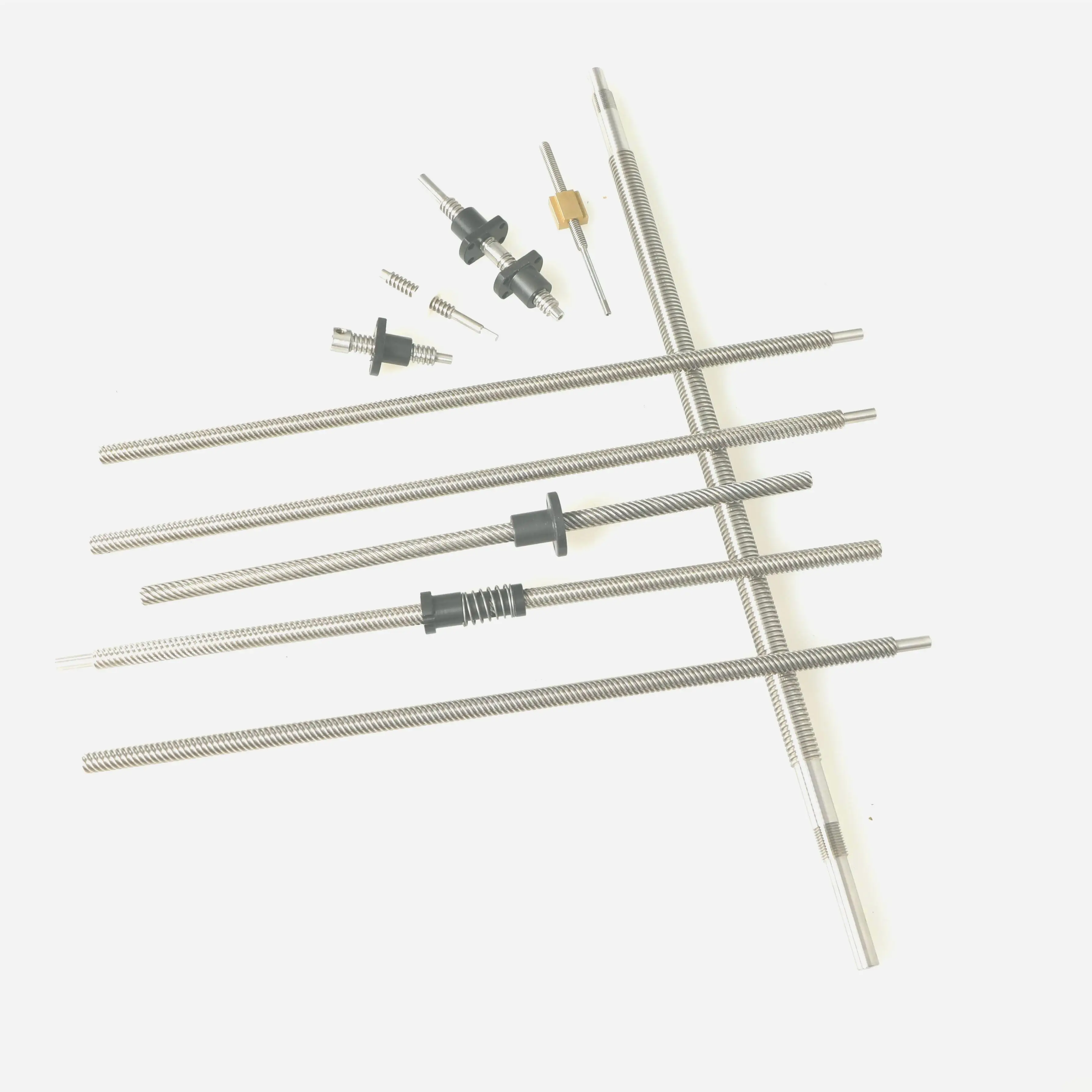
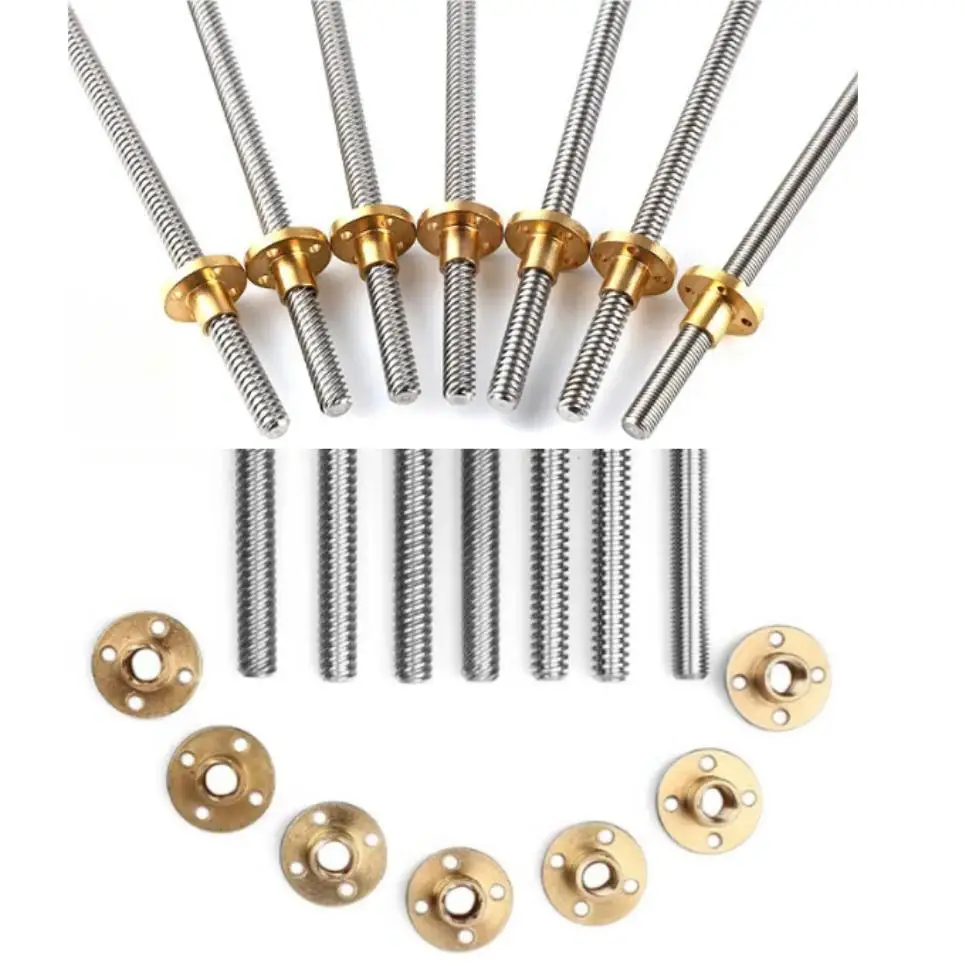
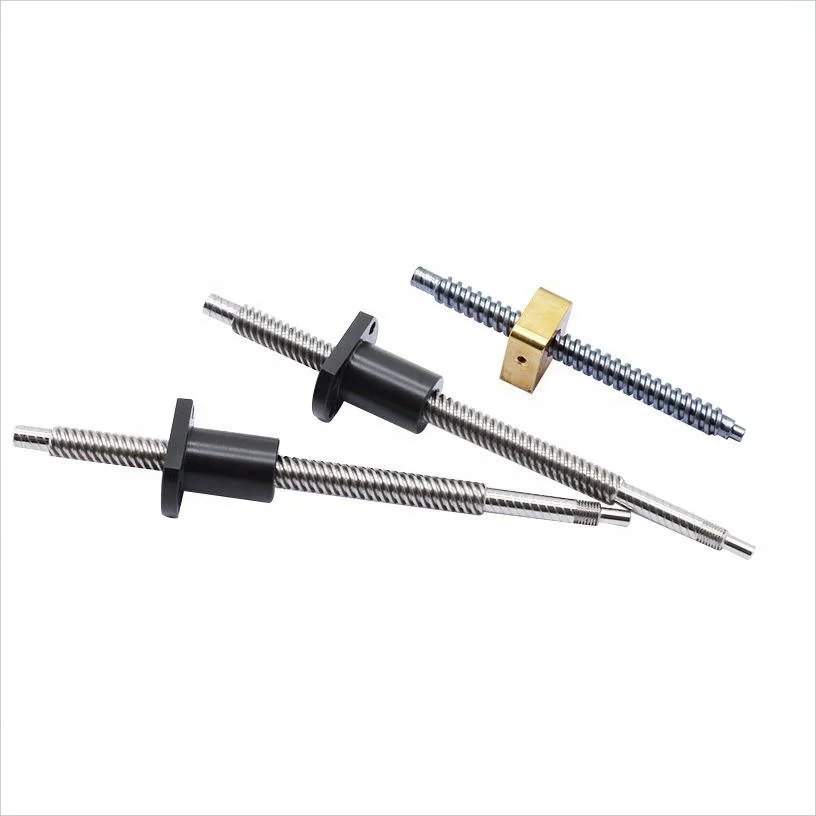
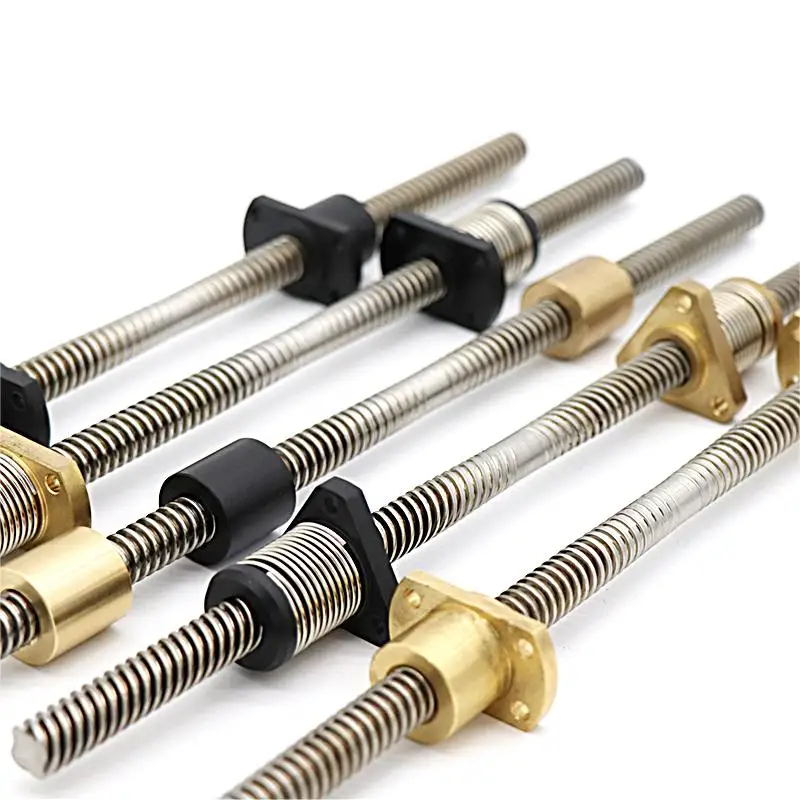
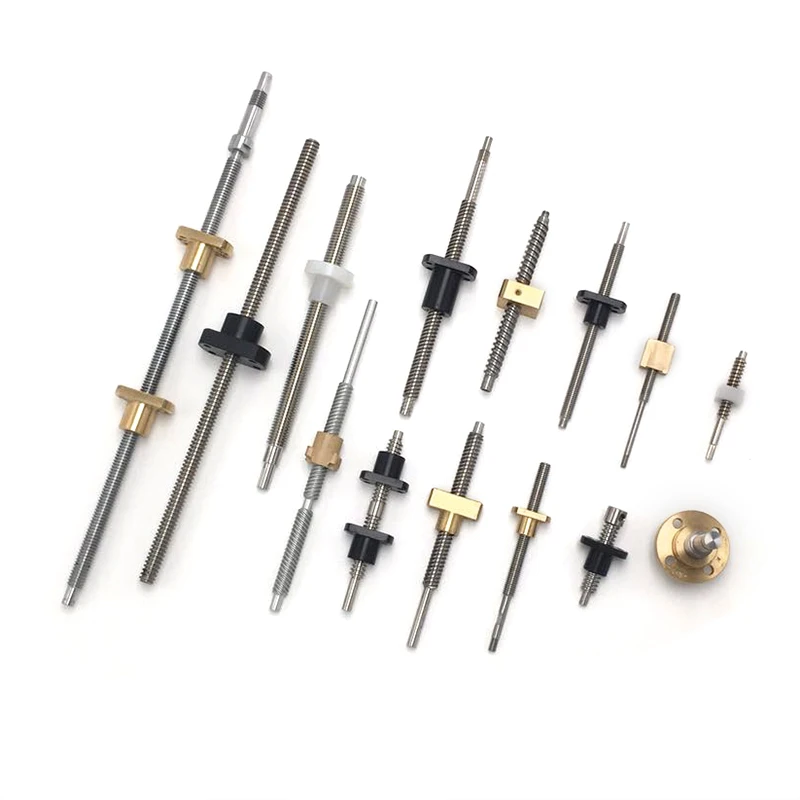
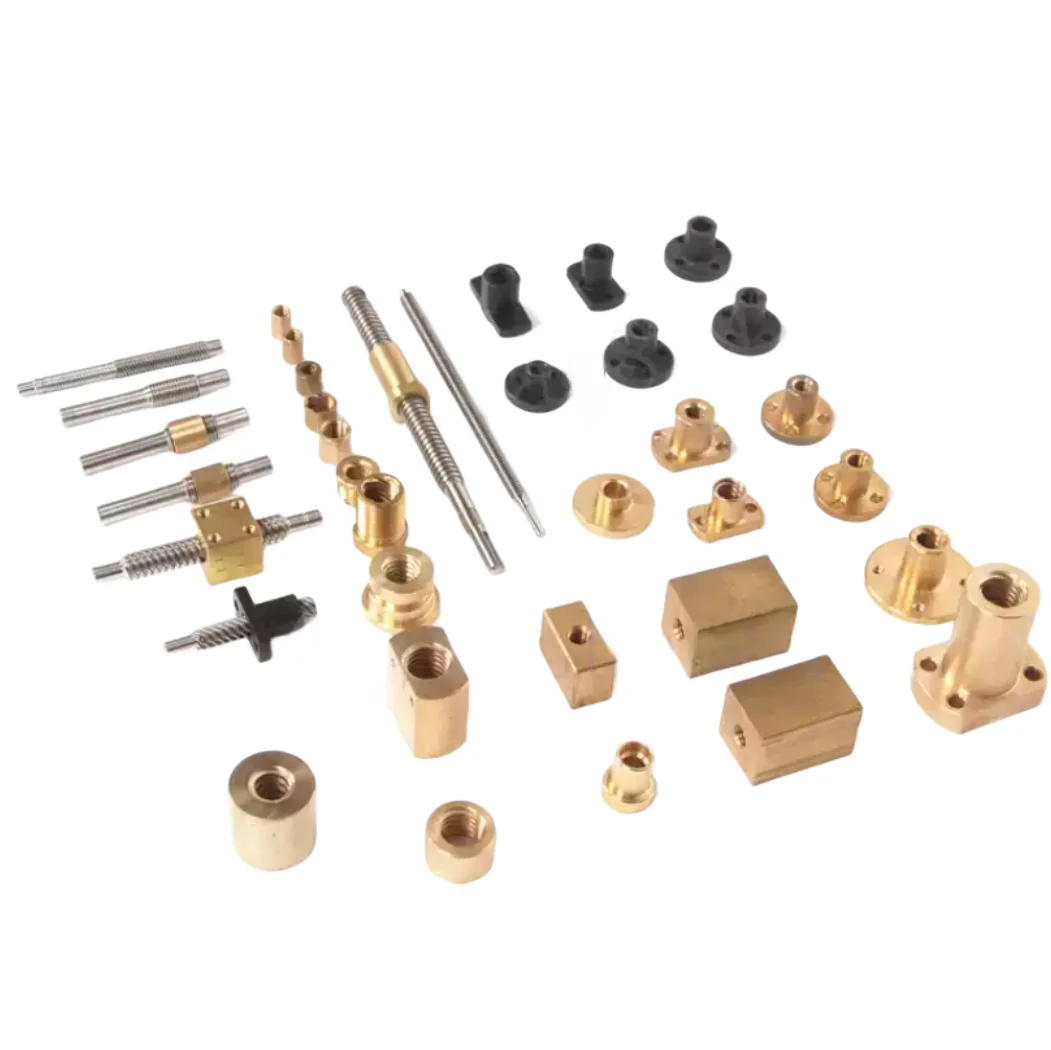
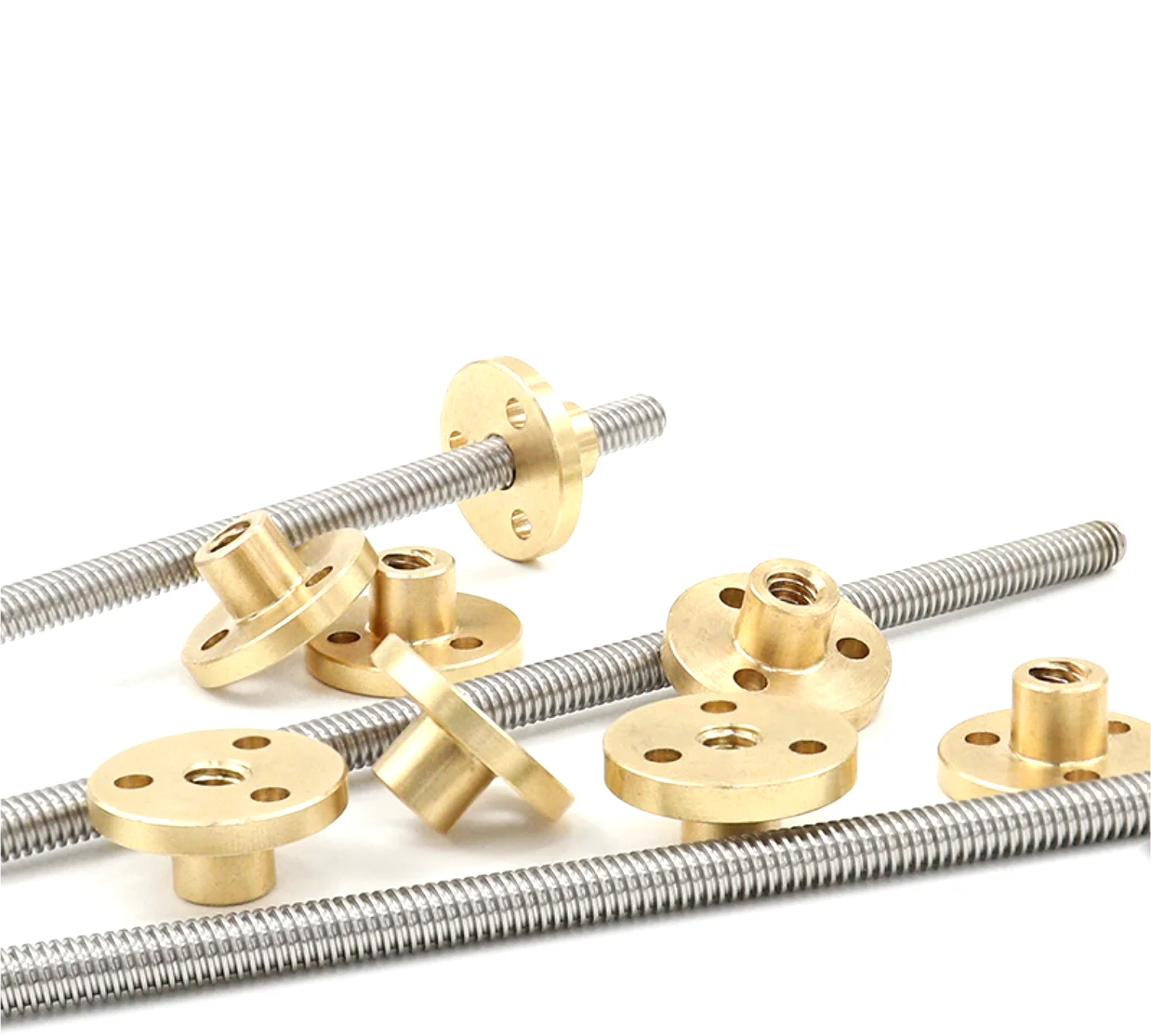
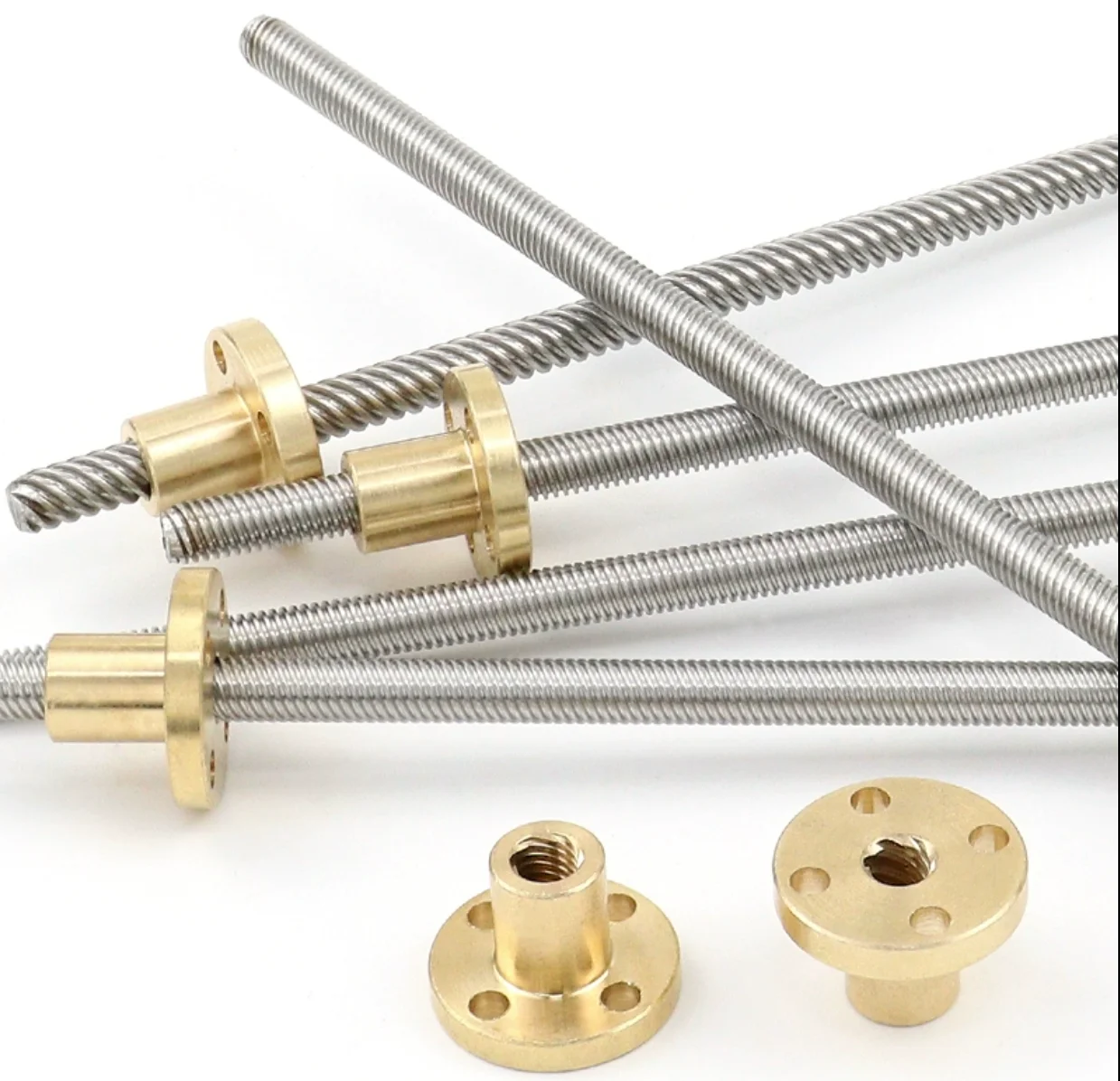
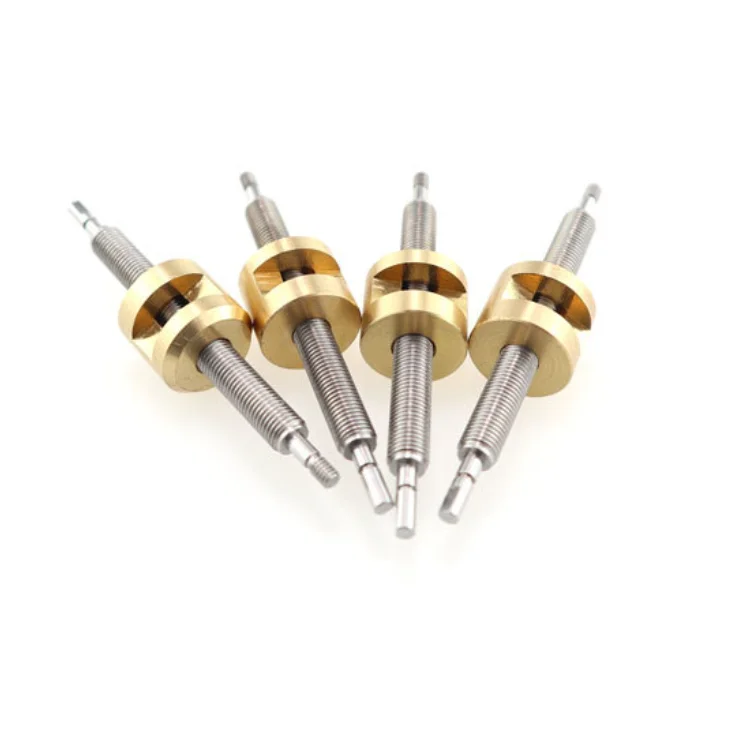
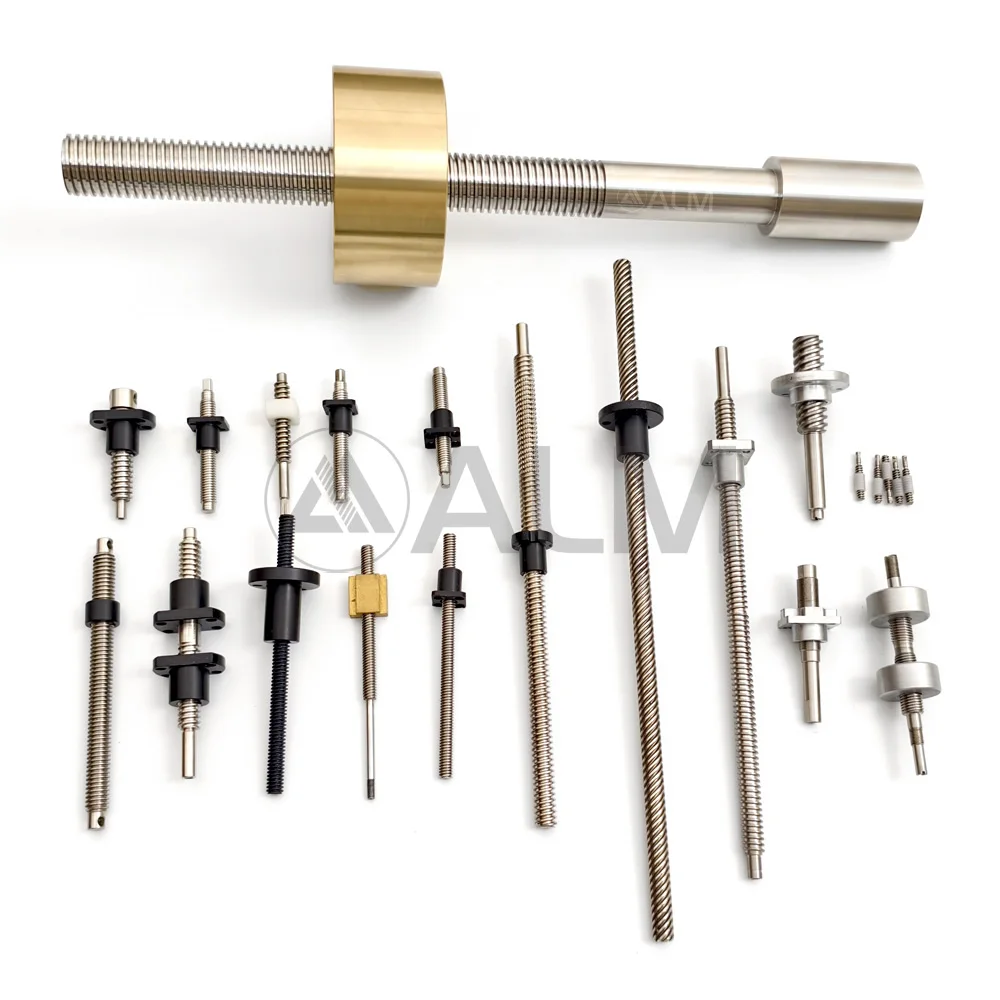
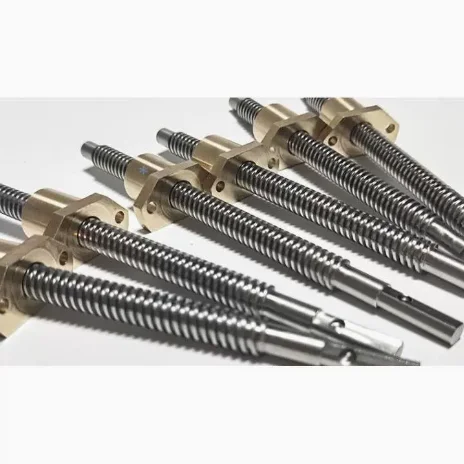
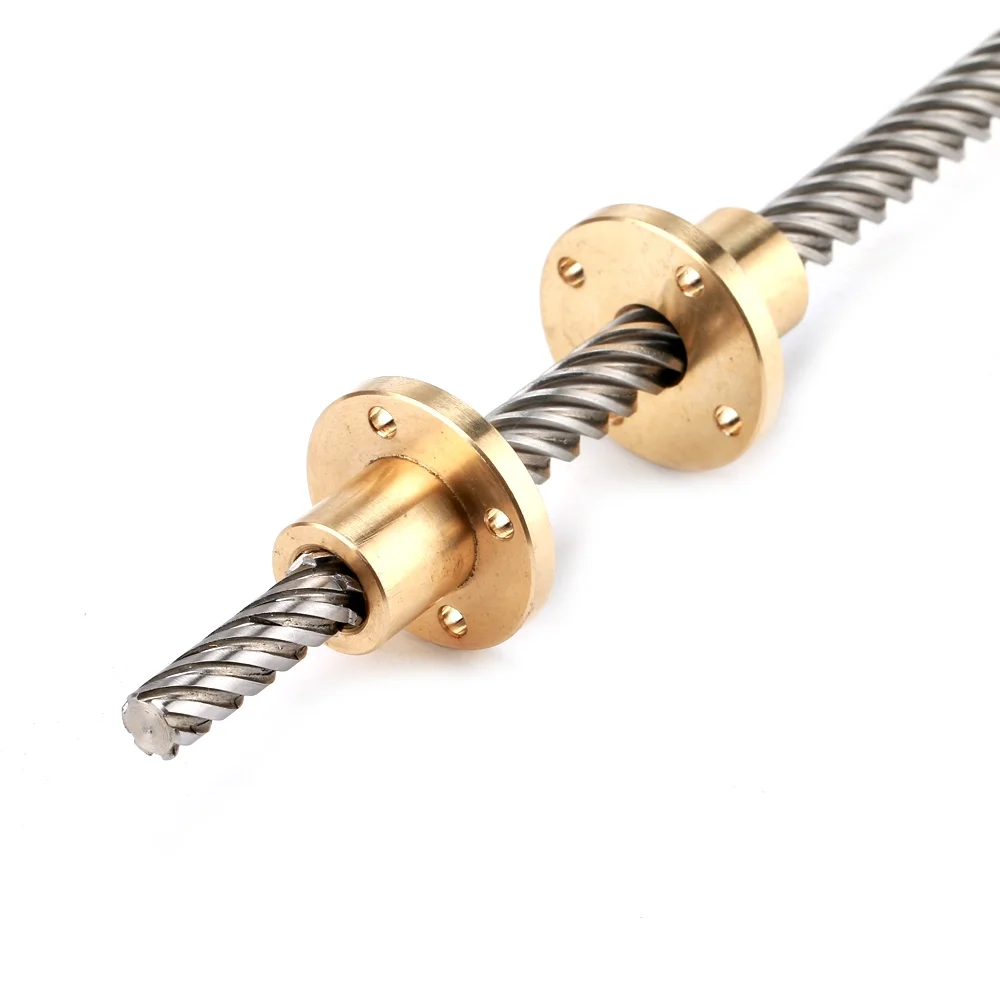
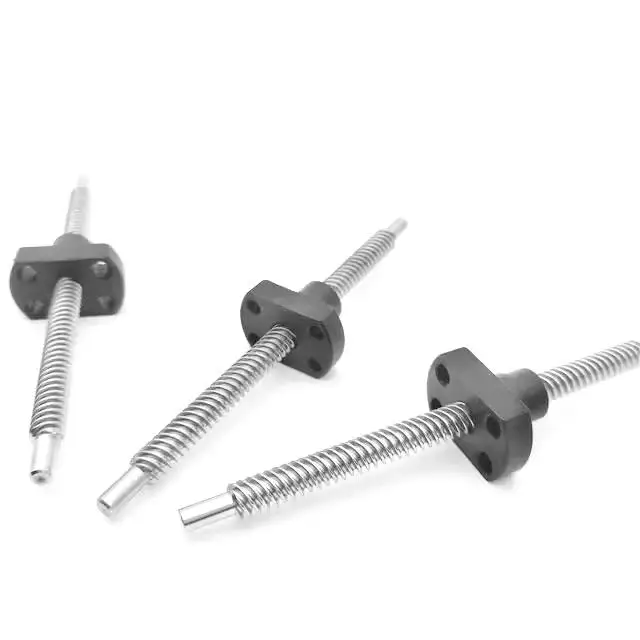
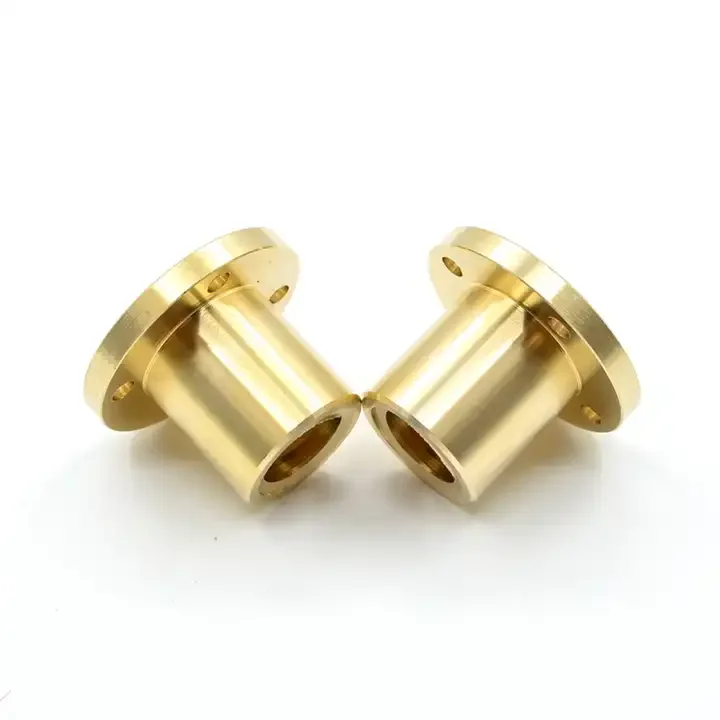
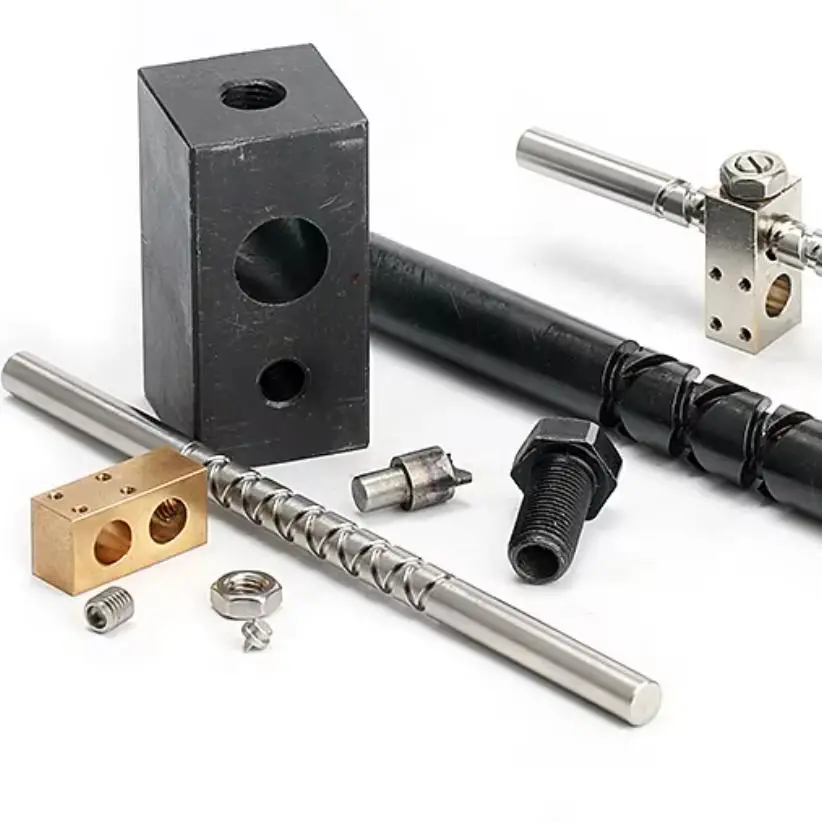
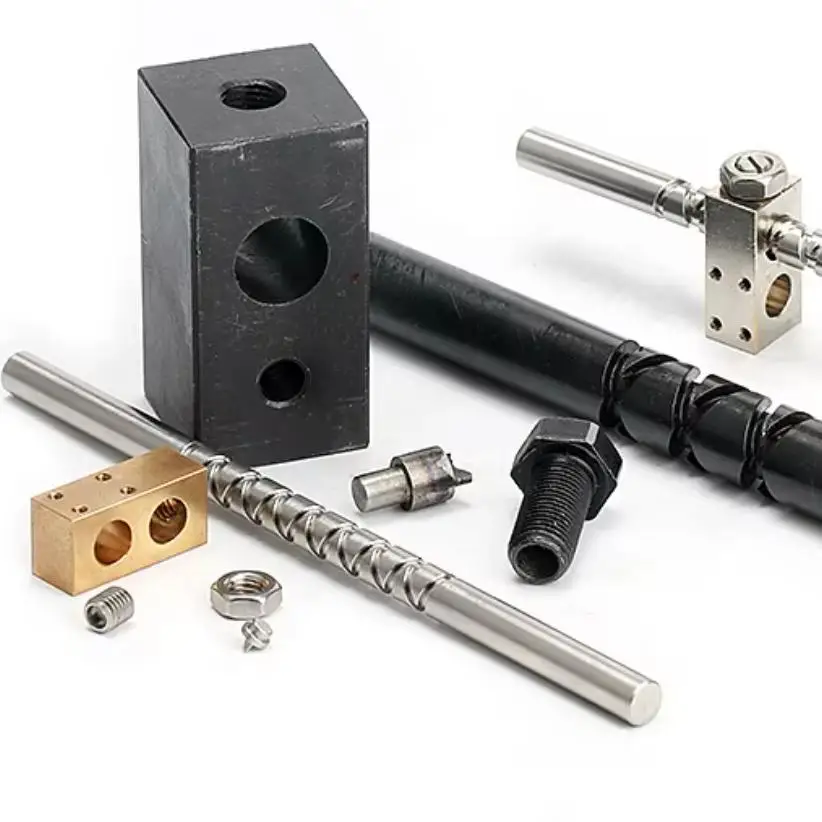
The range runs from T3 and Tr3 at the small end to T16 and Tr14, with T8 the volume item by a wide margin. Nuts are supplied in POM, brass and bronze; the material decides both the friction and the wear life.
| Nut material | Behaviour | Where it belongs |
|---|---|---|
| POM / acetal | Quiet, low friction, wears faster under load | Light axes, 3D printers, lab equipment, low duty |
| Brass | Good compromise, machines well, accepts higher load | General purpose, hand-adjusted axes |
| Bronze | Best wear resistance and load capacity, heaviest | Continuous duty, higher temperature |
Lead, pitch and starts are three different things
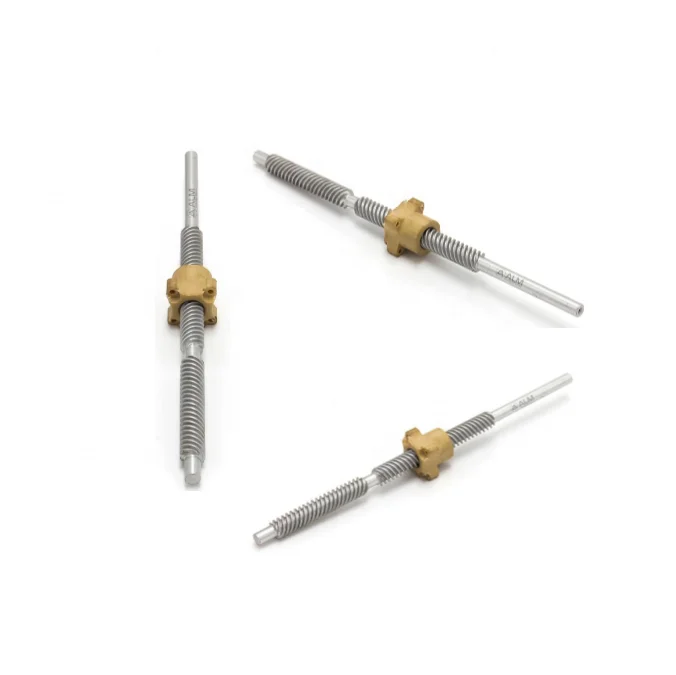
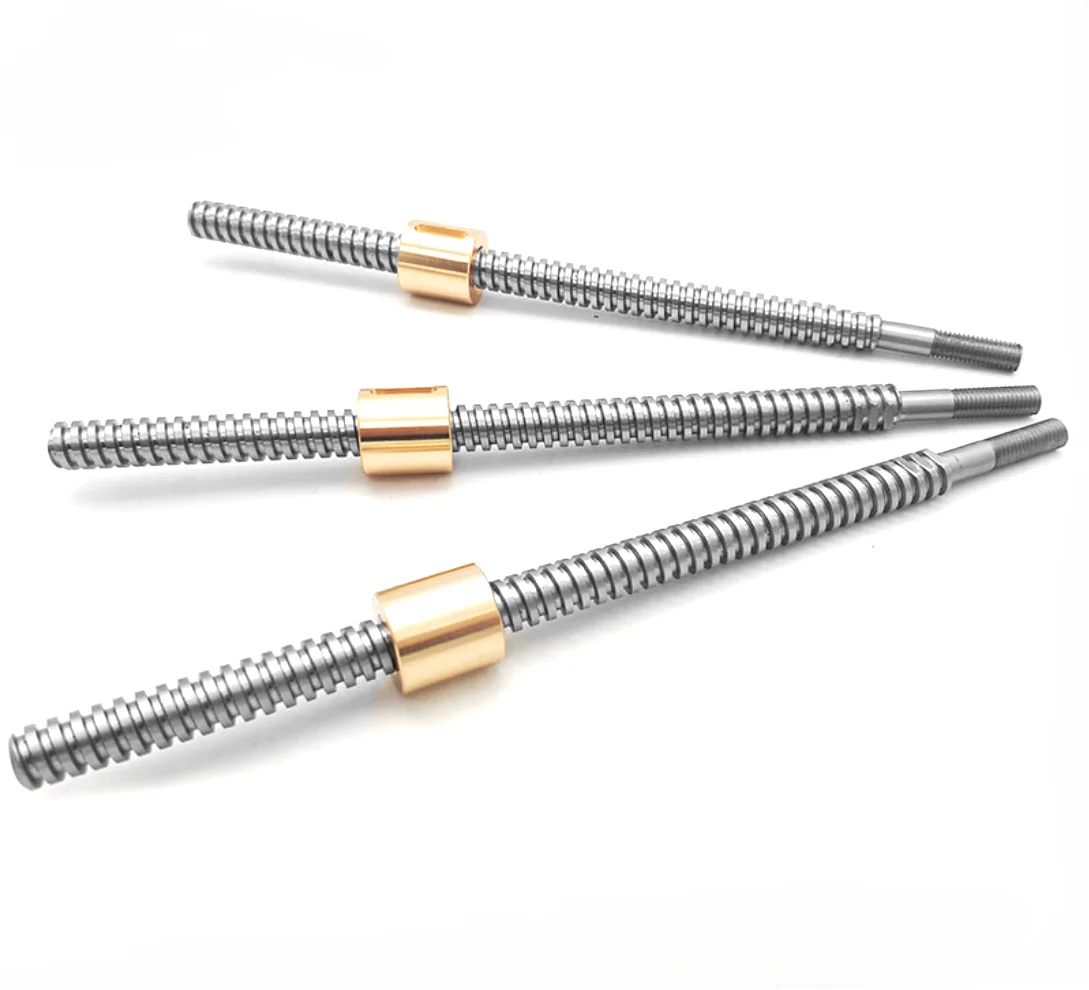
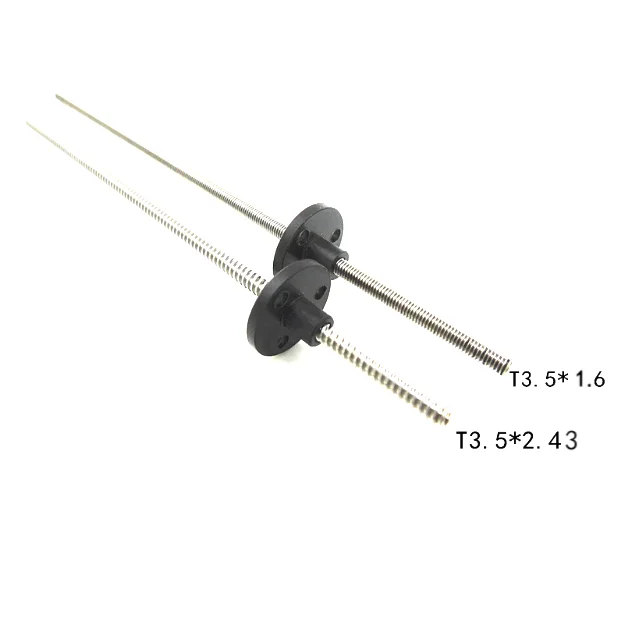
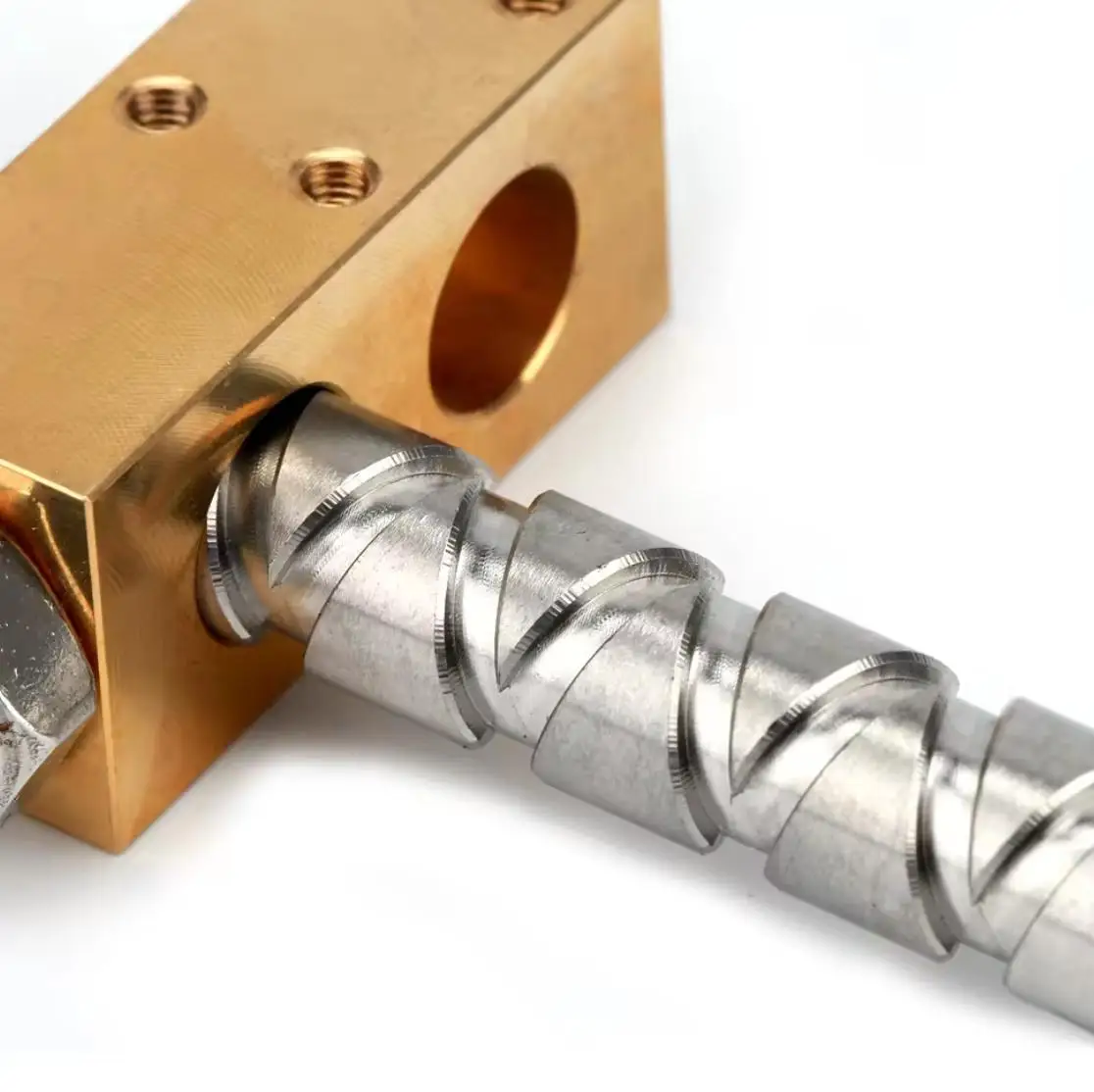
Pitch is the distance between adjacent thread crests. Lead is how far the nut travels in one full turn. They are equal only on a single-start screw. A two-start screw has two thread starts 180 degrees apart, so it travels two pitches per revolution while keeping the same thread depth and the same nut length. That is how a lead screw gets speed without becoming a coarse, weak thread.
When you read T8x2, the second number is the lead, not the pitch. Two suppliers can both sell "T8" and ship screws that travel 2 mm and 8 mm per turn. Ask for lead in millimetres, never for a model number alone.
Backlash is the number that limits you
Standard nuts have axial clearance so they can run without binding. That clearance is backlash, and it appears as lost motion every time the axis reverses. On a hand-adjusted axis nobody notices. On a CNC axis running a contour, backlash shows up as a witness mark at every direction change.
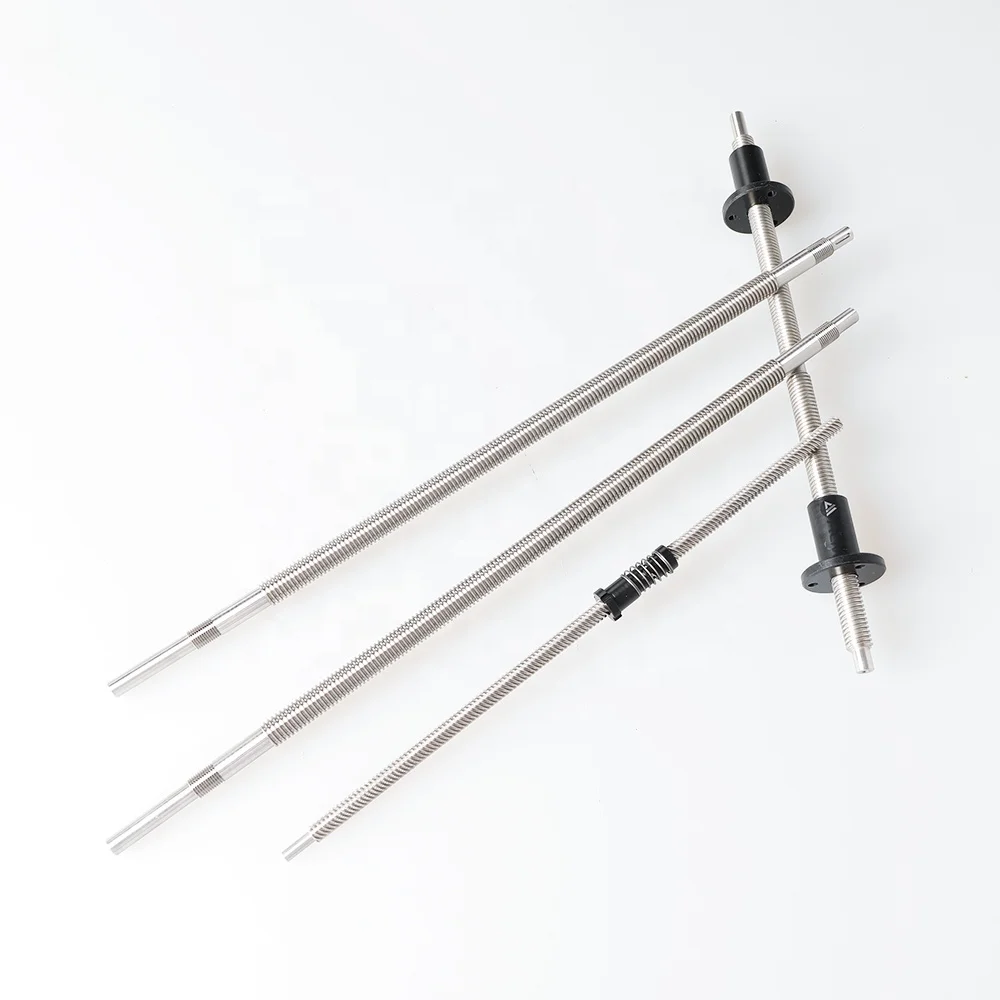
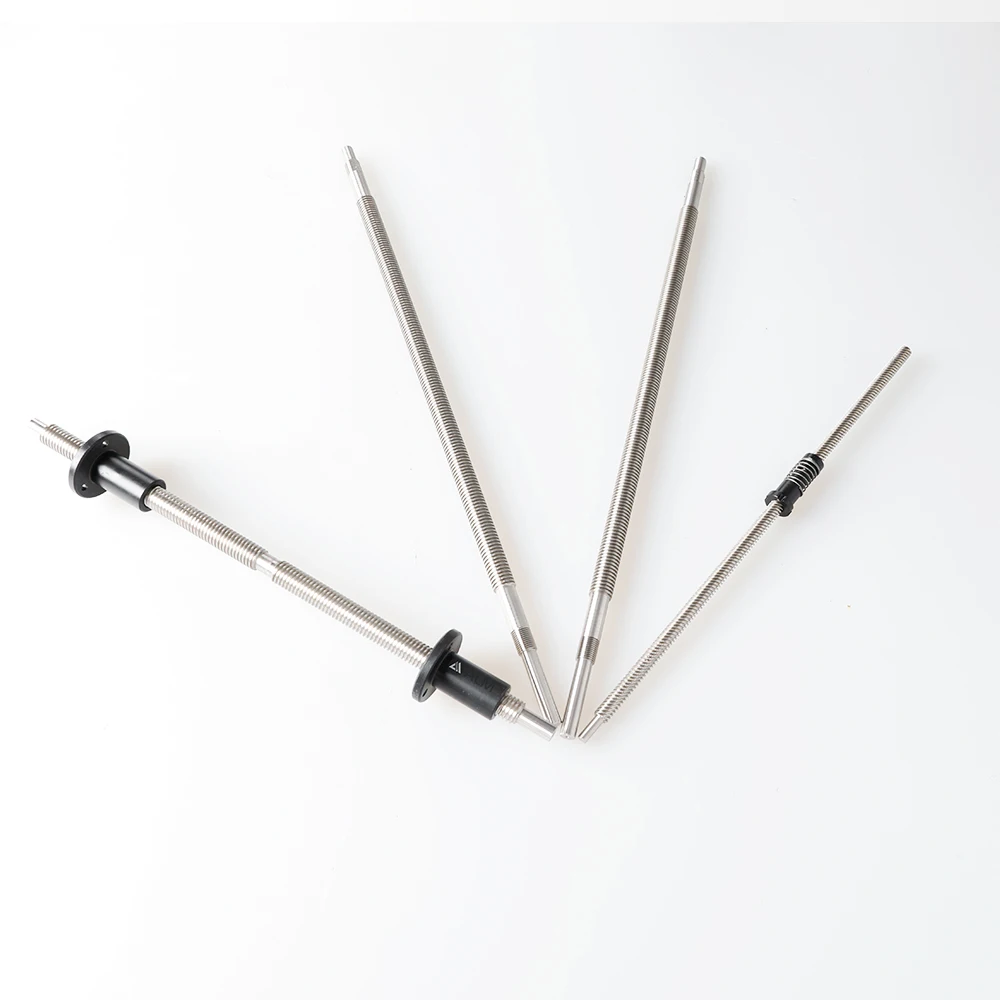
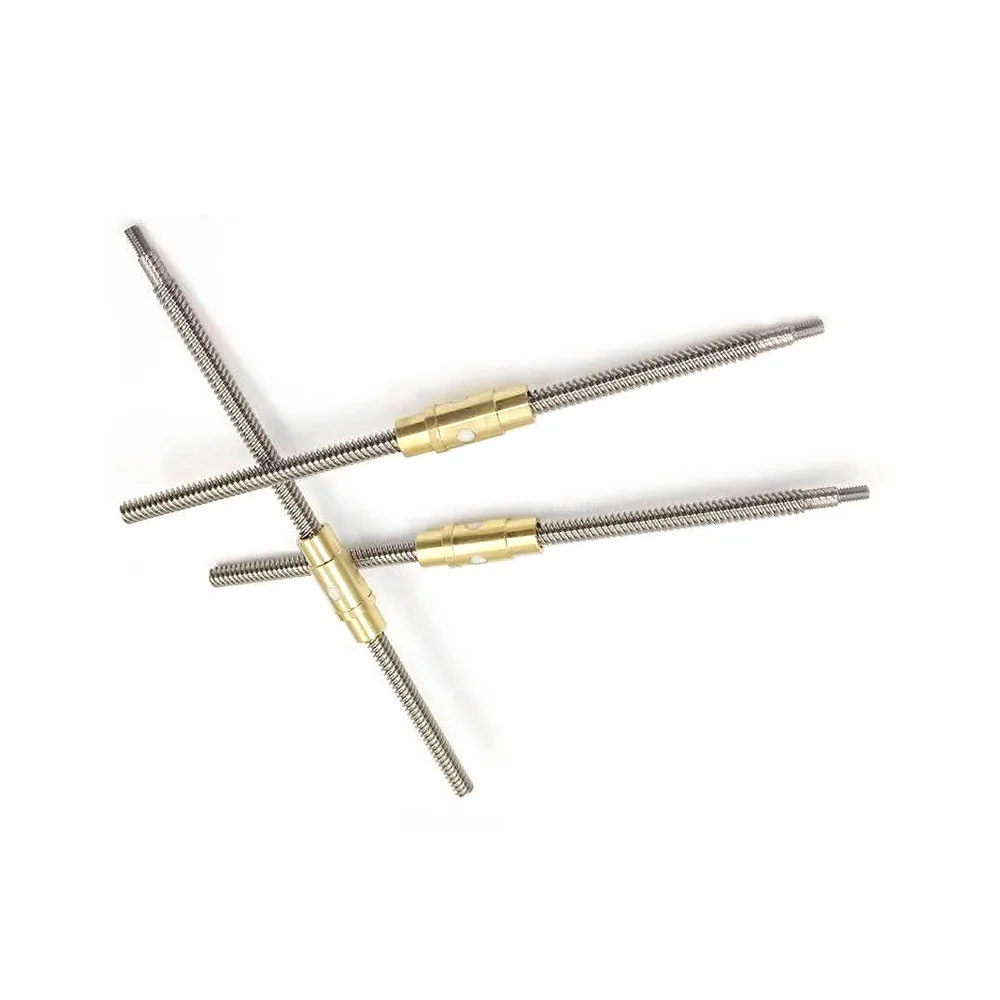
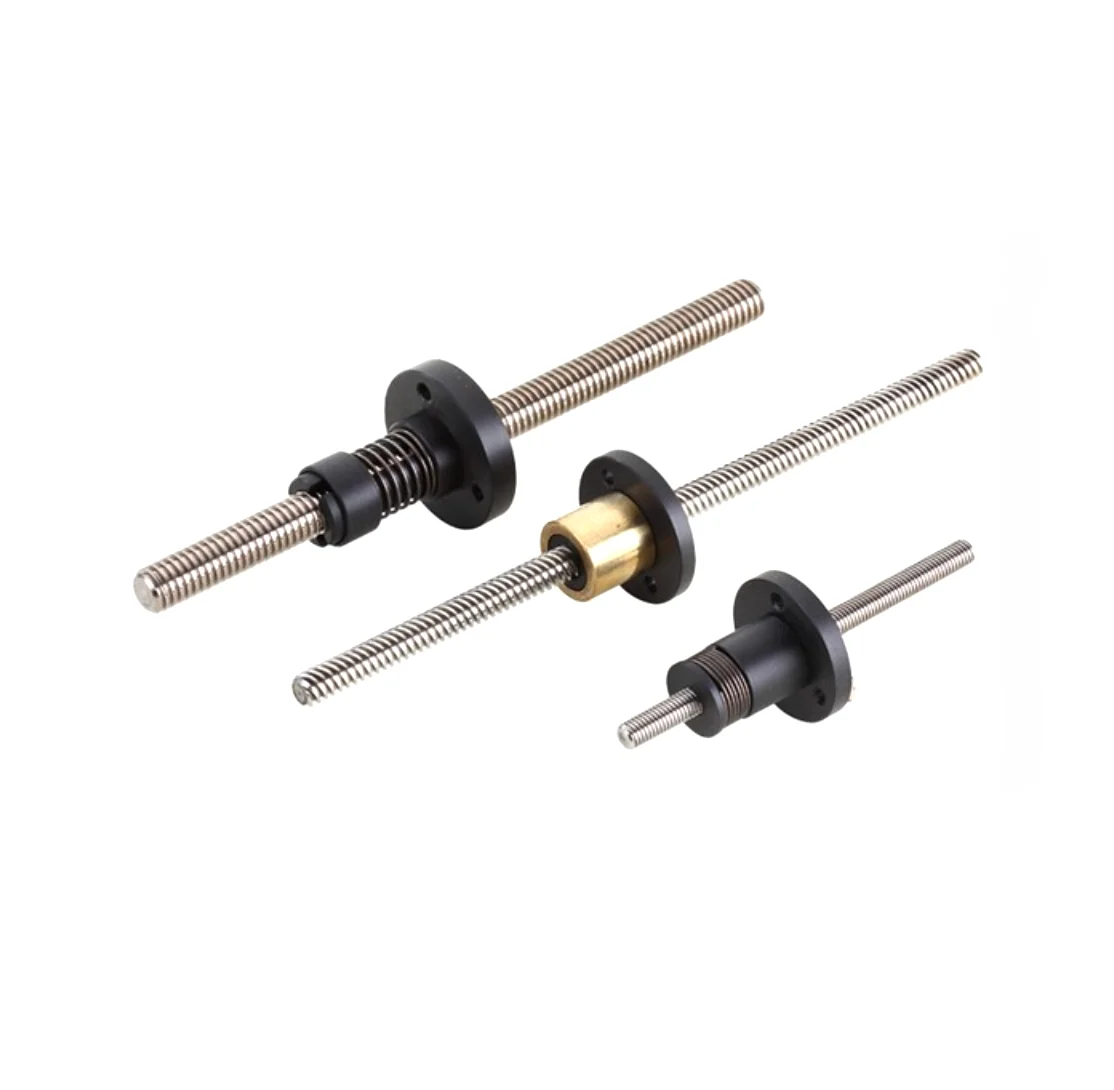
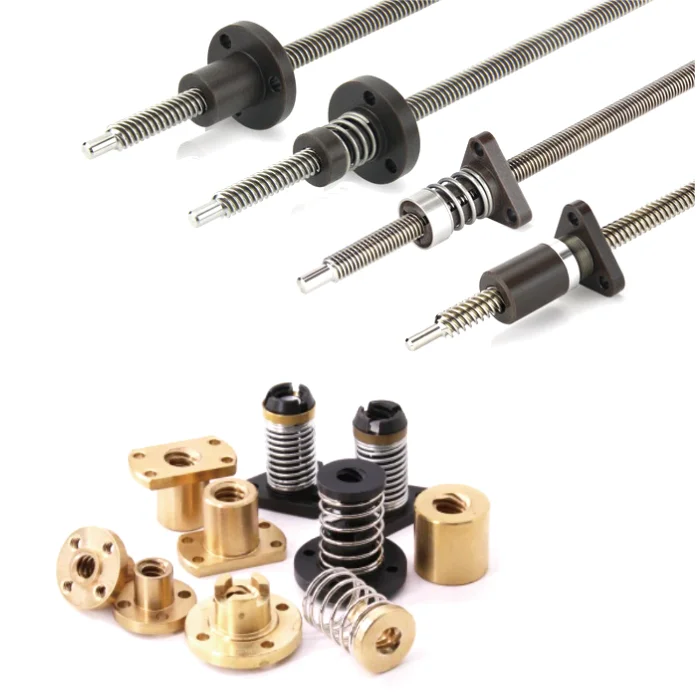
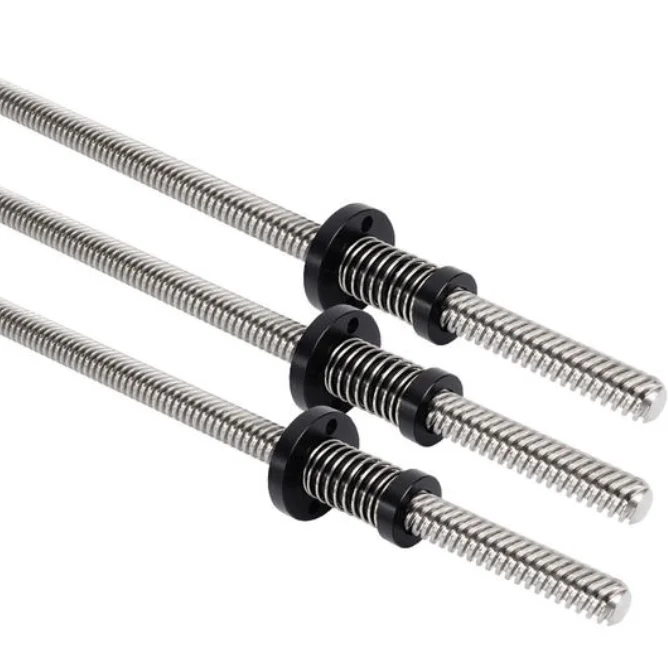
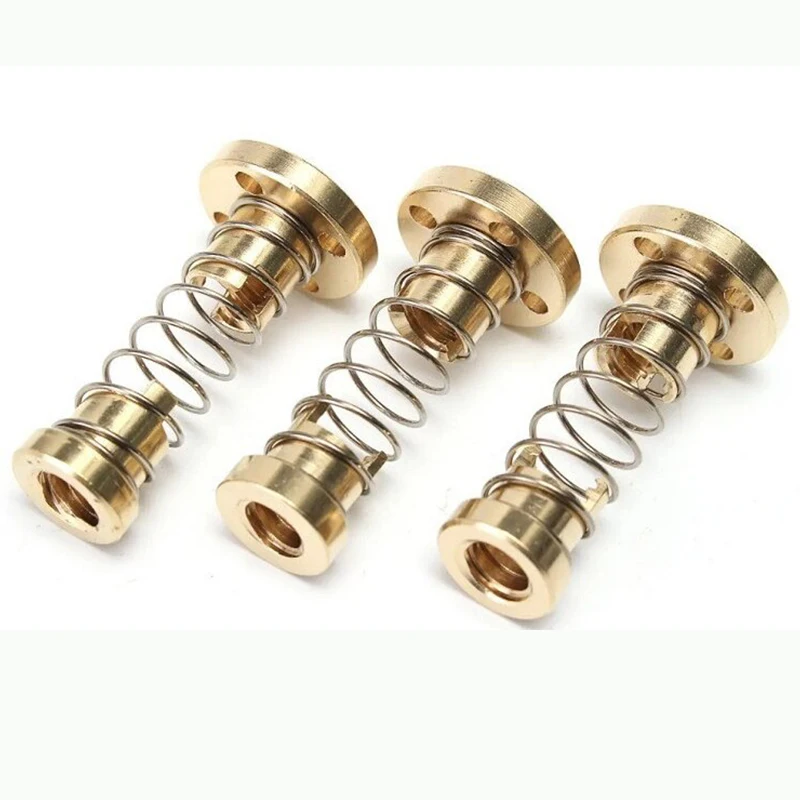
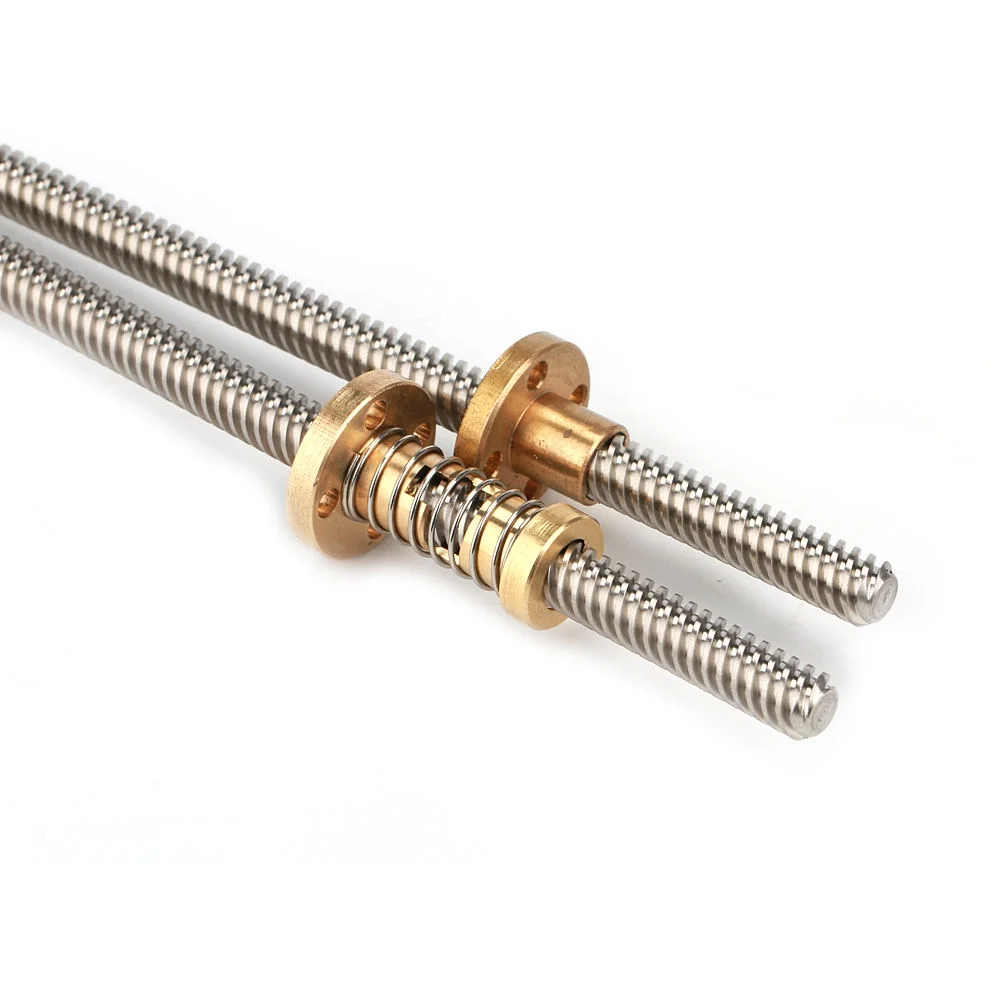
The fix is an anti-backlash nut — a split nut with a spring or a second adjusting collar that closes the clearance. It removes most of the play and adds drag. If your application reverses direction under load, specify it up front; retrofitting means replacing the nut.
Self-locking, and why it matters
At a small lead angle a lead screw will not backdrive: the friction angle exceeds the helix angle and the load stays where it is put. That is why a lead screw is often chosen for a vertical axis with no brake. It is also why the same screw is inefficient — the energy that would run the load back down is the energy you are paying for on the way up. A high-lead multi-start screw gives that up: it will backdrive, and a vertical axis then needs a brake.
The failure that is really a length problem
Long, thin lead screws whip exactly like ball screws and at lower speeds, because they are usually smaller in diameter. A T8 screw over a metre is not a high-speed axis no matter what the motor does. If the application needs both length and speed, the answer is a supported screw, a larger diameter, or a different transmission entirely.
What to specify
- Diameter and lead in millimetres, and the number of starts
- Overall length and the threaded length — the unthreaded ends are where the bearings go
- Nut material and whether anti-backlash is required
- End machining drawing, or the bearing bore it has to fit
- Whether the axis is vertical, and whether it must hold when unpowered