
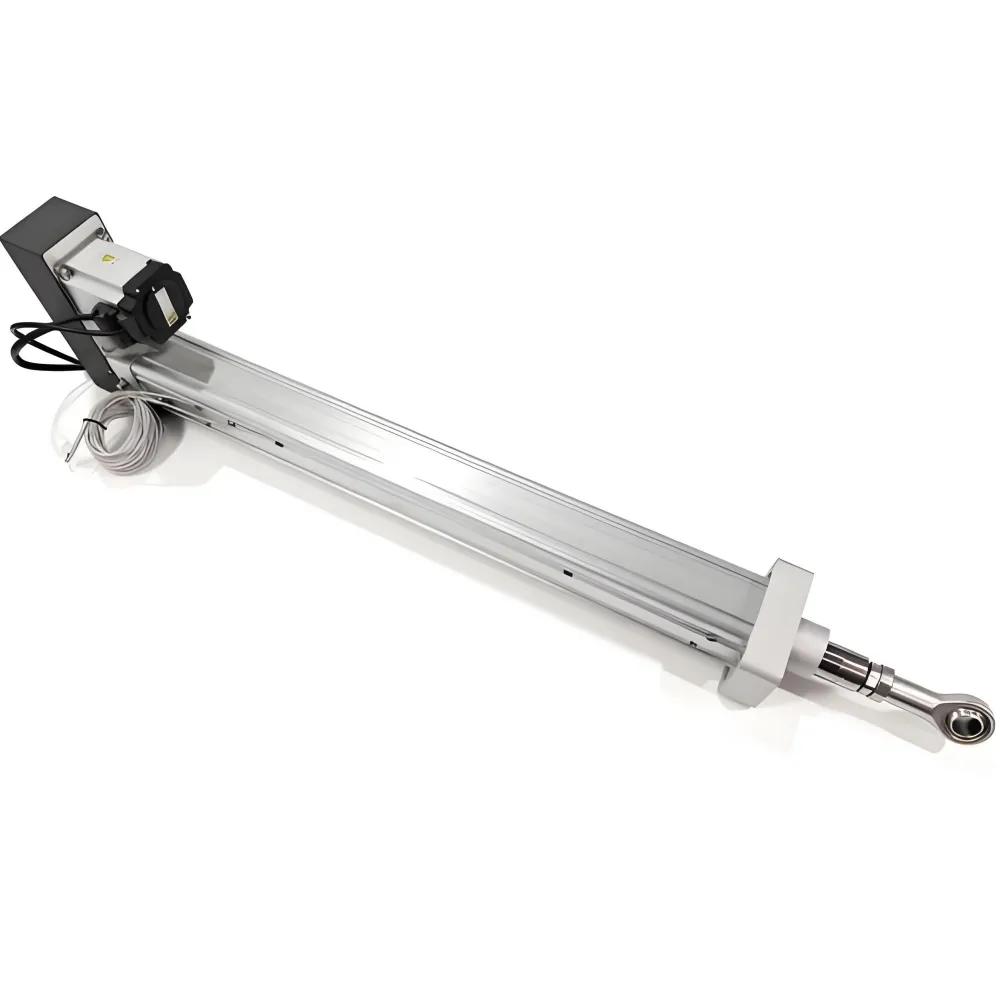
Low Noise Servo Electric Cylinder, Medical Duty, for packaging machines
Request pricing, MOQ and lead time for this product — we reply within 24 hours.
Construction
| Motor type | Servo Motor/Stepper Motor Compatible |
|---|
Performance
| Max thrust | 500N/1000N/2000N/5000N/10000N |
|---|---|
| Max speed | 50mm/s/100mm/s/200mm/s/500mm/s |
| Stroke | 50mm/100mm/200mm/300mm/500mm/Custom |
| Positioning accuracy | ≤0.01mm/≤0.02mm/≤0.05mm |
| Repeat positioning accuracy | ≤0.005mm/≤0.01mm |
| Lead | 2mm/4mm/5mm/10mm |
| Control mode | Position/Speed/Force Control |
Dimensions
| Horizontal load | Up to 50 kg |
|---|---|
| Side mounted load | Up to 50 kg |
| Unit weight | 5 |
Environment and motor
| Protection grade | IP54/IP65/IP67 |
|---|
Application
| Application | Industrial Robot, Linear Motion System,Automated |
|---|---|
| Compatible equipment | Industrial Robot, Linear Motion System,Automated Production Line |
Values above are the manufacturer's published figures for this series. Anything not listed — dynamic load rating, straightness, preload class — is confirmed against the drawing at RFQ.
Description
Overview
The ball screw linear actuator in this listing belongs to the group of parts that make a linear axis repeatable: it carries the load, holds the geometry, and sets the accuracy that the rest of the machine can achieve. A ball screw actuator turns a motor into a controlled push or pull along one axis. The screw converts rotation to thrust, the guide takes the side load so the screw is not bent by it, and the housing holds the whole assembly in line. The result is a compact linear drive that can be bolted to a frame and wired to a controller.
Key Features
· Horizontal load: Up to 50 kg
· Side mounted load: Up to 50 kg
· Unit weight: 5
· Application: Industrial Robot, Linear Motion System,Automated
· Max thrust: 500N/1000N/2000N/5000N/10000N
· Max speed: 50mm/s/100mm/s/200mm/s/500mm/s
· Supplied as a replacement part or as a production item for machine builders
· Material, tolerance and surface treatment confirmed against the drawing
Specifications
The parameter table above lists the values published for this item. Where a value depends on the machine it is going into, the drawing or the RFQ fixes it, and we confirm before production rather than after.
Application
Stroke: 50mm/100mm/200mm/300mm/500mm/Custom. Screw lead: 2mm/4mm/5mm/10mm.
Thrust, stroke, speed and the mounting style are the four numbers to fix first. Thrust comes from the motor torque and the screw lead; speed comes from the same two numbers in the opposite direction; and the mounting decides whether the actuator pushes, pulls or carries a load on its carriage.
The three things that shorten the life of a part like this are contamination, misalignment and overload. Keep the working surfaces covered during assembly, align to the datum that the machine was built from, and keep the load inside the rating with a margin for the peaks that occur when an axis starts, stops or jams.
Where it is used: press and clamp mechanisms, valve actuation, lifting and positioning, packaging and filling machines, test stands, automation cells.
Installation & Maintenance
Comparing quoted parts on price alone hides the differences that show up later: the tolerance on the mounting face, the grade of the working surfaces, the flatness of a rail or the straightness of a shaft. Two parts that look the same in a photograph can differ by a factor in life depending on those details, and the difference appears as a machine that holds accuracy after a year rather than one that has to be re-aligned.
Two limits belong together: the static one, which sets how much load the part can take without permanent deformation, and the dynamic one, which sets life under movement. A machine that is loaded while stationary is limited by the first, a machine that runs continuously is limited by the second, and a machine that does both has to satisfy whichever number is smaller in the application.
Environment changes the specification more often than load does. Dust and chips get into working surfaces and act as an abrasive; coolant and wash down remove lubricant and start corrosion; heat moves the geometry and changes the clearance that was set cold. Each of these has an answer, but the answer has to be chosen before the order rather than after the machine is built.
Keep the part clean and dry, check the fasteners after the first hours of running, and re-check them at the interval the machine builder sets. A part that has started to move on its mounting shows as a mark around the bolt holes, and that is the point to correct the joint rather than to tighten it again.
For a quotation, send the size, the quantity, the accuracy or grade required and a drawing or photograph of the mounting interface. Where the part has to match an existing machine, the dimensions of the old part and the distance between its mounting holes are the two measurements that avoid a mismatch.
Package & Lead Time
Standard export packing: each part is sleeved and cartoned, screws and rails are protected along their length, and larger assemblies travel crated. Lead time is confirmed with the quotation: standard sizes normally ship within 5 to 15 days of a confirmed drawing, custom parts against the agreed schedule. Minimum order is one piece, and sample orders are accepted before a production run.
Request a Quote
Send the model number or the drawing, with the shaft or rail size and the quantity you need, and we will reply with a quotation. For non-standard lengths, bore pairs, keyways and material changes we work from your drawing; bulk orders are quoted per quantity band and a sample can be supplied for approval.
Related components
Detail images
Questions buyers ask about this item
What thrust does it produce?
500N/1000N/2000N/5000N/10000N.
What stroke is available?
50mm/100mm/200mm/300mm/500mm/Custom.
What is the protection grade?
IP54/IP65/IP67.
Which motors fit?
Servo Motor/Stepper Motor Compatible.
How is the drive arranged?
A ball screw in an aluminium profile pushes the rod, so the axis holds position when the motor stops.
Related products
TEBAK Linear Module, Smaller Attraction Force Dustproof
TEBAK High Performance KK Ball Screw Linear Motion Guide
TEBAK Precision Linear Actuator grades C or P
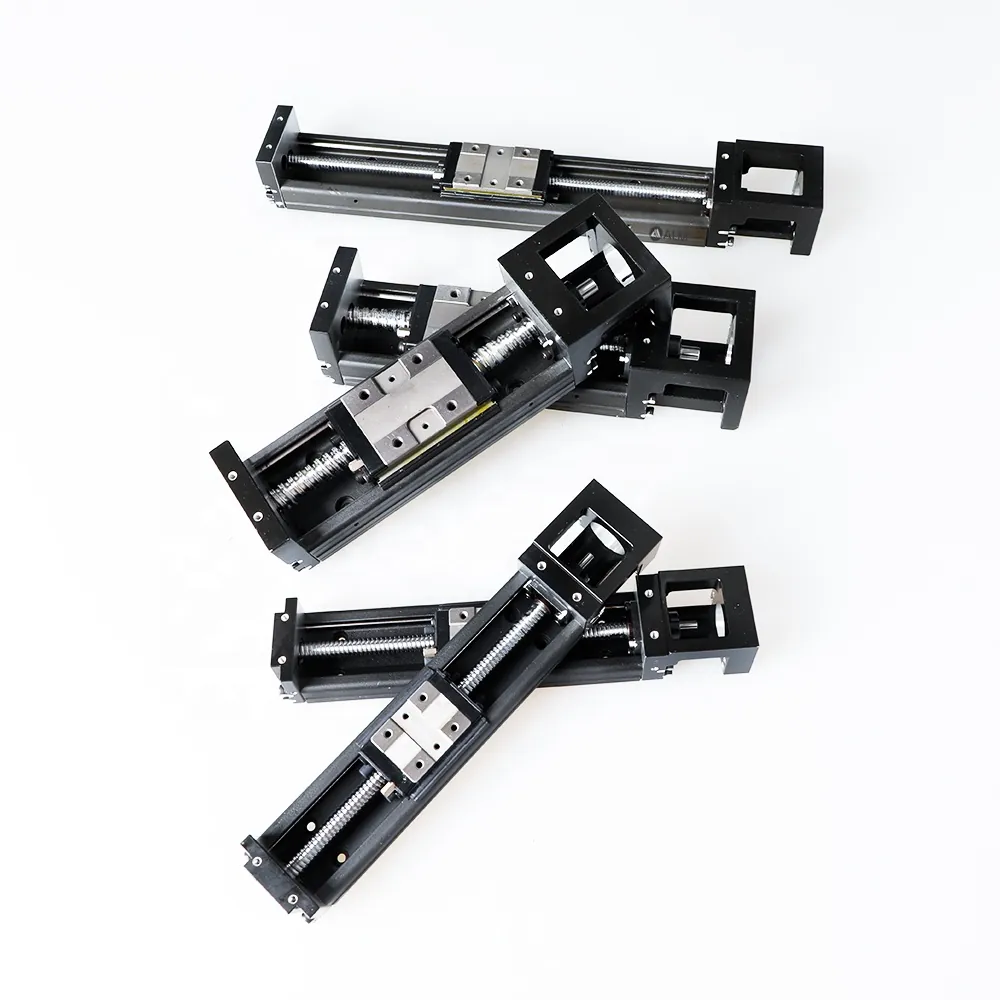
TEBAK KK6005C-150 Linear Module Single Axis Stage - KK
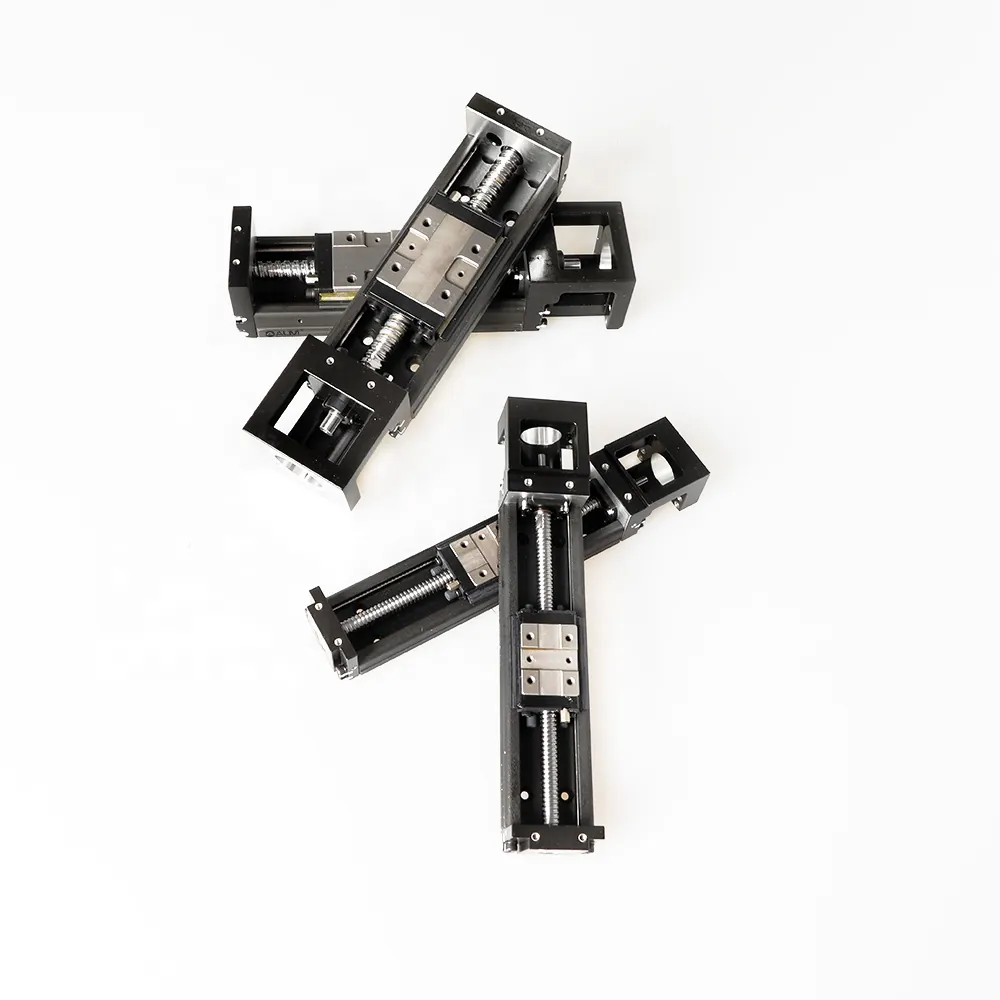
TEBAK Precision KK4001–KK13025 Ball Screw 40 mm
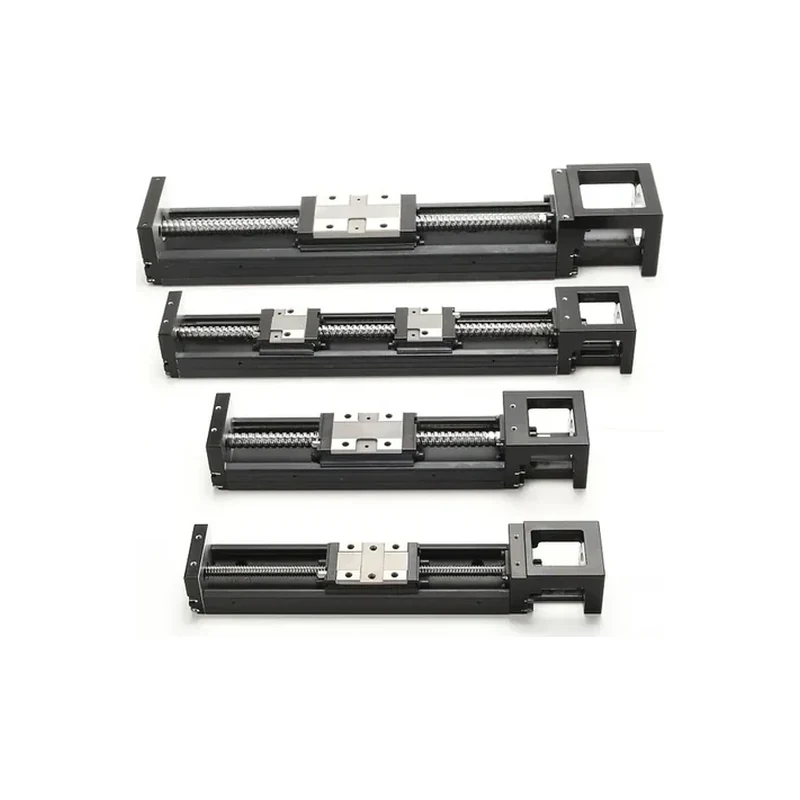
TEBAK KK40–KK130 Linear Module 40 mm
Interested in this product?
Send your details and we will respond within 24 hours.