
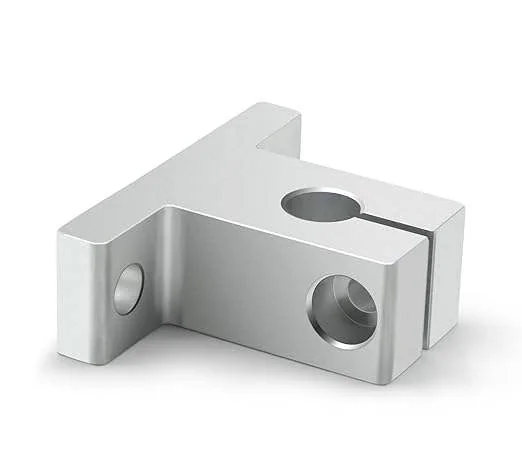
SK Shaft End Support Block, SK8 to SK35
Request pricing, MOQ and lead time for this product — we reply within 24 hours.
Geometry
| Models | SK8 to SK35, one bore size per model |
|---|---|
| Bore | Matches the nominal shaft diameter |
| Clamping | Split bore with a clamp screw |
| Height | Fixed by the model, sets the shaft centre height |
Supply conditions
| Material | C45 steel; aluminium available |
|---|---|
| Finish | As machined or black oxide |
| Packing | Carton, parts bagged |
| Lead time | Confirmed at quotation |
Values above are the manufacturer's published figures for this series. Anything not listed — dynamic load rating, straightness, preload class — is confirmed against the drawing at RFQ.
Description
Overview
An SK block holds a linear shaft at a fixed height above the mounting plate and clamps it so it
cannot move. It is the part that turns a loose rod into a defined axis: the height sets where the
shaft sits relative to everything else on the plate, and the split bore with its clamp screw holds
the shaft without needing a press fit or a drilled and tapped hole in the shaft itself.
Because the model number follows the shaft diameter, selection is one step: measure the shaft,
order the matching SK size, and the bore is right.
Key Features
· Models from SK8 to SK35, one for each standard shaft diameter
· C45 steel as standard, aluminium where weight matters
· Split bore with a clamp screw, so the shaft can be set and re-set
· Fixed centre height per model, which makes the axis geometry repeatable
· Usable at the ends or along the span of a long shaft
· Black oxide finish available for mild corrosion protection
Specifications
The parameter table above lists the published values. Bore size, centre height and mounting hole
spacing follow the model, and the material and finish are chosen with the order. Where a machine is
being rebuilt, the height of the original support is the number to match, not only the bore.
Application
SK supports are used wherever a round shaft has to be fixed to a plate: small linear axes,
converted 3D printers, engravers, dispensing heads, camera sliders, laboratory fixtures and
test rigs. They are also the standard repair part when a support on an existing machine cracks or
loses its clamp.
On a long axis, intermediate supports placed along the span are what keep the shaft straight, and
these blocks are the usual way to add them.
Installation & Maintenance
Mount the block to a flat, clean face, slide the shaft through with the clamp screw loose, align the
shaft along its length, then tighten the clamp. Do not use the clamp screw to pull a misaligned
shaft into position: it will hold the shaft bent, and the bend becomes a tight spot in the stroke.
Check the clamp screws at every service, since a support that has loosened takes the axis alignment
with it. If the shaft shows a bright ring where it sat in the bore, the clamp had been working
loose.
Where more than two supports hold one shaft, set the shaft in the end supports first, then bring the
intermediate blocks up to the shaft rather than pulling the shaft down to them. A long shaft forced
into three supports that are not at the same height will hold a slight curve, and the carriage will
feel it as a change in drag as it passes each block. A straight edge along the top of the shaft, or
a dial indicator on the mounting face, settles the height question faster than running the axis and
listening for it.
If a support has to be replaced on a machine in service, note the height of the original before it
comes off. The bore is easy to read from the shaft, but the height is what aligns the new block with
the rest of the axis, and it is the number that is lost when the old part is thrown away.
Package & Lead Time
Blocks are bagged and cartoned, with screws supplied where the model includes them. Lead time is
confirmed at quotation, normally 5 to 15 days for standard models. Minimum order is one piece.
Request a Quote
Send the shaft diameter, the number of supports and, for a rebuild, the height of the original
block. If the shaft is long, tell us the span so we can recommend how many intermediate supports to
add.
Related components
Detail images
Questions buyers ask about this item
What is the difference between an SK and an SHF support?
SK is a block that clamps the shaft at a fixed height above the plate. SHF is a flange bracket that mounts on a face or a plate edge. Which one you need depends on where the shaft has to sit relative to the mounting surface.
Does the SK model number follow the shaft diameter?
Yes. SK10 takes a 10 mm shaft, SK20 a 20 mm shaft, and so on. That is why the block is ordered by the shaft diameter rather than by its own dimensions.
Can the support be used mid-span, not only at the end?
Yes, and on a long shaft it should be. Supports placed along the span keep the shaft straight under load; end supports alone leave the middle free to deflect.
Is the bore split so the shaft can be clamped?
Yes, the bore is split and closed by a clamp screw, so the shaft is held by friction rather than by a press fit and can be released and repositioned.
Related products
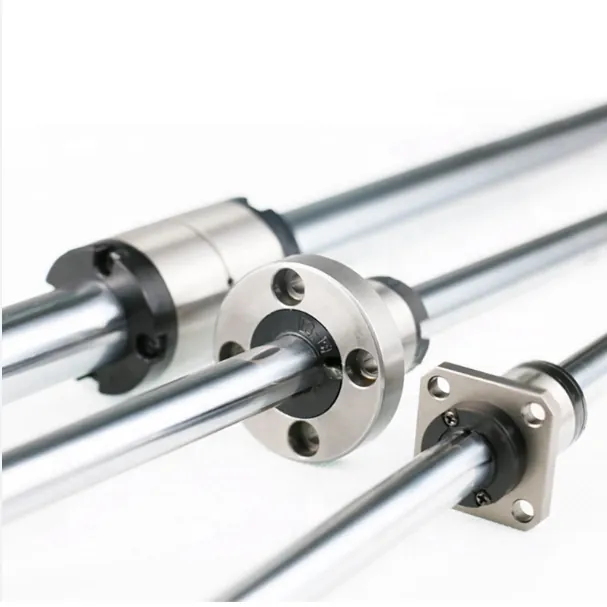
TEBAK Ball Spline, High Speed 10mm 13mm 16mm 20mm 25mm
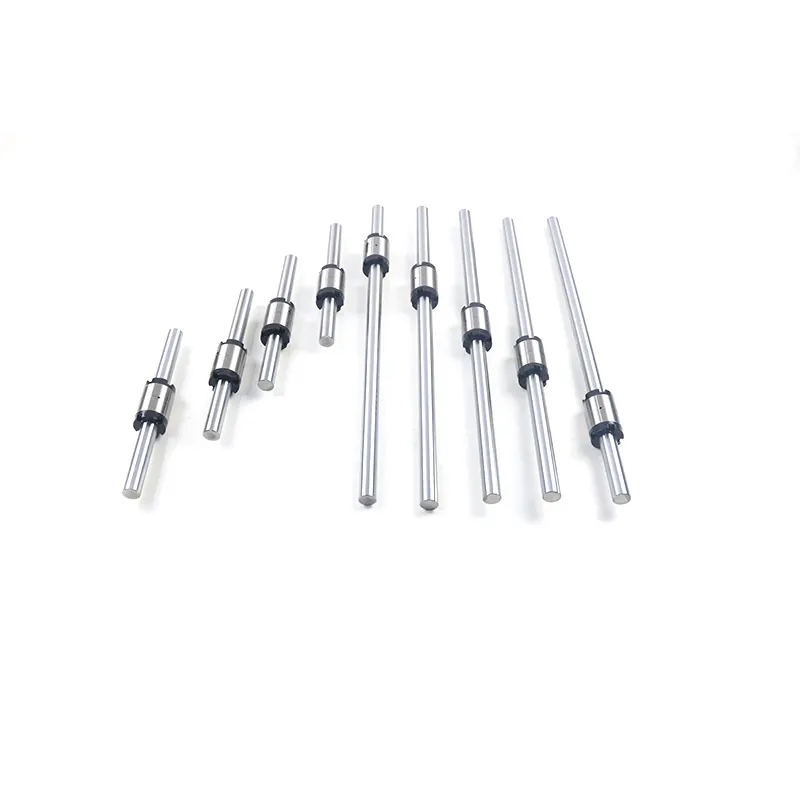
TEBAK Precision SLT008–SLT016 Ball Spline, grade N,H,P
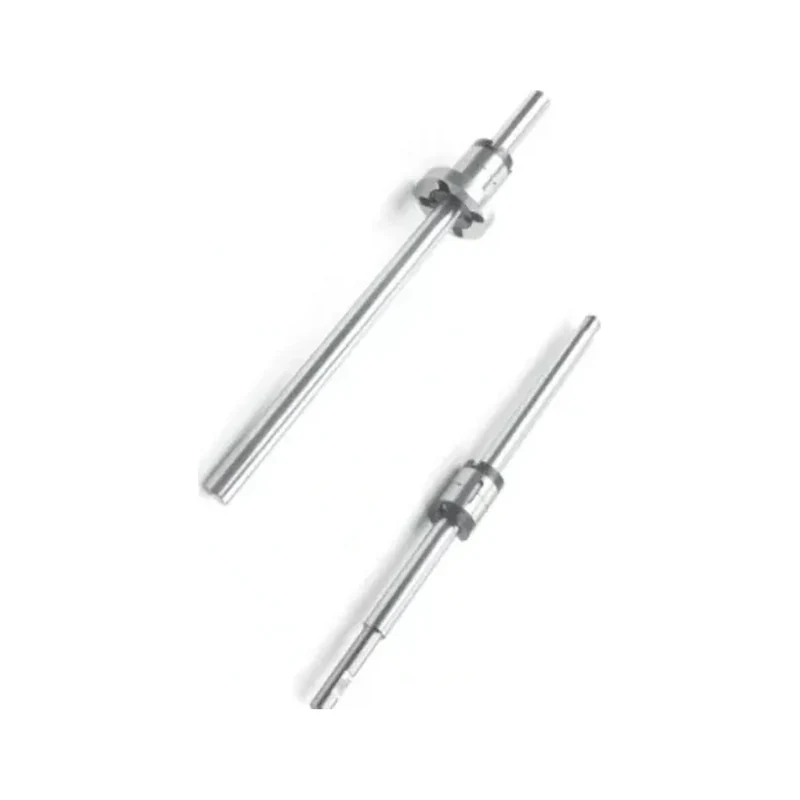
TEBAK Diameter 8mm 10mm 13mm 16mm Solid /hollow Custom
TEBAK Micron or Nanometer-level Positioning, grade H,P,SP
TEBAK Roller Linear Bearings VR1-20 VR2-30 VR3-50
TEBAK Smooth Motion Precision Cross Roller Guides VR4
Interested in this product?
Send your details and we will respond within 24 hours.