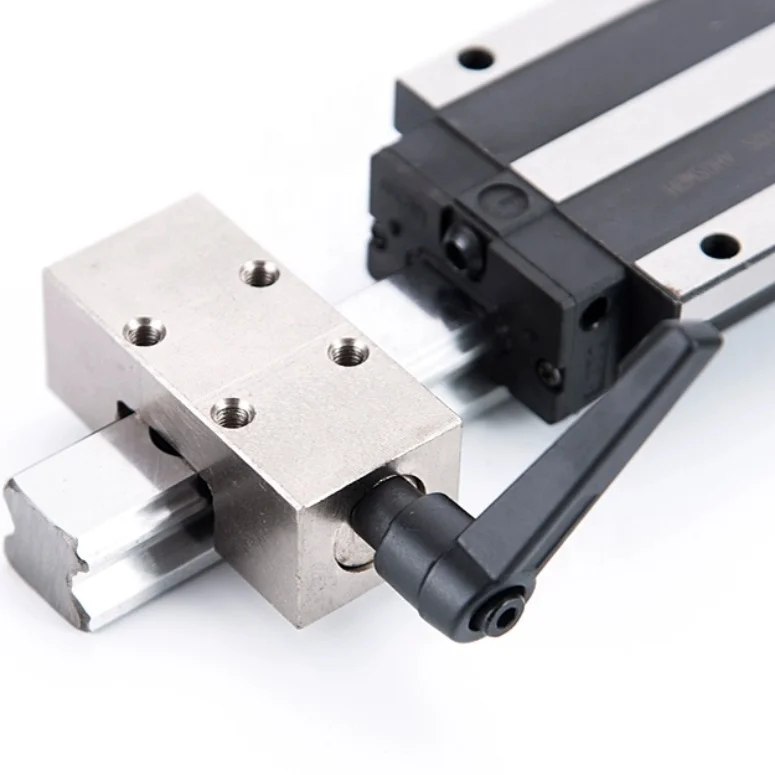
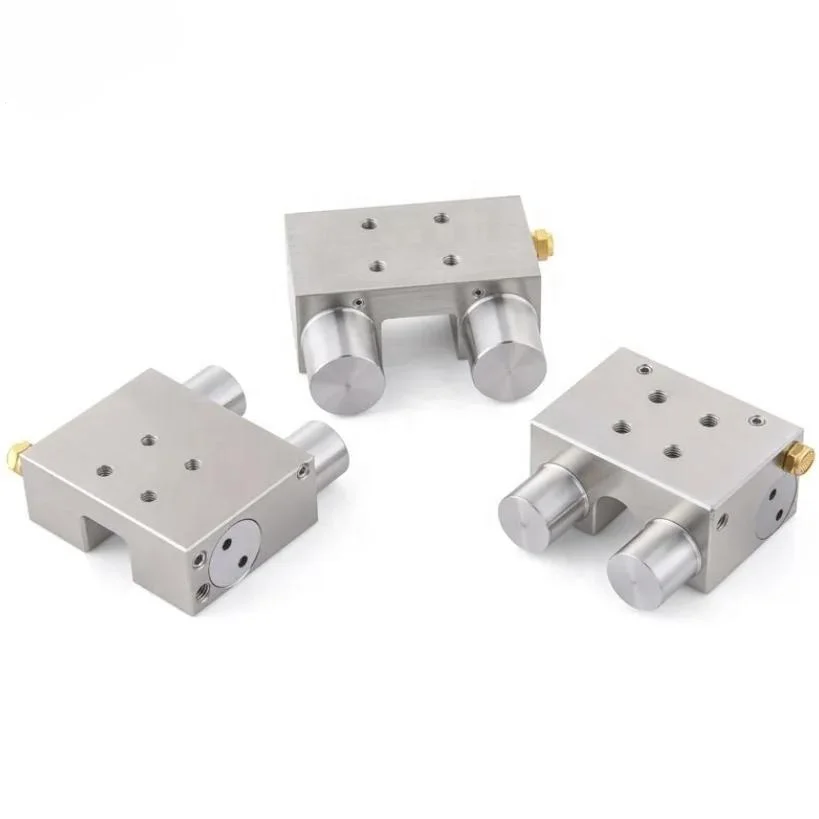
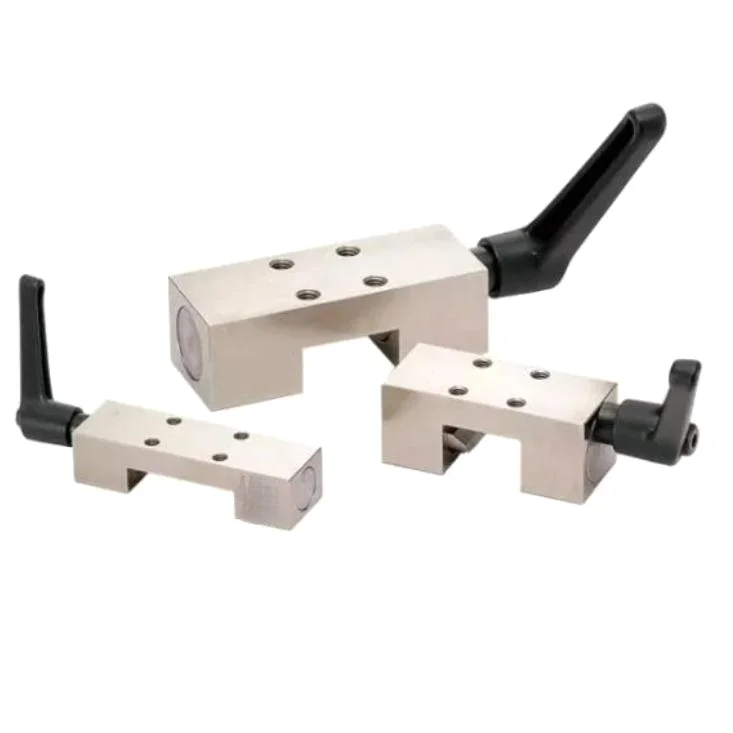
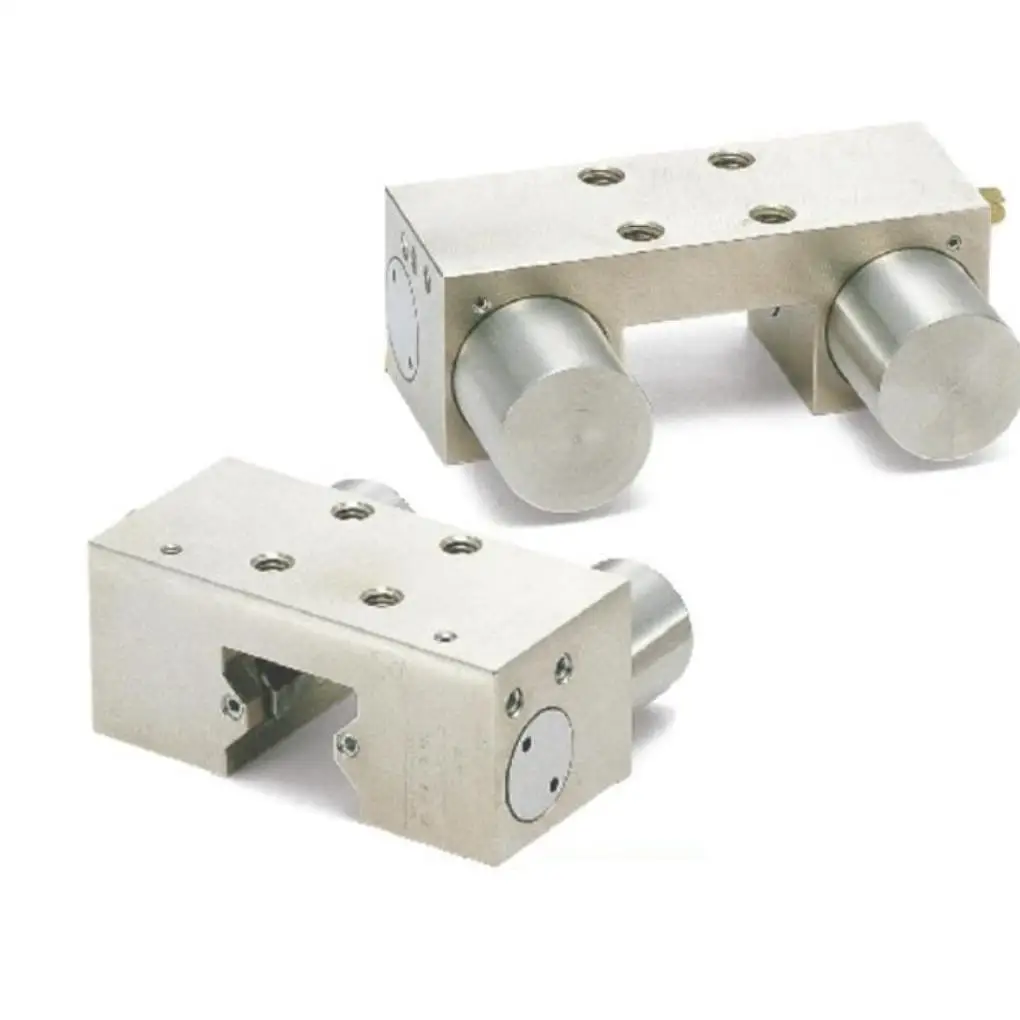
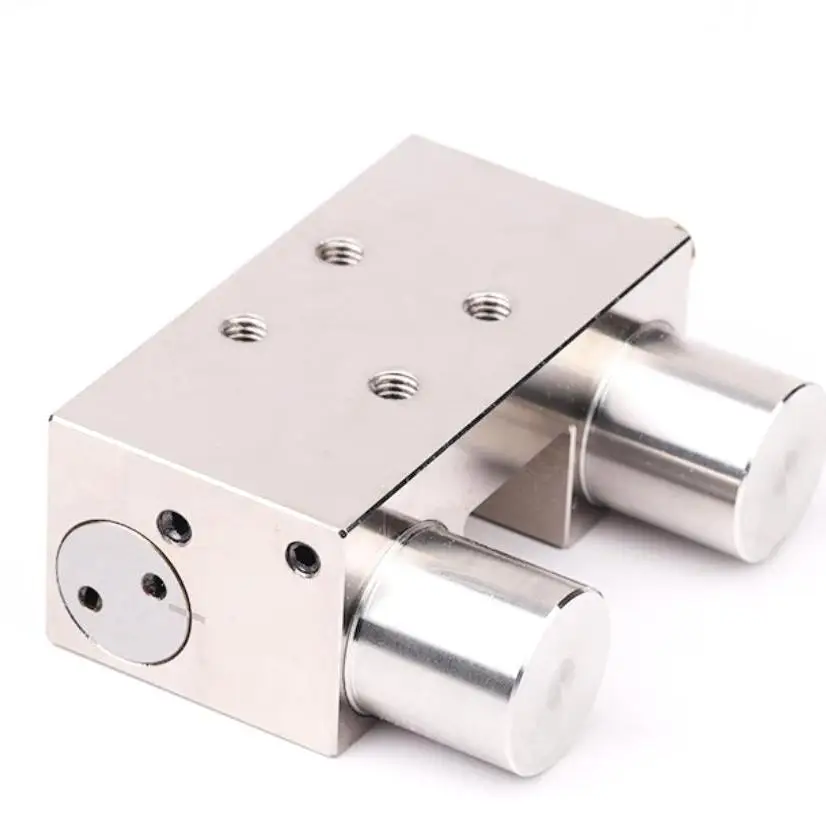
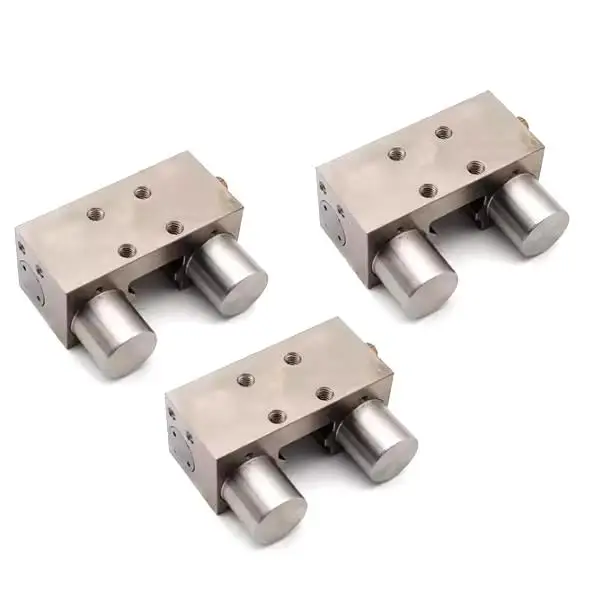
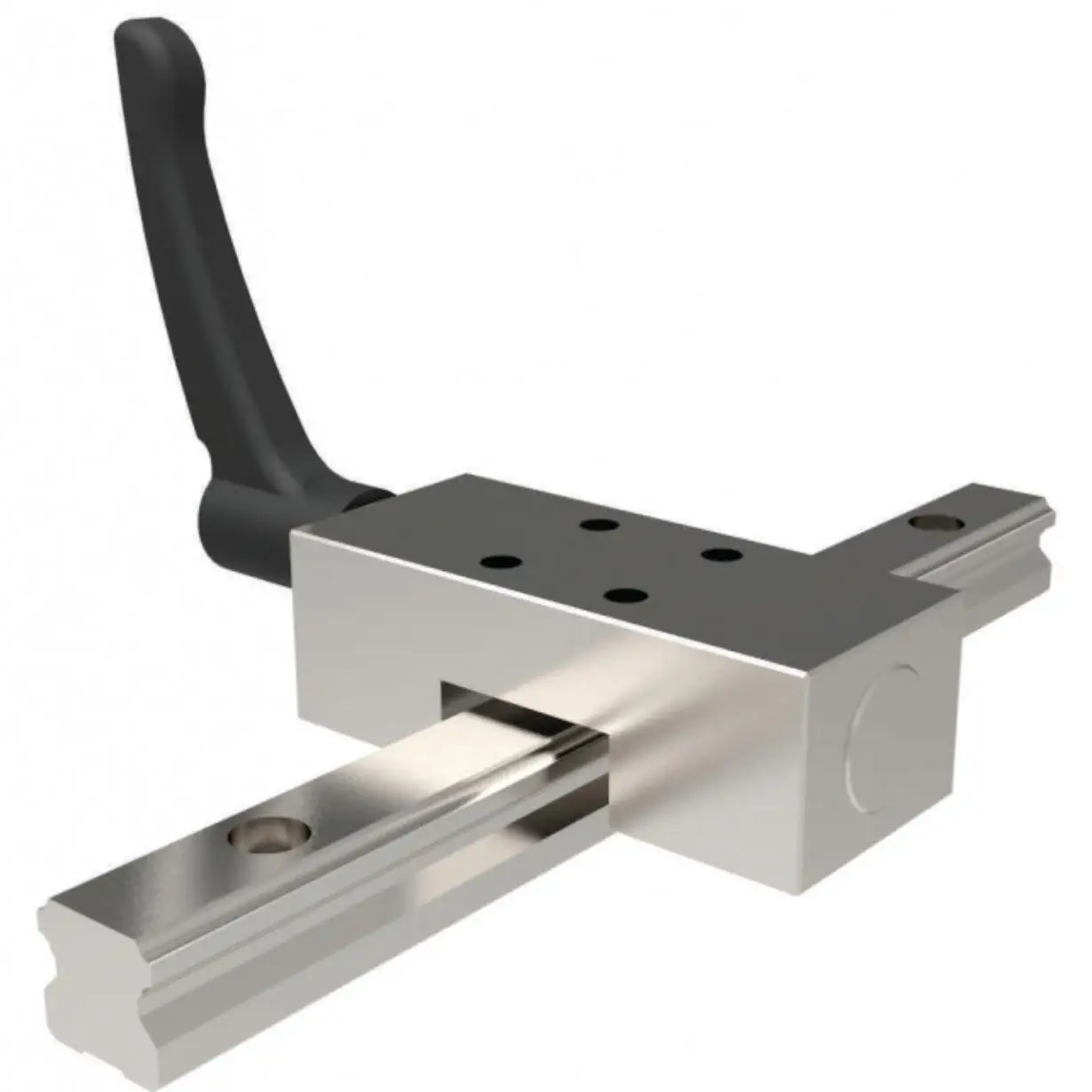
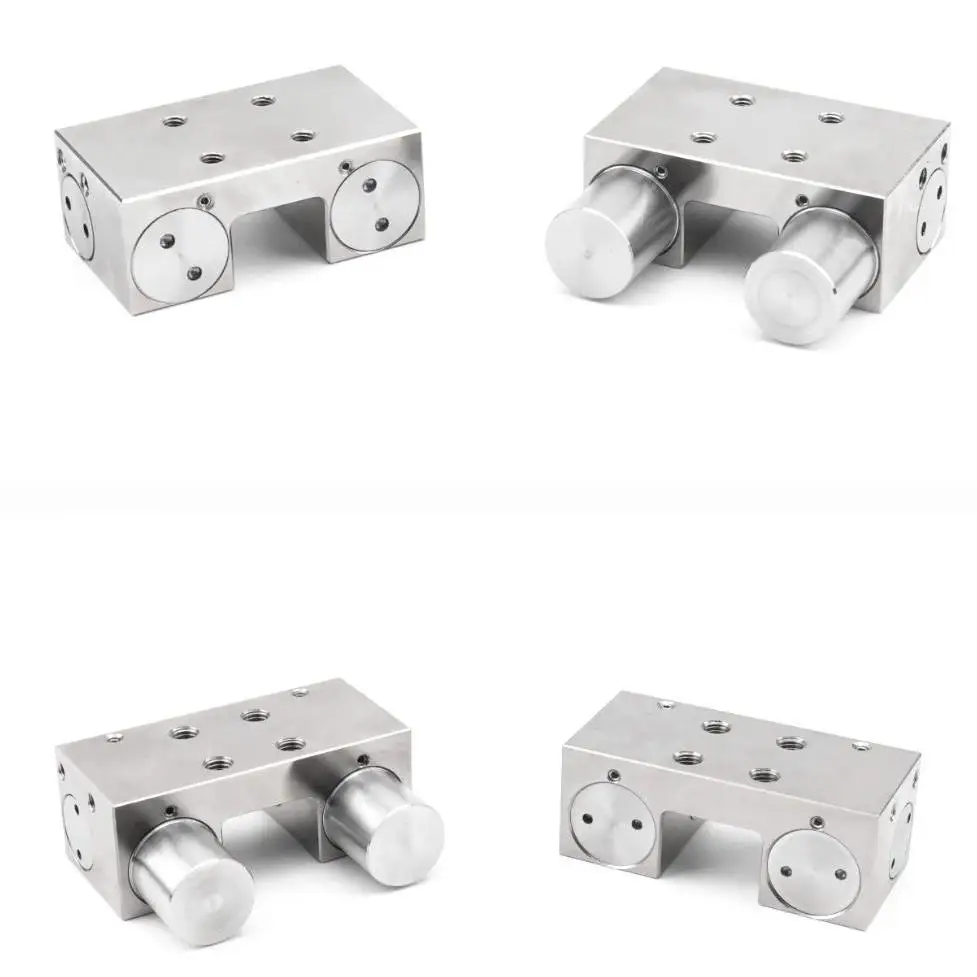
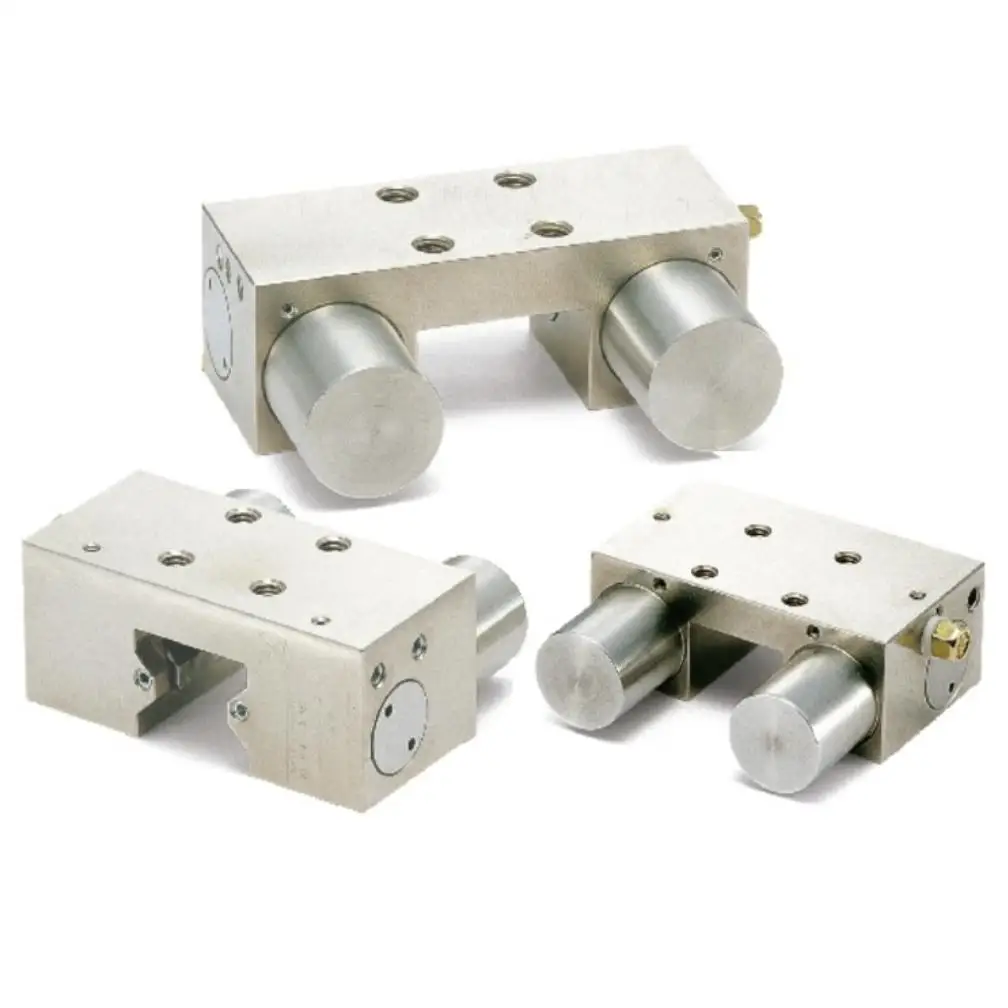
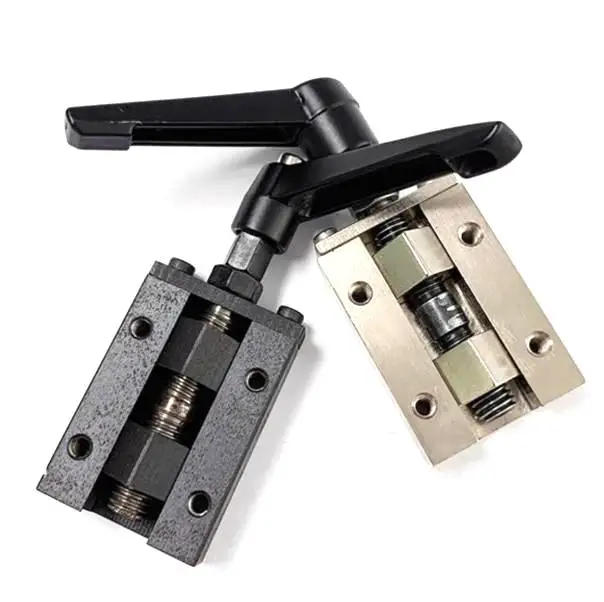
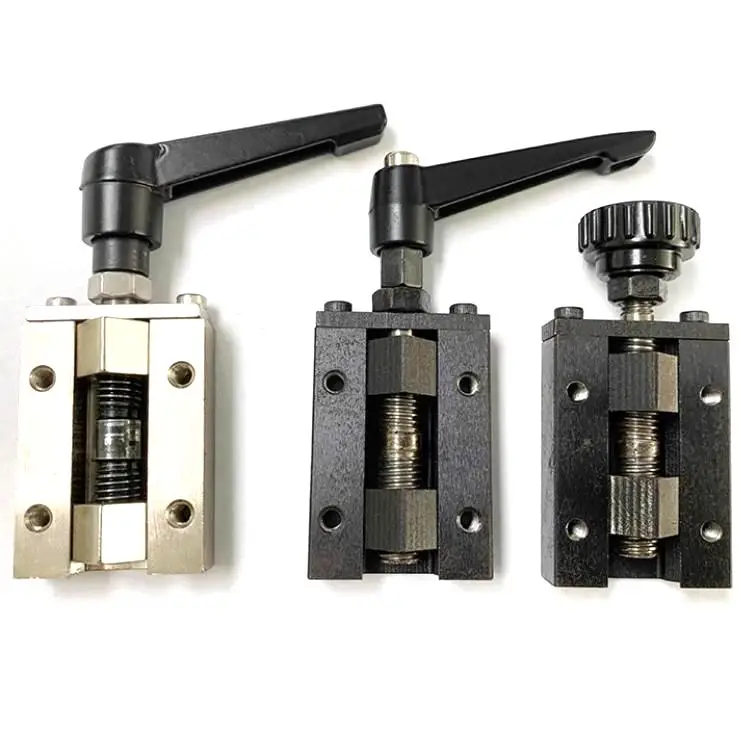
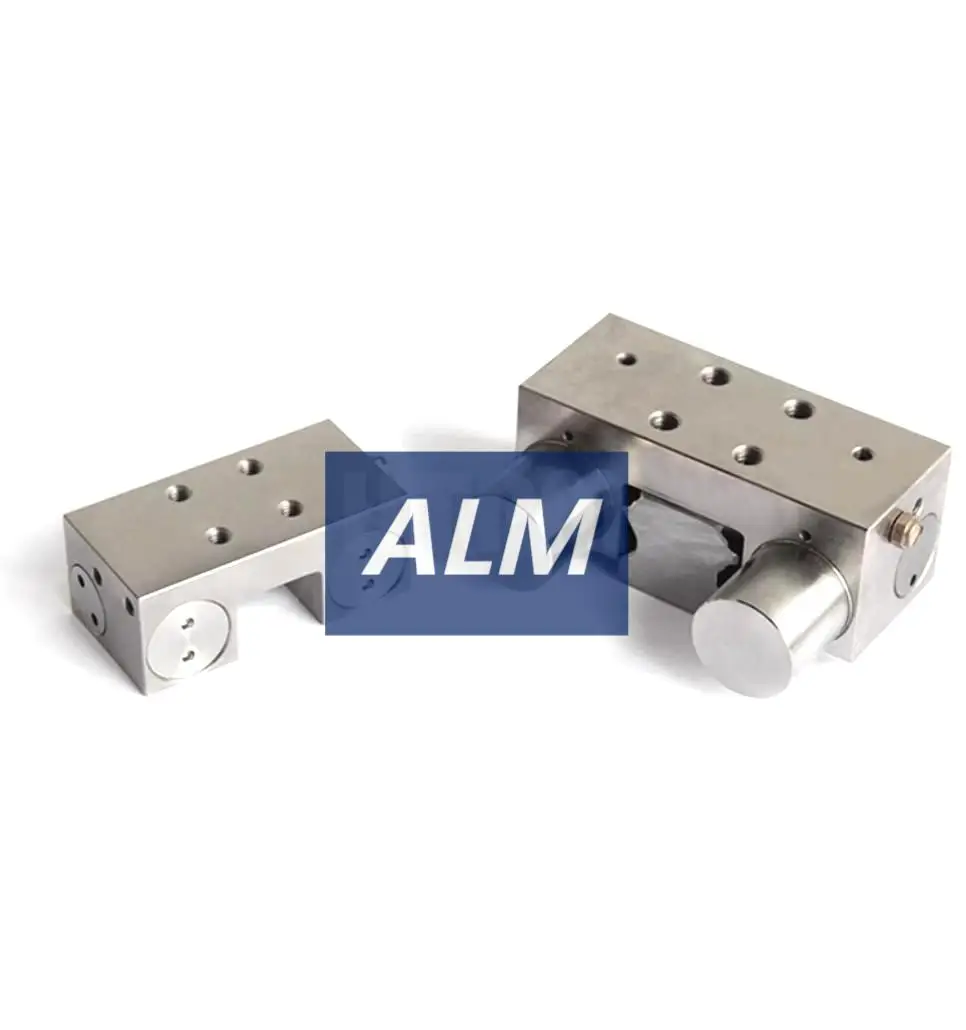
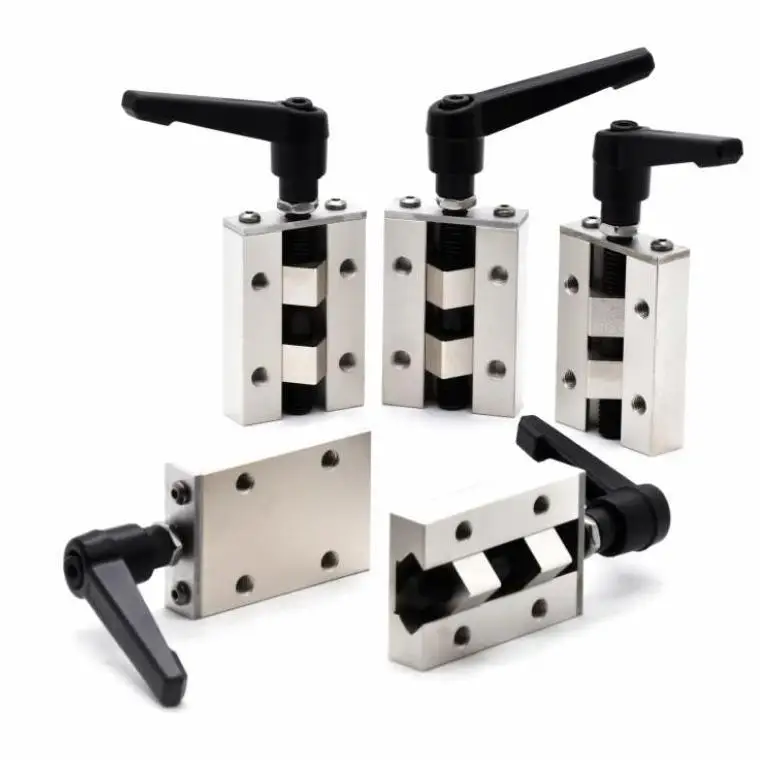
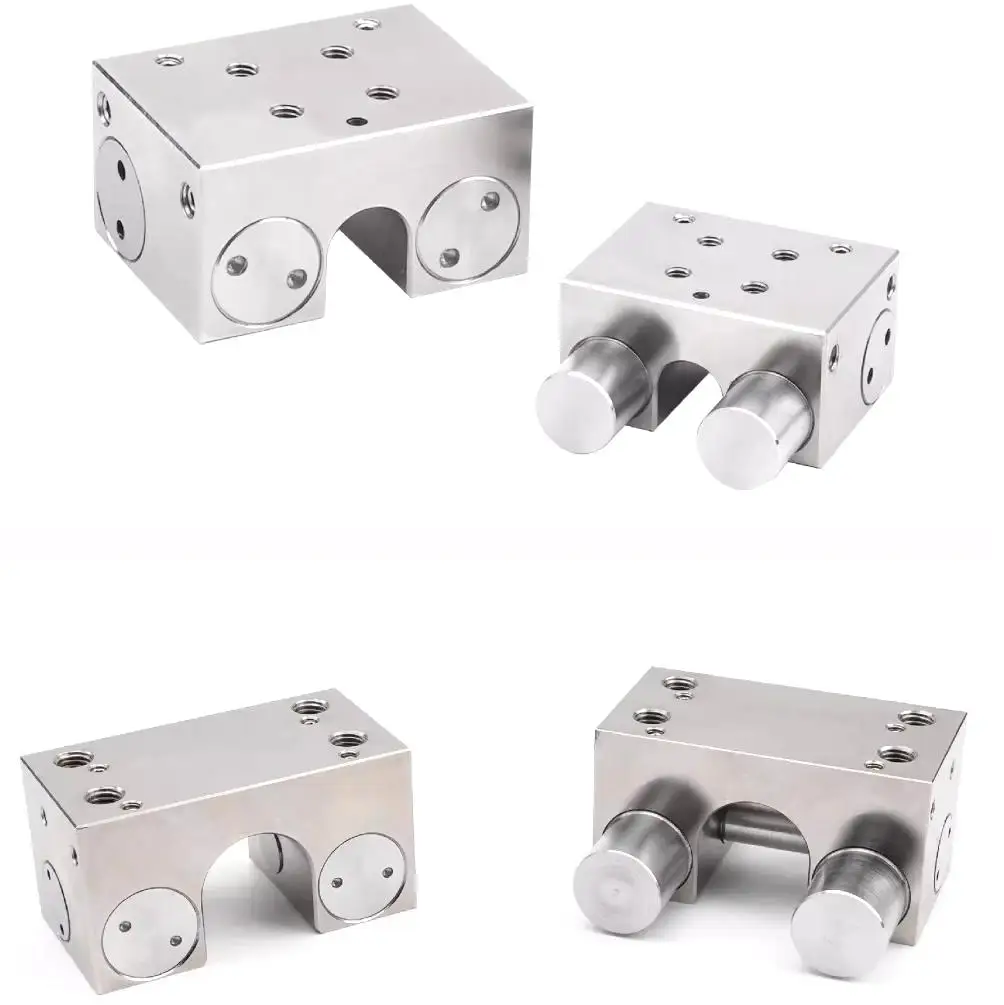
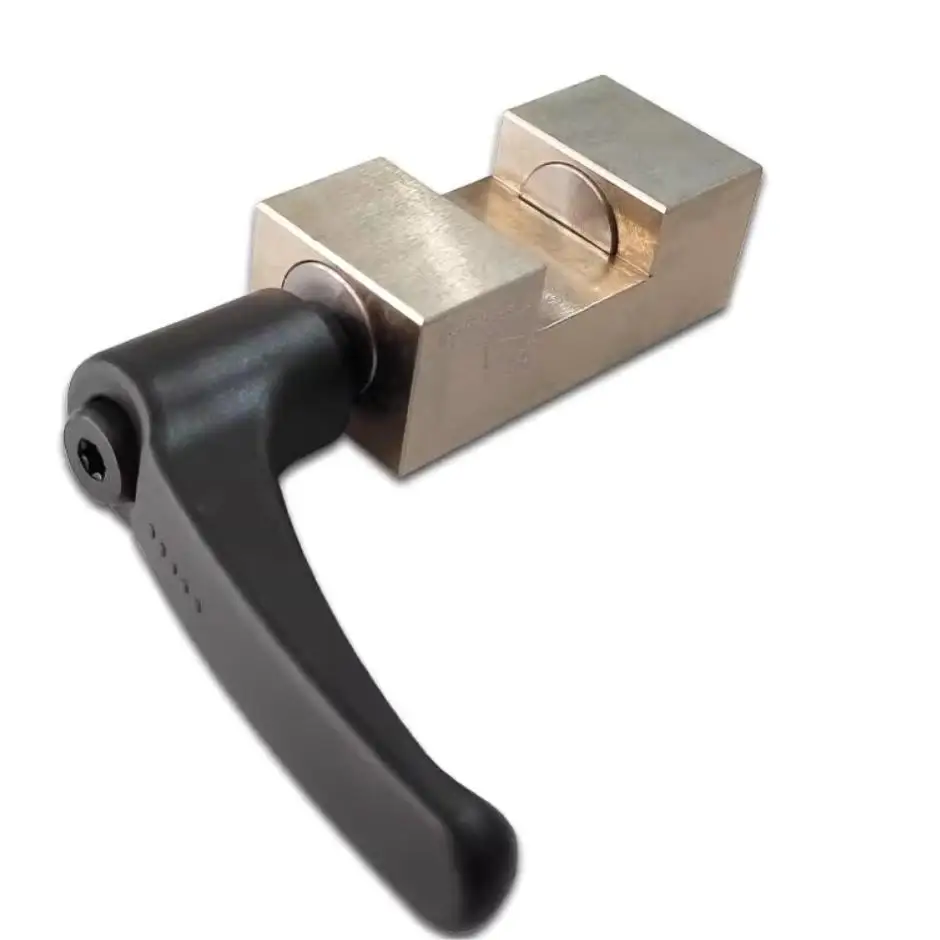
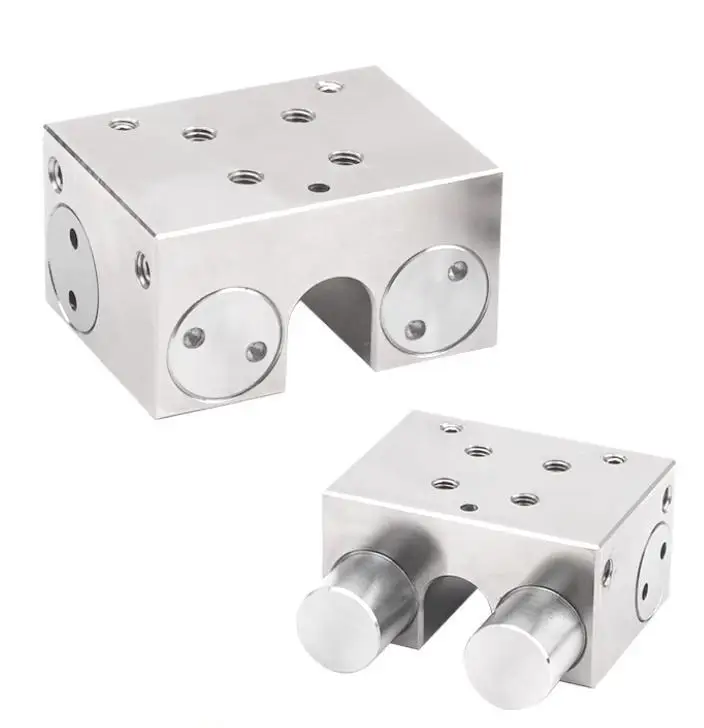
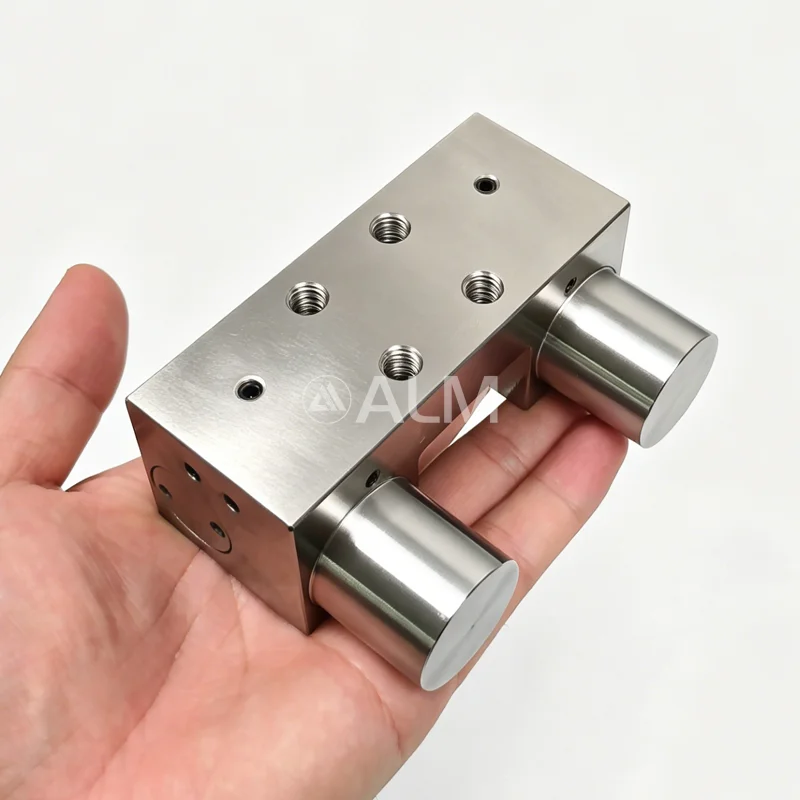
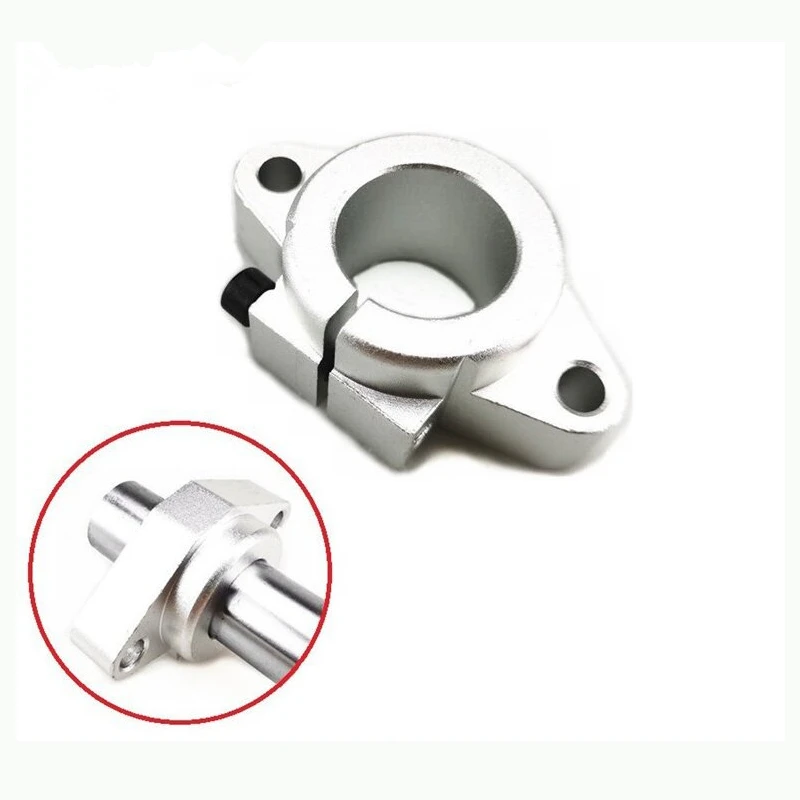
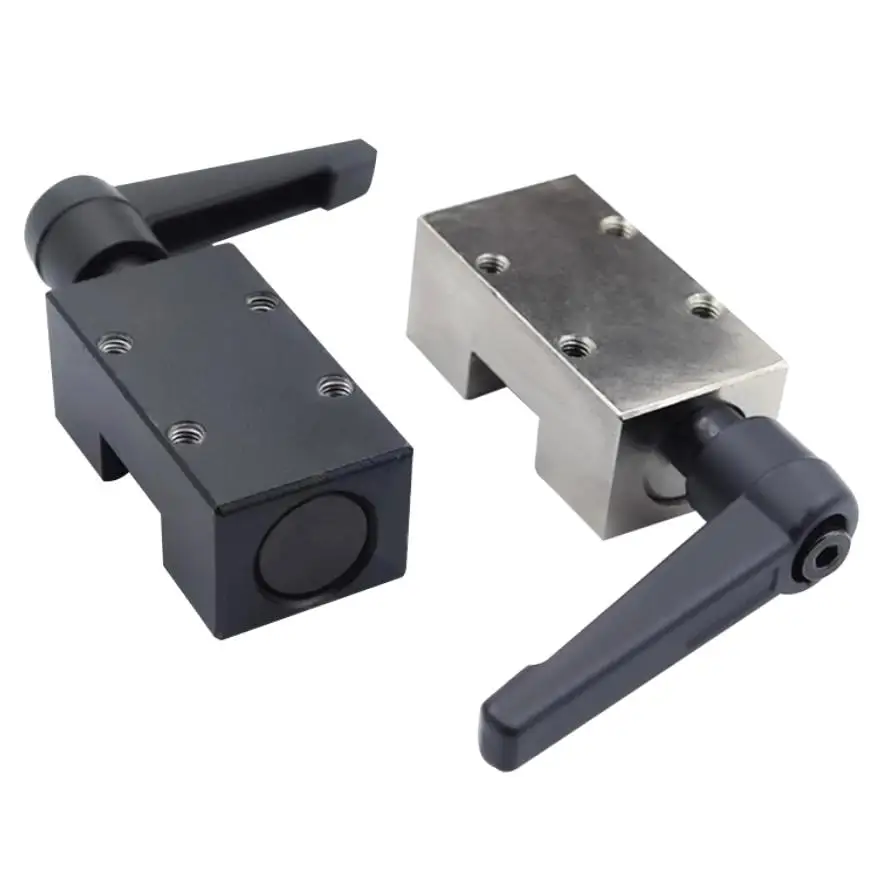
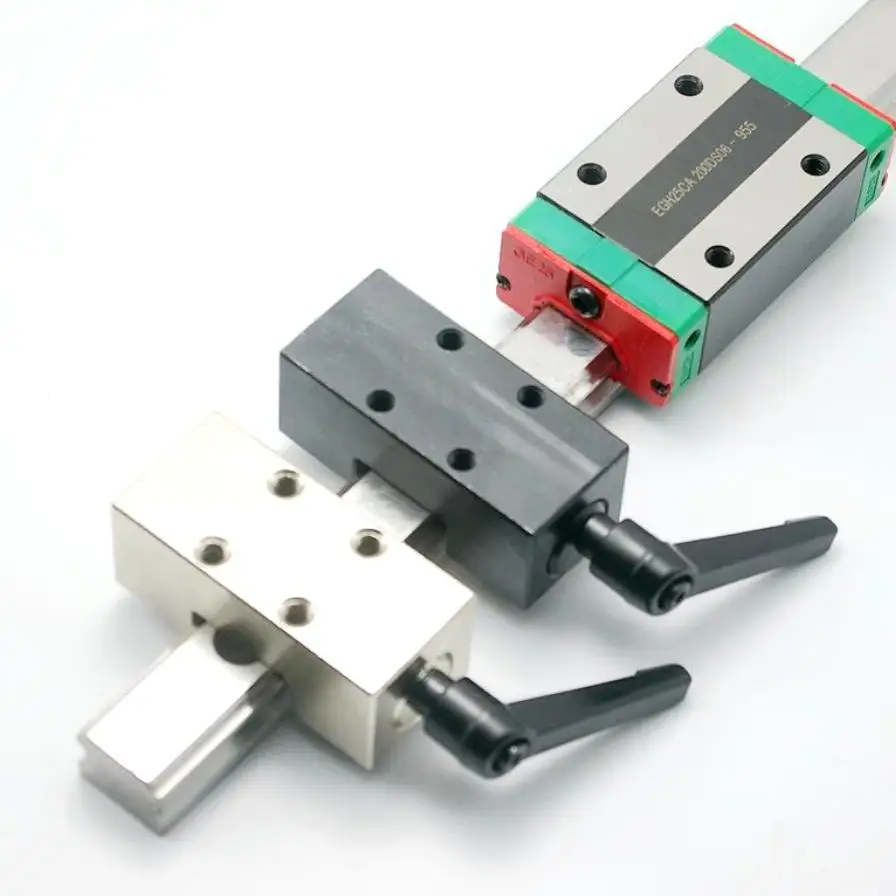
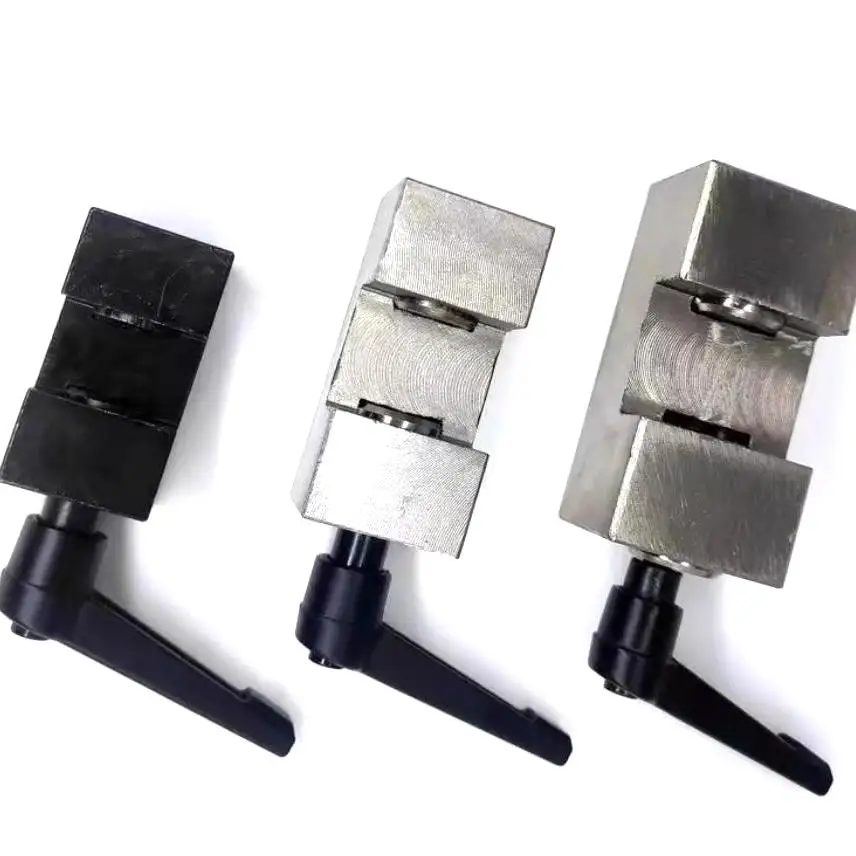
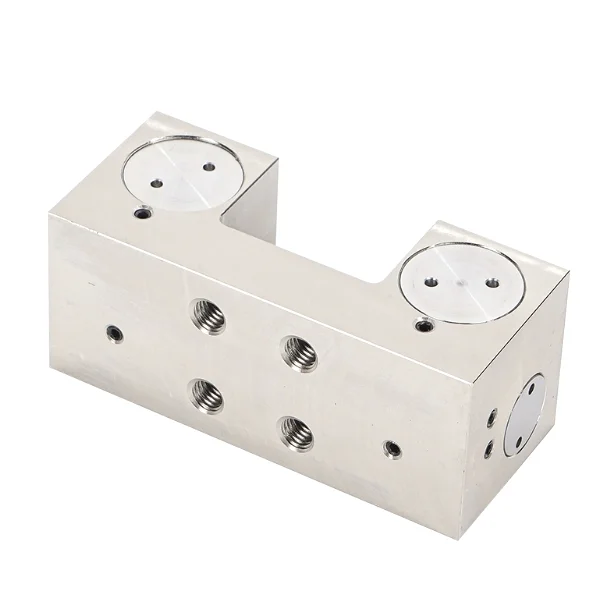
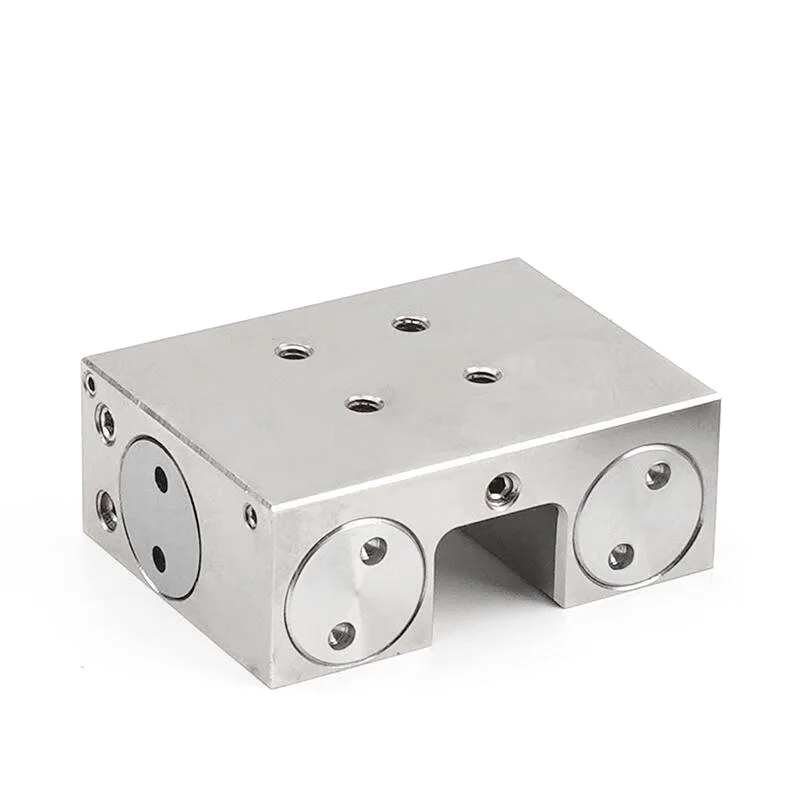
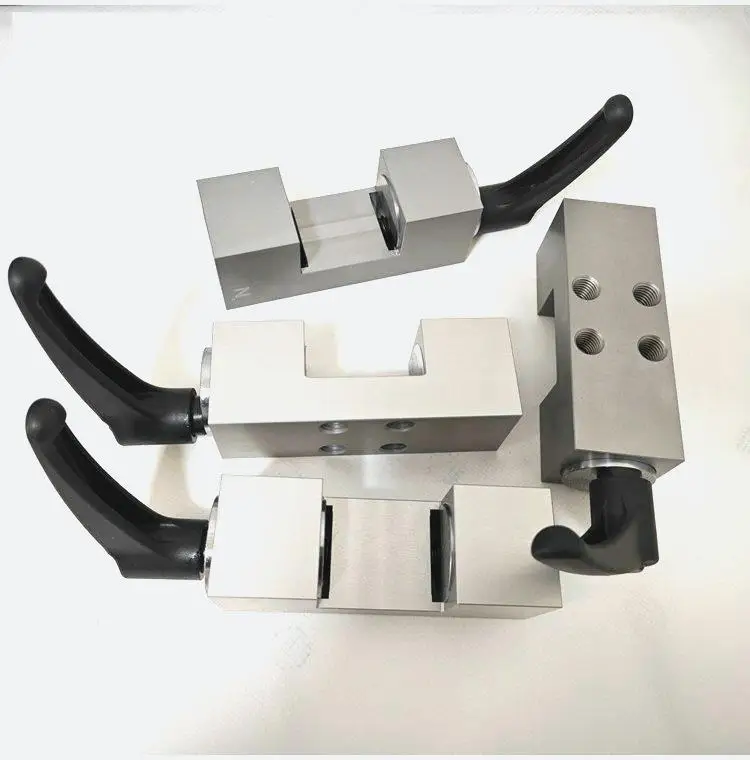
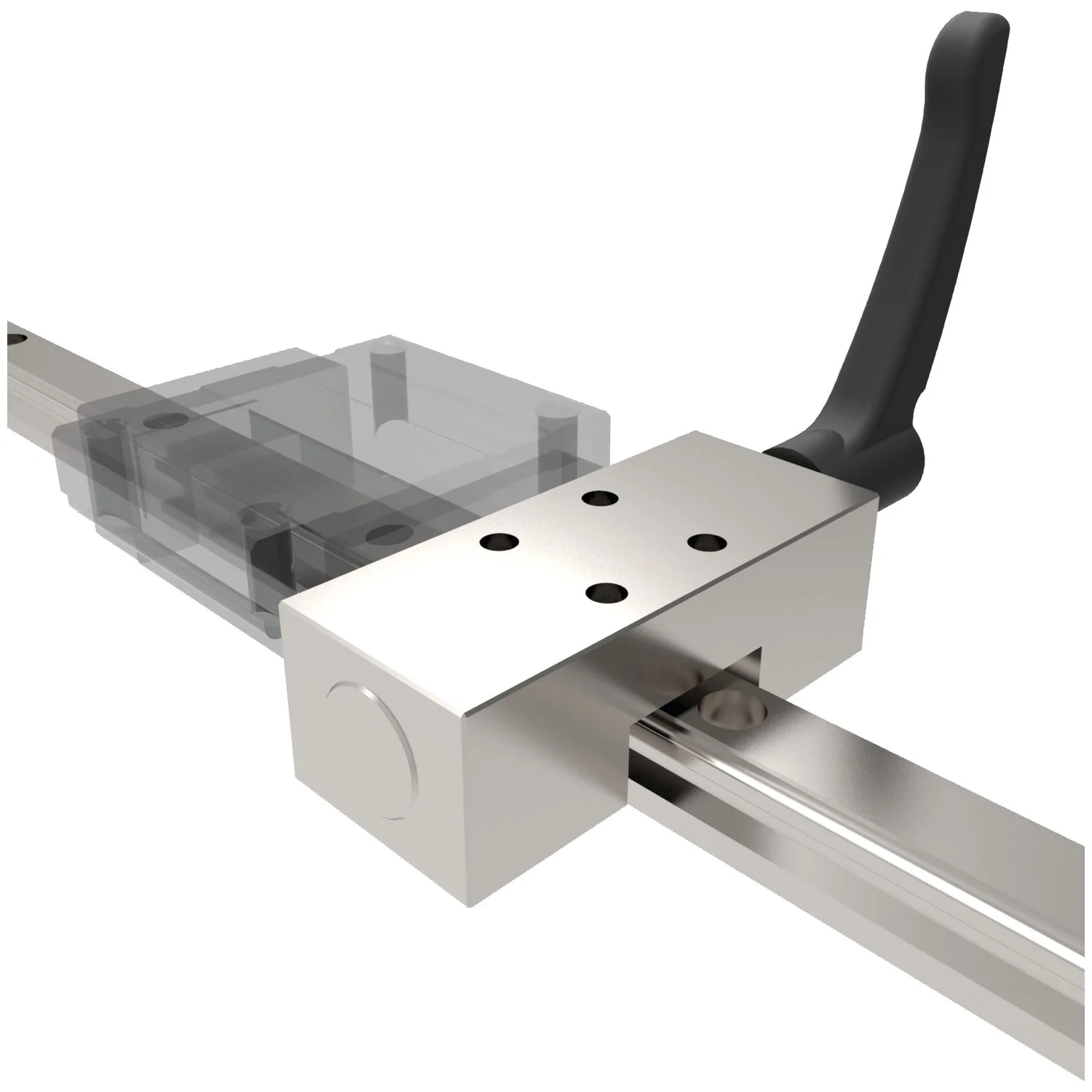
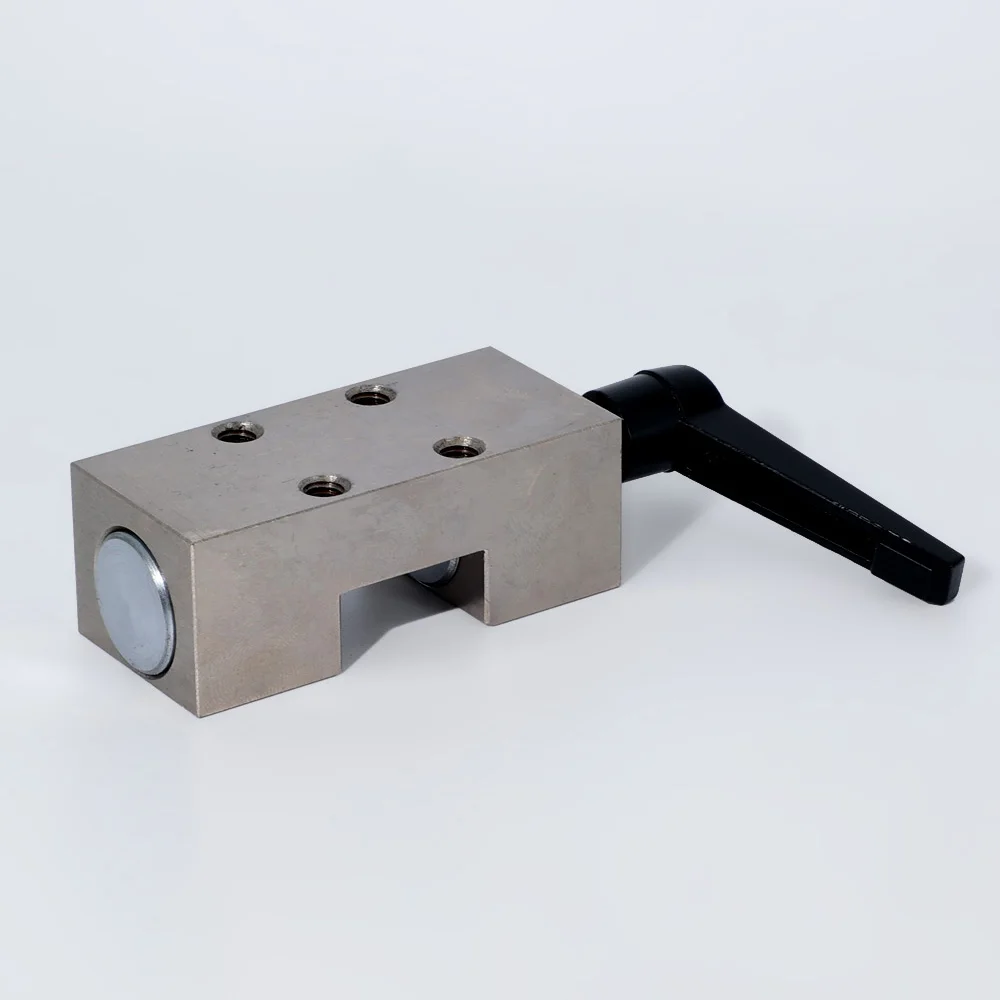
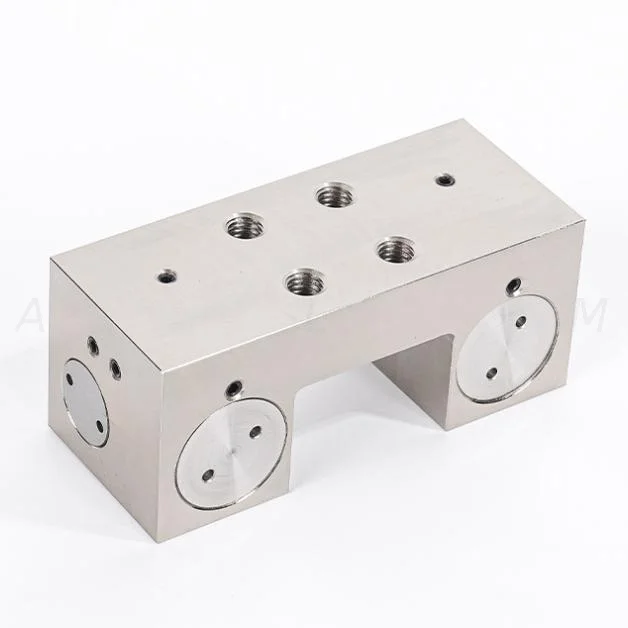
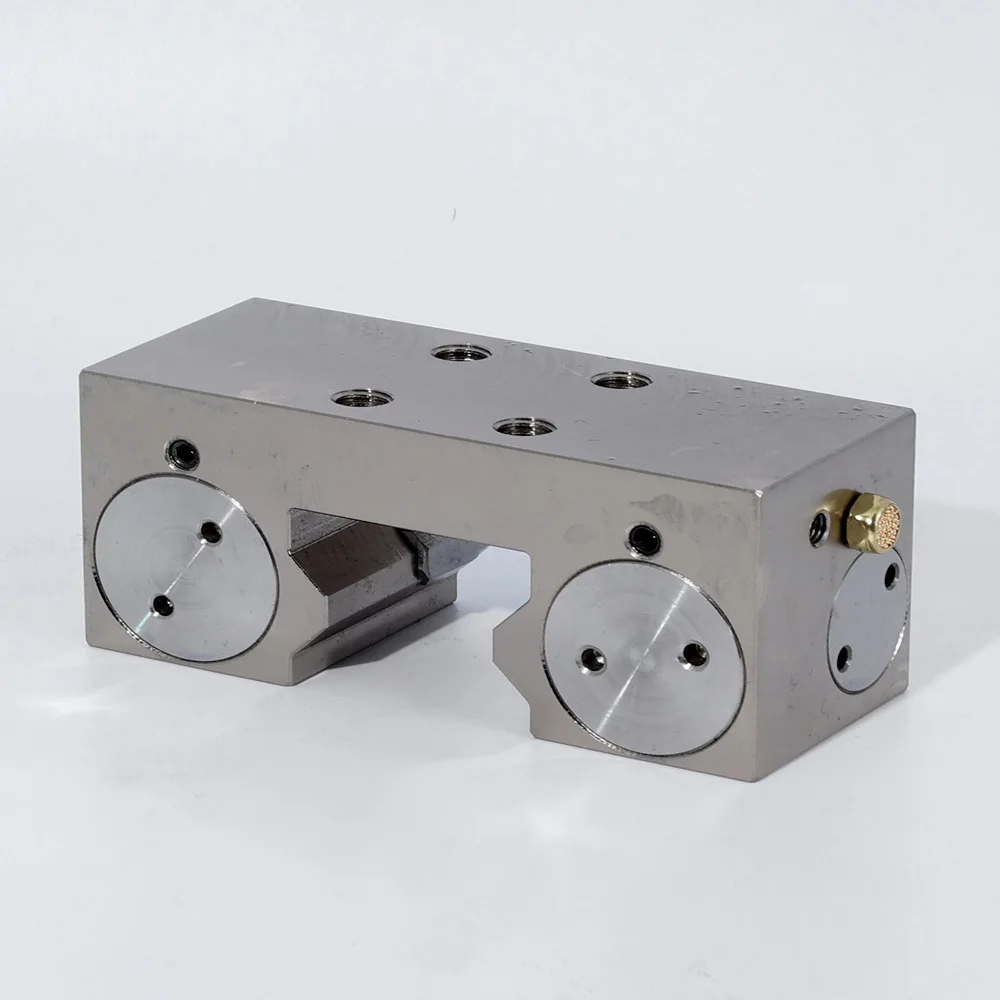
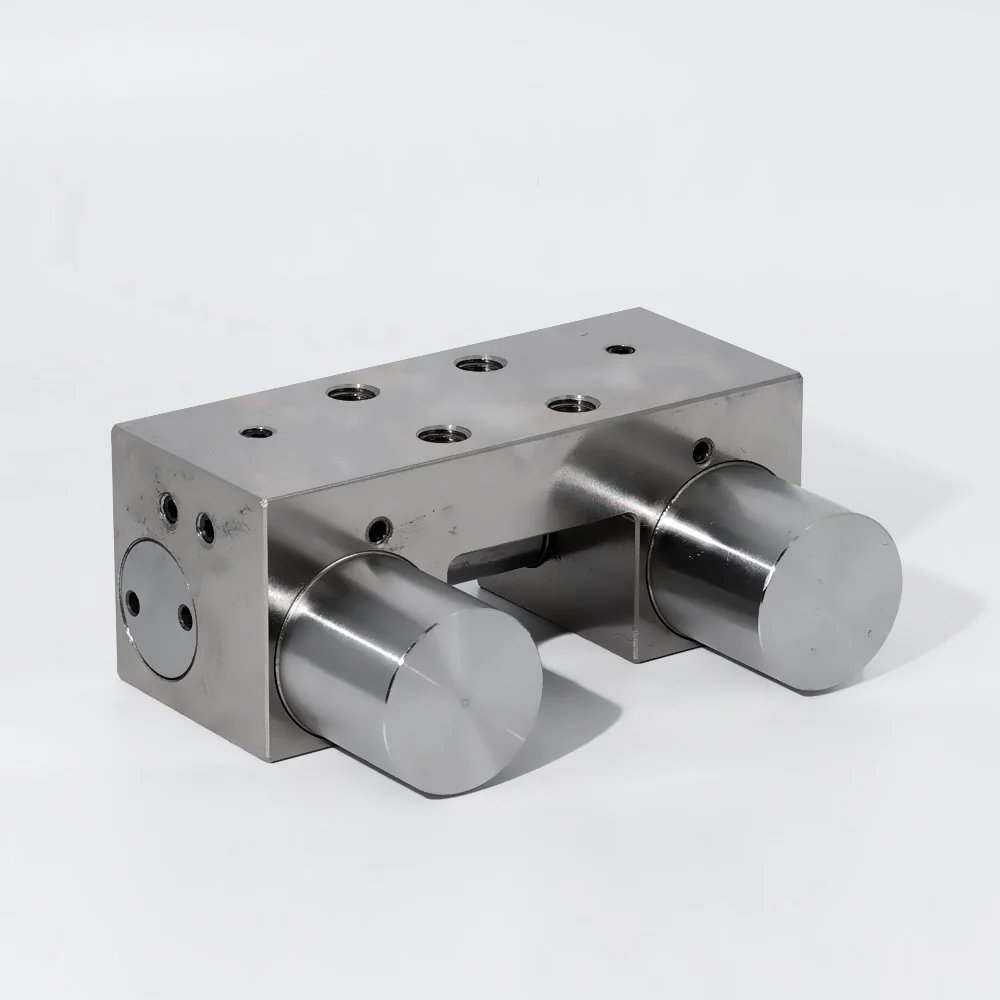
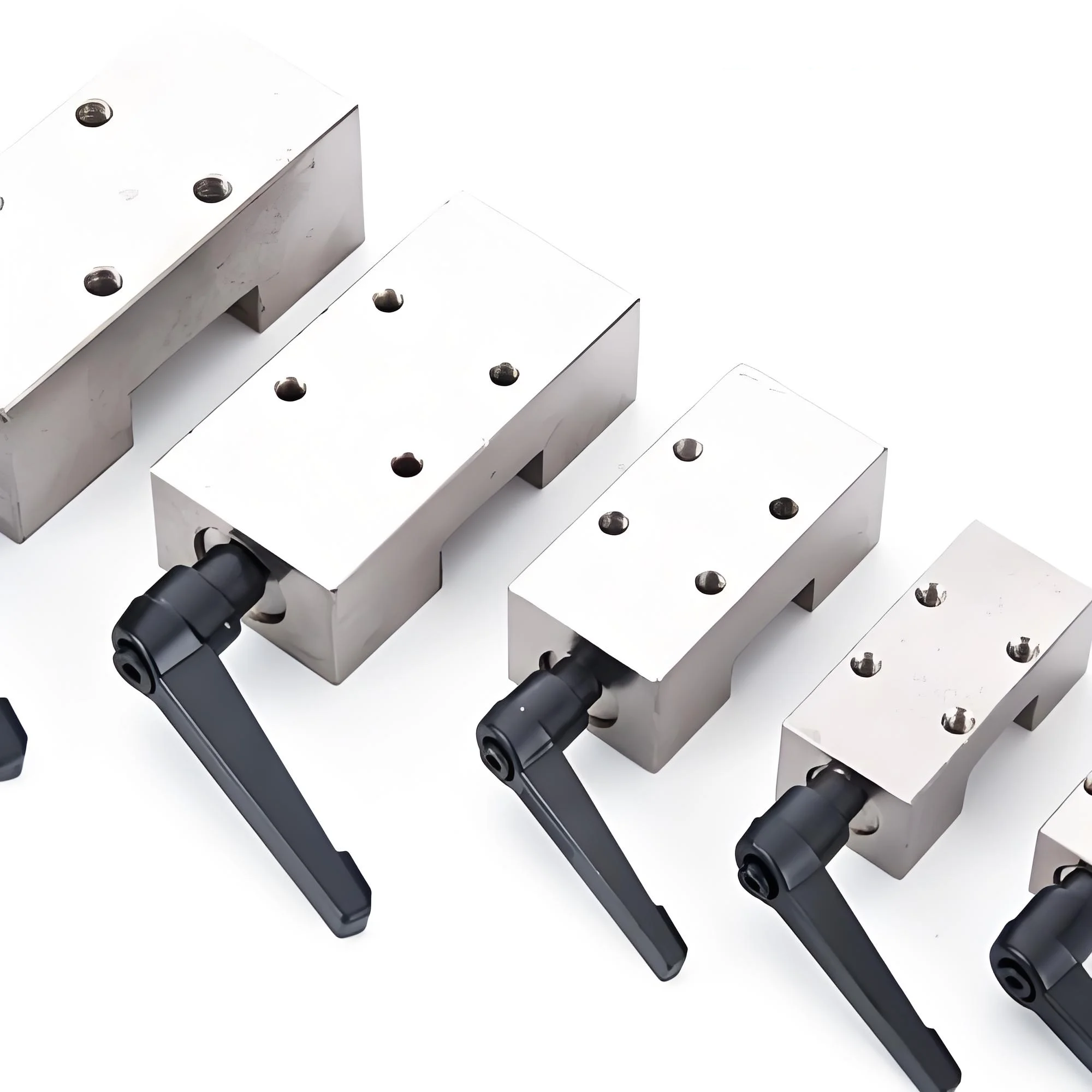
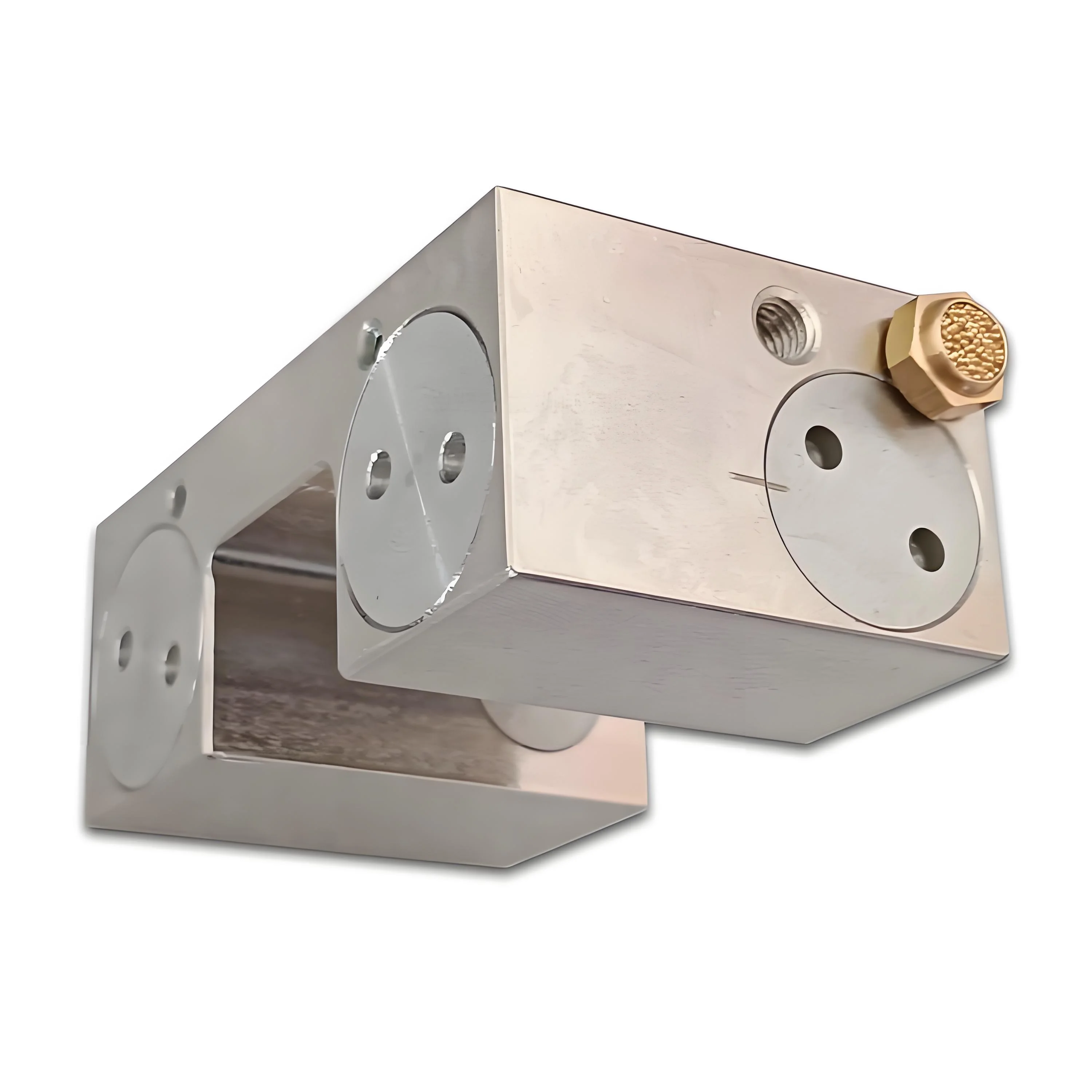
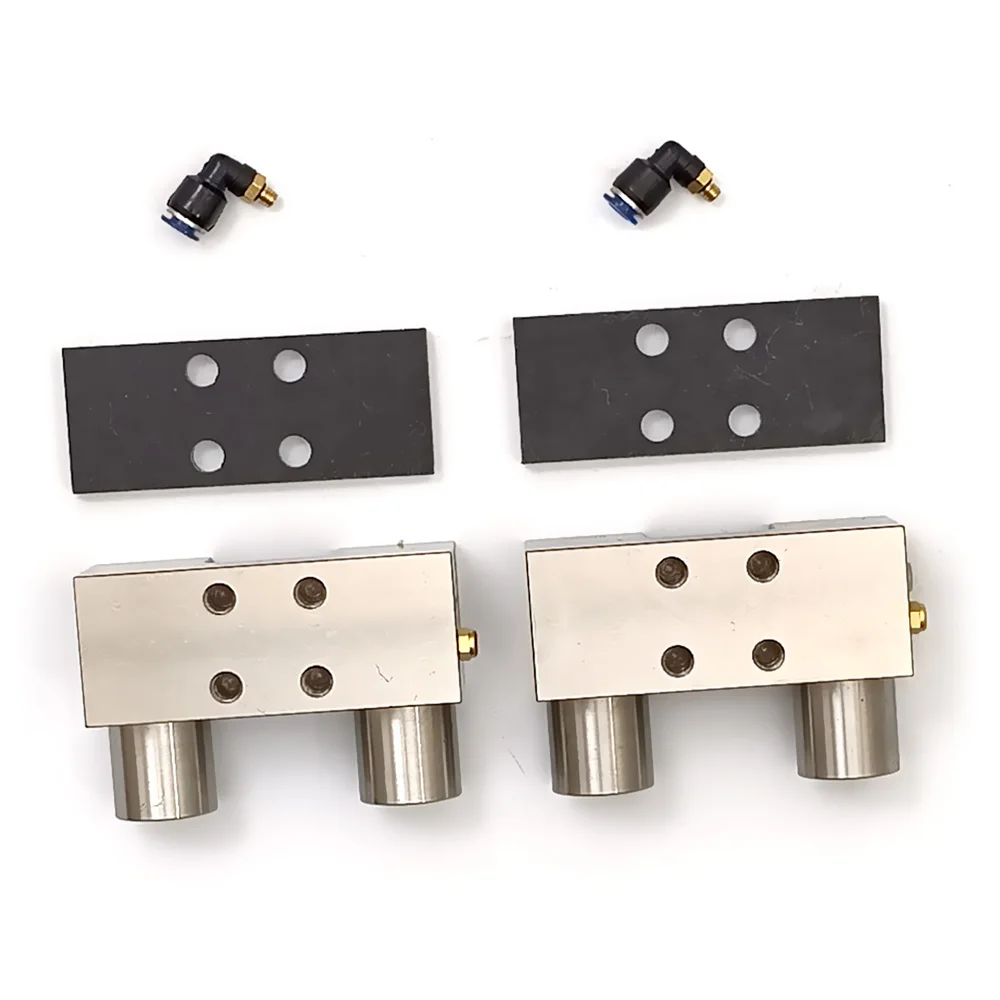
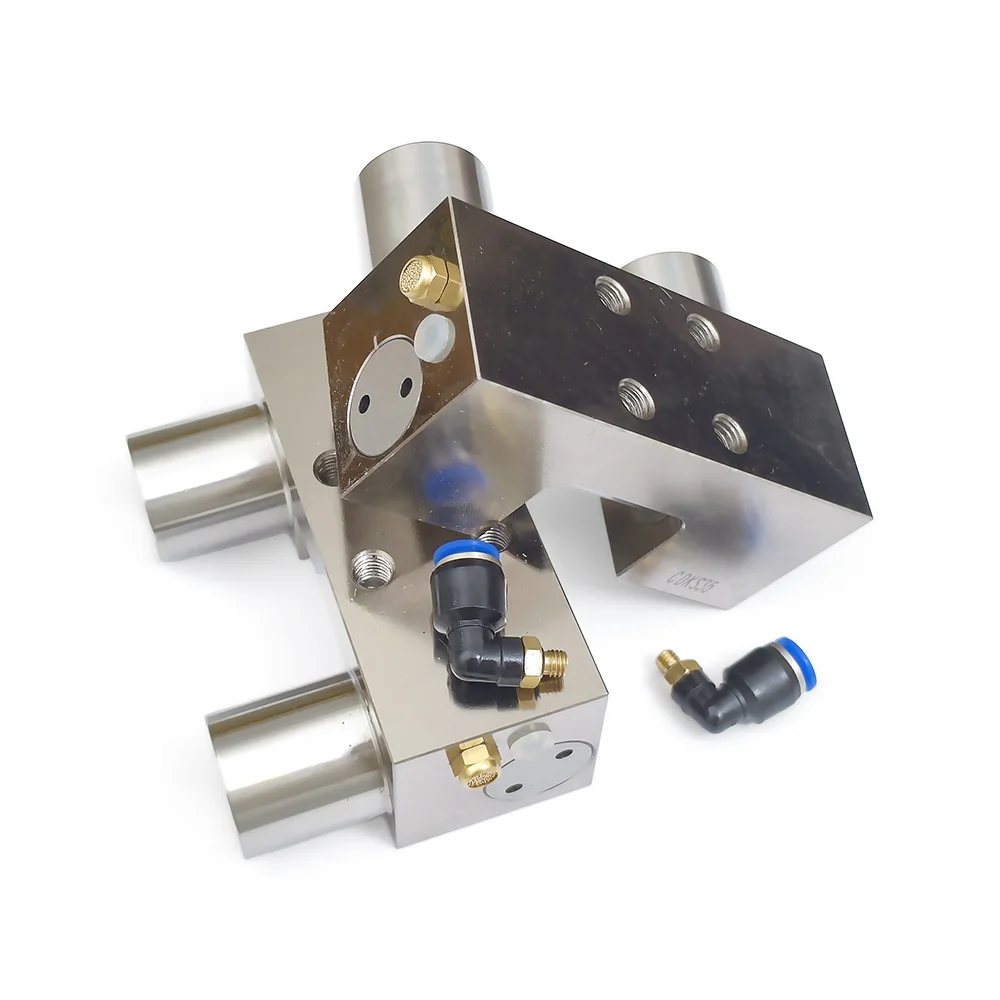
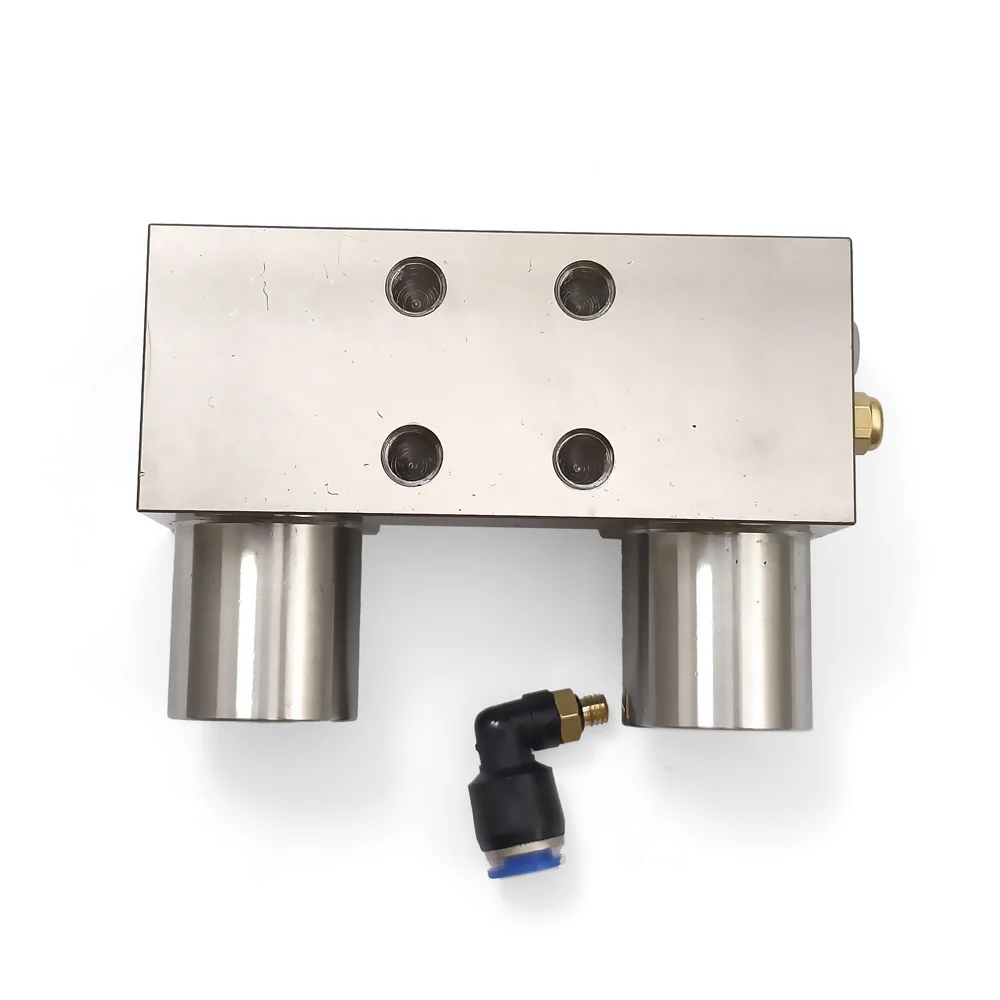
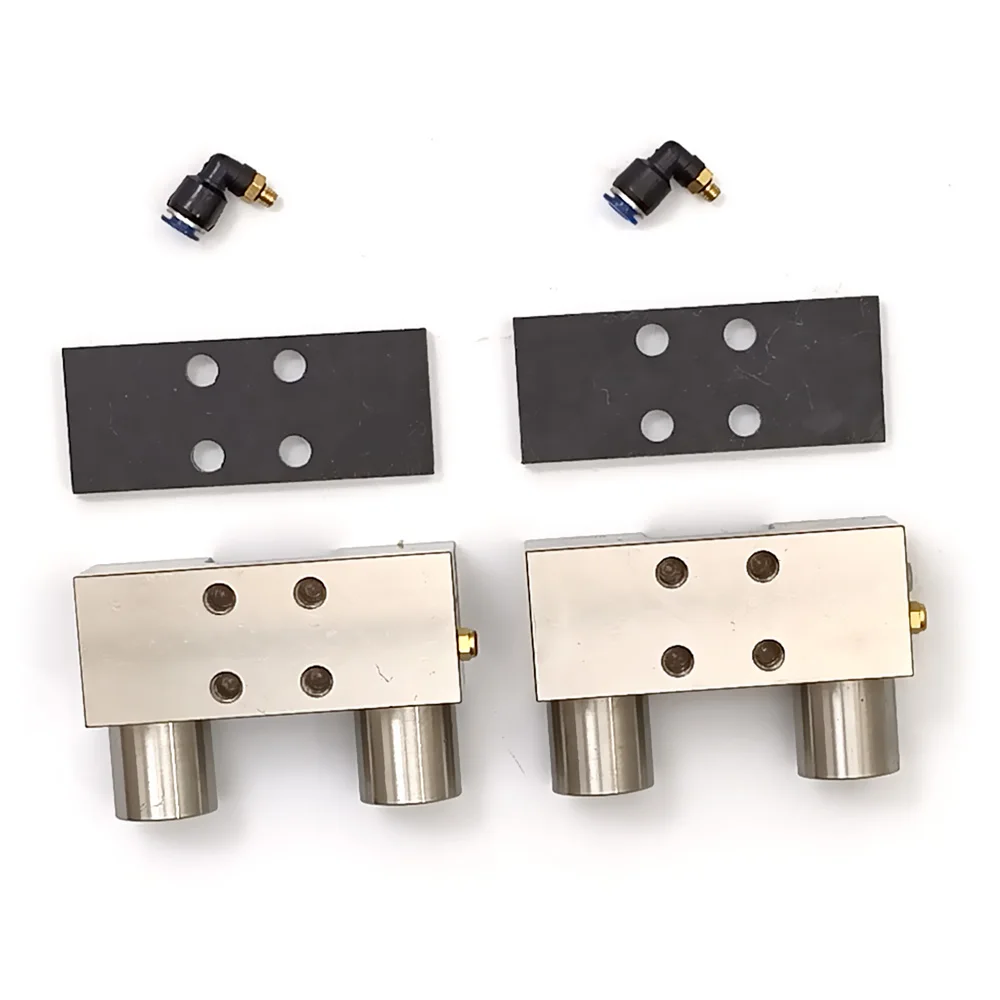
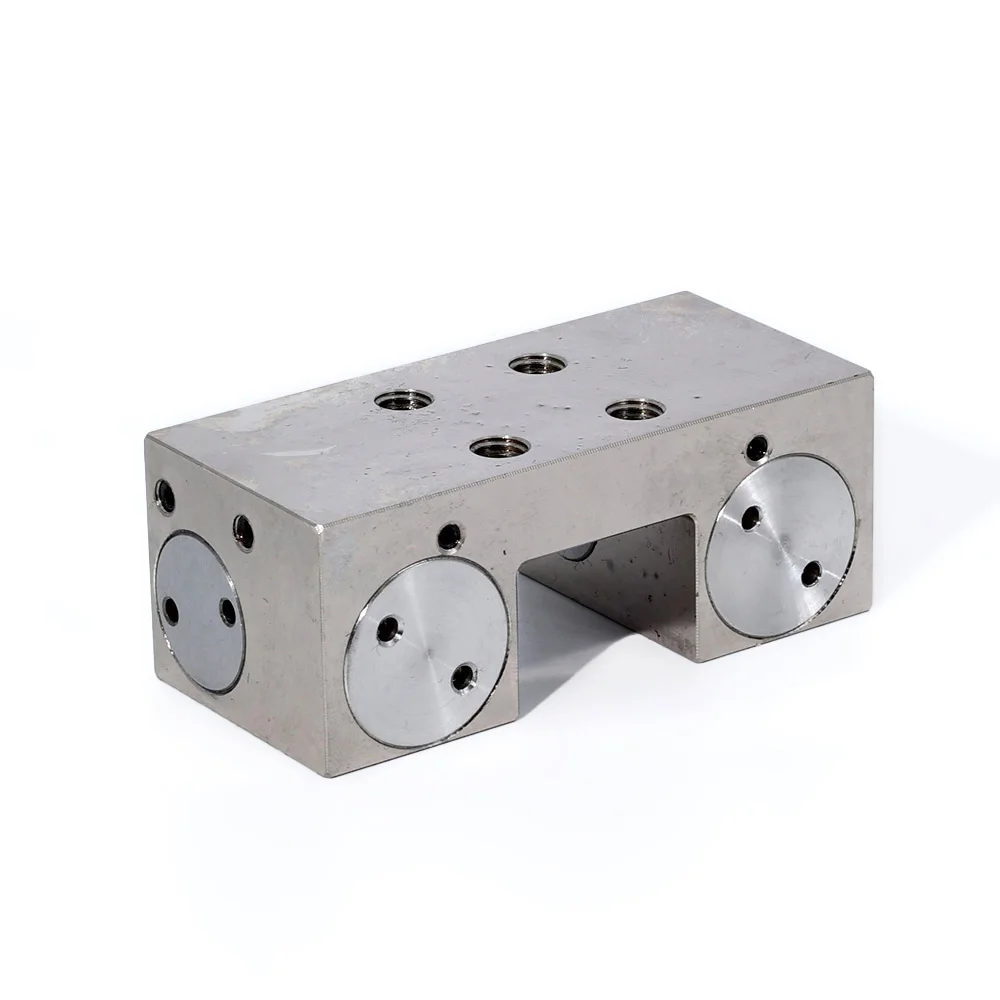
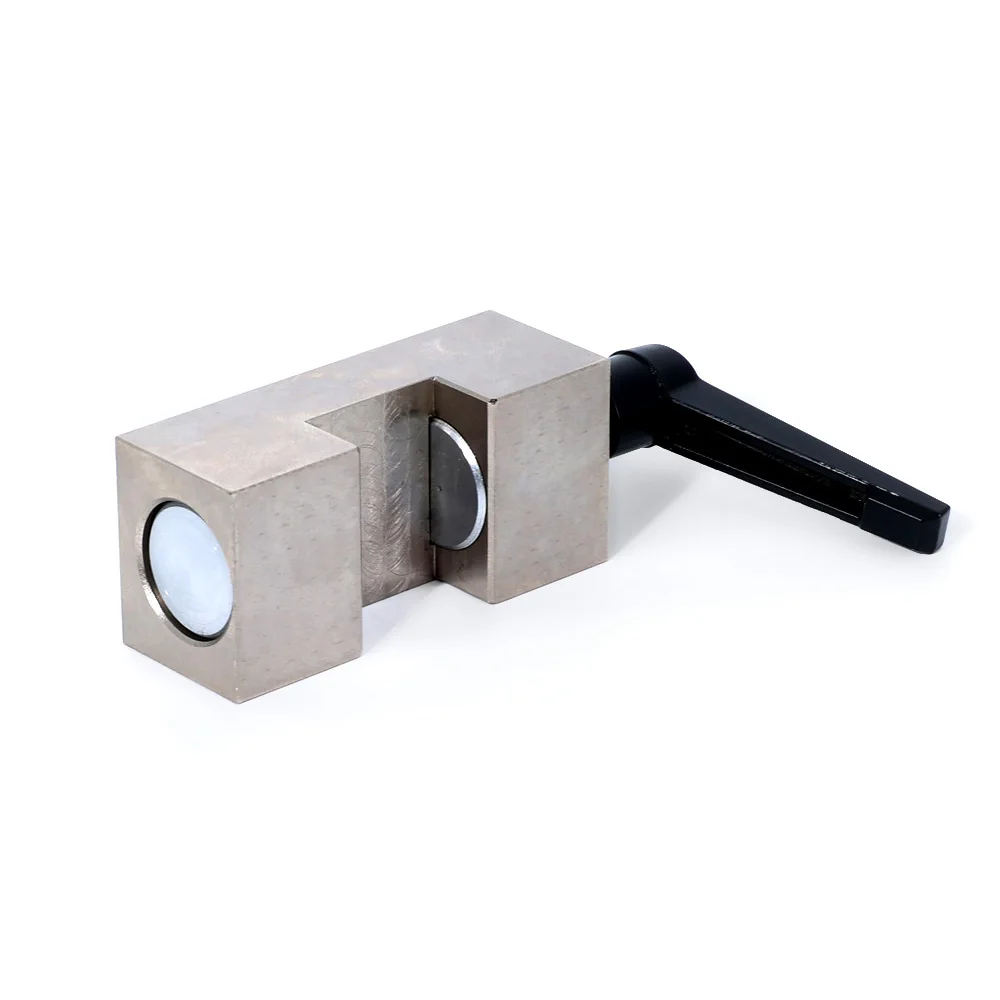
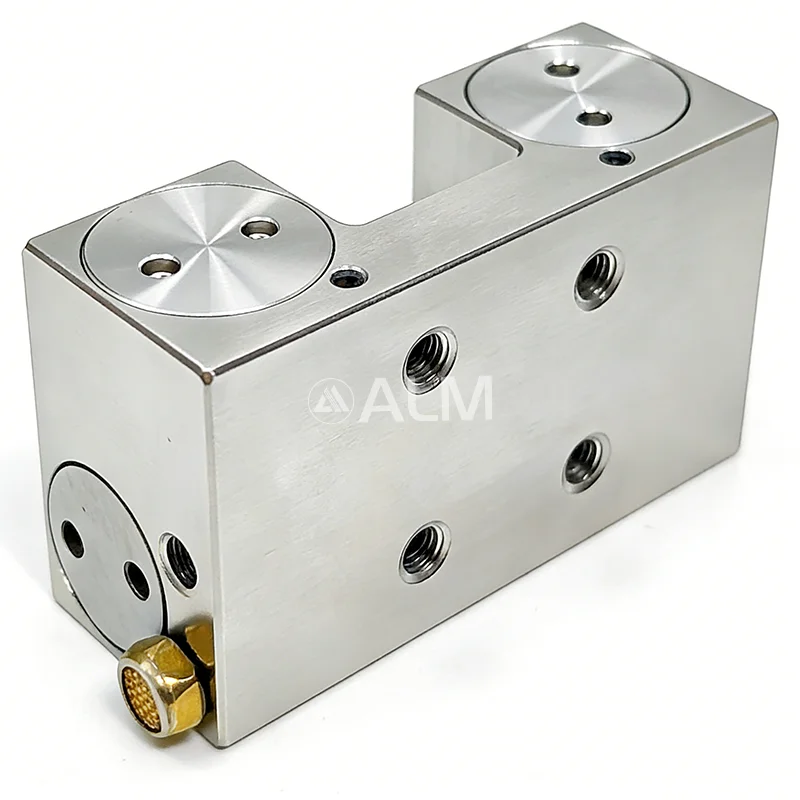
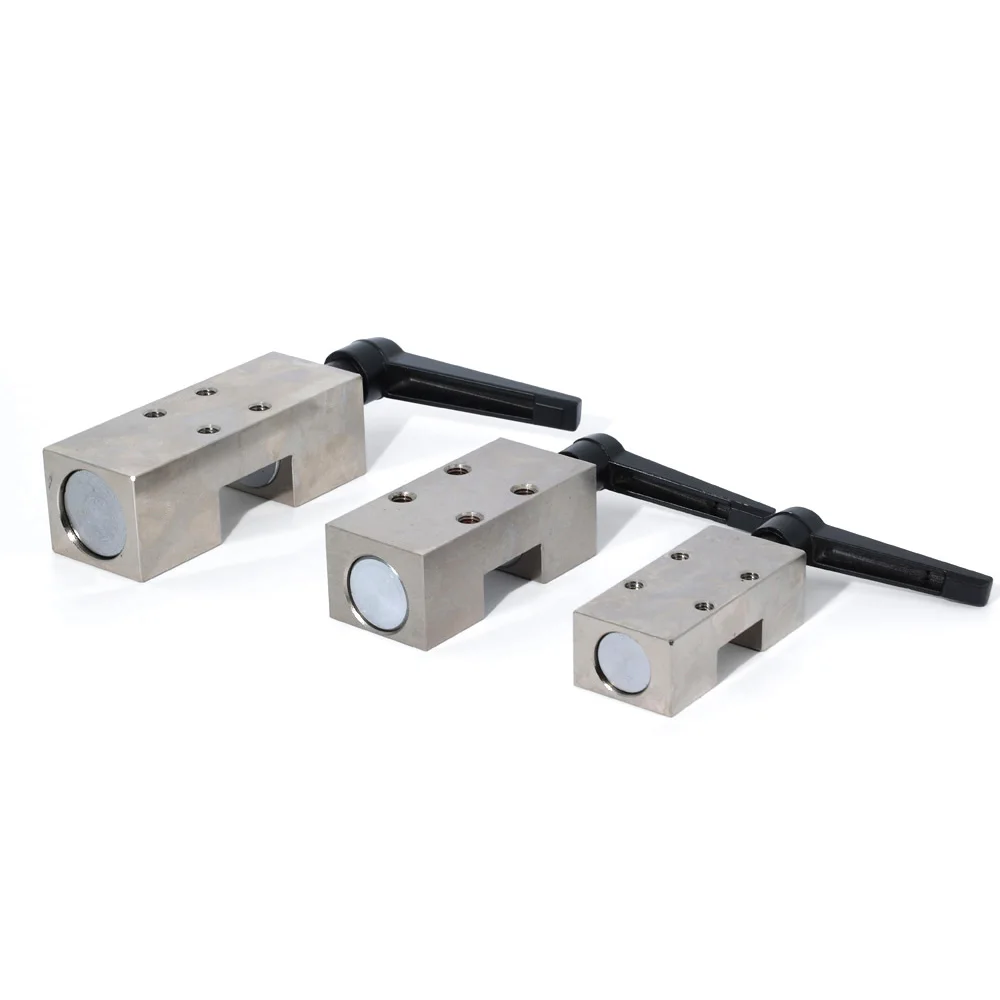
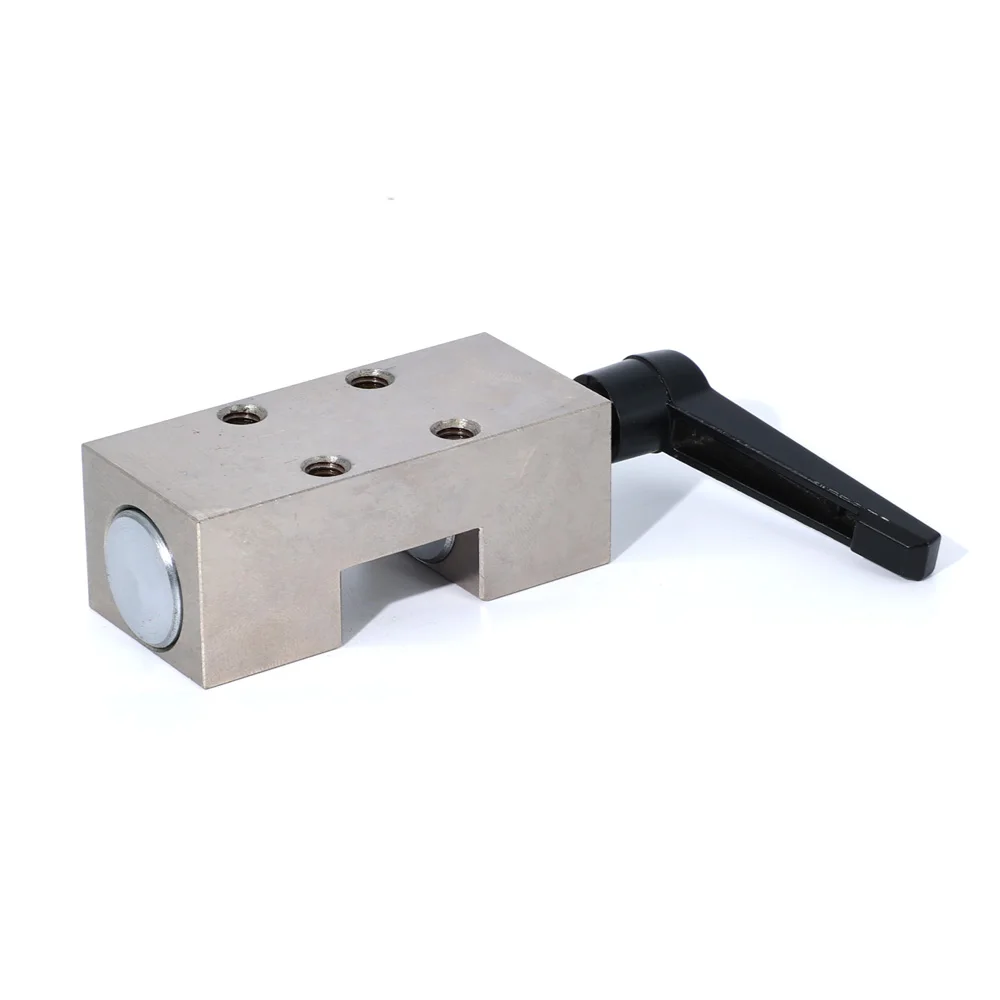
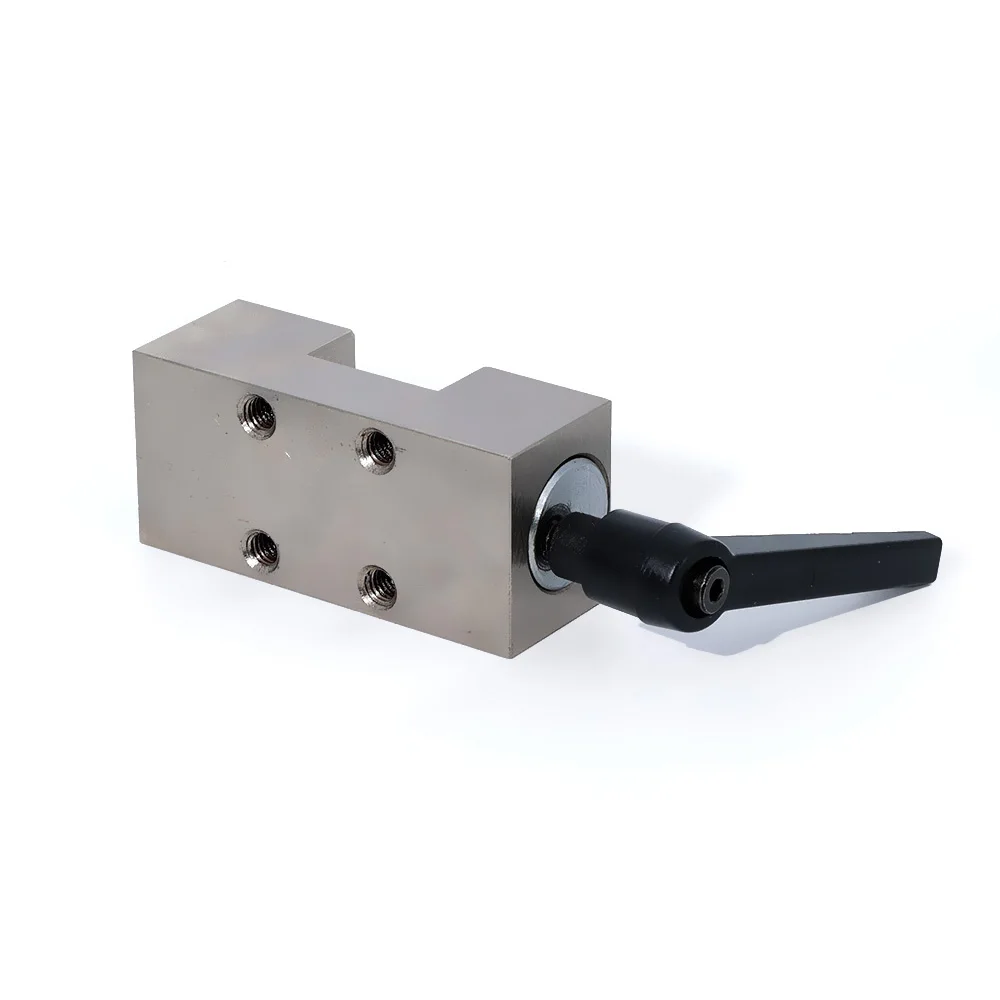
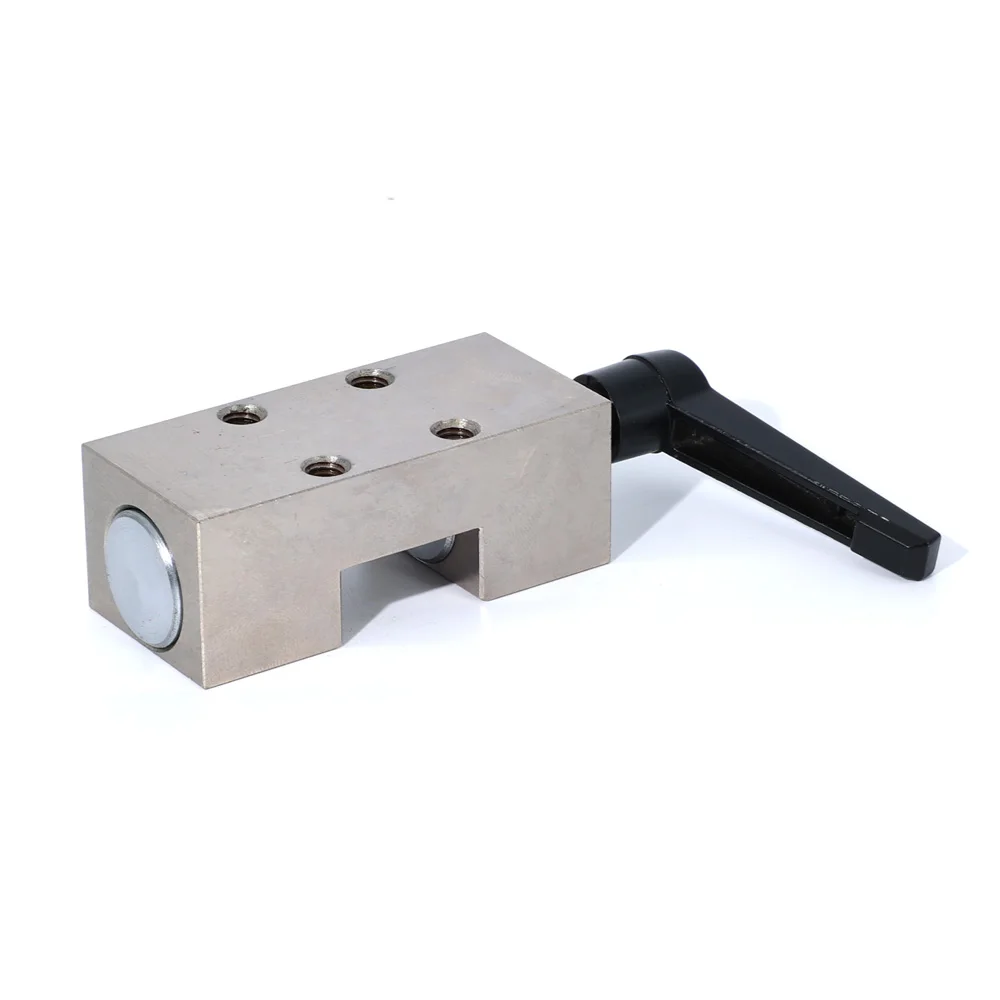
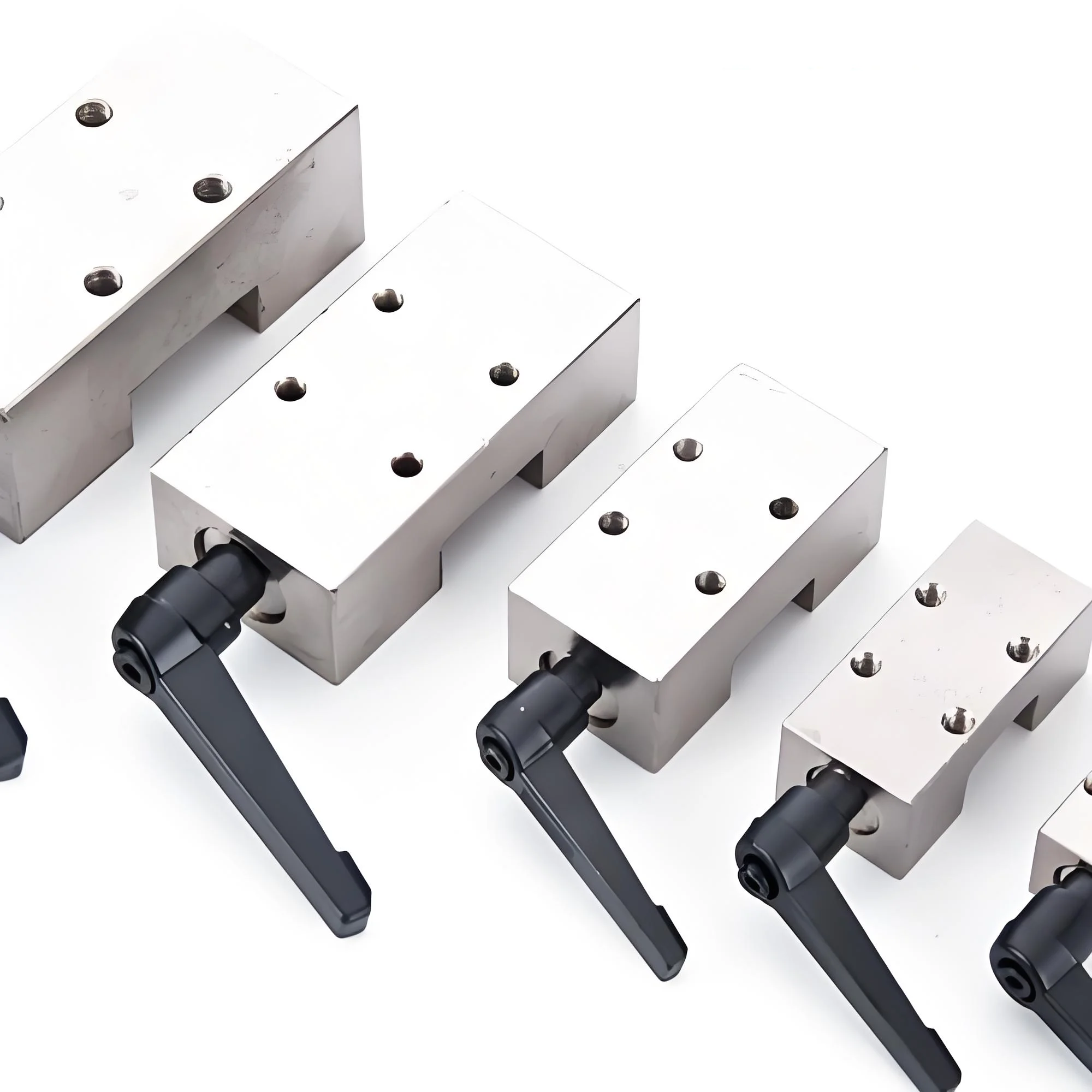
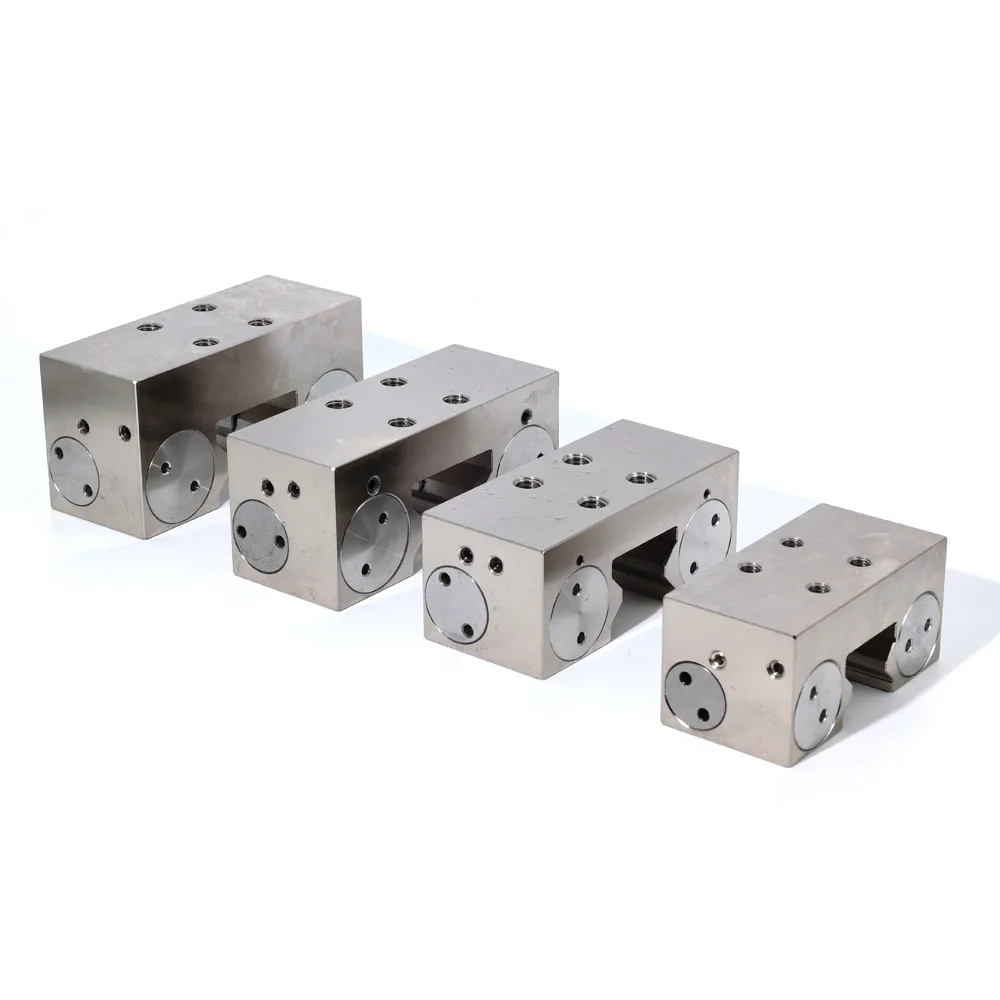
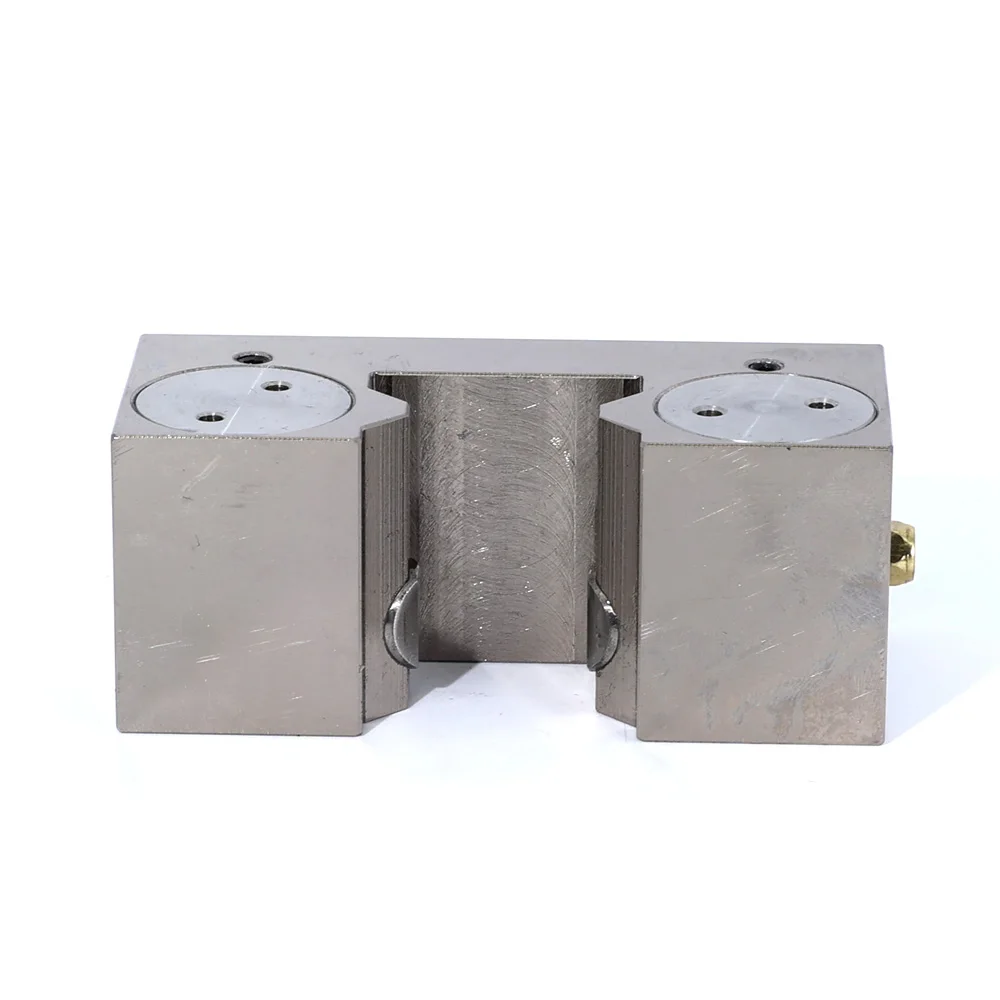
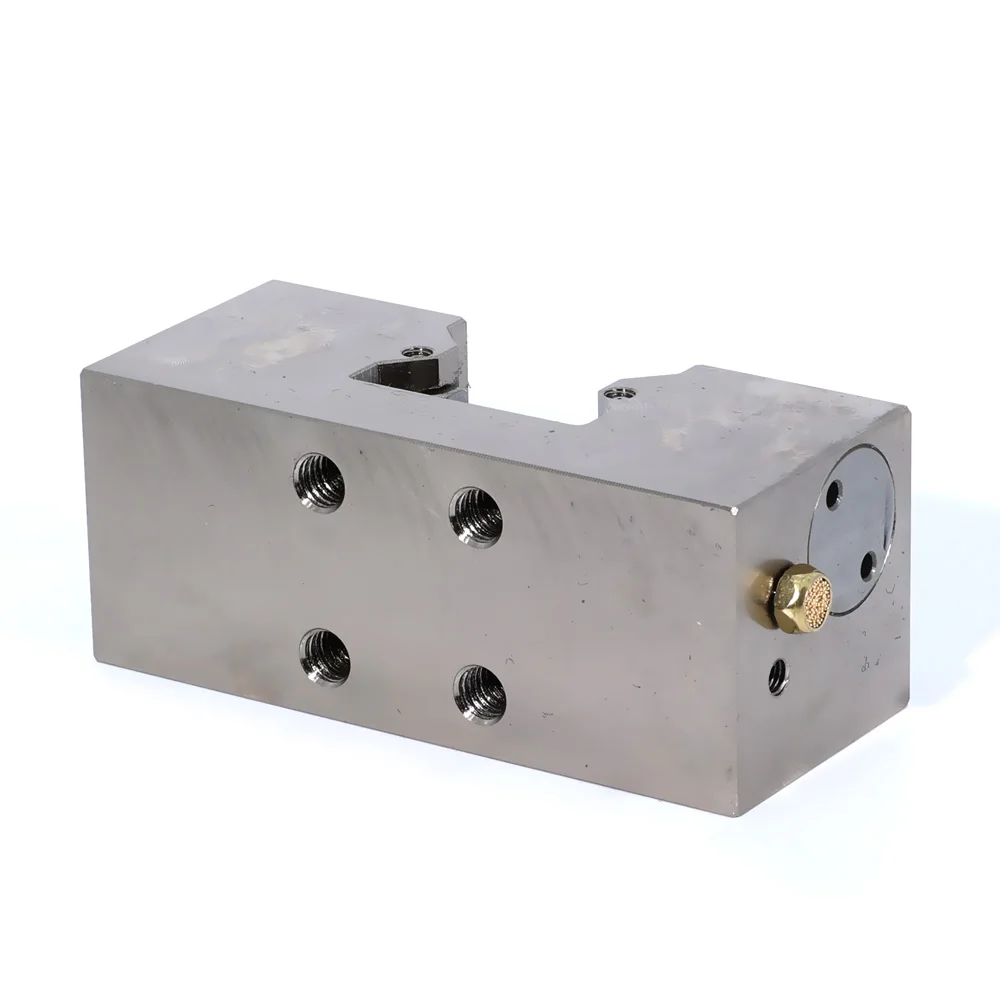
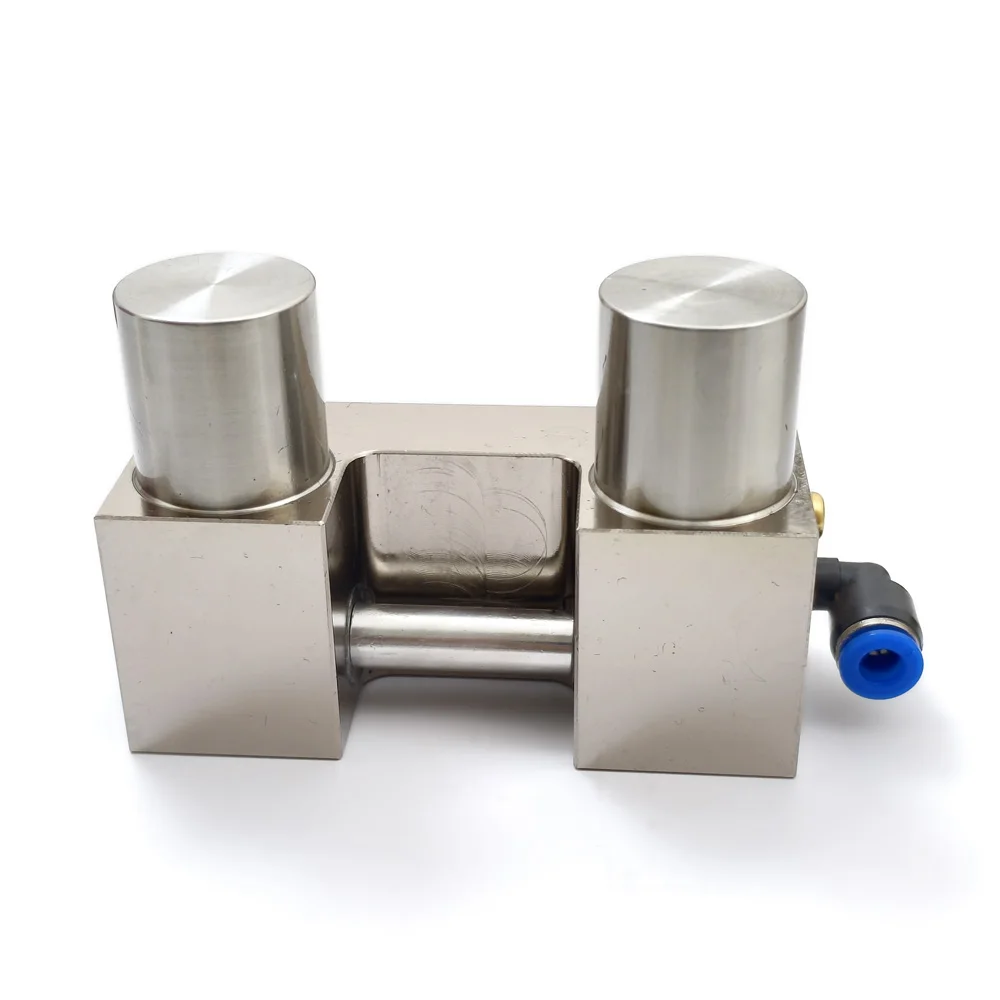
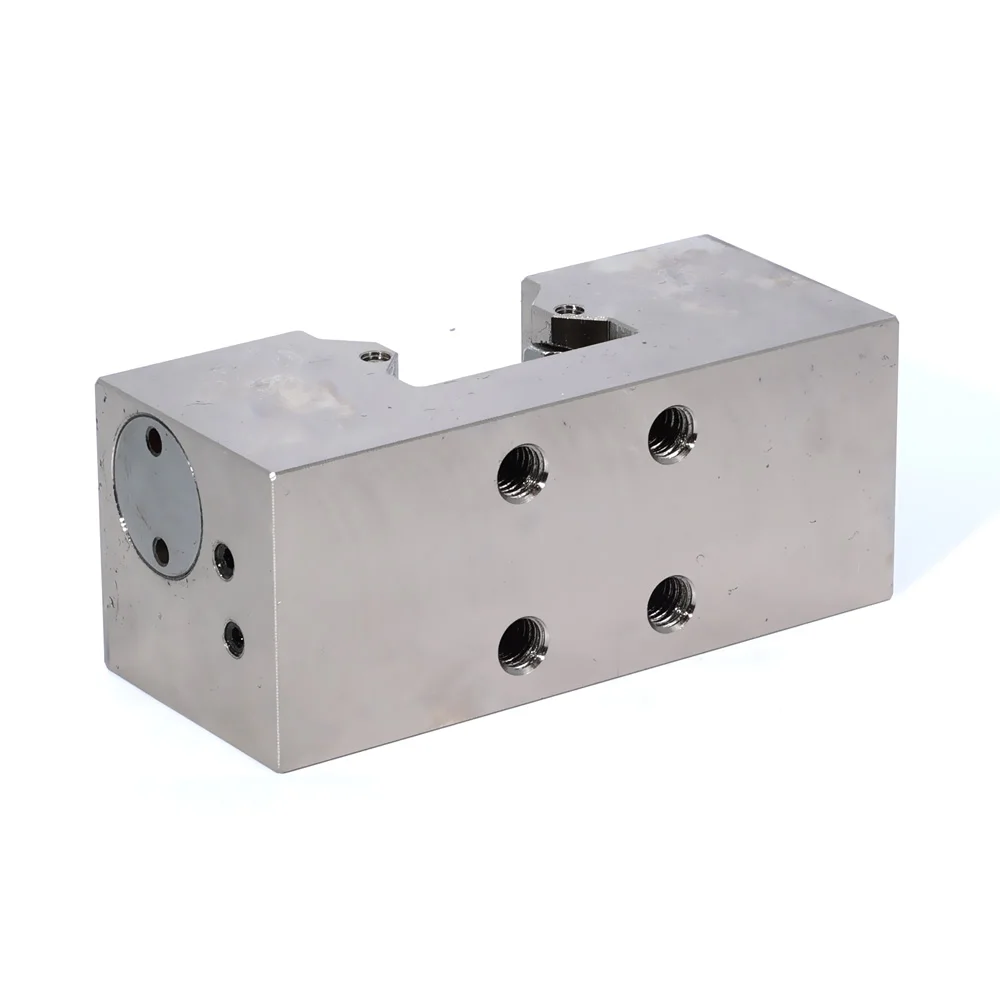
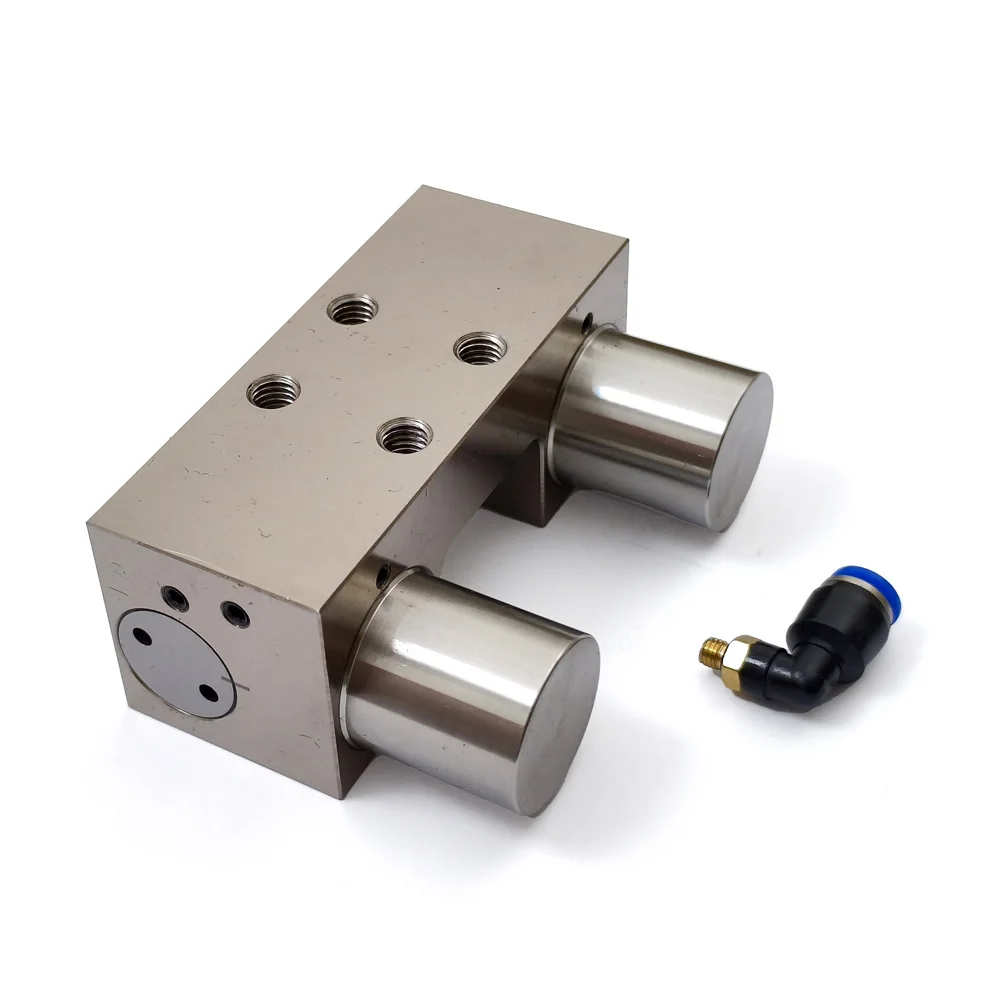
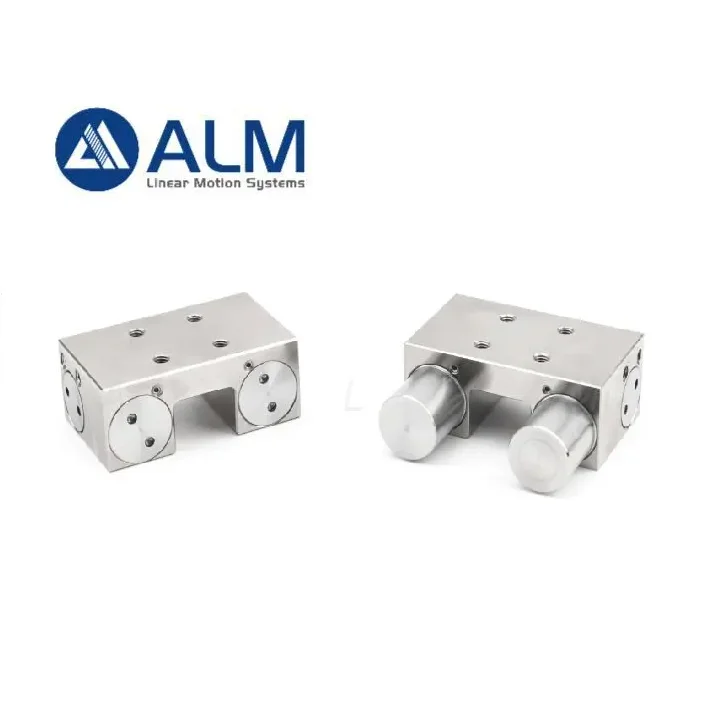
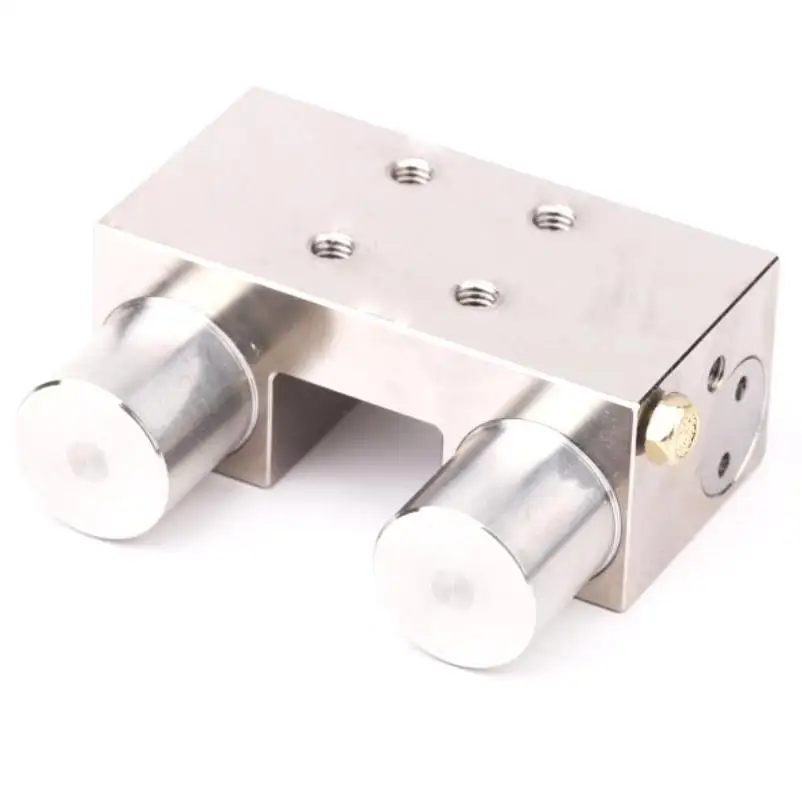
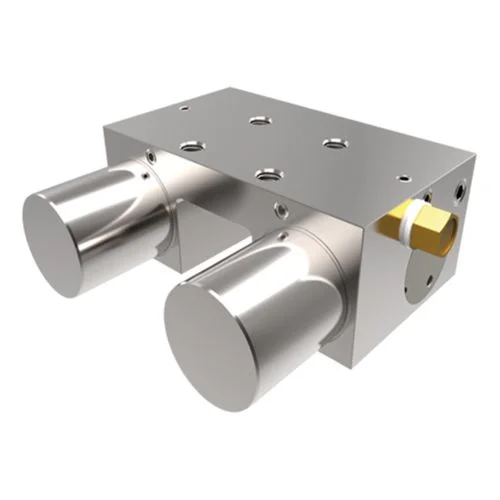
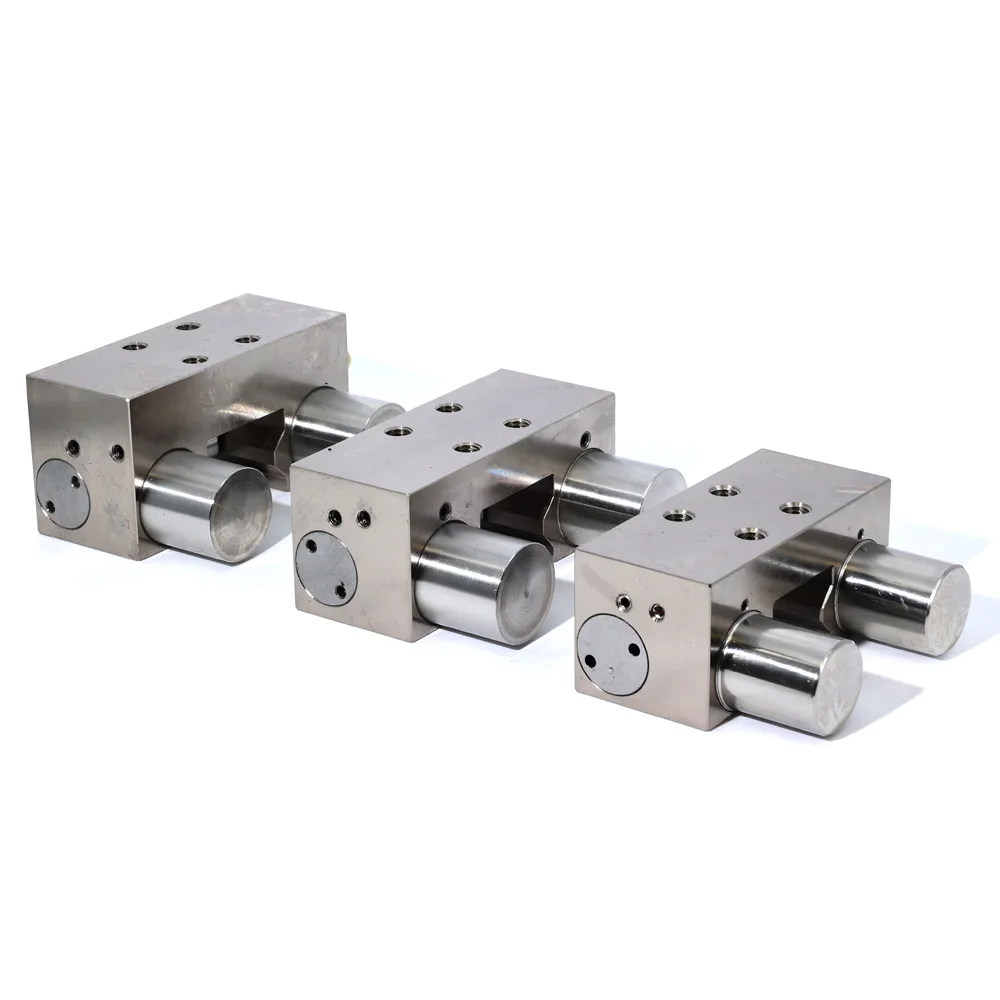
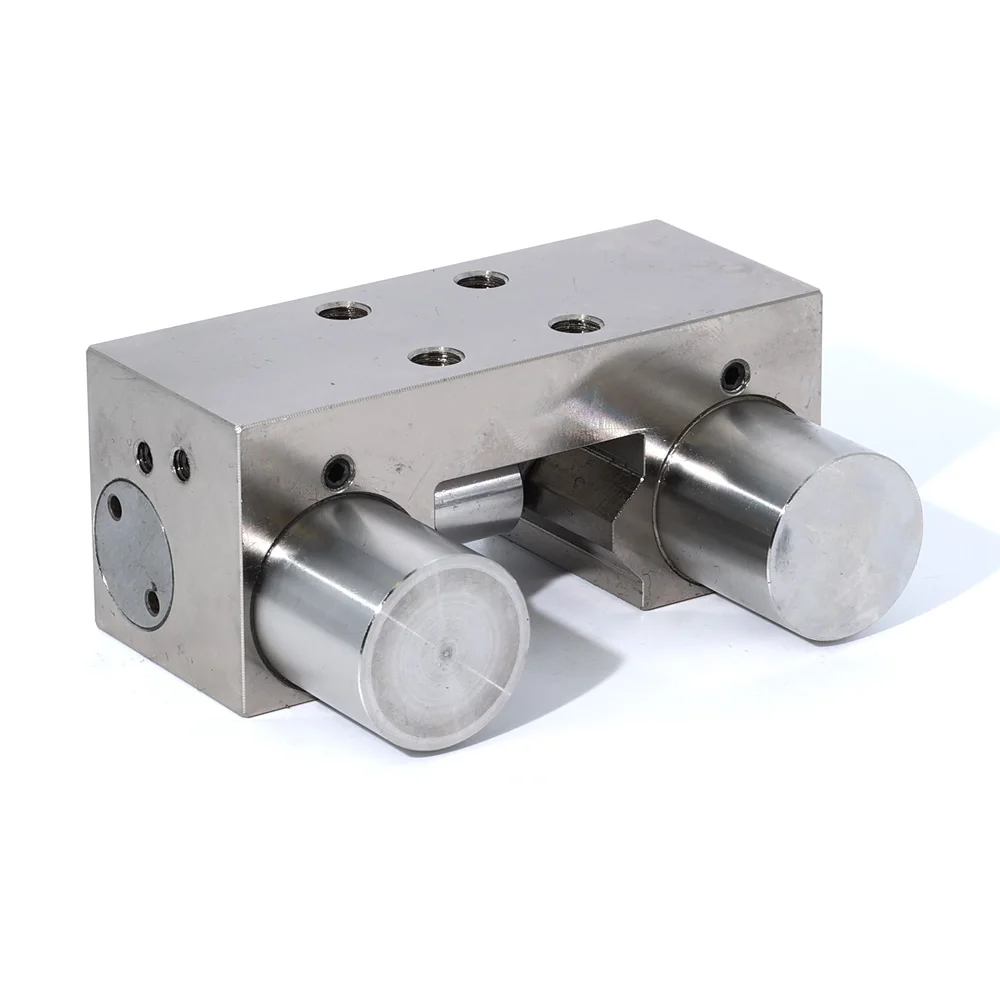
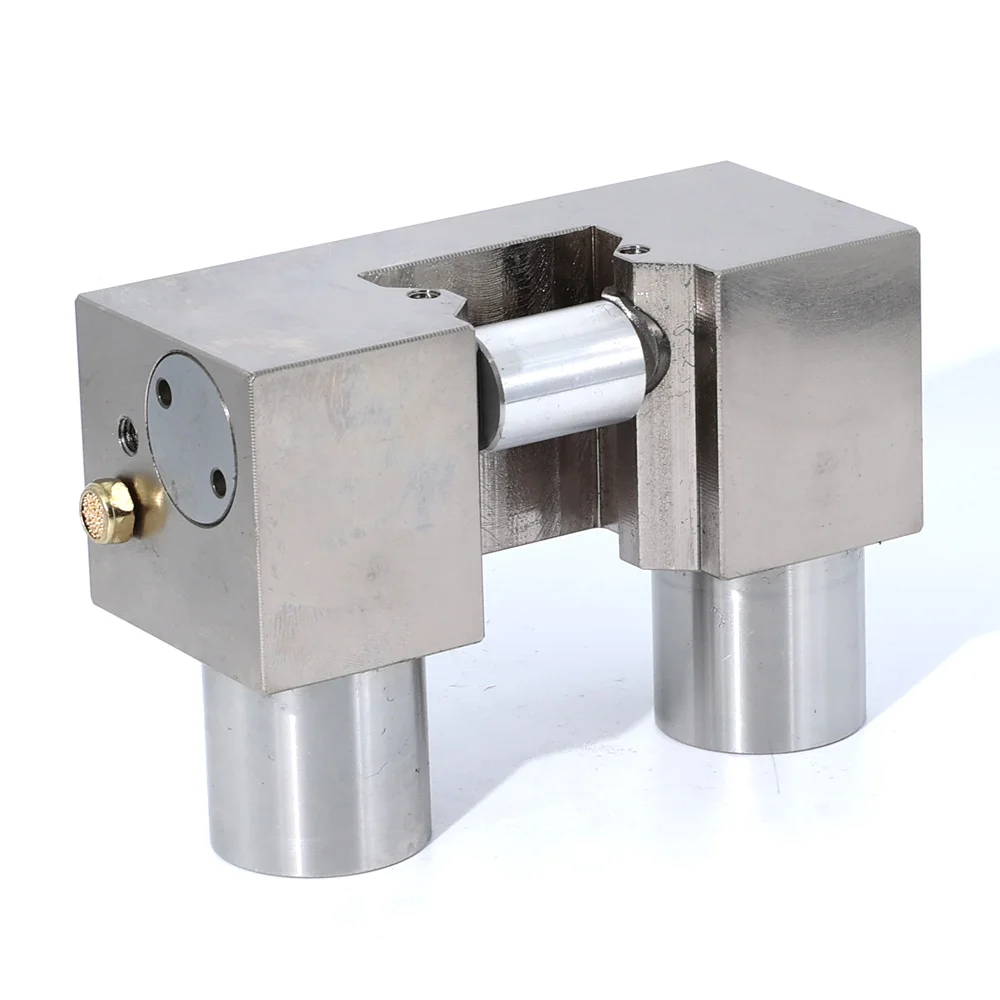
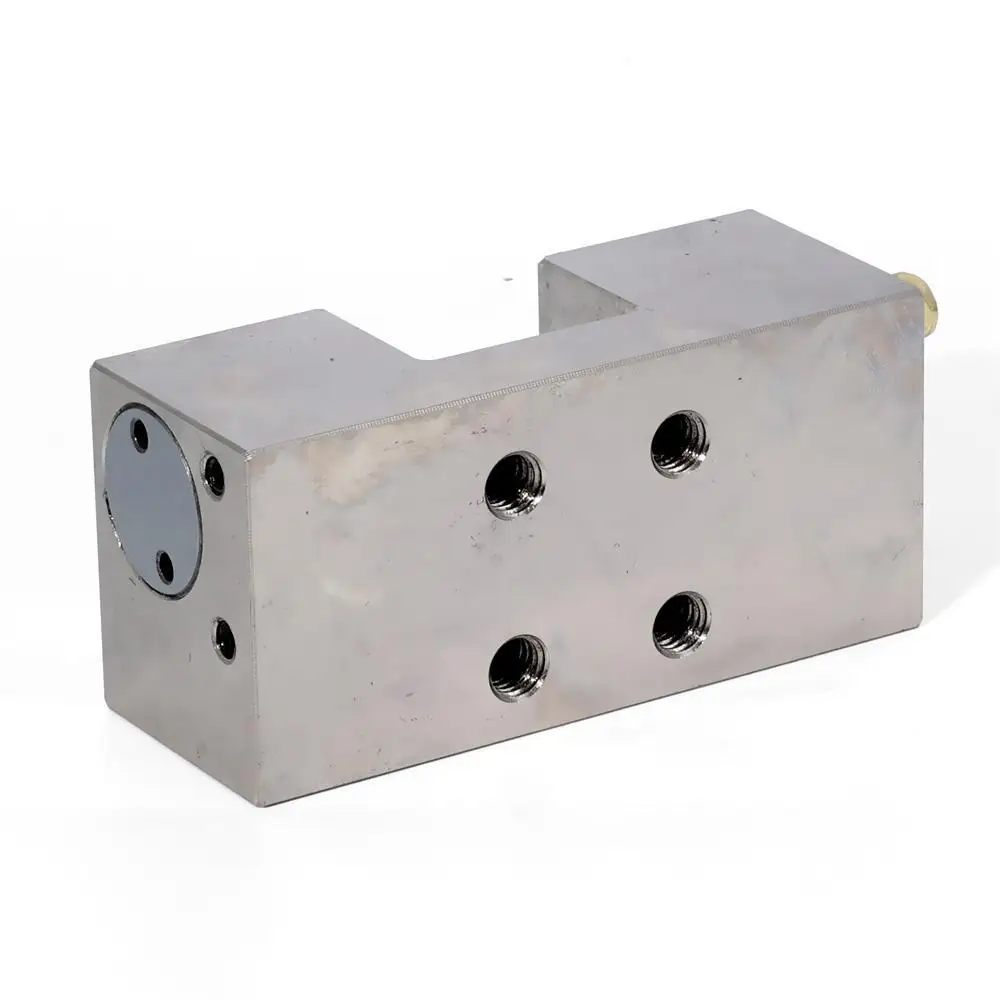
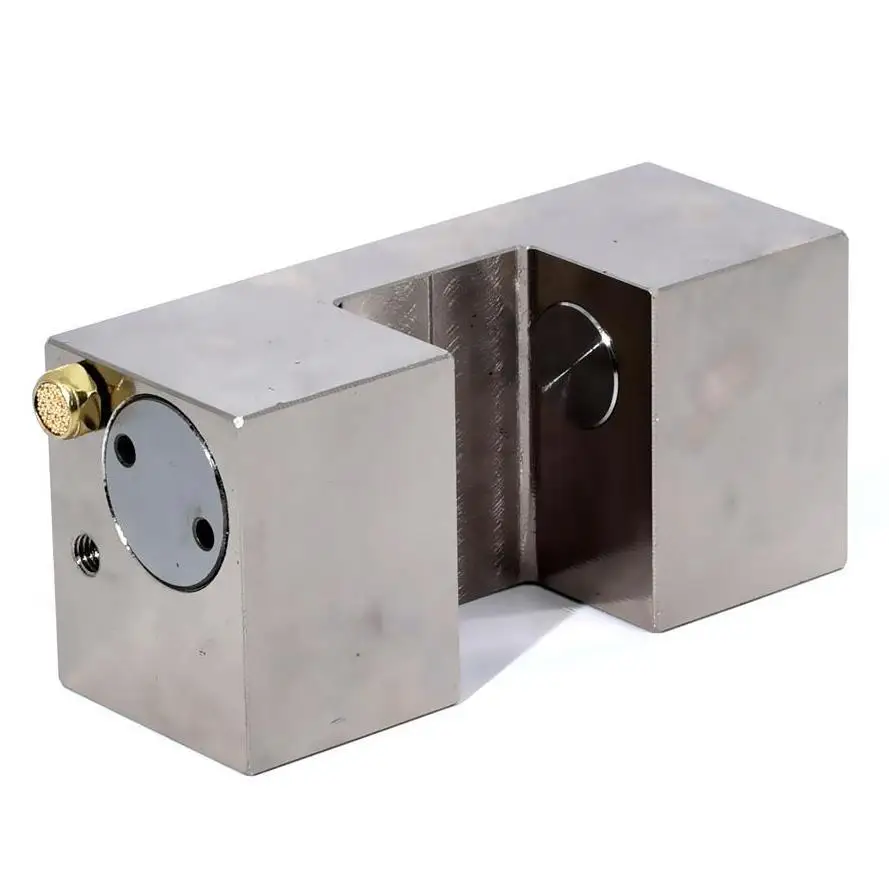
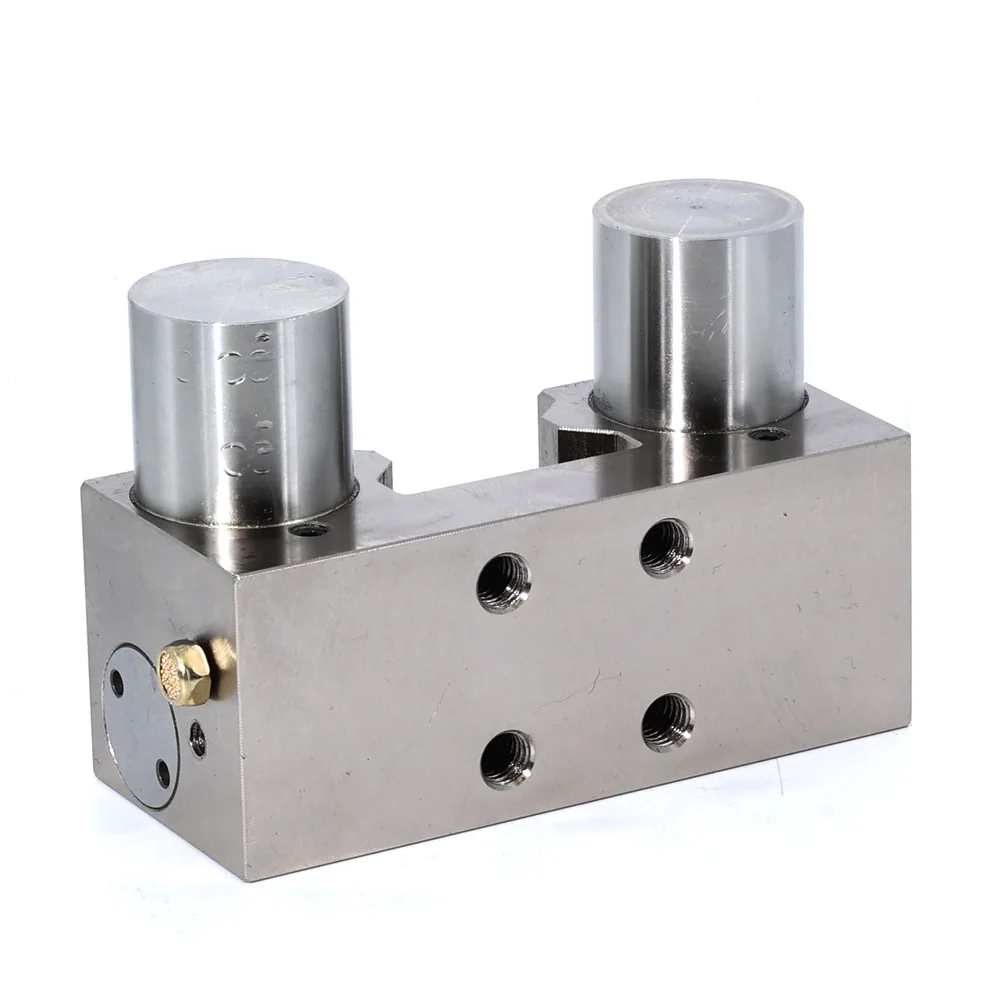
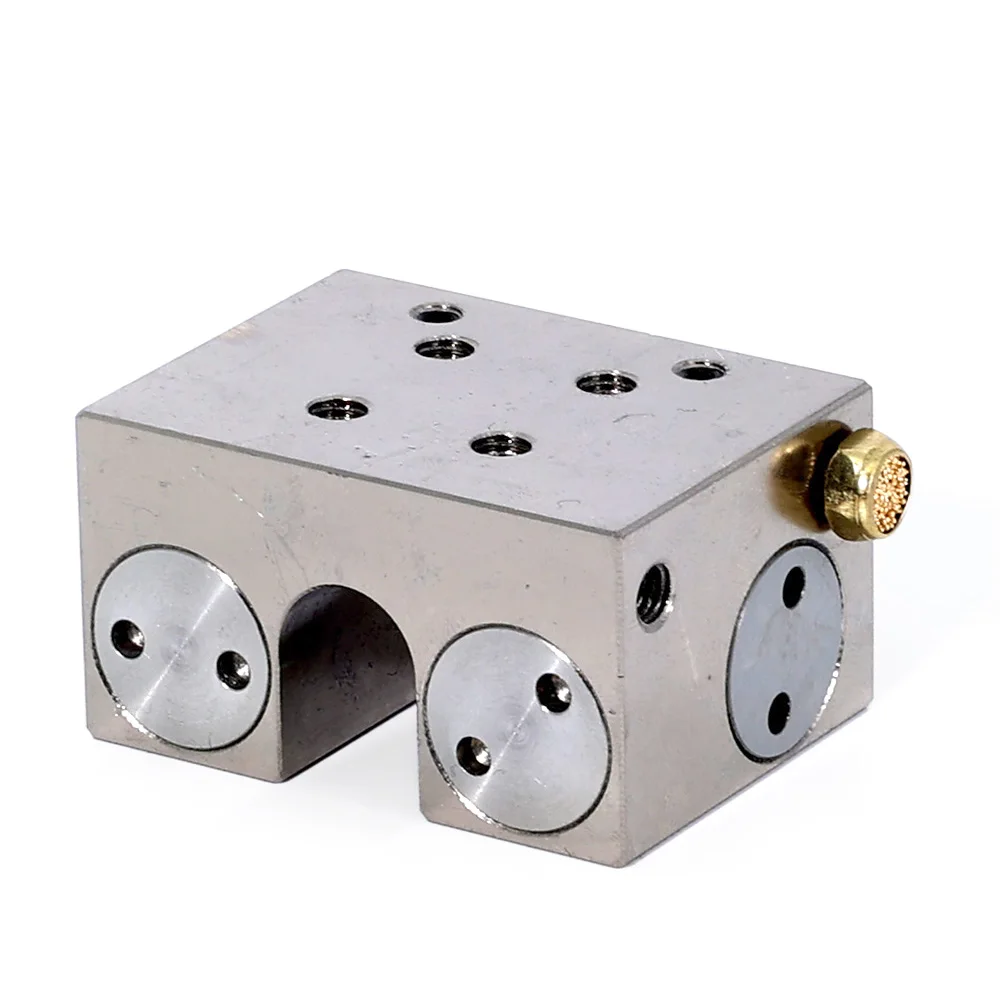
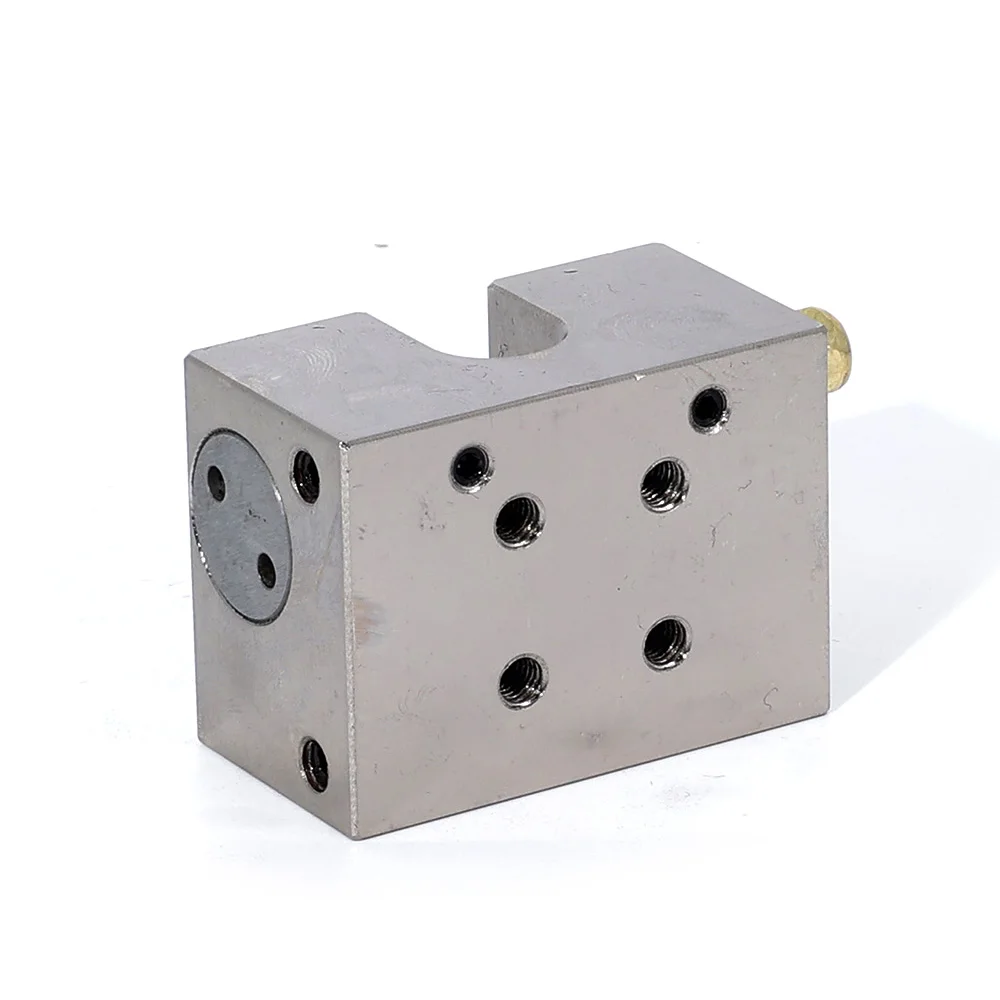
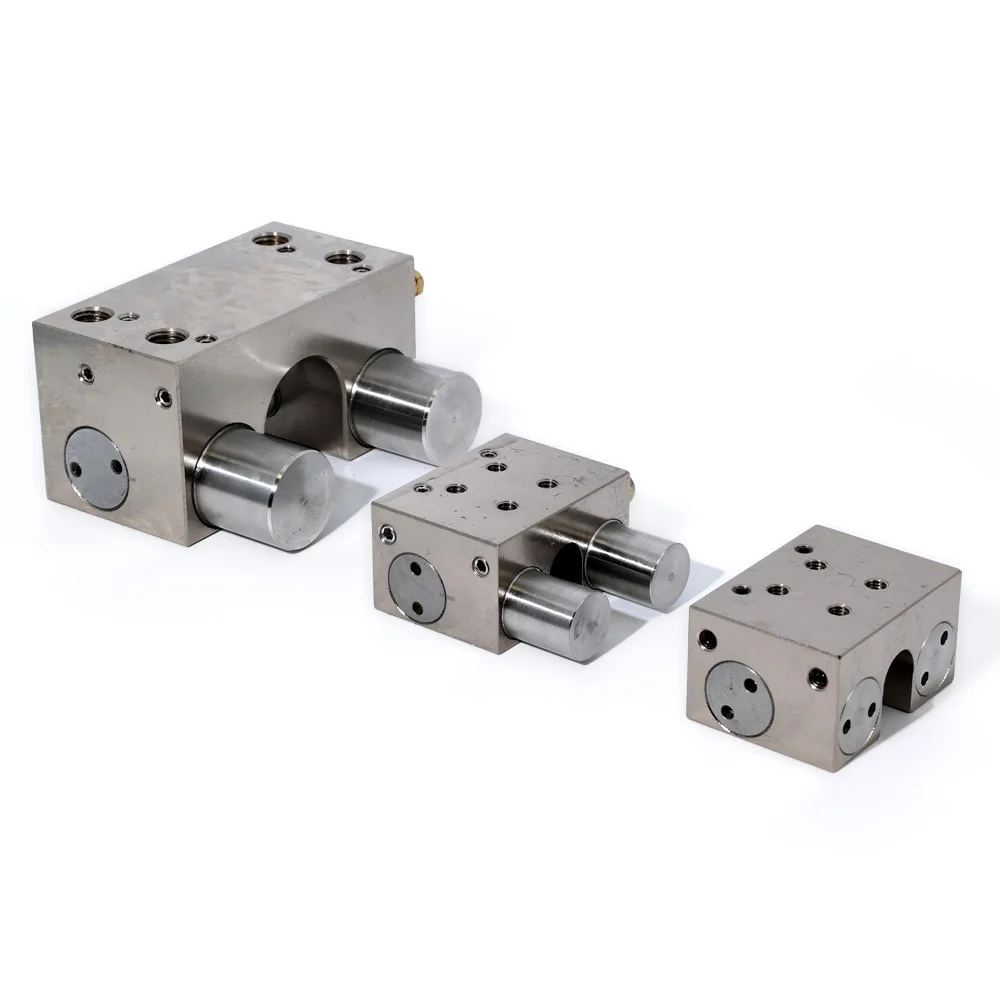
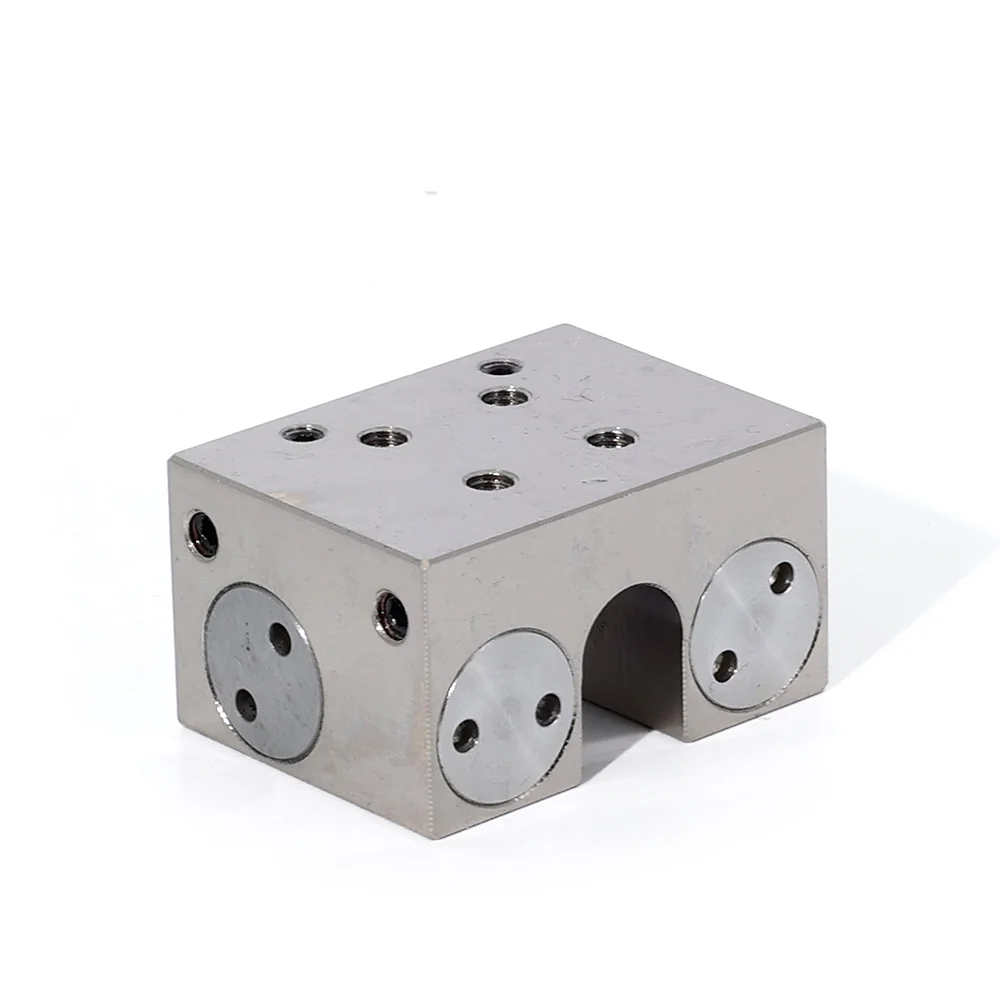
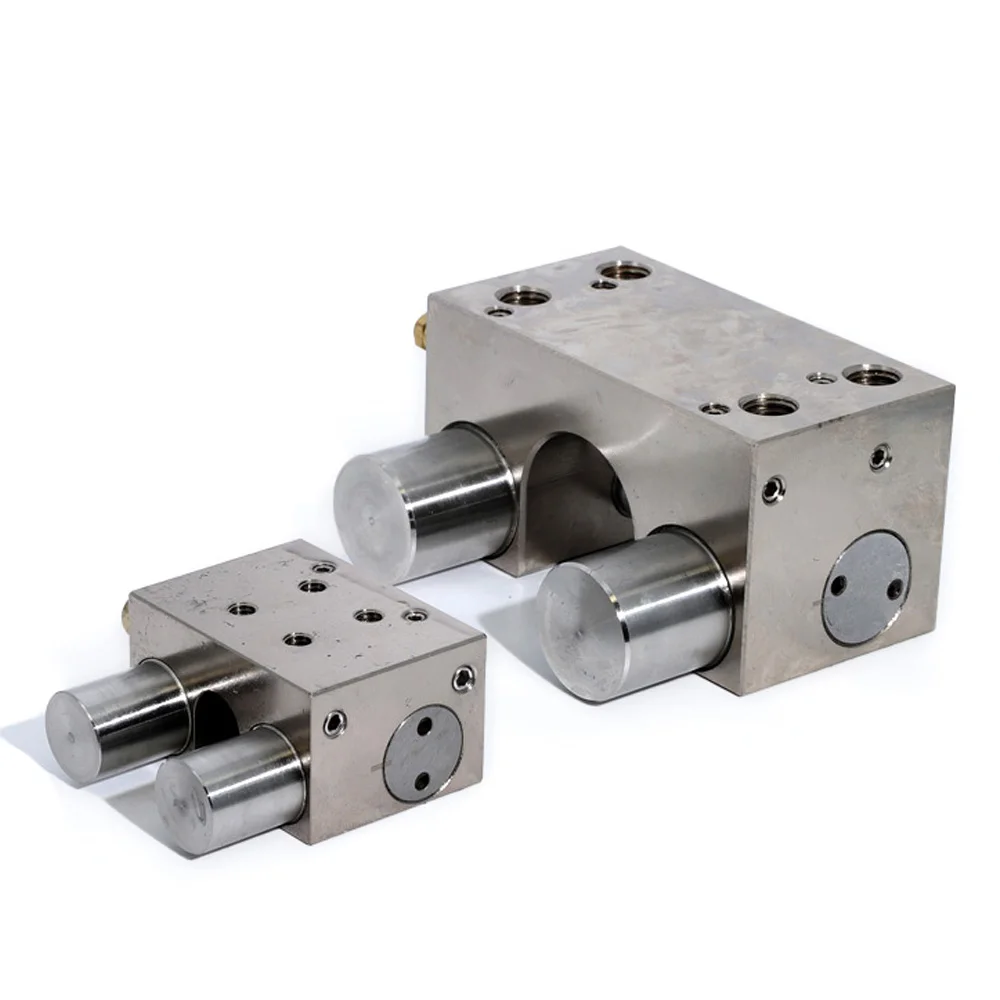
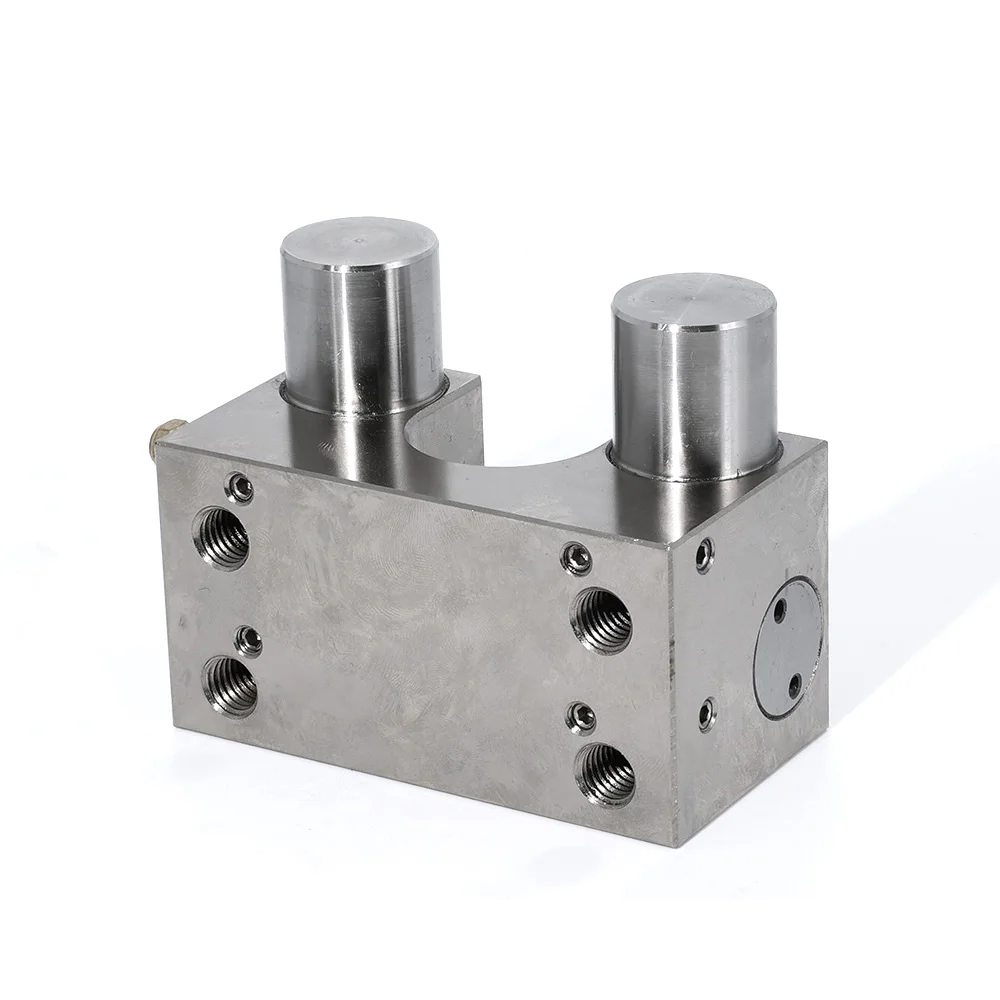
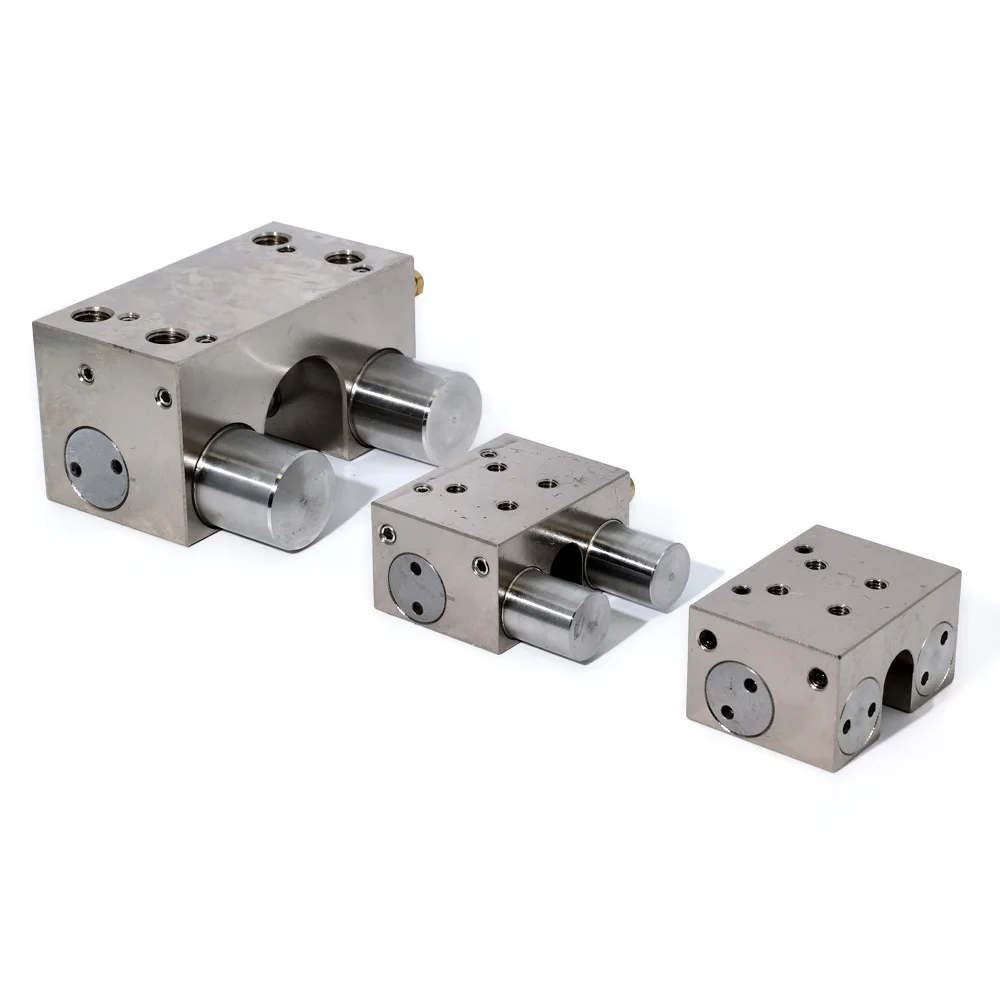
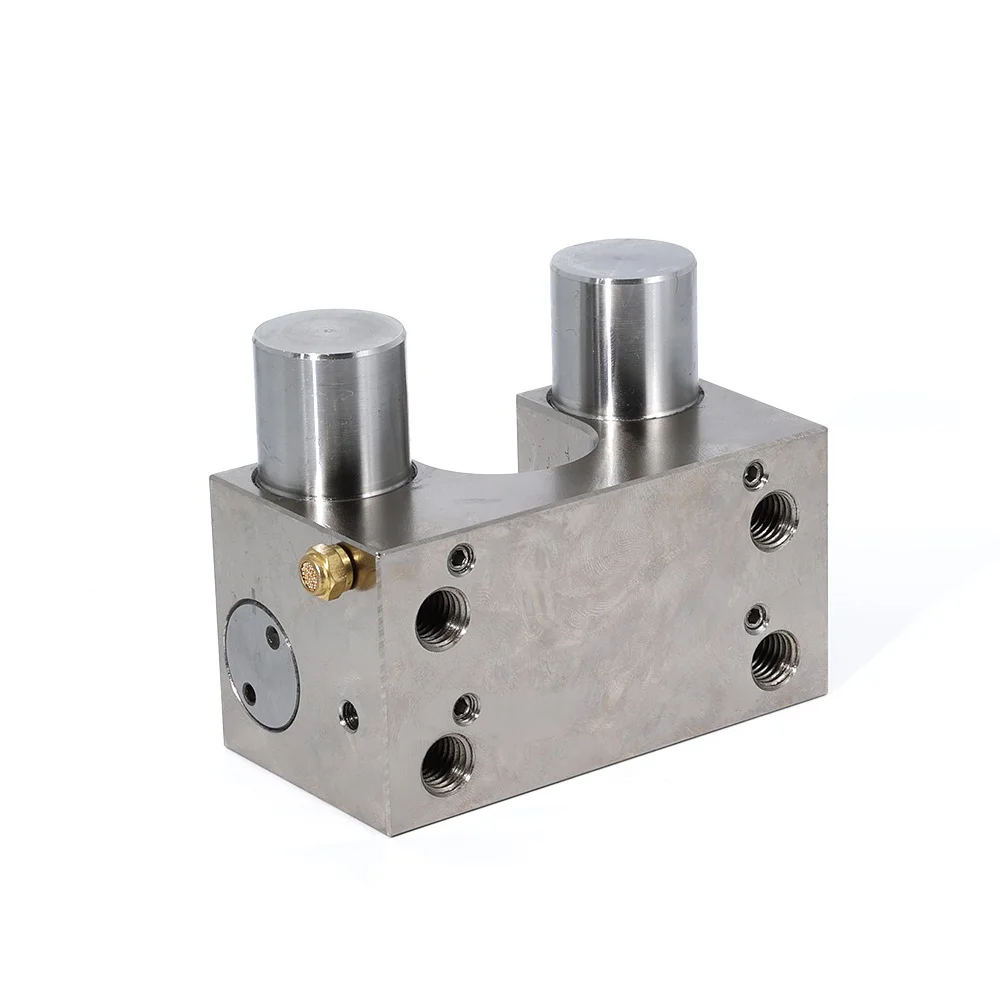
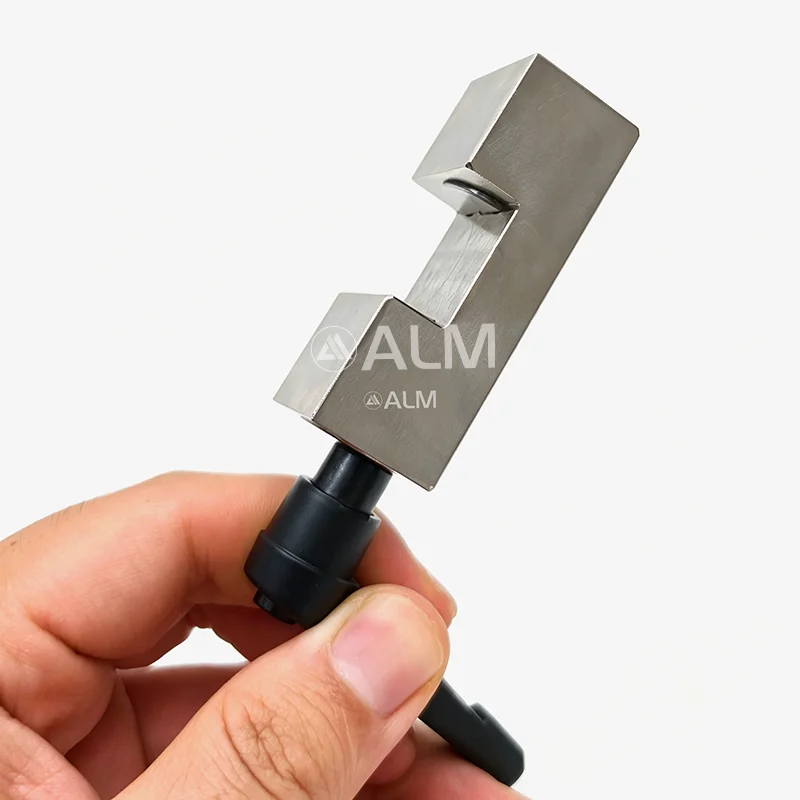
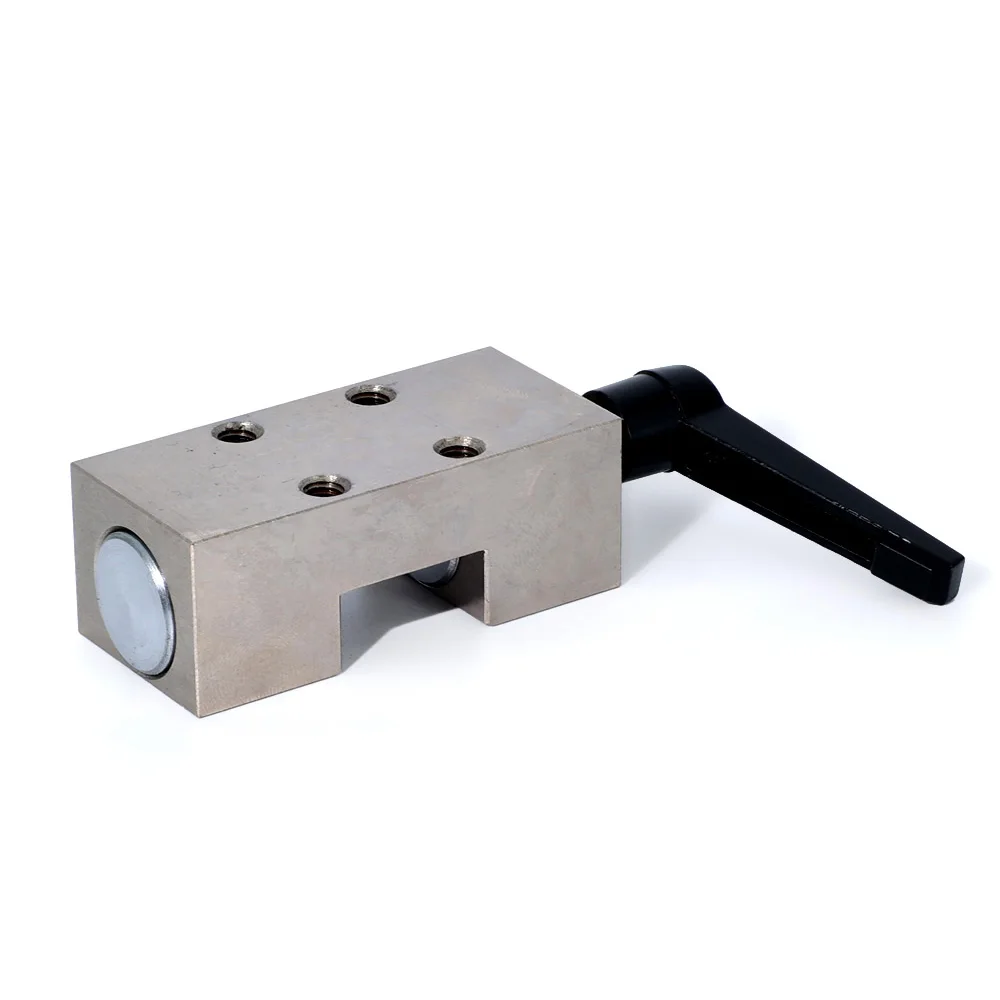
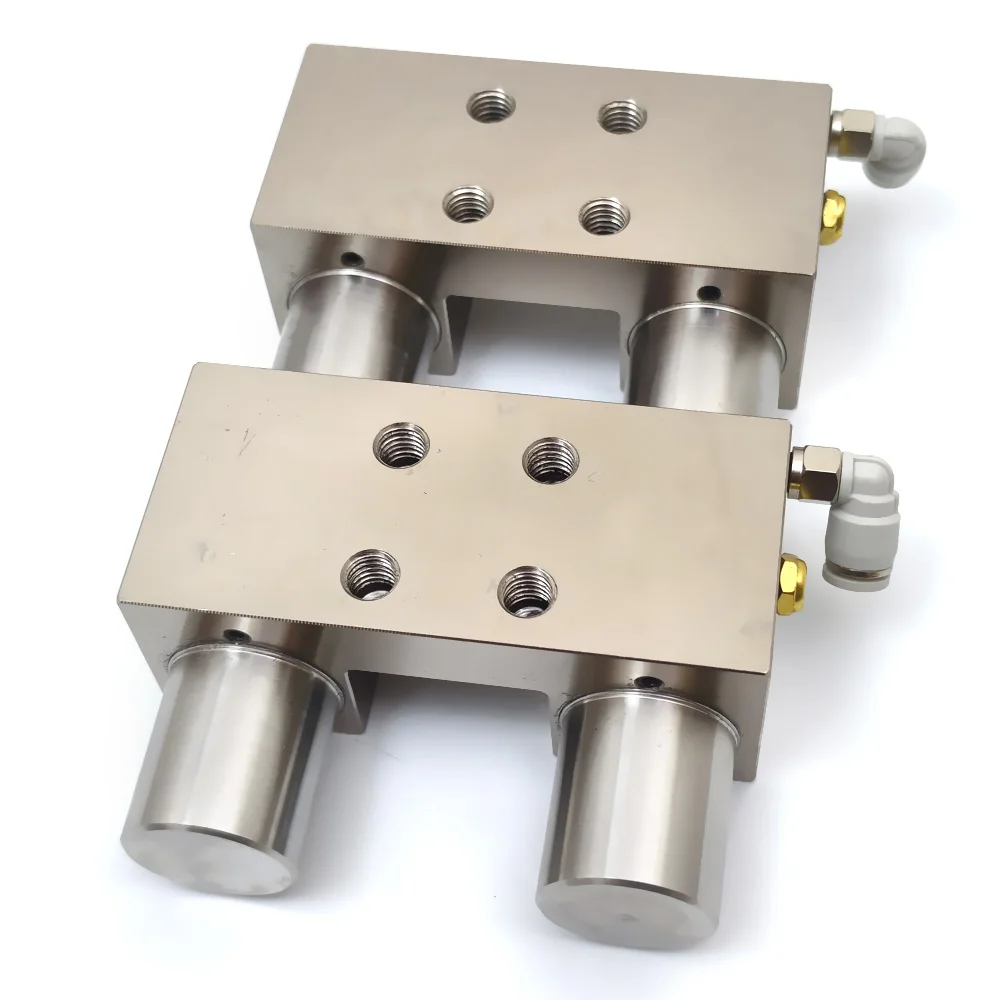
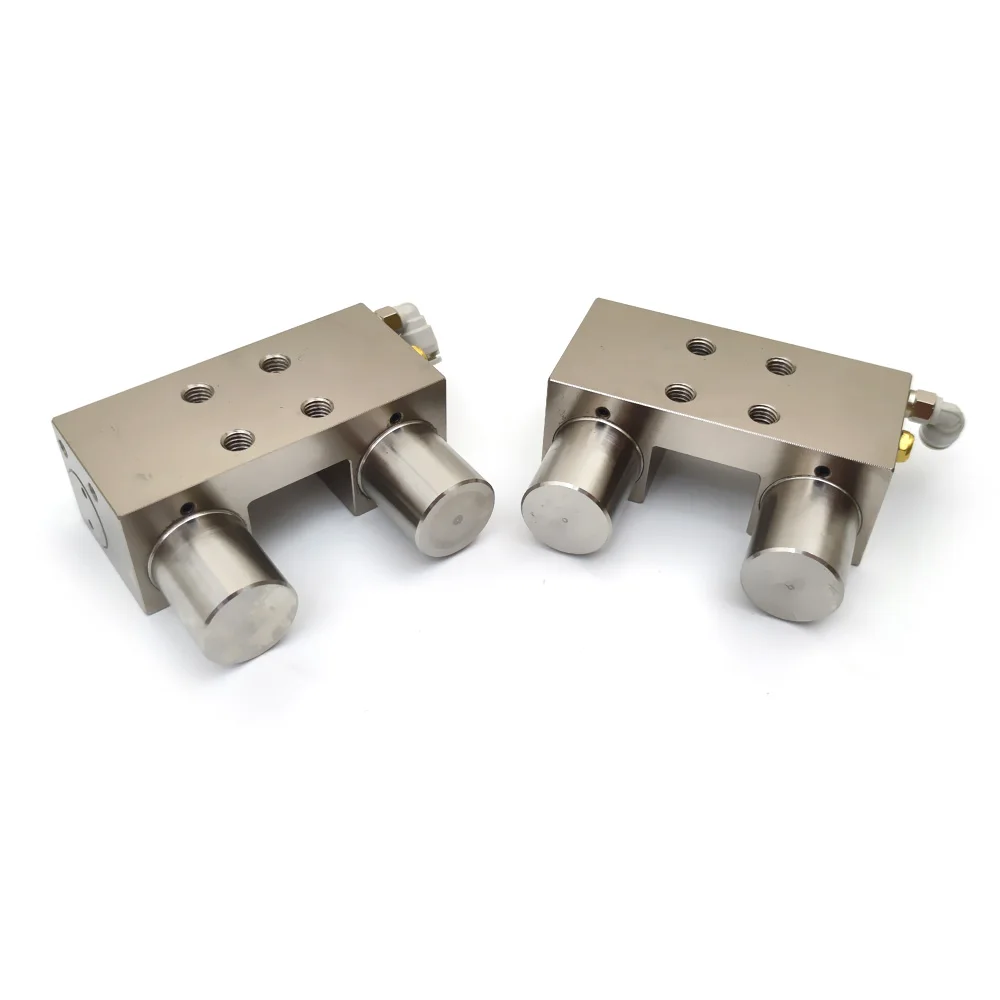
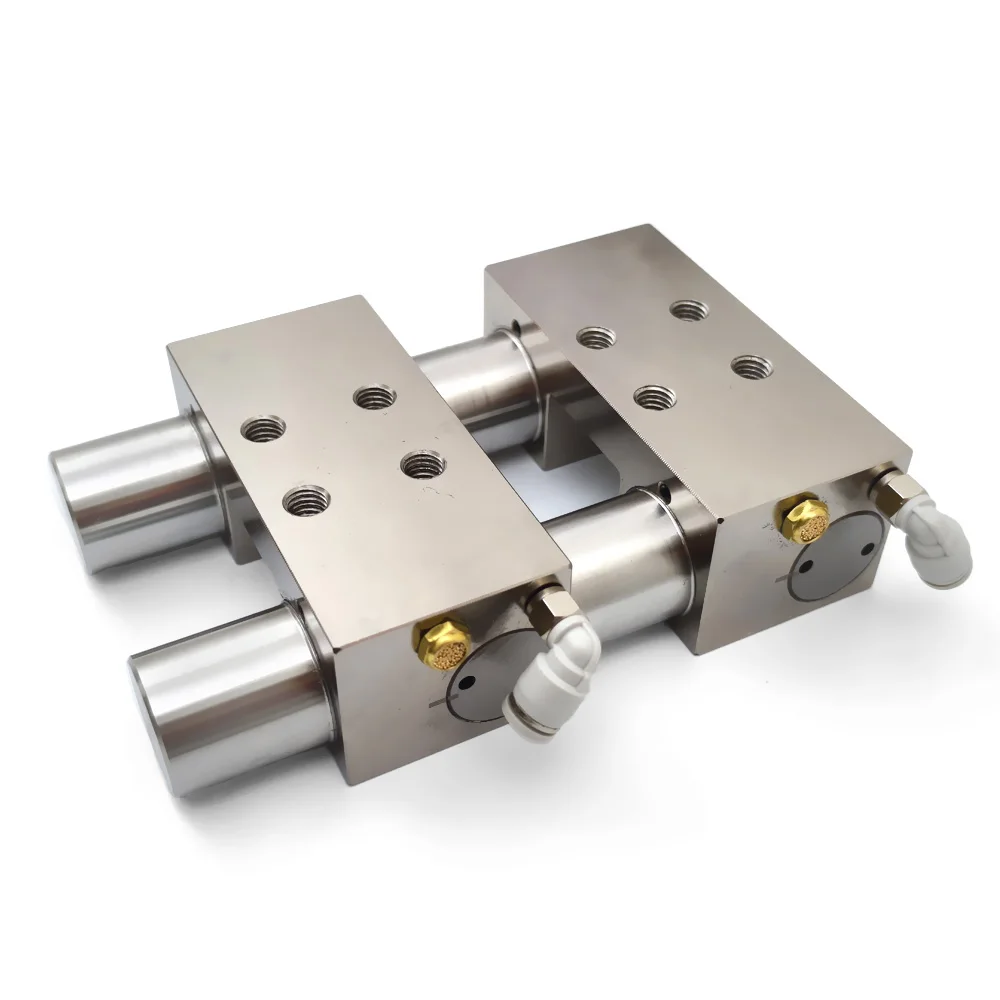
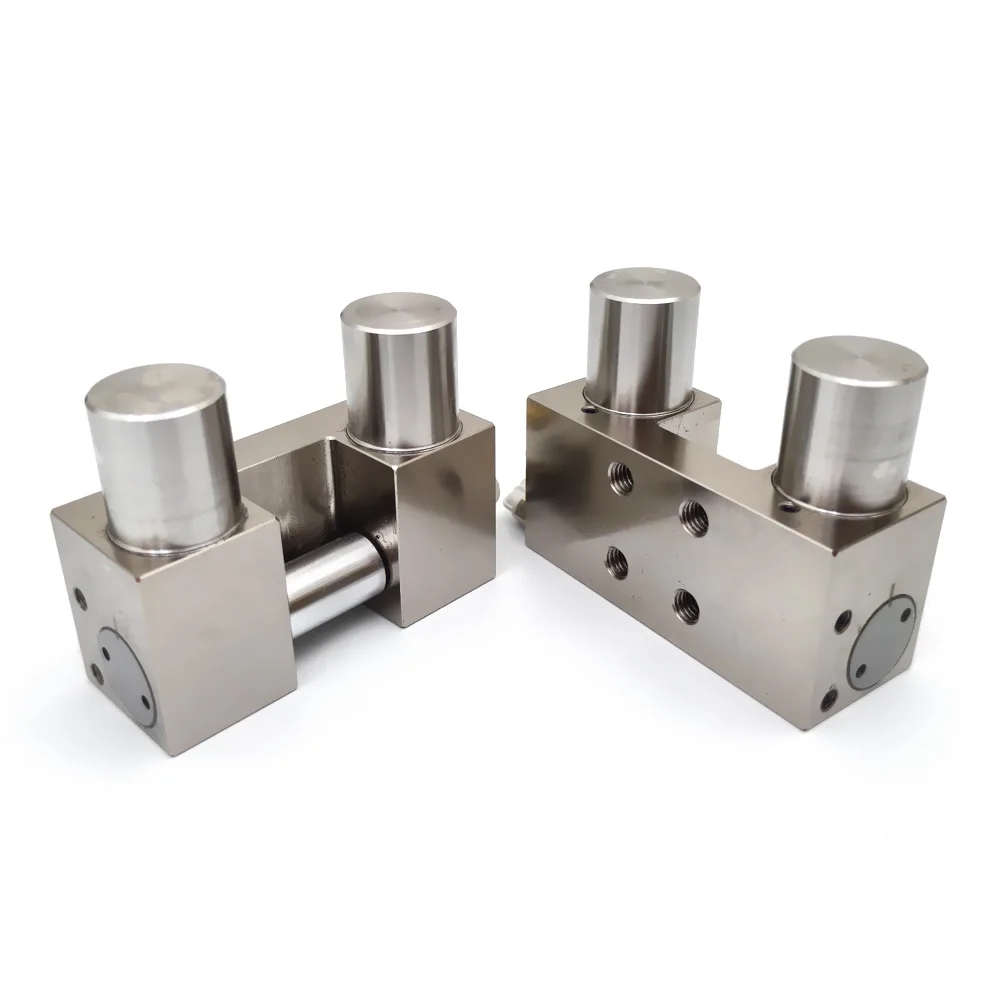
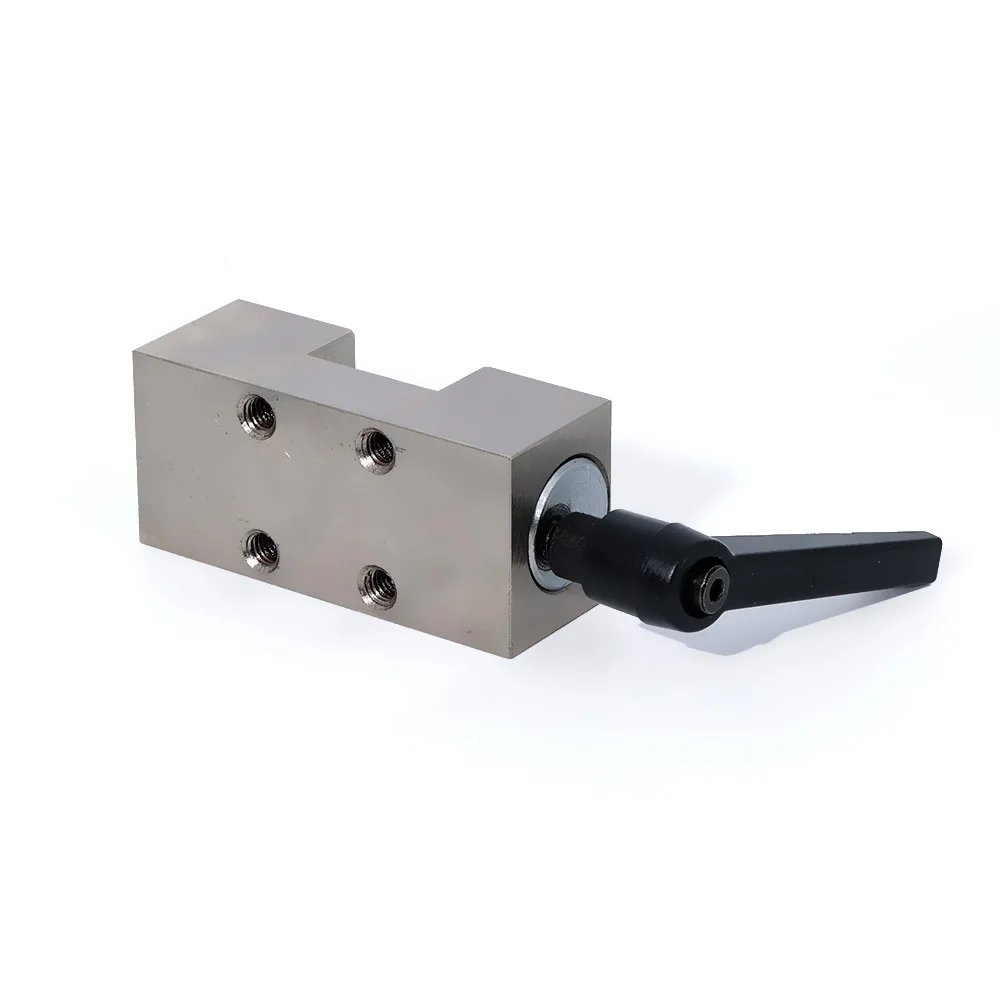
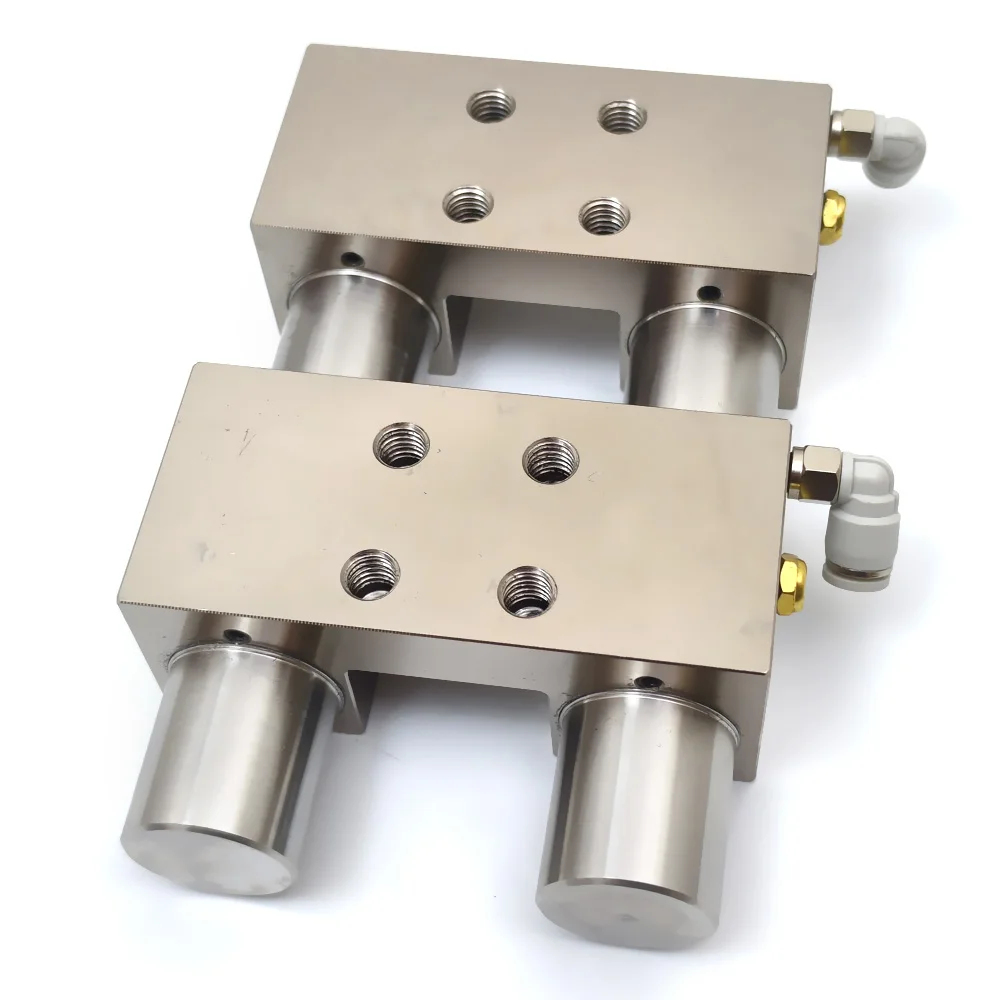
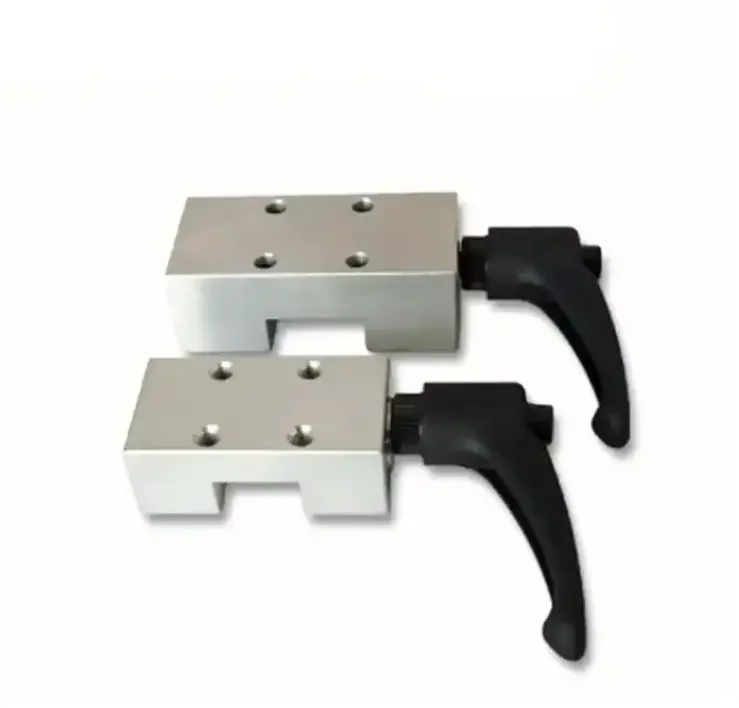
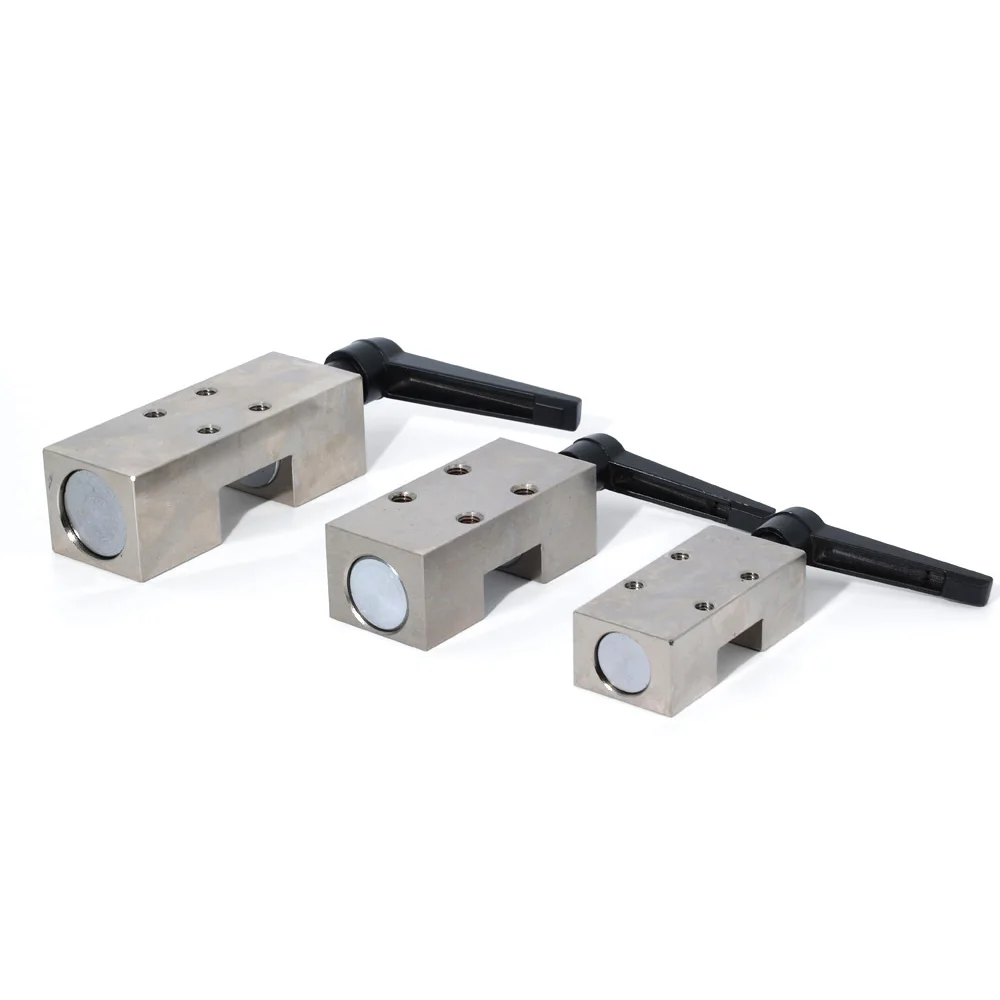
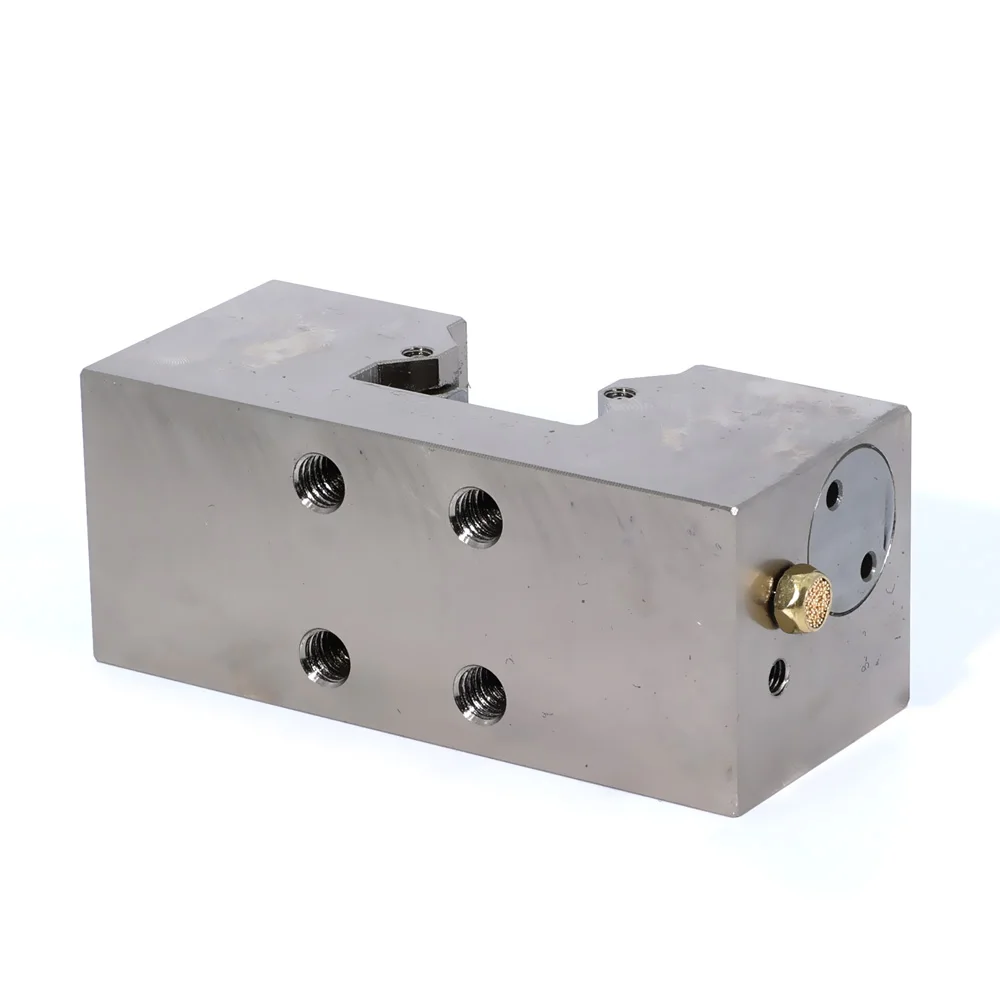
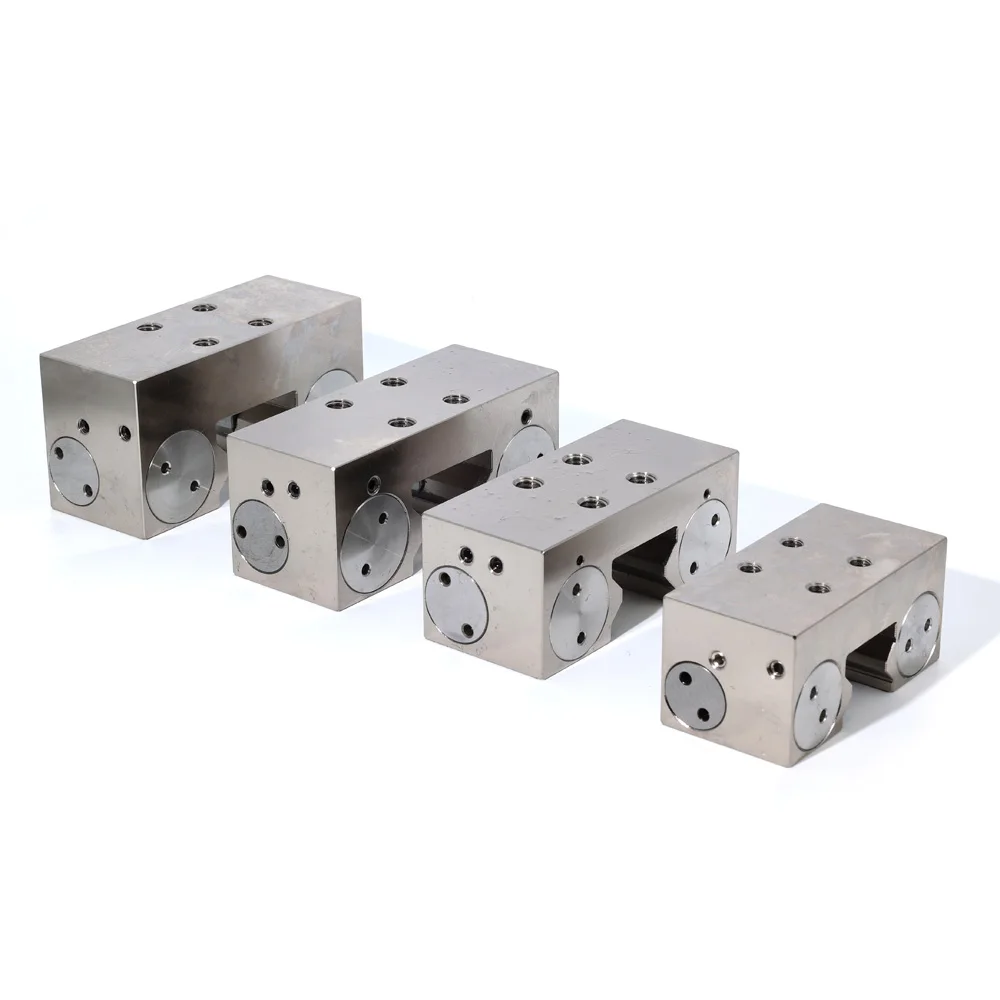
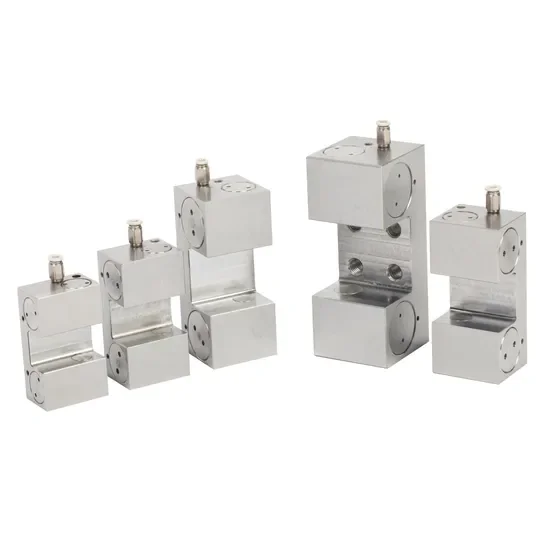
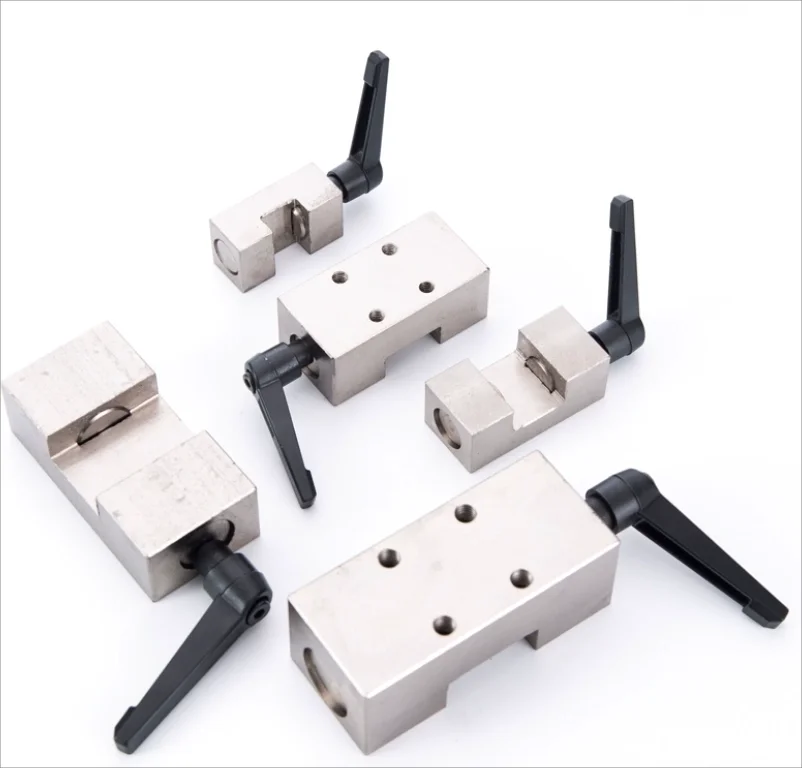
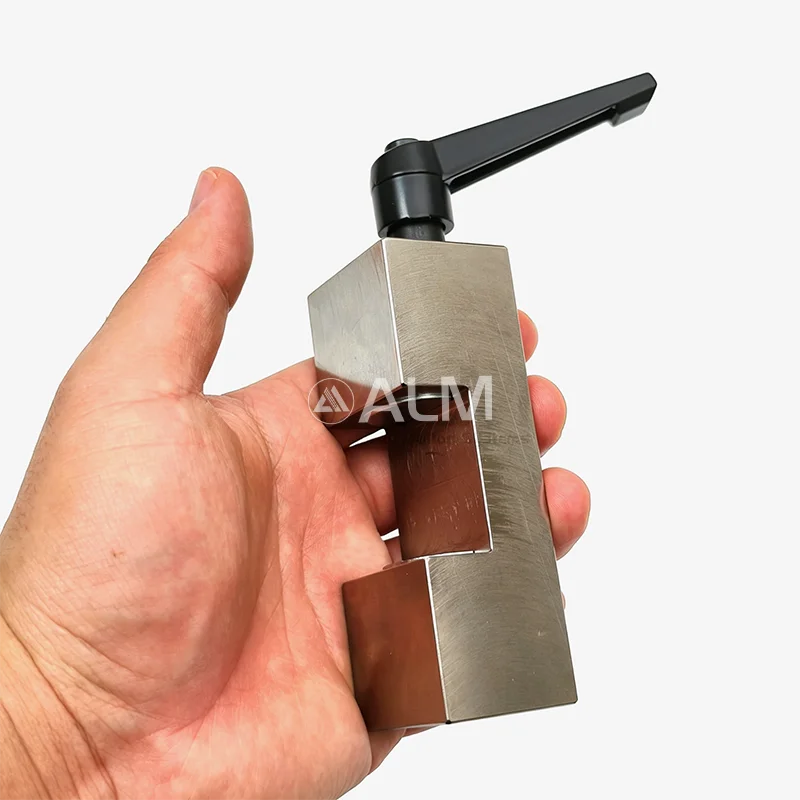
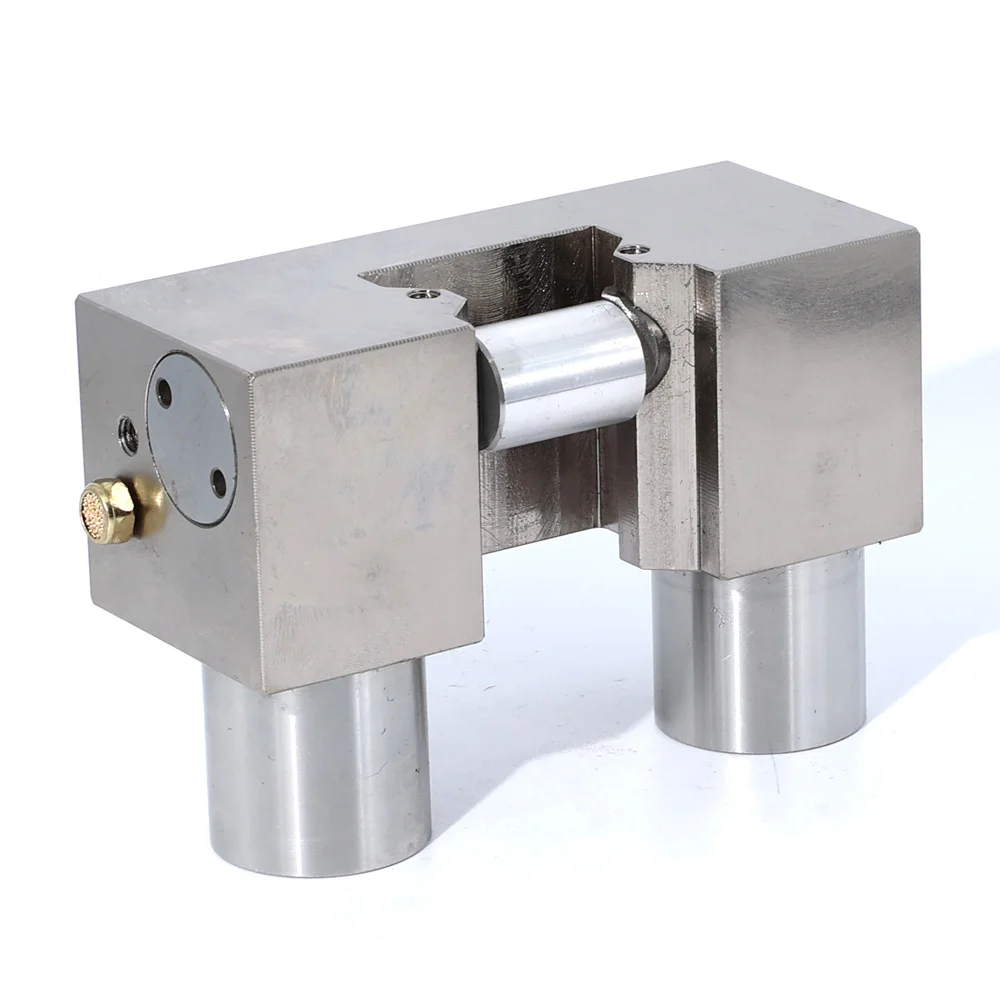
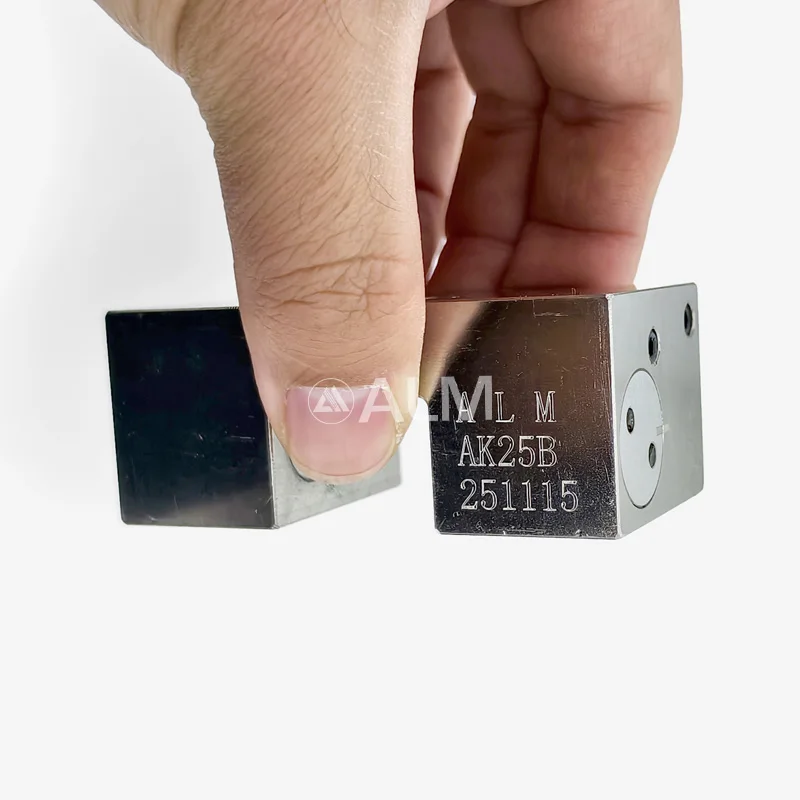
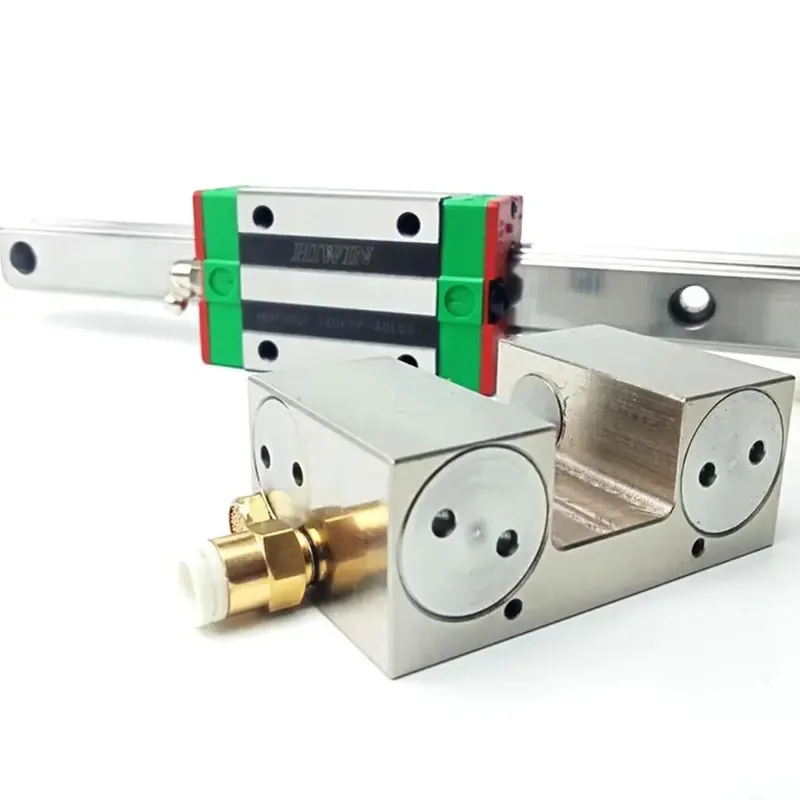
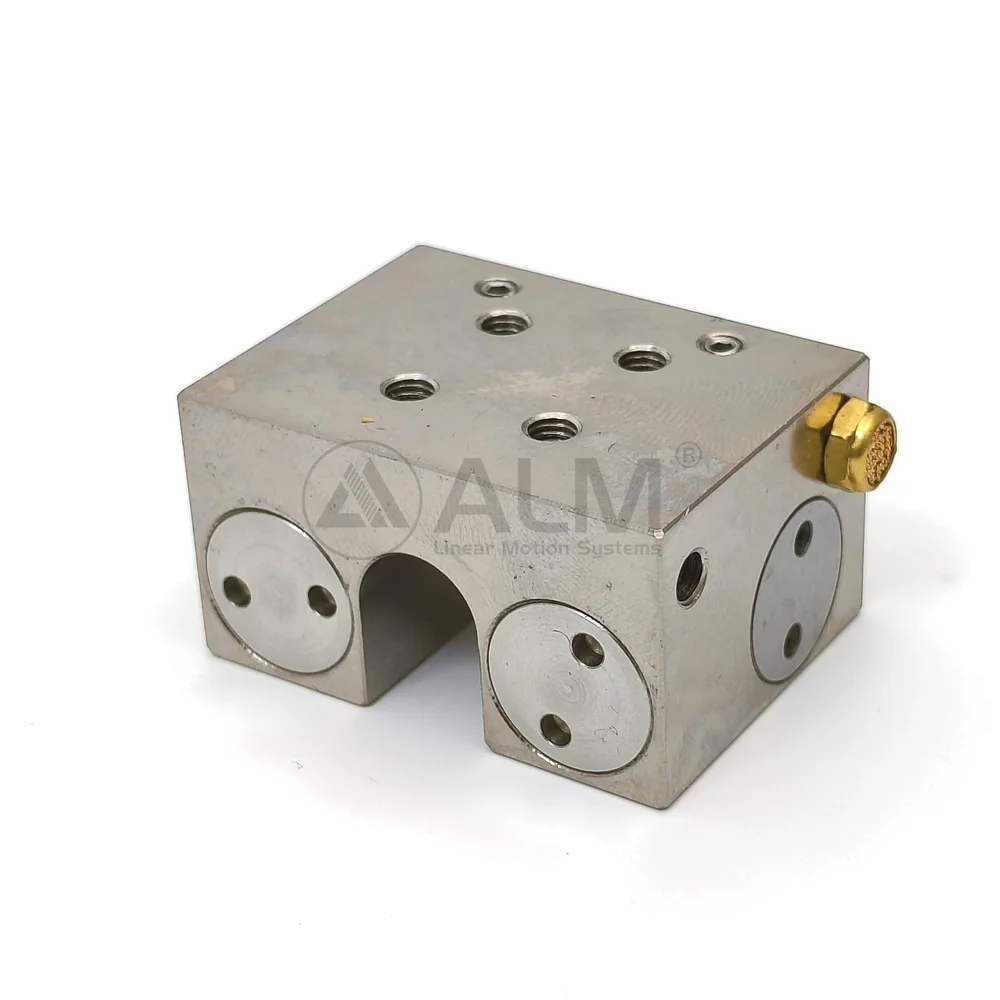
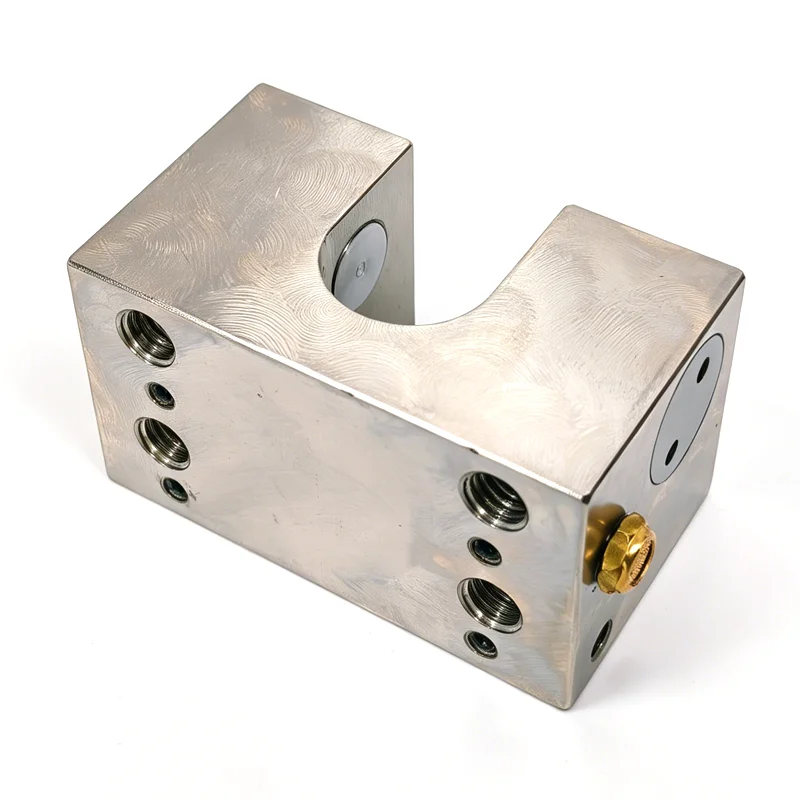
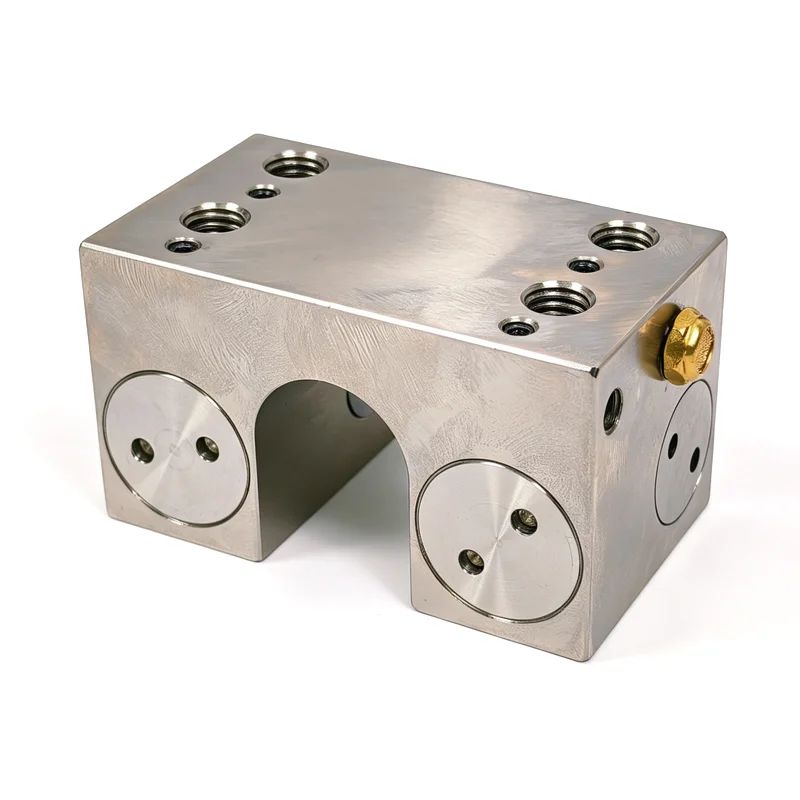
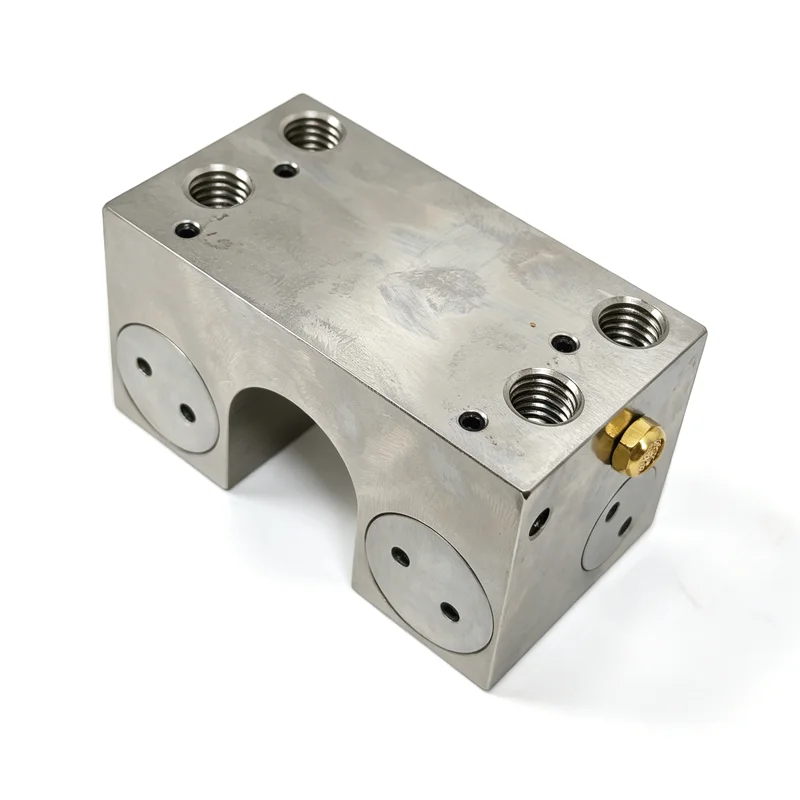
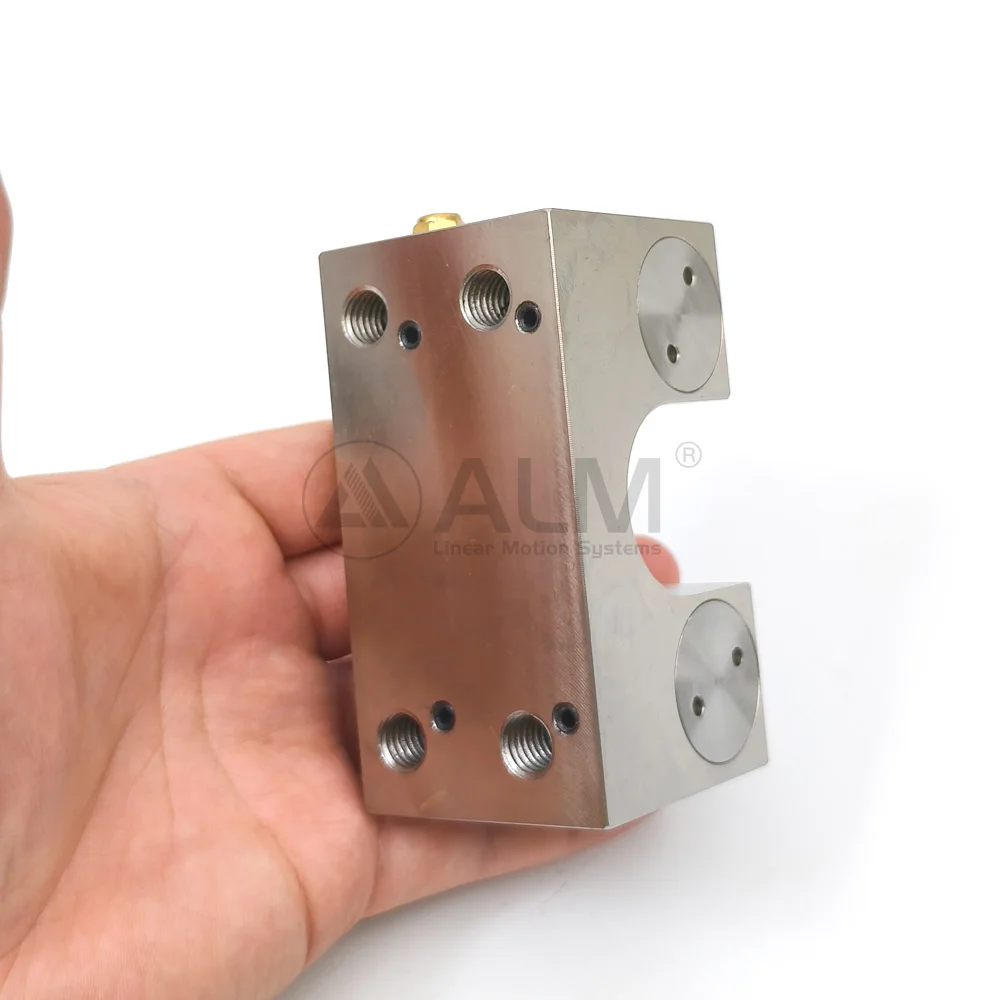
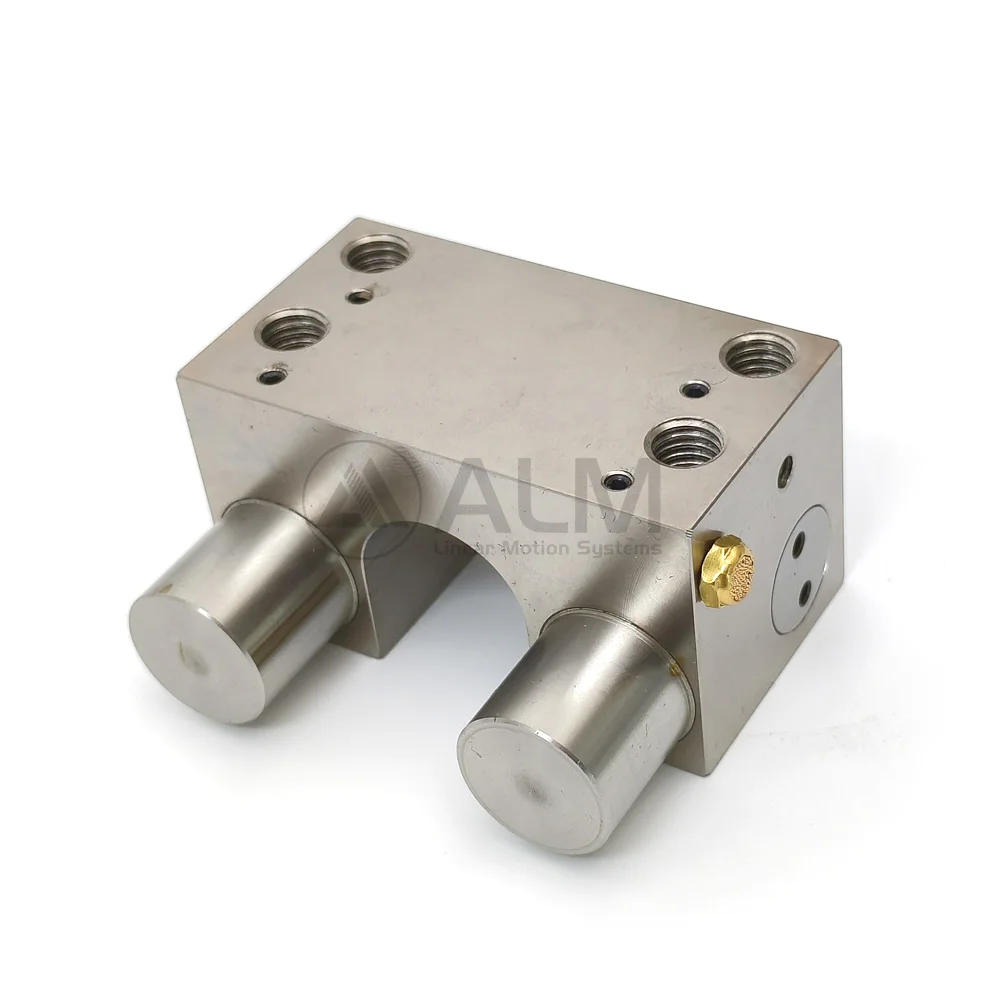
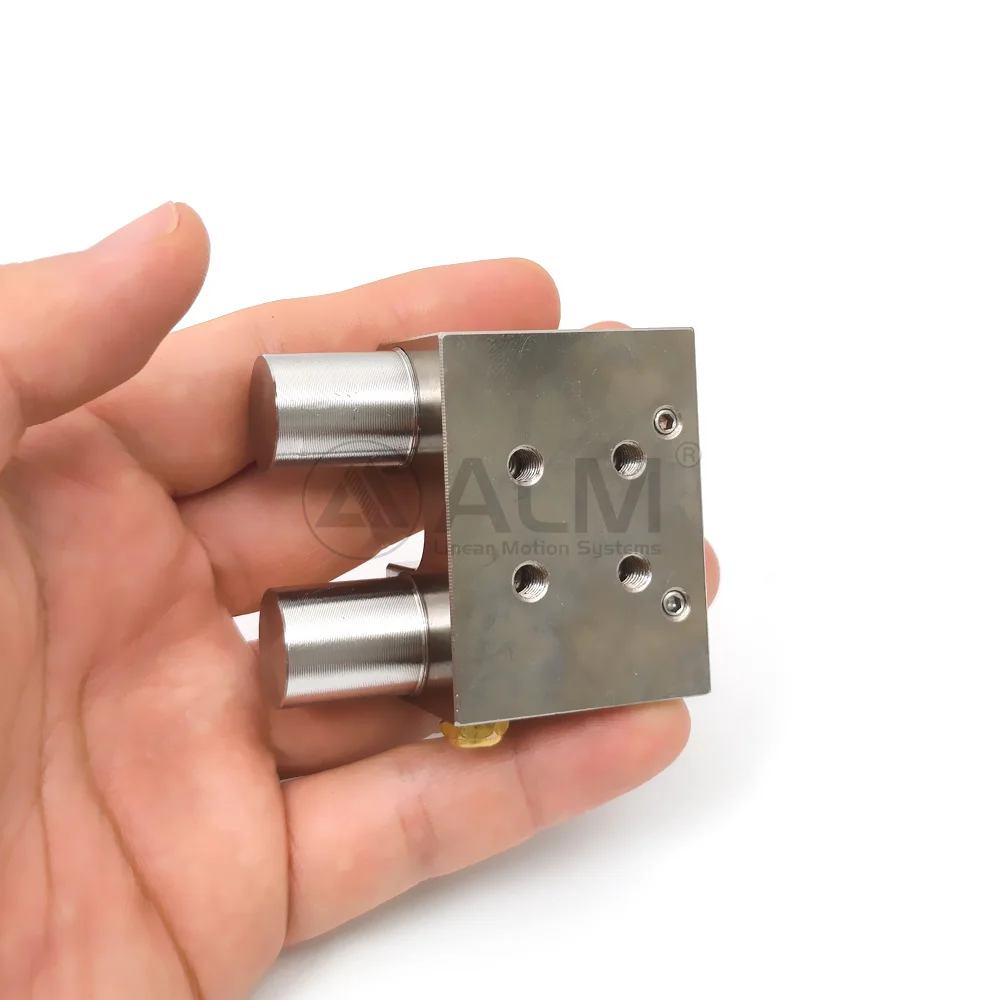
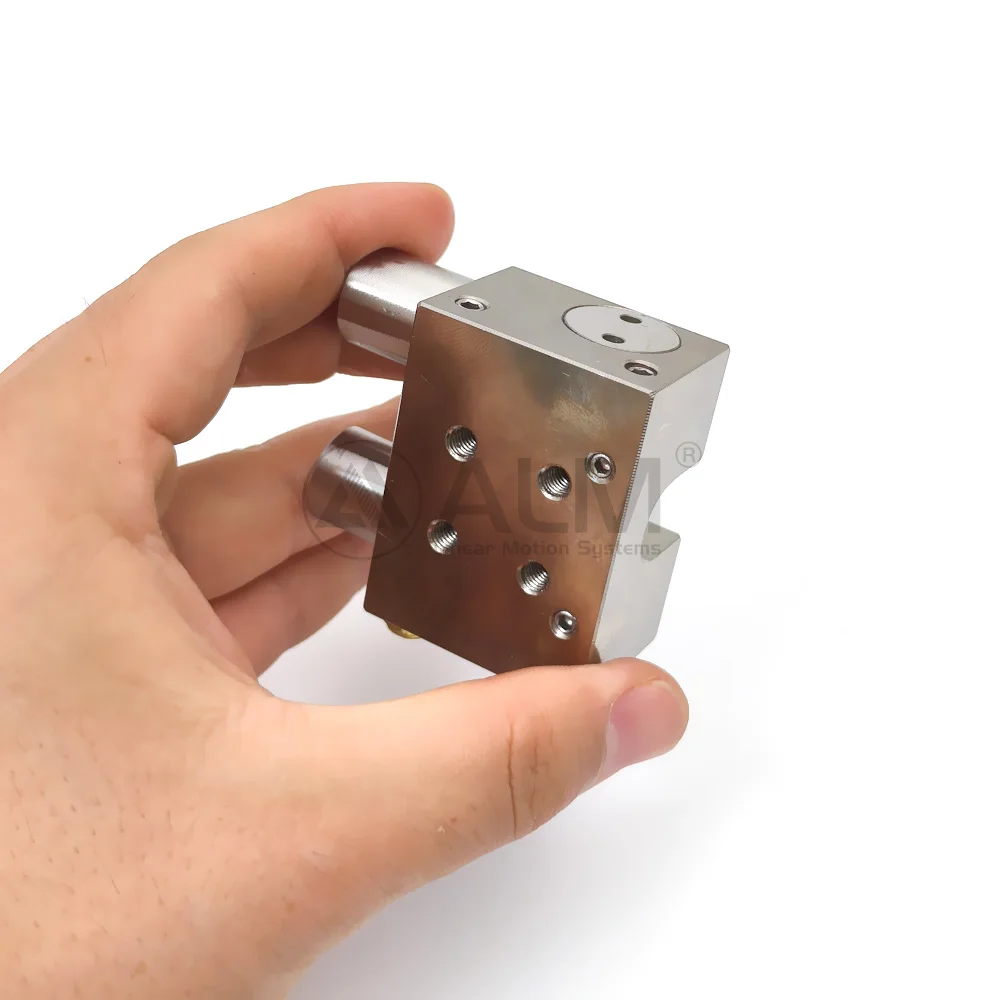
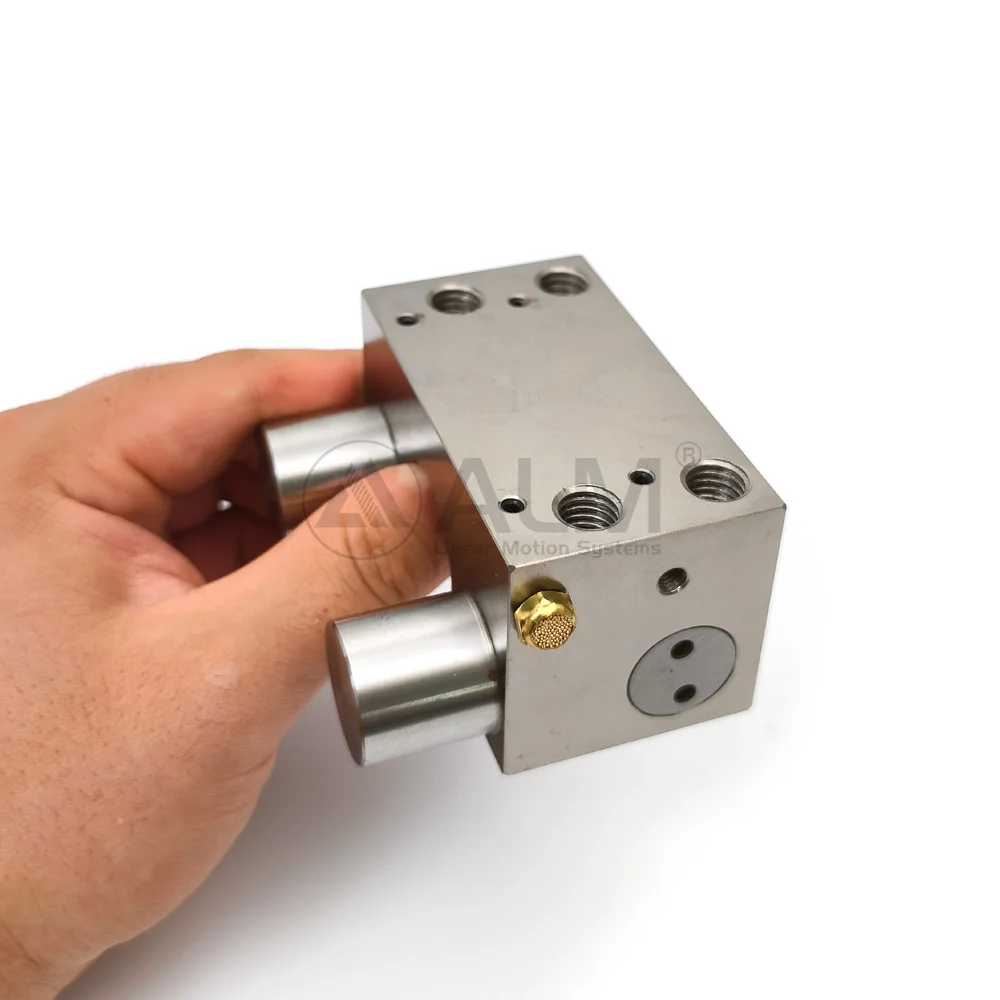
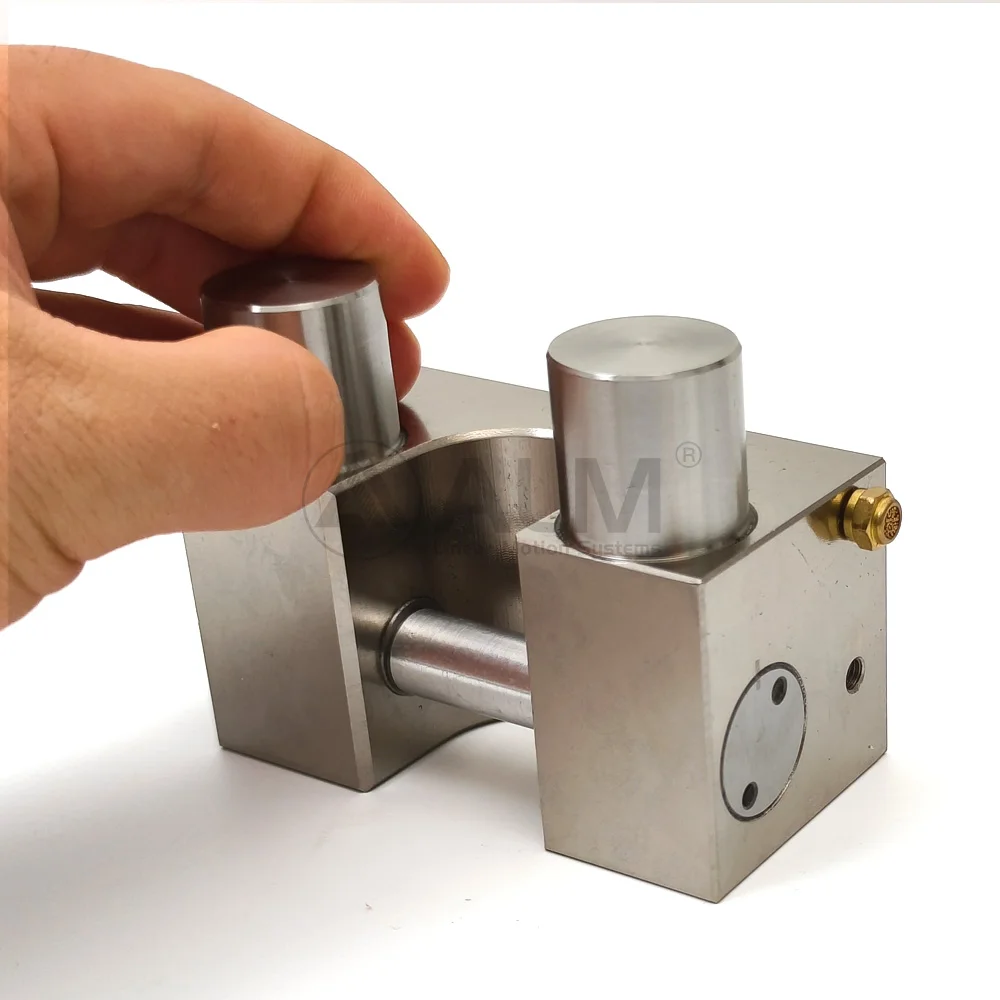
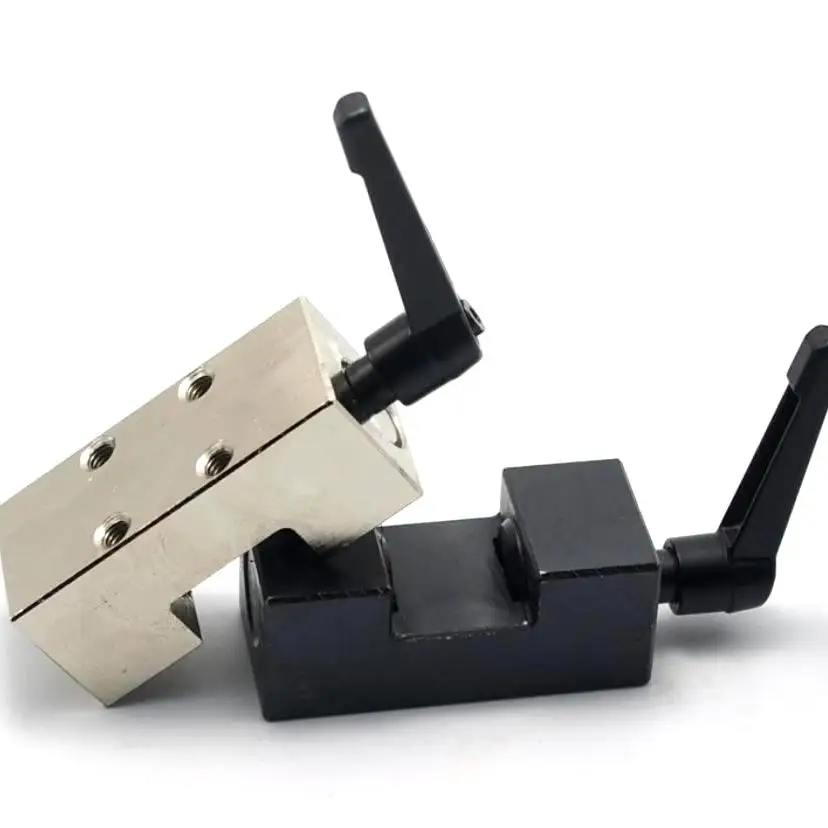
A clamping element grips the guide rail and holds the carriage still. It exists because a ball screw does not hold: a screw with a normal lead will backdrive under load and a servo will drift when it is disabled. For a vertical axis, a heavy gantry, or any machine that has to be safe when the power drops, the clamp is a safety component rather than an accessory.
Manual and pneumatic
| Series | Actuation | Behaviour | Typical use |
|---|---|---|---|
| HK1501A to HK4501A | Manual lever | Operator clamps and releases by hand | Setup, maintenance, axes that are locked between cycles |
| MKS1501A to MKS6501A | Pneumatic | Spring applied, air released, or air applied depending on variant | Automated axes, fail-safe holding on power loss |
| AKS and SVCN types | Pneumatic or manual | Interchangeable with the common European pattern | Retrofit where the original brand is unavailable |
Normally closed is the safety case
A normally-closed clamp is held by a spring and released by air. Lose the air supply and the axis stops. A normally-open clamp does the opposite: it needs air to hold, and it lets go when the pressure drops. The two look identical in a photograph and behave in opposite ways in a failure, so the logic has to be stated on the purchase order, not inferred from the picture.
Holding force is not the rail size
The number in the model — 1501, 2501, 3501 — refers to the rail width the clamp fits, not to how hard it grips. Two clamps for the same 25 mm rail can differ substantially in holding force depending on the spring pack and the number of friction elements. If the axis has to hold a vertical load, size the clamp from the holding force and the coefficient of friction against a greased rail, then apply a safety factor. A clamp rated at the load with no margin will slip once the rail has a film of way oil on it.
Fitting it to an axis
The clamp body mounts to the carriage or to the machine frame, and the friction elements close on the rail. That means the clamp must be fixed to the moving part and the rail to the stationary part — or the reverse, as long as one moves and one does not. Fitting the clamp to a bracket that is not rigid in the clamping direction turns the clamp into a spring and wastes most of its force in deflecting the bracket.
Air supply, in practice
Pneumatic clamps are usually specified at 5 to 6 bar. Below the rated pressure the clamp may not fully release, which shows up as drag and motor overload rather than as a clamping fault. If the machine has a single air line shared with blow-off nozzles, fit a dedicated regulator and a pressure switch: the day the line drops is the day the axis stalls.
What to specify
- Rail width and profile — MGN, HGR or SBR, and the size
- Manual or pneumatic, and normally closed or normally open
- Required holding force, and whether the axis is vertical
- Available air pressure, if pneumatic
- Whether the clamp has to replace an existing branded part, and which one