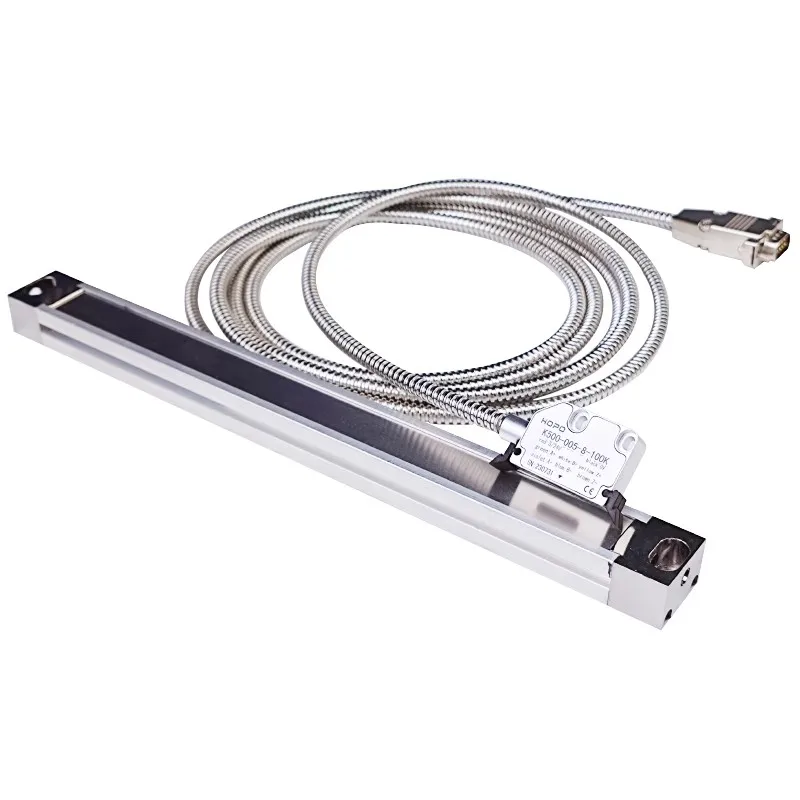
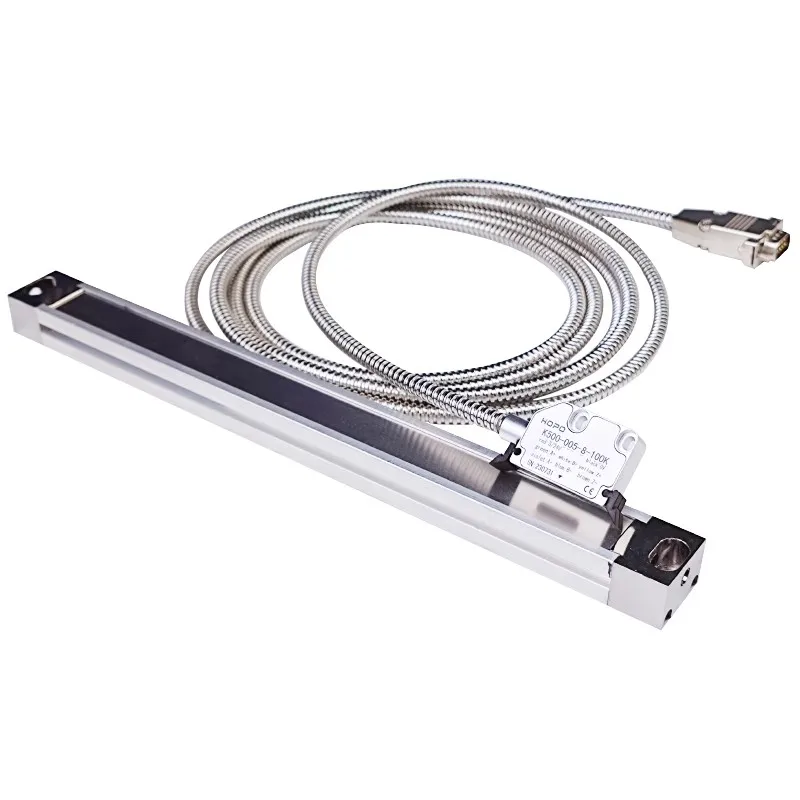
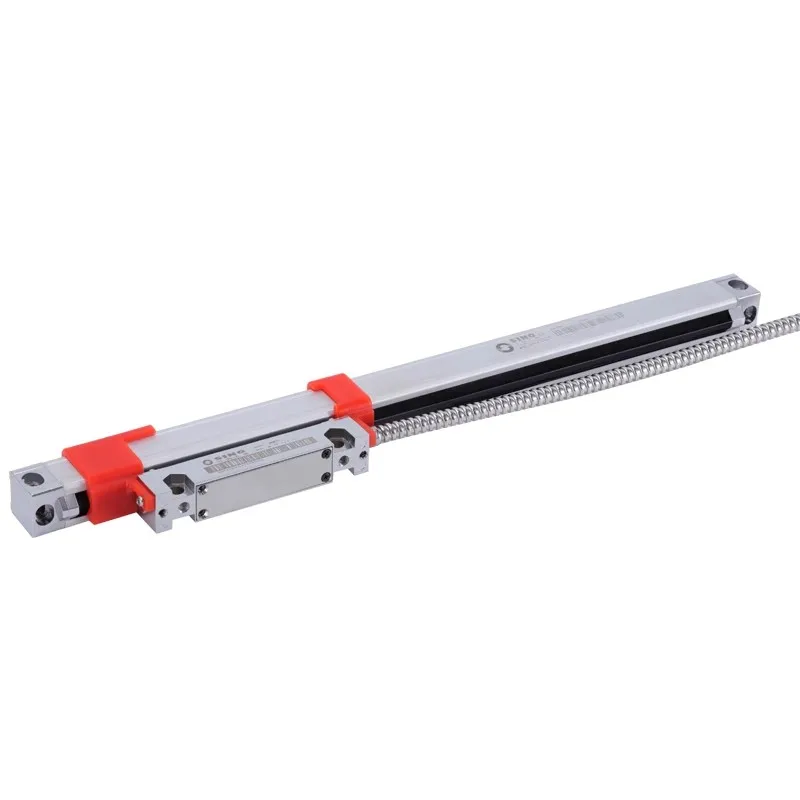
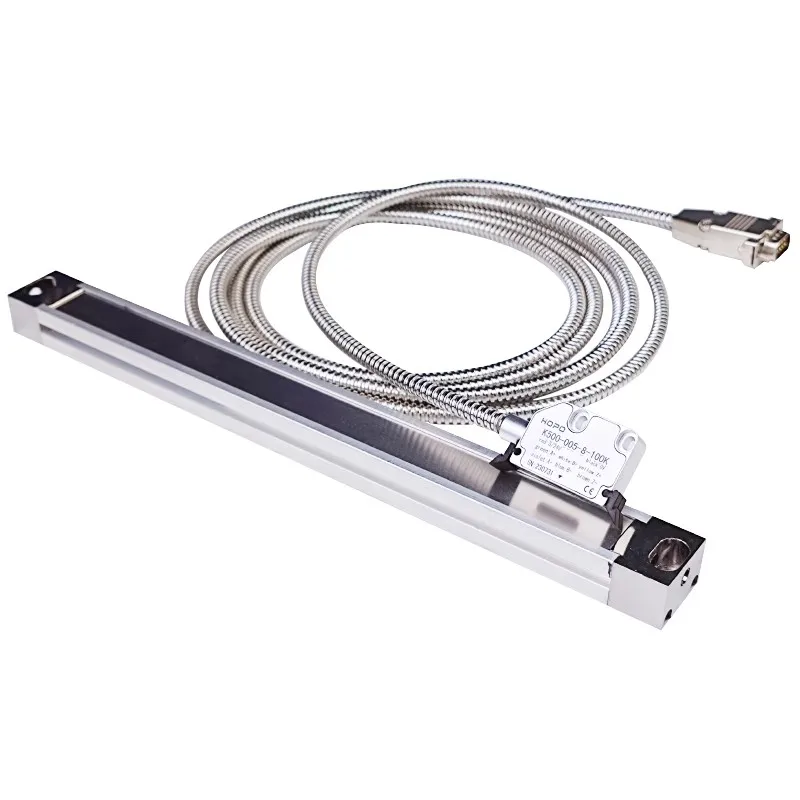
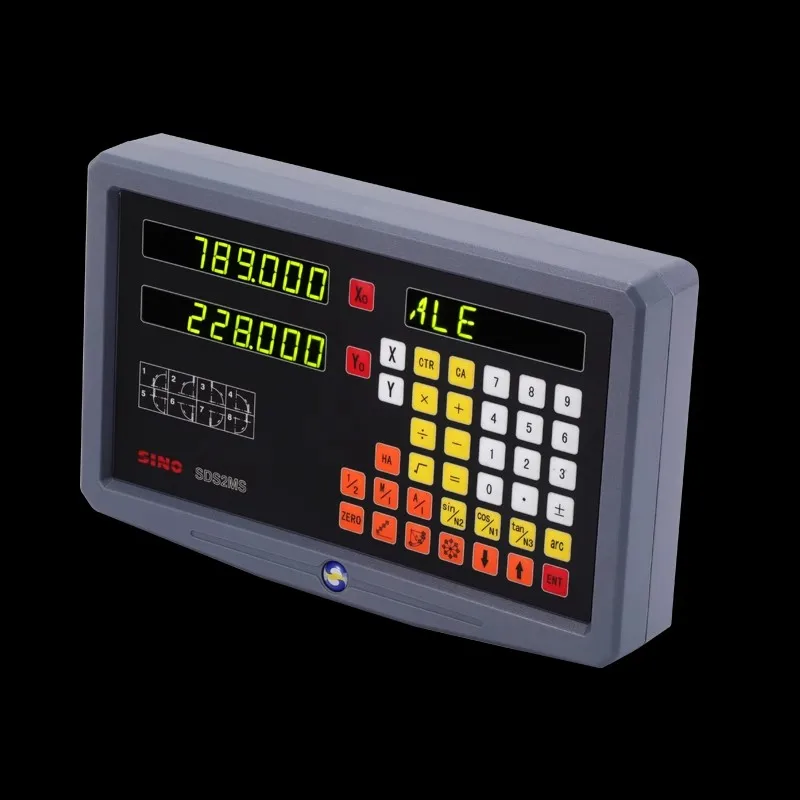
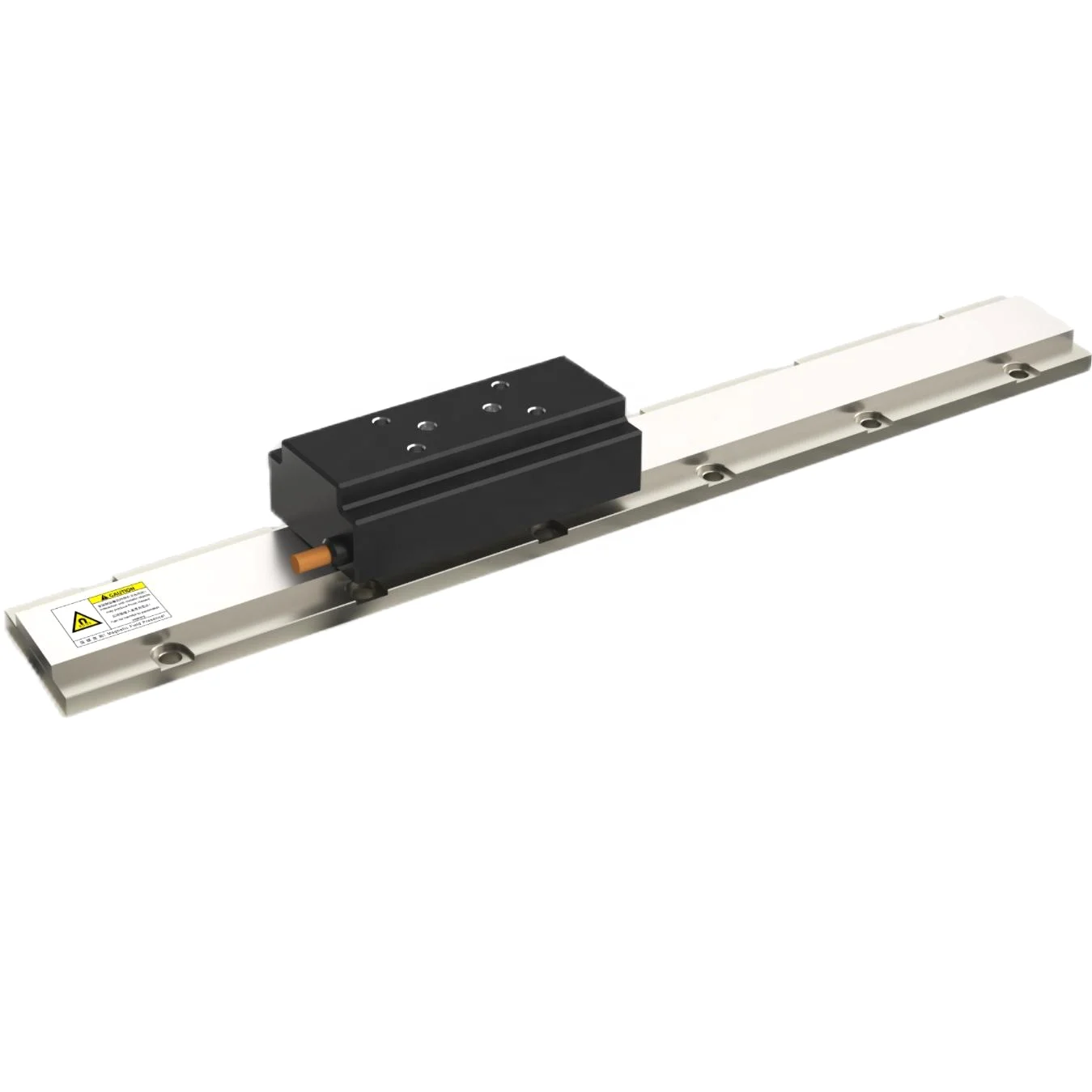
A linear scale measures where the table actually is, not where the screw thinks it is. That difference is the whole reason the product exists: backlash, screw wear and thermal growth all disappear from the reading once the scale is on the slide rather than on the motor.
What is in the catalogue
| Item | Type | Note |
|---|---|---|
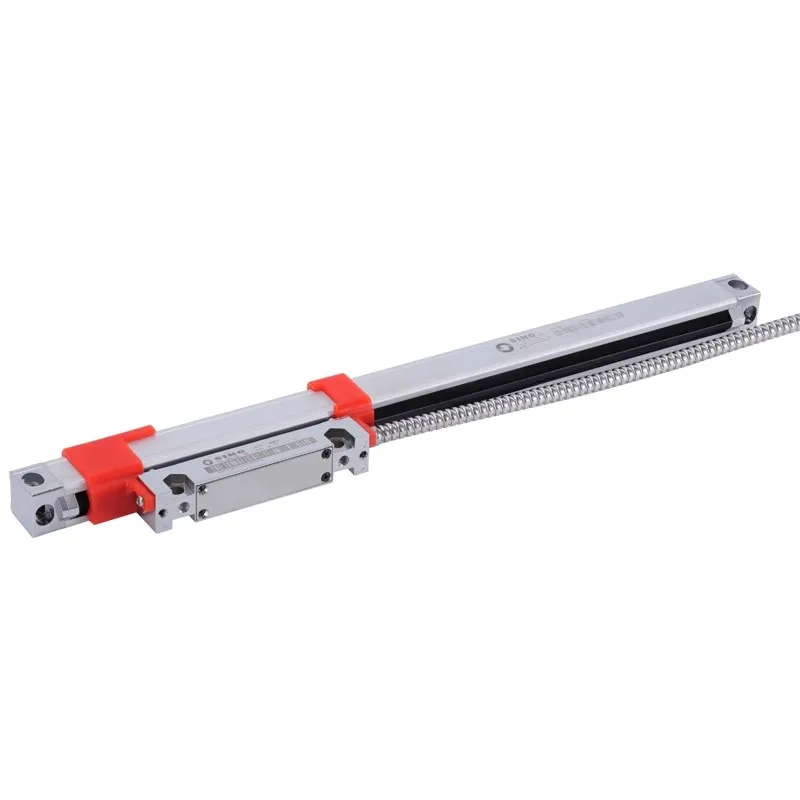
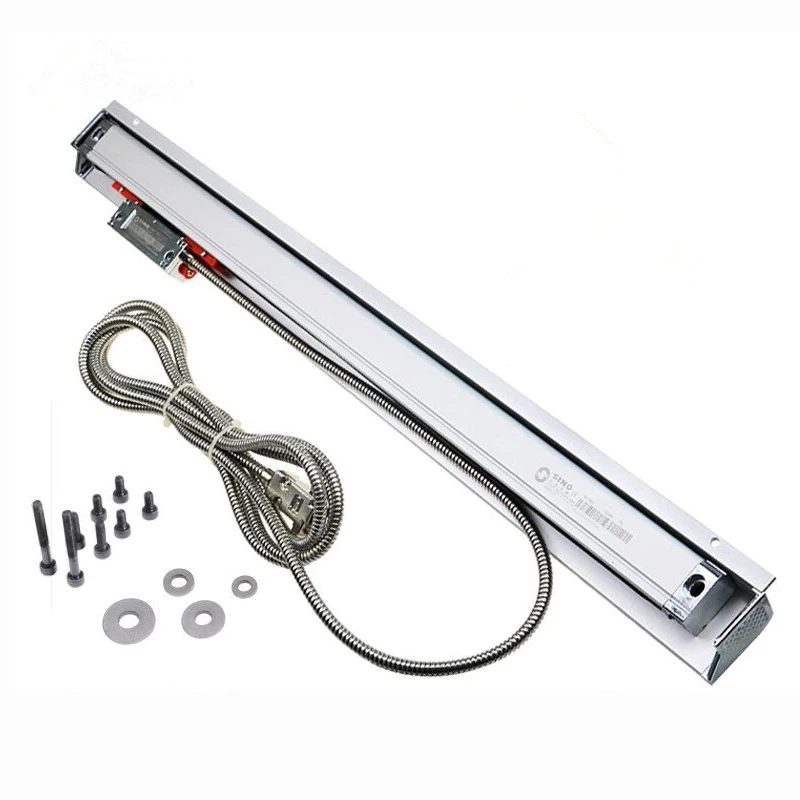
| SINO KA200 | Glass scale, compact | Small machines and short travels |
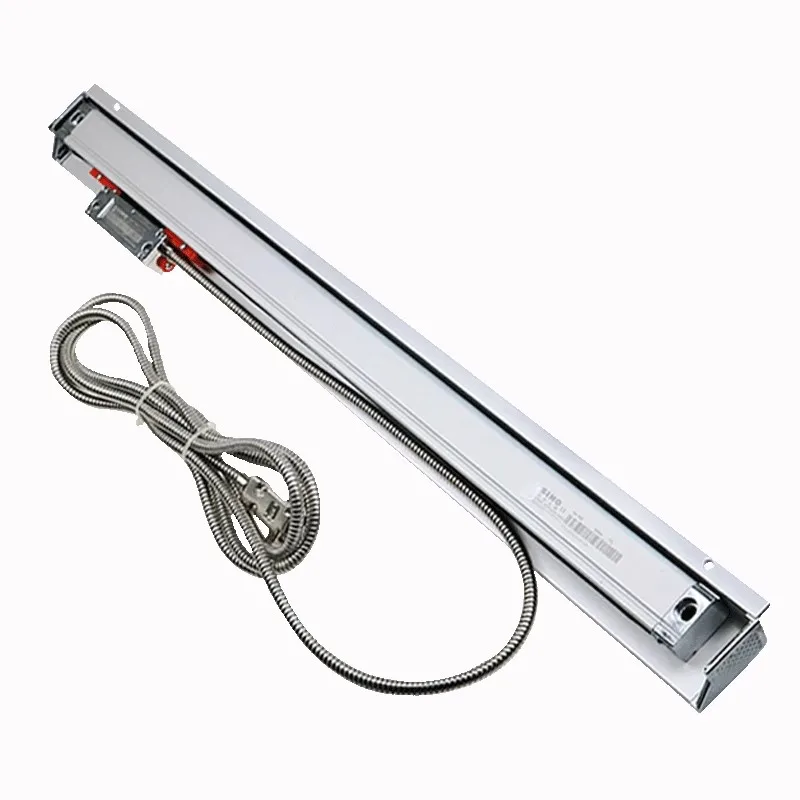
| SINO KA300 | Glass scale | General machine tool use, common lengths |
| KA800MC | Glass scale | Longer travels and larger sections |
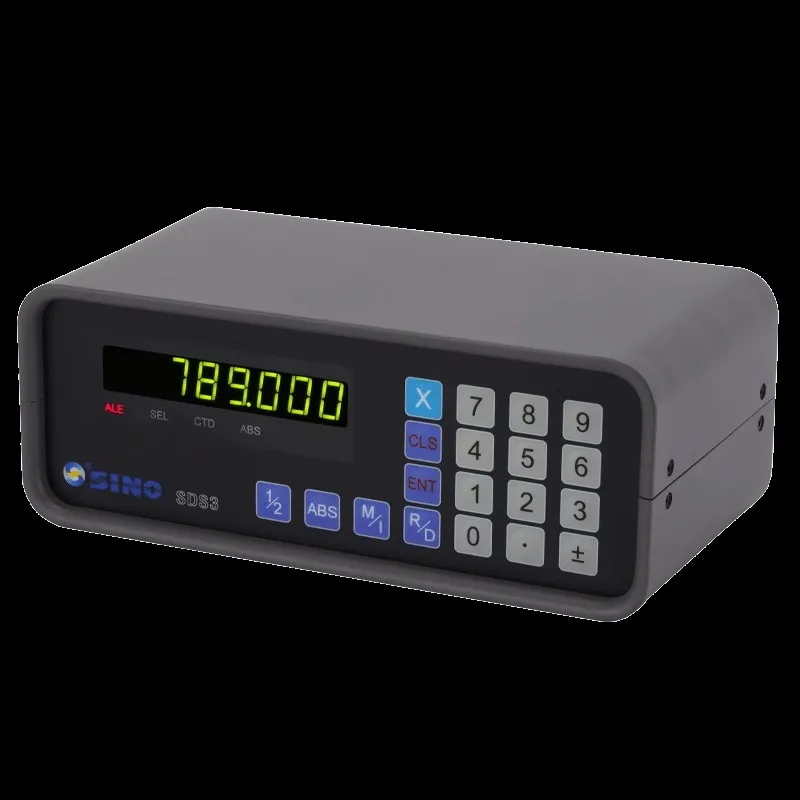
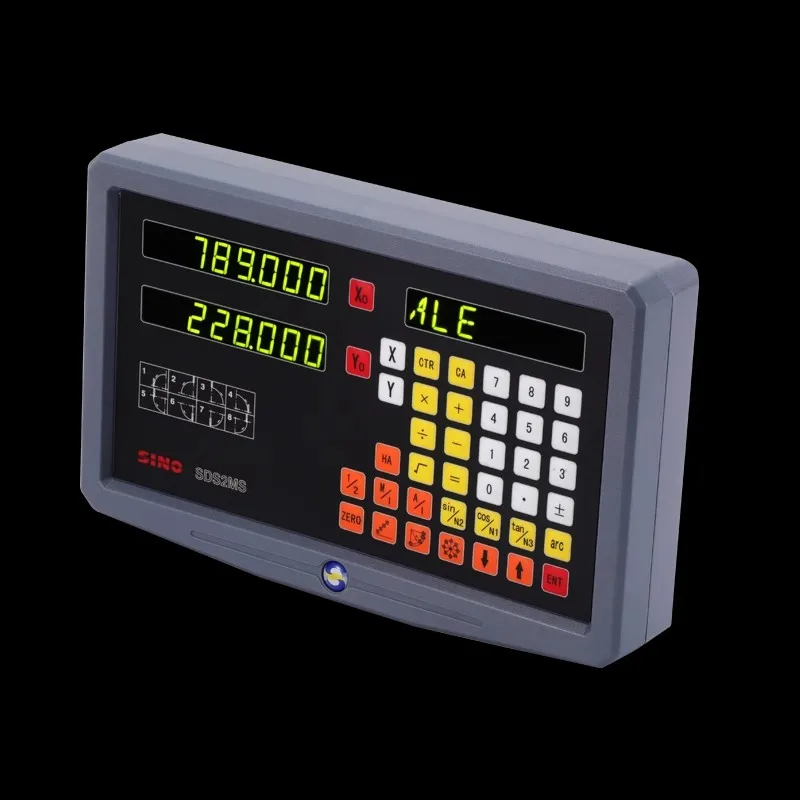
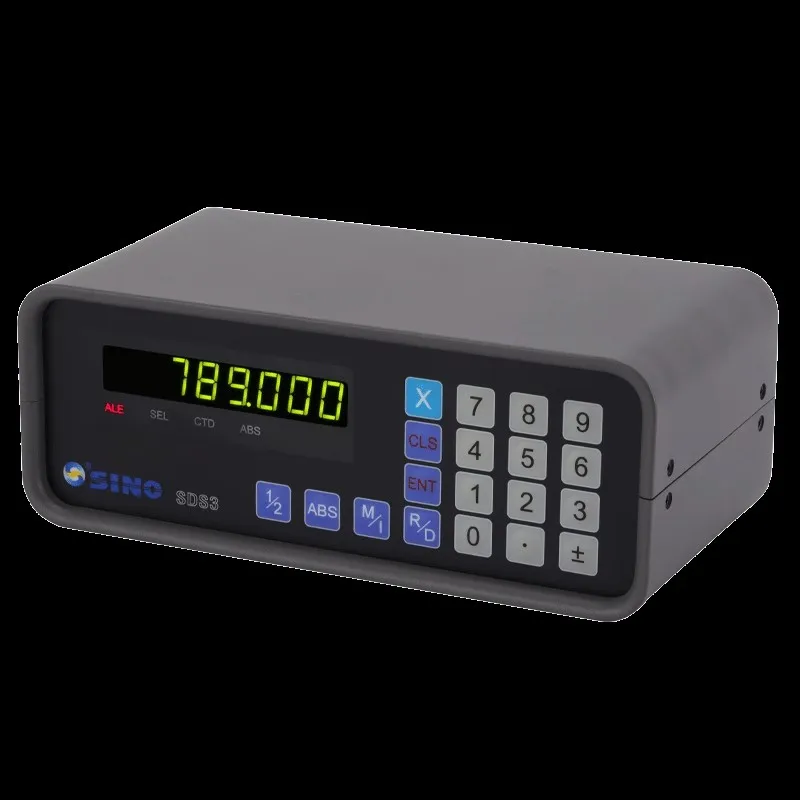
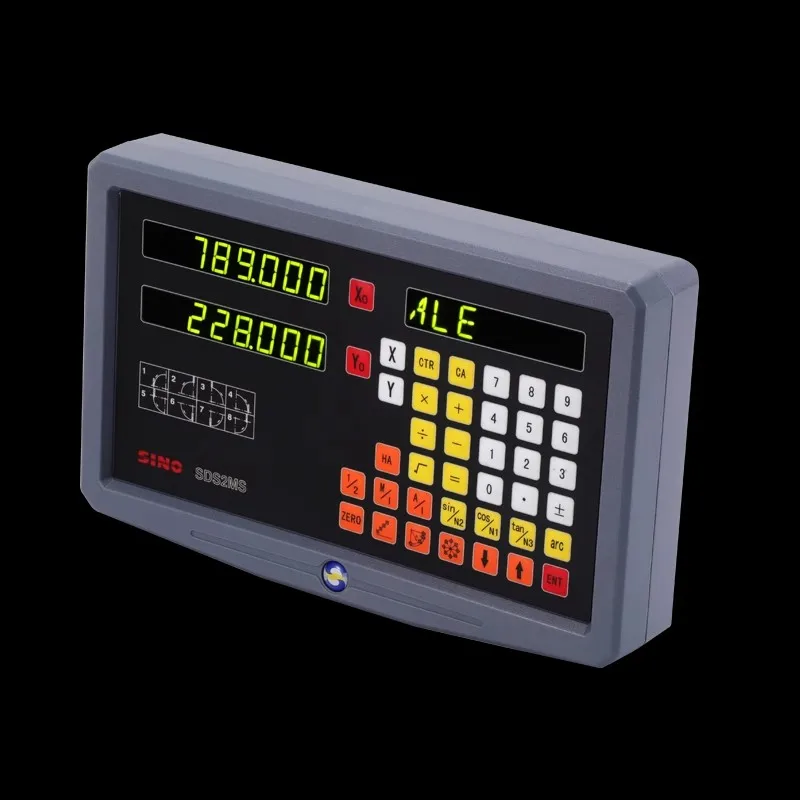
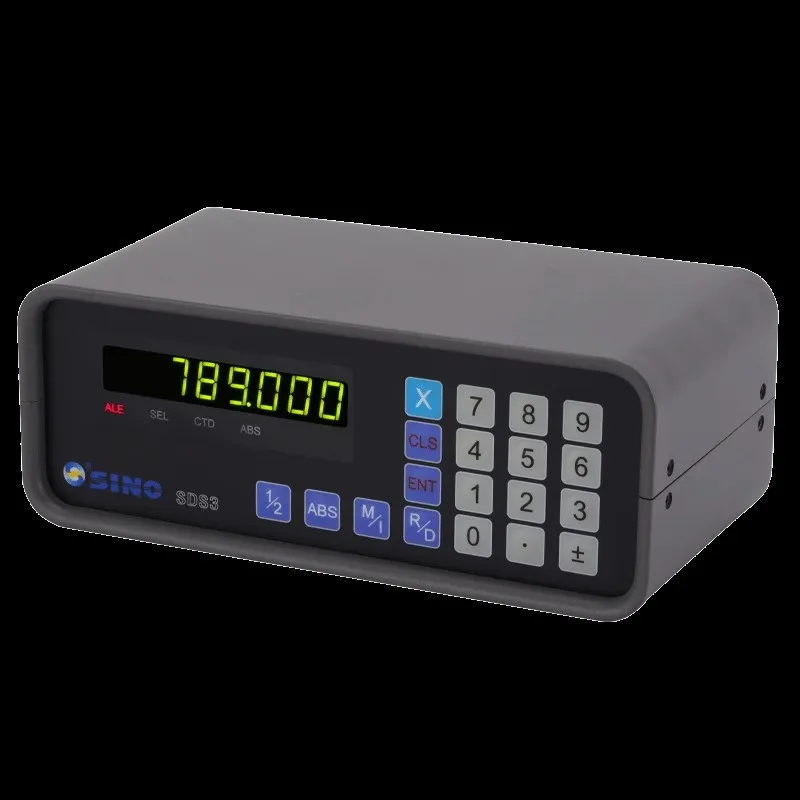
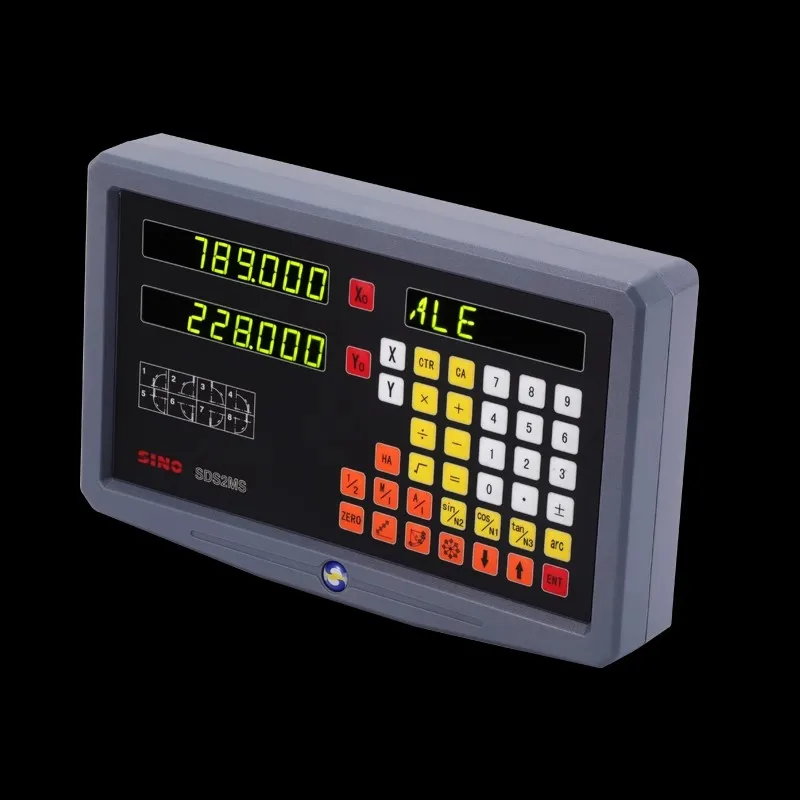
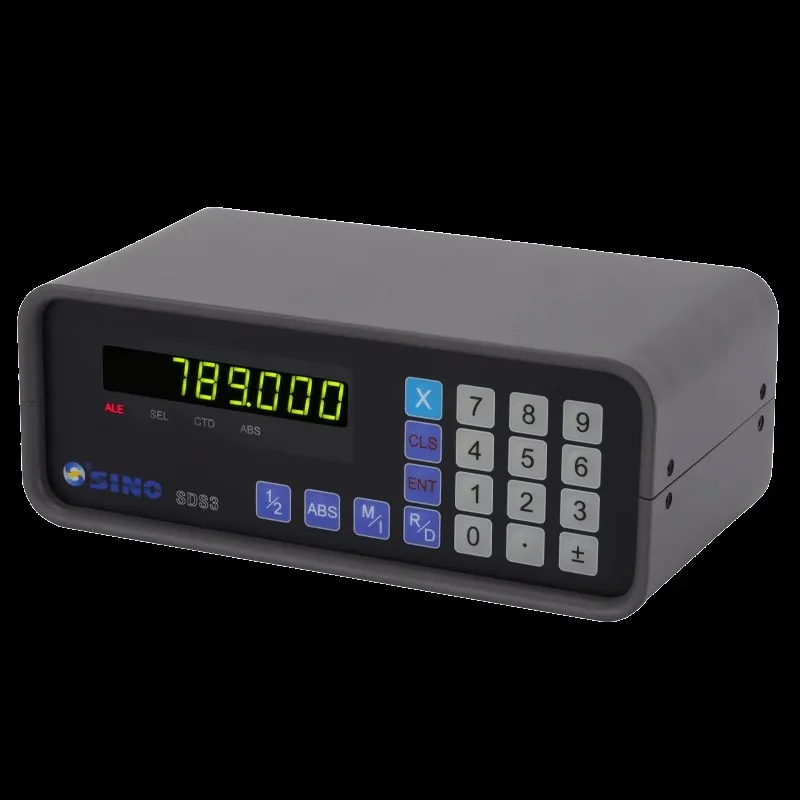
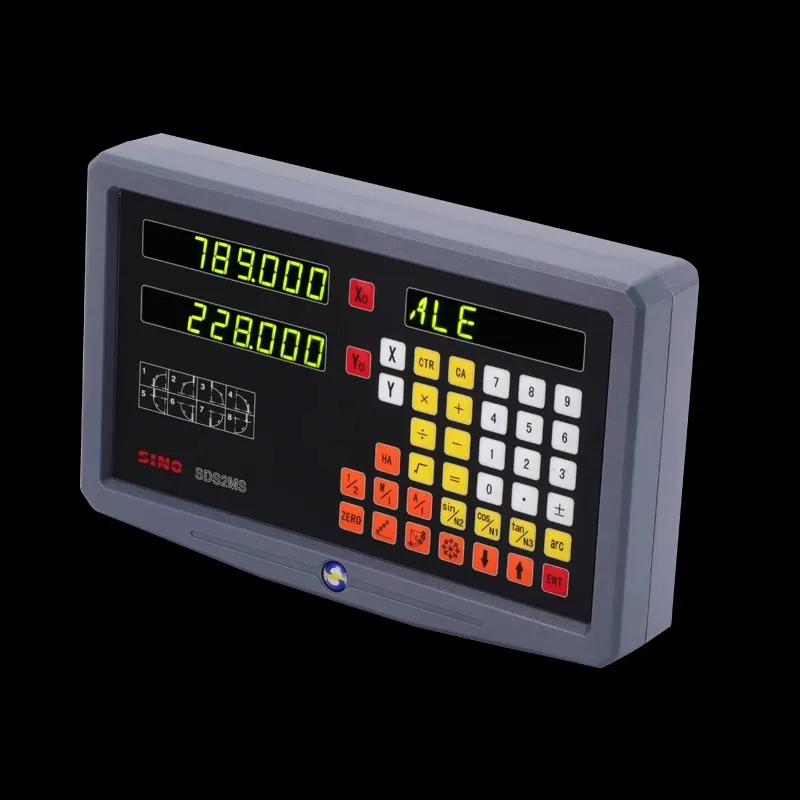
| SDS2MS / SDS3 | Digital readout | Two and three axis displays, TTL input |
| Magnetic scale | Magnetic tape and reader | Long travel, dusty or wet environments where glass is at risk |
Resolution is not accuracy
A 5 micrometre scale resolves to 5 micrometres. That says nothing about whether it reads correctly: glass scales carry an accuracy grade over a defined length, typically expressed as a tolerance per metre. A scale that resolves to a micron with a coarse accuracy grade will display a precise number that is wrong. Ask for both figures.
Mounting decides whether it works
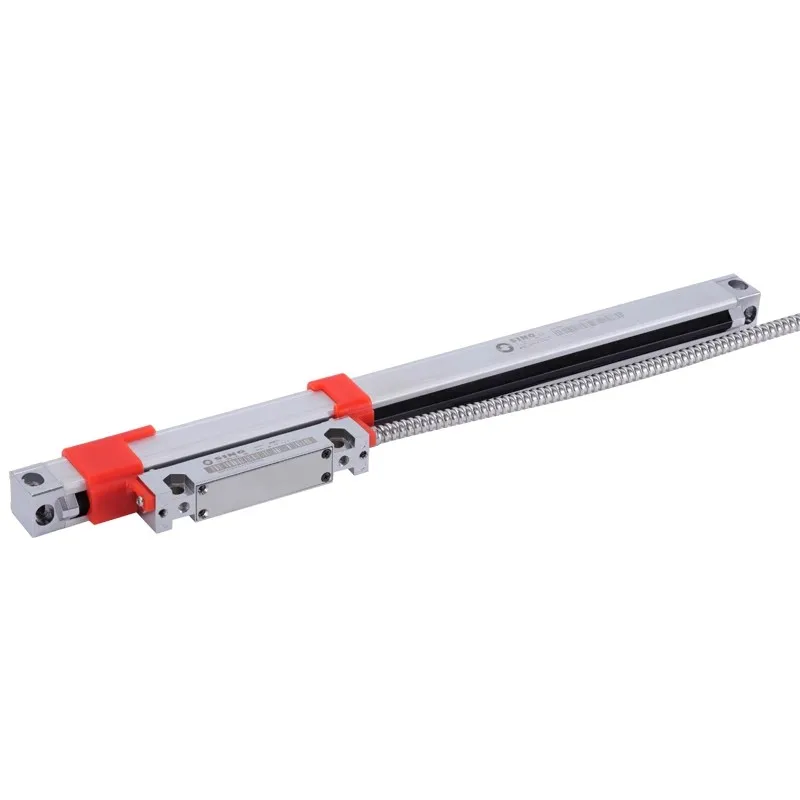
The scale body mounts to the stationary part; the reader head mounts to the moving part and must stay at a fixed gap and angle over the whole travel. The usual installation errors are:
- Head gap drifting — the bracket flexes and the gap opens at mid-travel; the readout blinks or drops counts
- Scale not parallel to the axis — the head rides up on one edge and the signal degrades
- Rigid mounting at both ends — the scale is aluminium and the machine is cast iron; they grow differently and the scale bows
- No protection — coolant and swarf on a glass scale ends the scale
The standard fix for the last two is a scale with a lip seal and a cover, mounted with slotted holes at one end to allow expansion.
Glass or magnetic
Glass gives the best accuracy and the worst tolerance of contamination. Magnetic tape is more forgiving, can be supplied in long lengths, and is the usual choice for a plasma table, a router cutting MDF, or any machine where the scale will see dust. If the machine cuts with coolant and no way covers, choose magnetic and stop fighting the environment.
What to specify
- Travel length in millimetres, and the reading length you need — they differ by the head width
- Number of axes and whether the readout has to do bolt-hole circles or tool offsets
- Required resolution and, separately, required accuracy
- Mounting orientation and whether covers are part of the scope
- Whether the existing readout is being reused, and its input type